
Pricing in e-commerce works best when it is based on strategy, costs and market data, rather than intuition. A well-set price can simultaneously support sales, protect margin and build a consistent brand image. In practice, the key is calculating how much really remains after order fulfilment costs, payments, marketing and returns. Just as important is comparing yourself with the right competition at the level of identical SKU/EAN, because the “category average” can be misleading. In this section, you will go through the fundamentals of pricing strategy and the methods of market and competitor research that allow you to make decisions without shooting in the dark. This makes it easier to set price bands and avoid chaos across sales channels.
Fundamentals of pricing strategy in e-commerce
The foundation of pricing strategy in e-commerce is a clear definition of the goal: whether the price is meant to maximise gross profit, accelerate growth, or defend market share. For a store at the start, a “penetration pricing” approach often makes sense (lower price and fast turnover), while for a premium brand it may be more important to maintain margin and image consistency, even at the expense of volume. This choice affects how aggressively you run promotions, how you set free-delivery thresholds and how you react to competitor moves. Without a goal, it is easy to “buy” conversions with a discount that is later hard to roll back.
Brand positioning sets the acceptable price level, because customers pay not only for the product, but also for the promise: service quality, delivery speed and returns policy. If you communicate “premium” while at the same time you are constantly the cheapest in price comparison engines, you weaken credibility and make future price increases more difficult. Consistency between what you promise in your communications and how you price your offer is a condition for long-term pricing flexibility. In practice, this means the price must “fit” the shopping experience you deliver.
Gross margin alone is not enough for pricing decisions (price minus COGS), because in e-commerce shipping, payments and marketing costs take a large share. The right question is: how much remains after acquisition cost (CAC) and fulfilment, i.e. what the contribution is per order and per SKU. That is why the calculation should include the full unit cost: purchase/production, packaging (e.g. 1.20–3.50 zł), payment processor commissions (e.g. 1.2–2.5% + 0.30 zł), warehousing and returns handling. If returns in the category reach 20–40% (e.g. fashion), the price must take this into account, otherwise the margin “disappears” despite strong sales.
You set price bands by defining a minimum price (floor) and a maximum price (ceiling). The minimum price is the level below which you do not go without a conscious marketing subsidy (e.g. acquisition promotion), while the maximum price results from customer value and substitute pricing — once you cross the “pain threshold”, conversion will start to fall faster than margin grows. When you sell simultaneously on a marketplace (e.g. Allegro, Amazon), in your own store and offline, customers can compare prices in minutes, and discrepancies quickly undermine trust. Introduce MAP (Minimum Advertised Price) rules and make sure differences arise from real benefits (e.g. freebie, bundle, longer warranty), not from pricing chaos.
Price should also take into account availability and delivery time, because the same amount works differently with delivery “tomorrow” than “in 5 days”. If you have a logistics advantage (e.g. fulfilment with D+1 delivery), you can test a price that is 3–8% higher without a drop in conversion in critical segments. At the same time, it is worth segmenting your approach: new customers are usually more price-sensitive, while returning customers more often prioritise convenience, availability and support. In practice, this means different mechanisms: a discount on the first purchase for new customers and non-price benefits for loyal ones (e.g. free delivery from a lower threshold, early access to new products).
Market and competitor research without shooting in the dark
Market and competitor research without shooting in the dark is based on a price benchmark for identical SKU/EAN, rather than comparing “averages” within a category. Compare yourself against 5–10 stores with a similar delivery SLA, similar returns policy and credibility, because otherwise the results will be distorted by sellers with a completely different service standard. Use comparison engines and price monitoring tools to observe the market, as they show price history and send alerts about changes. Choosing reference points is just as important as the rate itself, because the customer judges the offer in the context of the entire shopping experience.
Price monitoring is worth basing on tools such as Dealavo, Price2Spy, Minderest or Skuuudle (depending on integrations and countries). Such solutions also show whether the competition has the product “in stock”, which is crucial when making price increase decisions. If 70% of competitors are out of stock, your price can be higher without losing sales, because the customer has fewer alternatives. In such a situation, instead of automatically moving downwards, you can test a 5–12% price increase on bestsellers.
- Compare prices for identical EAN/SKU and note who has the product “in stock”.
- Choose 5–10 comparable competitors in terms of delivery SLA, returns and credibility.
- Monitor price history and change alerts (e.g. Dealavo, Price2Spy, Minderest, Skuuudle).
- Take into account the “total price” at checkout, including delivery costs and free-delivery thresholds.
You can verify price elasticity using store data by observing how a price change affects demand. If a 5% price increase reduces sales by only 1–2%, you usually still have room to improve margin. The simplest way is to calculate this on weekly data per SKU, with seasonality controlled for, and at larger scale these relationships can be modelled in BigQuery/Python. This approach makes it easier to distinguish products that genuinely “carry” margin from those where price is often the key purchase driver.
The competition is not always the identical product model, because the customer often buys the outcome and compares substitutes (e.g. capsule coffee machine vs filter coffee machine). For this reason, price monitoring should cover 3–6 main substitutes, otherwise a drop in conversion can come as a surprise despite the “lowest price for the EAN”. It is also worth taking seasonality and demand calendar into account: during peaks (e.g. Black Friday, Christmas, back-to-school) customers have different priorities and different price tolerance. When demand grows faster than supply, it is often more profitable to limit discounts and protect margin rather than enter a price war.
Price wars can be recognised by cuts that fall below a rational margin level (e.g. dumping or clearance of end-of-line stock), and in that case competing on price usually ends in losses on both sides. Instead, it is better to differentiate the offer: a bundle, a freebie, faster delivery, 0% instalments or a message like “best service + 30 days to return”. At the same time, analyse delivery cost as part of the “total price”, because the customer compares the final cost in checkout. A shop with a price lower by 5 zł, but expensive delivery, may lose out, which is why in your benchmark you should also note free delivery thresholds and delivery cost (e.g. Paczkomaty 12,99 zł).
Price psychology and offer presentation: how to make price sell
Price psychology and the way the offer is presented make the customer assess price in context, rather than as a “naked” number. The simplest mechanism is the reference price and anchoring: the message “was 299 zł, now 239 zł” works when the “was” price is credible and compliant with the guidelines, including the principle of the lowest price from the last 30 days. A second form of anchoring is showing a more expensive variant alongside a cheaper one, which increases acceptance of the mid-tier option’s price. If you do not build a value context, price becomes the only differentiator and starts to pull the shop towards a price war.
It is worth choosing price endings for the category, because .99 and .00 create different associations. In mass-market segments, .99 endings often reinforce the perception of a bargain, while in premium it is better to test full amounts (.00) or .90, which look more “solid”. The most practical approach is an A/B test on top SKU, e.g. 199 vs 199,99, because the impact on conversion and average basket value can be counter-intuitive. Such tests allow you to improve the perception of price without actually cutting margin.
Breaking the price down into instalments or a monthly cost can increase conversion without lowering the nominal price. For more expensive products (e.g. 1999 zł), showing “from 83 zł/month” lowers the entry barrier, as long as the instalment calculation is clear and complete (APR, number of instalments) and there are no hidden fees. When the information is unclear, the risk of cart abandonment increases instead of sales growing. In practice, it is worth treating instalments as part of value presentation, not a price “trick”.
Price sells more effectively when you increase perceived value instead of lowering the amount, for example through bundling and packages. Mechanisms such as “buy together cheaper”, a starter set or 2+1 help increase AOV and maintain margin, because the customer sees more benefits in the same transaction. The same applies to the free delivery threshold, which is worth calculating in terms of profit, not just conversion (often a threshold of 199 zł works better than 149 zł if it raises AOV more strongly). It is also important to minimise the “pain of paying”: first show value (benefits, proof of quality, guarantee), and only then display the price and delivery costs, avoiding surprises in checkout.
Acceptance of price is strengthened by risk reduction, that is, social proof and guarantees. Ratings, UGC and case studies help justify a higher price, because the customer has fewer doubts about the purchase outcome. In addition, a 30–60 day guarantee and simple returns act like “insurance”, allowing you not to drop to the lowest price. It is also worth designing the structure of variants (Basic/Standard/Pro), because the compromise effect means customers often choose the middle option. Use personalisation cautiously: a dynamic price for logged-in users may undermine trust, so it is safer to personalise benefits (freebie, sample, service) or segment coupons while keeping a consistent base price.
Promotions and discounts that do not destroy margin
Promotions and discounts do not destroy margin when they are a tool for a specific goal rather than the default way of selling. A discount makes sense in scenarios such as acquisition, stock clearance or reactivation, because then you can account for it as a cost of achieving the result. When discounts are continuous, customers learn to wait, and the “regular” price stops existing in their minds. The most important operational rule is this: a promotion must have a calculated goal and limit, otherwise it starts working against profitability.
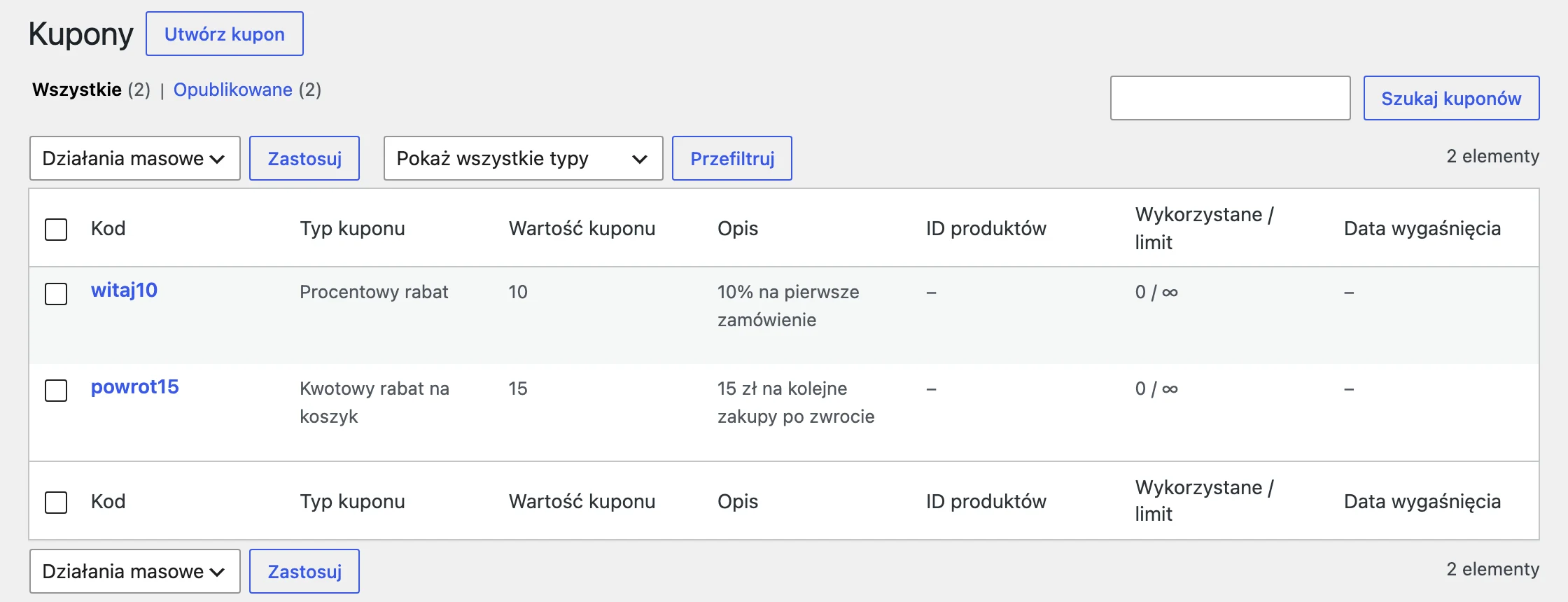
A discount on the first purchase should be treated as part of acquisition cost and compared with CAC and potential LTV. A -10% coupon can be effective, but for a 200 zł basket it means 20 zł of cost — sometimes a better alternative is free delivery if, in that model, it improves conversion more strongly at a lower cost. Instead of public discounts, segment coupons in CRM often work better, for example for an abandoned basket, no purchase for 60 days, or for customers with high AOV. For such segmentation and automation you can use tools such as Klaviyo, Bloomreach or SALESmanago, limiting the “leakage” of discounts to people who would have bought anyway.
- Choose the mechanism according to the goal: acquisition, stock clearance or reactivation, instead of a general “discount on everything”.
- Implement threshold discounts (e.g. “-50 zł from 300 zł”) to increase AOV instead of lowering the price of each item.
- In categories with repeat purchases, focus on multi-buy offers (2+1, 3 for 2) and check the impact on retention in cohorts.
- Plan clearance of end-of-line stock based on a controlled markdown schedule (e.g. -10% after 30 days, -20% after 60, -35% after 90).
- Protect promotions with limits (1 coupon per account, minimum basket value, expiry dates, exclusions for low-margin products).
Threshold promotions and multi-buy offers help increase basket value and turnover without automatically “killing” the unit price. For example, a threshold discount such as “-50 zł from 300 zł” often increases AOV by 15–25%, and you only bear the discount cost on larger baskets. Mechanics such as 2+1 or 3 for 2 work particularly well in repeat-purchase categories (supplements, coffee, pet food, cosmetics), because they speed up turnover and reduce packaging cost per item. At the same time, it is worth verifying in the data whether the customer comes back sooner (retention rises) or whether demand is simply being “frozen” for a few months.
During peak periods such as Black Friday, it is easier to protect margin if you do not discount the entire assortment and separate product roles. A practical approach is a list of “traffic drivers” (headline discounts) and “margin protectors” (with no discount or only a small one), so you can take advantage of increased traffic without giving away profit across the board. Instead of cutting the price, you can also use promotions without reducing the amount: a low-cost freebie, an additional service (e.g. gift wrapping) or express delivery, which build perceived value and do not damage the price reference. Abuse control is just as important as promotional creativity, which is why limits and rules are best implemented directly in the shop system or in marketplace promotion tools.
Dynamic pricing and automation: how to scale pricing decisions
Dynamic pricing makes sense when you manage hundreds or thousands of SKUs and operate in a changing competitive landscape. At that scale, automation lets you react faster than manual changes and maintain control over margin without daily “firefighting”. At the same time, dynamic prices do not replace strategy or profitability control, so the starting point should be clear rules and minimum profitability thresholds. If you have few products and low market volatility, manual price tests and working on the value proposition are usually better than a complex automation system.
Scaling pricing decisions is based on rules that combine minimum margin, competitor alignment and a “premium buffer” resulting from the offer’s advantages. In practice, you will encounter rules such as: “do not go below X% margin”, “be 1% cheaper than the TOP5 median” or “maintain +5% if we have D+1 delivery”. Exceptions for image products (KVI – known value items), where price has a stronger impact on how the whole shop is perceived, are also important. This way, automation does not push you into a price war where stability and trust matter more.
Pricing automation is implemented differently on a marketplace and differently in your own shop, because on a marketplace price has a stronger effect on visibility and winning the Buy Box. On marketplaces, repricers are used (e.g. for Amazon) as well as monitoring tools with a price-change module (Dealavo/Price2Spy depending on the ecosystem). In your own shop, you can update prices via ERP/PIM integrations and rules in the system or scripts changing prices via API (e.g. Shopify Admin API). This separation makes it possible to apply more aggressive rules where it is justified, without transferring price pressure to the whole business.
To prevent automation from creating chaos, set the price update cadence and hard safety rules. Too frequent changes (e.g. every hour) can frustrate customers and complicate returns handling, which is why 1–2 updates per day for top SKUs and 1–2 times a week for the “tail” often works well, with exceptions for sales events. The system should also take costs into account (exchange rates, delivery and COGS changes), especially when you buy in EUR/USD and margin can “drift apart” within a few days. In addition, it is worth implementing rules for reacting to demand and stock levels (e.g. raising the price when stock is low) and keeping full change logs: who/algorithm, when, from which rule and based on which data, with alert thresholds (e.g. price drop >15% in 24h) and approval of exceptions.
Measuring pricing effectiveness: metrics, tests, analytics
Pricing effectiveness is measured not only by conversion, but above all by its impact on profit and sales profitability. The most important pricing KPIs are conversion, AOV, margin and gross profit/contribution per session (profit per visit), because they combine the effect of price on volume and profitability. If you optimise solely for CR, it is easy to “buy” the result with a discount at the expense of margin, which can be misleadingly positive in reports. That is why pricing metrics should be read from the outset in the context of fulfilment and acquisition costs, rather than in isolation from the P&L.
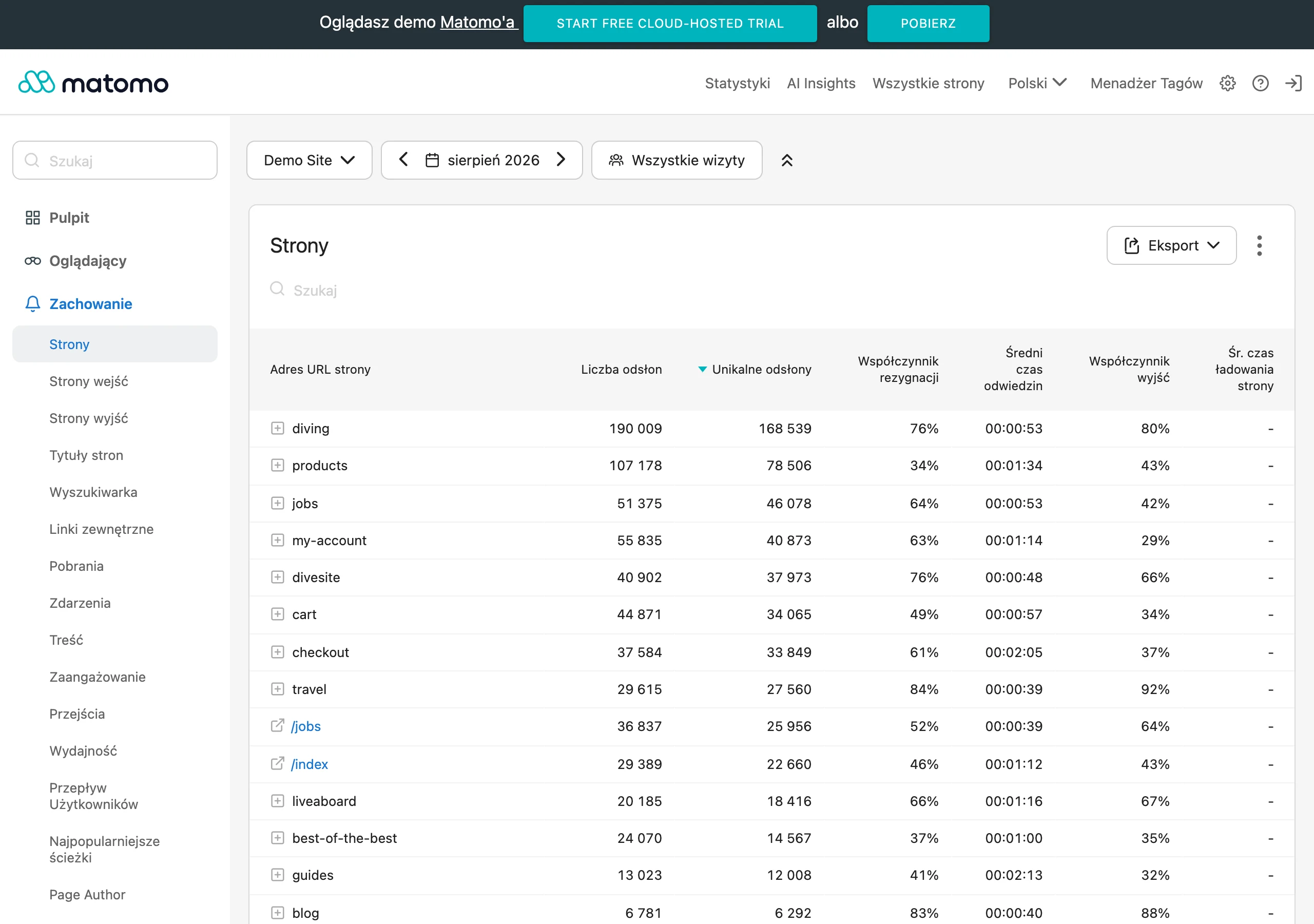
A/B price tests are reliable when you have sufficient traffic and stable conditions, and the user sees the same price throughout the purchase path. For many shops, a test lasting 2–4 weeks and an evaluation criterion based on profit, rather than conversion alone, is a sensible minimum. The best way to conduct analytics is at SKU level: you set price points (e.g. -5%, 0%, +5%, +10%) and observe the change in volume, looking for resistance thresholds and “dead zones” where a price increase raises margin without a clear drop in sales. This process brings structure to decisions, because it clearly shows which products still have room for a price increase and which remain price-sensitive.
You can assess the impact of promotions and pricing policy on customer quality through cohorts and LTV, comparing people acquired with a discount with those who bought without one. What matters most is retention after 30/60/90 days and average LTV, because only these show whether a discount builds loyalty or only delivers a one-off sales spike. At the same time, take marketing attribution into account, because a price reduction can “improve” ROAS in campaigns while reducing actual profit. To avoid drawing rushed conclusions, combine data from GA4, the order system and advertising platforms (Google Ads/Meta) in Looker Studio or BigQuery and analyse pricing decisions in the context of the overall result.
Diagnosing problems after price changes is made easier by analysing basket abandonment and returns, because the barrier is often not the price itself, but delivery costs, lead times or the lack of a preferred payment method. In GA4 it is worth tracking events (add_to_cart, begin_checkout, add_shipping_info) and checking at which stage users drop off after a price or offer-condition change. Also monitor the impact of prices on returns and complaints: overly aggressive promotions can increase impulse purchases and returns, so measure return rate and the cost of handling returns per campaign/voucher. In a broader sense, remember that the price shown in comparison sites and product results (Google Merchant Center) affects CTR, so sometimes a price that is 2–3% higher performs better if the feed is stronger (images, availability, reviews) — and for quick decisions, the most convenient option is a dashboard with the top 20 SKUs, products on promotion, products with low margin and alerts (margin drop, CAC increase, conversion drop) set against the level of competition and stock levels.
Operational “mines” in pricing: tax, law, B2B, returns
Operational “mines” in pricing are above all tax, legal requirements around how promotions are communicated, the separation of B2B/B2C logic, and the real cost of returns, which can “eat up” margin despite strong sales results. In Poland, the gross price must include the correct VAT rate, and cross-border sales also bring OSS thresholds and different rates in EU countries. A mistake in VAT calculation can mean that the store records excellent turnover, but after tax settlement it loses money on every order. That is why tax control should be part of the pricing process, not the “last step” in accounting.
Discount communication requires consistency with promotion law, because with discounts you often have to show the lowest price from 30 days before the promotion. That means keeping a price history per SKU and consistently displaying it on the product page and in the basket. If you do not have a price history and a consistent way of presenting it, you risk not only sanctions, but also losing trust in the “fairness” of promotions. In practice, it is worth treating this part as a permanent element of pricing infrastructure.
In B2B and B2C sales, it is not only basket values that differ, but also the very structure of the price and the profitability of the transaction. In B2B, net prices, volume discounts and payment terms (e.g. 14 days) are key, as they genuinely change the result on the order. If you serve both segments, separate the price lists and discount logic so that B2C customers do not see the negotiated rates for companies. Such separation also makes promotions easier to manage and helps control margin.
Safe pricing requires a hard minimum-price rule that protects you from making a loss on the transaction. No promotion should go below the total cost (COGS + fulfilment + payments), unless it is a deliberate acquisition campaign with limits. With high returns, the “effective price” is lower than the one visible in the store, so include the average return cost (e.g. 12–25 zł) and the probability of return for a given category and size range in your calculation. This is particularly important where the cost of handling returns and logistics makes up a significant share of contribution.
Operational risks also include pricing errors and channel conflicts, which can escalate faster than the price change itself. Pricing errors can generate thousands of orders within an hour, so you need a procedure: anomaly monitoring, automatic suspension of sales, and clear communication with customers, plus internal rules on when you honour the price and when you cancel in line with the terms and conditions. Before launching a big discount, also check the terms of agreements with partners, because distributors and partner shops may respond with price cuts or blocking the cooperation. At the same time, remember that sometimes the biggest “discount” is made not to the customer, but in purchasing: improving COGS (e.g. by 5%) allows you to maintain the price and increase margin without the risk of a conversion drop.
The role of availability and delivery time in pricing
Availability and delivery time have a direct impact on the acceptable price level, because many customers pay not only for the product, but for speed and certainty of fulfilment. The same price can work differently when the lead time is short and predictable, and differently when it is long or uncertain. If you have a logistics advantage, you can test a higher price without an automatic drop in conversion, provided the customer understands what they are paying extra for. It is therefore key to treat logistics as part of the value proposition, not merely a cost.
In practice, the “price” for the customer also includes fulfilment conditions and checkout cost, so it is worth linking pricing decisions with how you communicate delivery and what thresholds you set. The customer compares the final cost at the order stage, so differences in delivery and its price can be decisive even when the product price is similar. From the perspective of channel consistency, price differences should result from real benefits, not chaos, so if you keep a different price somewhere, justify it with elements of the offer (e.g. an add-on, a bundle or a different service level). This helps you avoid a situation where logistics undermines trust instead of building an advantage.
It is also worth including availability and delivery lead time in segmentation, because different customer groups have different price thresholds and priorities. New customers are often more price-sensitive, while returning customers more often value convenience, availability and support, which makes it possible to strengthen the offer with non-price benefits. Instead of risky personalisation of the price itself, it is safer to personalise benefits (e.g. a free gift or service), while maintaining a consistent base price level. This approach lets you use the advantages of availability and fulfilment without undermining trust in pricing fairness.
FAQ
Frequently asked questions
How should you set prices in e-commerce so they sell and do not destroy margin?
The price should result from the strategic objective, full costs and market data. You need to calculate not only gross margin, but also shipping, payment, marketing and returns costs.
Is it enough to compare prices with the category average in e-commerce?
No, because the category average can be misleading. It is better to compare identical SKU/EANs against 5–10 similar competitors with comparable delivery SLA, returns and reliability.
Why must a price in an online store include delivery and returns costs?
Because the customer looks at the total price, not just the product amount. If returns are frequent or delivery is expensive, the real margin can disappear despite good sales.
When is it worth raising the price in e-commerce instead of competing with a discount?
When competitors are out of stock and your offer is more available or delivered faster. The article states that with D+1 delivery, you can test a price 3–8% higher without a drop in conversion in critical segments.
How can you check whether the price in an online store is too high or too low?
The best approach is to measure price elasticity on your own weekly SKU-level data and control for seasonality. If raising the price by 5% reduces sales by only 1–2%, there is usually still room to increase margin.
Which promotions in e-commerce help sell more without lowering the unit price?
Threshold discounts, multipacks, bundles, freebies and additional services work well. These mechanics increase AOV or turnover, instead of automatically “damaging” the price of the entire assortment.