

AI visibility
SEO for chatbots
I check whether bots can read and index the key content (including when rendering) and whether multiple URLs represent the same content. I tidy up indexing hygiene: URL consistency, statuses, sitemaps. The result is a list of recommendations with priorities and a description of the implementation, plus a plan of changes to the content structure.
About the service
Audit of content accessibility for bots and of structure readability for chatbot citations
About the SEO for chatbots service
A few service details- Verifying how bots read the content
- Identifying blocks and rendering differences
- Tidying up URL consistency
- Checking statuses and sitemaps
- Assessing headings and content formats
- Question-and-answer brief and topic map

Work process
The SEO for chatbots process: from diagnosis to implementation
I start the cooperation by gathering information and establishing a realistic scope of work. I then audit the site in terms of how understandable and citable it is in chatbot answers. After that we work in stages, according to the priorities and the rules for approving changes.
- 01/ 03
Scope and access
I gather information about the offer, content and markets, ask for the access and materials needed, and establish the priorities, the approval method and who implements the changes.
- 02/ 03
Site audit
I analyse the accessibility and structure of the content, data consistency and credibility signals, and run visibility tests in chatbots in order to identify barriers and interpretation errors.
- 03/ 03
Backlog and implementation
I prepare an audit report and a backlog of recommendations with priorities and a description of the implementation, and then we deliver the technical and content fixes in stages under the agreed implementation model.
Start and defining the scope of work
The start and defining the scope of work consist of gathering the information needed to plan the work on “SEO for chatbots”. At this stage I gather information about the offer, the content types and the markets in which the website is meant to be understandable and citable in answers. I also establish the priorities and the way changes are approved, so that it is clear which elements take precedence and how sign-off works. In parallel, we specify what scope of implementation is realistic within the site and the client’s organisation.
Access and materials that make it possible to carry out the analysis and prepare recommendations for implementation are required. This includes access to the CMS/server or the designation of a person implementing changes on the client’s side, a list of key products/services, the existing content and the legal and brand rules. On this basis we make the “Who implements the changes” decision — whether the technical and content implementation is carried out by the contractor, by the client or under a mixed model. This choice affects the pace and scope of the work, which is why settling it at the outset limits the risk of downtime in the later stages.
Website audit for chatbots
A website audit for chatbots checks how understandable the site is and how readily it can be cited in chatbot answers. I analyse the accessibility of the content, the information structure, the credibility signals and the consistency of data within the domain. In practice, the audit identifies the elements that make it harder for bots to reach the content or that cause misinterpretations and inconsistent answers. In parallel, visibility tests in chatbots are run in order to compare the quality of the answers and catch the places where errors appear.
As part of the “Content accessibility for bots” analysis I check, among other things, indexing blocks, the state of rendering, canonicalisation, duplication, page statuses, sitemaps and basic crawl/index hygiene. I then assess the “Content structure for answers”, that is, the readability of headings and sections and the presence of definitions, step lists, tables and short, unambiguous passages that are easy to quote. In parallel, I map the “Coverage of questions and intent” (problem→solution), comparisons, instructions, prices/terms, limitations and choice scenarios, which chatbots often summarise or cite. Separately, I verify “Data consistency and compliance” in order to detect discrepancies in names, parameters, terms, contact details, locations and descriptions within the domain.
The audit also covers “Content credibility signals”, such as authorship, sources, updates, policies, pages about the company, terms and responsibility for content. In addition, I identify “Templates and scalability”, that is, the page types and shared elements that can be improved globally, e.g. headings, structured data, FAQ sections or comparison modules. The result is an audit report and a backlog: a list of problems and recommendations with priorities, a description of the implementation, risks and an indication of the elements to improve in templates and in content. The report is the starting point for the next stage, planning the work and the priorities.
Analysis of content accessibility for bots
The analysis of content accessibility for bots means verifying whether the key information on the page can be effectively read, processed and taken into account in the crawl/index processes. I check whether there are restrictions that make it harder for bots to reach the content or that cause them to see a different version of the page from the one the user sees (e.g. in the context of rendering). The verification also covers situations in which multiple URLs may represent the same content, which makes it harder to unambiguously “point to” the source to cite. The outcome of this part of the audit is an indication of the specific places that need tidying up before work on structure and content begins.
As part of this analysis I tidy up the areas related to basic indexing hygiene, in order to reduce the risk of errors and ambiguity in how the website is interpreted. I take into account, among other things, URL consistency, the correctness of statuses and the elements that support content discovery, such as sitemaps. The findings go into a list of recommendations with priorities and a description of the implementation, so that the order of changes can be planned at the level of templates and individual pages. If the implementation is carried out by a person on the client’s side, the recommendations are worded in a way that allows them to be handed over for publication.
Content structure and its readability
Content structure and its readability are assessed in terms of whether a chatbot can easily extract short, unambiguous passages and cite them correctly. I analyse the arrangement of headings and sections and whether the key information is given in a form that can be quickly interpreted as an answer. I check whether the content includes elements such as definitions, procedural steps, tables or other clear formats that make extraction easier. This part of the work shows where the content is too scattered, ambiguous or does not lead from the general to the specific.
In practice, the readability assessment translates into recommendations on sharpening the answers to questions and the choice scenarios that users raise in a problem→solution form. I pay attention to the places where it is worth clearly describing the terms, limitations and comparisons, so that the answers generated by chatbots are consistent with the offer. The findings of this analysis feed the plan of changes for specific pages and page types, as well as the materials for further work, such as the question-and-answer brief and the map of topics and pages. As a result, rebuilding the content does not come down to individual corrections, but to a coherent arrangement of information on the site.
Planning and prioritising the work
Planning and prioritising the work mean turning the findings of the audit report and the backlog into a specific implementation plan. I set the order of work at the level of templates and the list of pages to rebuild, so that the changes can be delivered in stages and in a controlled order. At this stage I also specify the content topics that are to fill the gaps on the site in relation to typical questions and choice scenarios. In parallel, the division of responsibility for delivering the tasks and the path for approving changes are established.
In the “Content production: who and how much” area, it is agreed whether the content is created by the contractor or by the client and what depth of expertise it should have within a given iteration. We determine how many pages or sections a given work cycle covers and whether source materials are needed to prepare the content. The outcome of the planning is two working documents: the “Question-and-answer brief” and the “Map of topics and pages”, which organise the scope of publication. These arrangements are the basis for moving into the stage of implementation and optimisation on the site.
Technical and structural optimisation
Technical and structural optimisation covers the implementations that increase how understandable, indexable and citable the content is in chatbot answers. Fixes are carried out in the area of the technical basics of crawl/index (including blocks, canonical URLs, status errors, consistent linking, sitemaps and order in duplication). In parallel, the structure of the content is organised for extraction: headings and sections, definitions, answers to questions, steps, requirements, limitations, comparisons and examples in a form that is easy to quote. As part of the optimisation, structured data and metadata are also completed, and topical navigation is built to support the clusters of questions and offer pages.
An important part of the implementation is unifying the facts across the site, so that different pages do not give contradictory information about names, parameters, terms, price lists/scopes and contact details. In addition, the content credibility signals are strengthened through elements such as authors/experts, update dates, sources, policies, sections about the company and clear disclaimers where they are required. The result of this stage is an Implementation package: a list of tasks in templates, content recommendations per page, structured data guidelines and instructions for post-implementation tests. The scope and pace of publishing the changes may depend on subject-matter/brand approval and legal requirements, and on the complexity of the templates (the number of page types and the difficulty of making changes in global modules, navigation and structured data).
Testimonials
What clients and the industry say
Feedback from clients and industry people I have worked with on SEO projects.

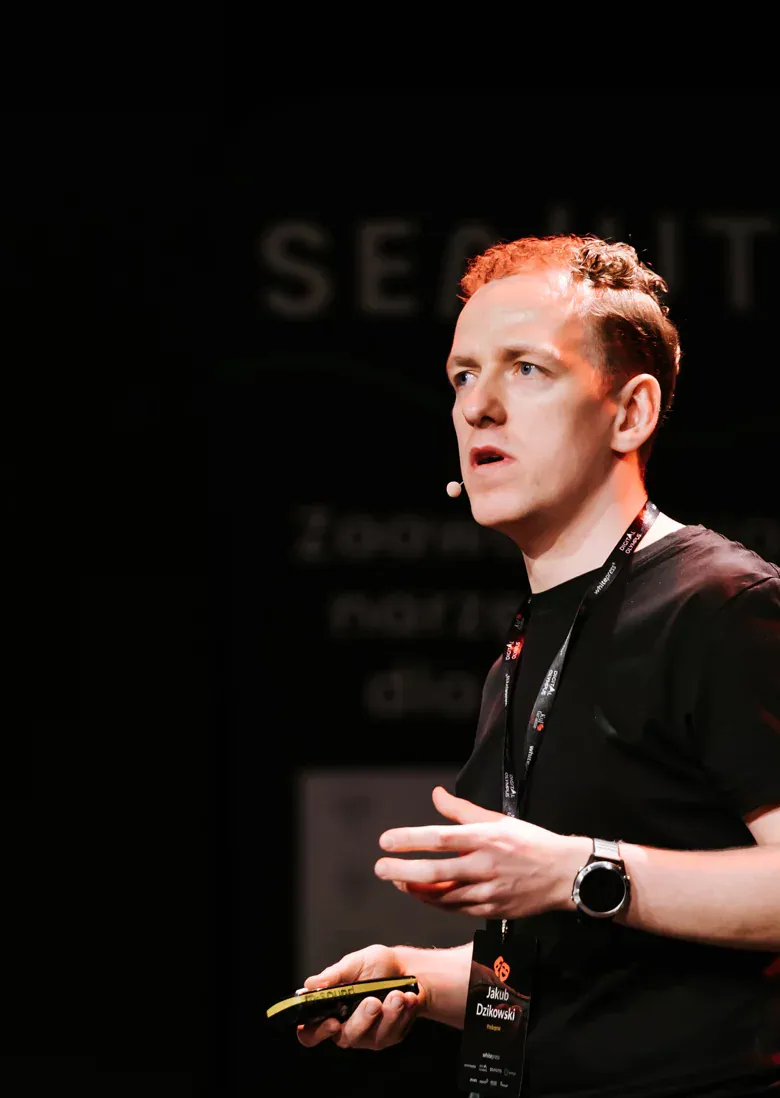
I had the chance to work with Kuba at Kulturalnie o SEO, an event I organise. Kuba did a great job as a speaker and received high marks from the audience. He showed professionalism and broad knowledge. In other projects at Vestigio, Kuba shows enormous commitment, a willingness to explore and implement new ideas, and excellent organisation of his work.

01 / 08
You talk to me, not a salesperson
Tell me what you want to achieve. I’ll reply personally
I work as a freelancer: the same person reads your message, prepares the quote and then runs the project. No sales team in between.