
How does AI help reduce stockouts and lost sales?
AI supports the reduction of stockouts and lost sales because it forecasts demand and delivery lead time uncertainty more accurately, which makes it possible to set replenishment policies more precisely. As a result, organisations can raise the service level, for example from 92% to 97%, when forecasts and ordering rules are better matched to volatility. It is important to take lead time into account, as well as the fact that demand and availability do not always go hand in hand. When the forecast is fed with the right operational data, decisions on “how much to order and when” become less reactive and cheaper to maintain.
The most common reason forecasts are underestimated is “censored” demand, meaning sales constrained by stockouts (OOS), so lost demand needs to be estimated rather than treating zero sales as zero demand. In practice, this means correcting the data when the product was unavailable, because otherwise the model “learns” an artificially low demand level. Such corrections can use, among other things, historical data, demand in similar stores or models with an OOS feature. This directly reduces the risk that the system will under-order stock for the following weeks.
AI also reduces stockouts when it can distinguish demand spikes caused by promotions from the underlying baseline trend. Models with promotional features (e.g. discount, display, budget) and uplift approaches help predict the “lift” and prepare stock for the promotion period without overestimating demand after it ends. In an omnichannel setting, AI can additionally forecast demand per channel and optimise allocation, taking into account delivery SLA, margin and the cost of reallocation between warehouses. When data or sales behave unusually, anomaly detection on sales series and inventory levels can flag a problem before a faulty signal “spoils” the forecast and orders.
- 01Precise demand forecastingBetter alignment with volatility
- 02More accurate replenishment policiesTakes lead time and uncertainty into account
- 03Estimation of lost demandCorrection of “censored” data
- 04Higher customer service levelReduced stockouts and lost sales
Thanks to AI, decisions on “how much to order and when” become less reactive, cheaper and more effective, based on a complete picture of demand.
Using AI to optimise inventory and capital costs
AI optimises inventory and the cost of capital because better forecast quality usually means a lower average stock level while maintaining the required availability level. In practice, improving WAPE by a few percentage points can reduce average inventory by 5–15% in categories with high volatility, especially when the forecast is combined with dynamic safety stock. This works best where fluctuations in demand and lead time increase the risk of overstocking. Ultimately, it is not just about a better forecast metric, but about less capital tied up in stock without increasing stockouts.
The most practical savings mechanism is setting safety stock based on uncertainty, rather than on the average forecast alone. In the classic approach, safety stock is calculated as z * σLT, where σLT describes the standard deviation of demand during lead time, and for a 95% service level z≈1.64 is assumed. The reorder point (ROP) then results from the forecast demand during lead time (μLT) plus safety stock. This approach makes it possible to “pay for uncertainty” precisely where it actually occurs, instead of holding excess across the entire assortment.
- Link the forecast to the decision: use forecast demand during lead time (μLT) and safety stock to calculate ROP and ordering recommendations.
- Optimise the buffer continuously: combine WAPE improvement with dynamic safety stock to reduce average inventory, especially in categories with high volatility.
- Take operational realities into account: respect lead time and its variability, and avoid underestimating demand due to “censored” data resulting from OOS.
AI also supports inventory optimisation in multi-warehouse networks, when forecasts along with uncertainty feed a multi-echelon approach and show where safety stock can be held most cheaply at a given service level. In organisations operating under S&OP/IBP, weekly or monthly forecasts broken down by region and channel make it easier to align the plan between sales, finance and operations. If transfers between warehouses are also involved, models can compare the cost and time of transfer with the cost of stockout and supplier lead time. As a result, inventory optimisation is no longer a single number “per SKU”, but a decision tailored to risk and constraints in the supply chain.
Planning purchasing and production using AI forecasts
AI forecasts support purchasing and production planning because they answer the question “how much to order and when”, combining demand signals with production capacity and supply constraints. In practice, this means that instead of relying solely on intuition or a historical average, the plan can be based on forecasts updated in line with the pace of the business. In S&OP/IBP processes, weekly or monthly forecasts are particularly useful. By breaking them down by region and channel, it is easier to translate demand into a real purchasing and production plan.
The biggest benefit in S&OP/IBP is a single, agreed plan that combines sales, finance and operations, based on shared forecasts for regions and channels. This alignment makes it easier to have a substantive discussion about trade-offs: where the risk of stockouts is greatest, and where excess inventory will be most costly. AI does not “replace” the process, but strengthens it by providing a better demand signal and mapping the planning horizon more consistently. As a result, purchasing and production decisions are less short-term, and their rationale during the planning cycle becomes simpler.
- 01How much and when to order?Use current AI forecasts
- 02Signal integrationDemand with capacity constraints
- 03Cadence and granularityWeekly/monthly updates, regions
- 04One agreed planAlignment of sales, finance, operations
Alignment makes it easier to have a substantive discussion about trade-offs, risk and inventory in S&OP/IBP processes, basing the plan on shared forecasts for regions and channels.
Effectiveness of AI in promotion and price management
AI works well in promotion and price management because it can separate the demand uplift caused by a promotion from the underlying trend, and predict the “lift” within the promotional window. This is achieved with models that take promotional attributes into account, such as discount, display or budget, rather than treating the entire sales series as homogeneous. As a result, stock planning does not come down to simply “inflating” the forecast. This reduces the risk of misjudging demand after the campaign ends.
The key is to describe the promotion mechanics in the data (e.g. 2+1 type, “-20%”, intensity such as GRP, coupons and supply constraints), because only then can the model reliably estimate the impact of price and promotion on demand. In practice, gradient boosting-based models (e.g. LightGBM) make good use of non-linear interactions between price, promotion type and the calendar. This makes it possible to plan inventory levels and replenishment timing more accurately when a promotion overlaps with seasonality or the specifics of the day of the week. At the same time, uplift forecasting helps avoid overestimating demand after the promotion, when sales return to the baseline level.
Demand forecasting for new products and long tail
Demand forecasting for new products (NPI) and long tail is possible with AI even when there is no sales history, because models can transfer knowledge from similar products and from aggregation levels. In practice, transfer learning and similarity features such as category, brand and price are used to “anchor” the forecast in the behaviour of similar SKUs. Hierarchical forecasts are also helpful, allowing estimates to be based on more stable aggregates (e.g. category) and then broken down to product level. This means that launch planning is not based solely on manual assumptions.
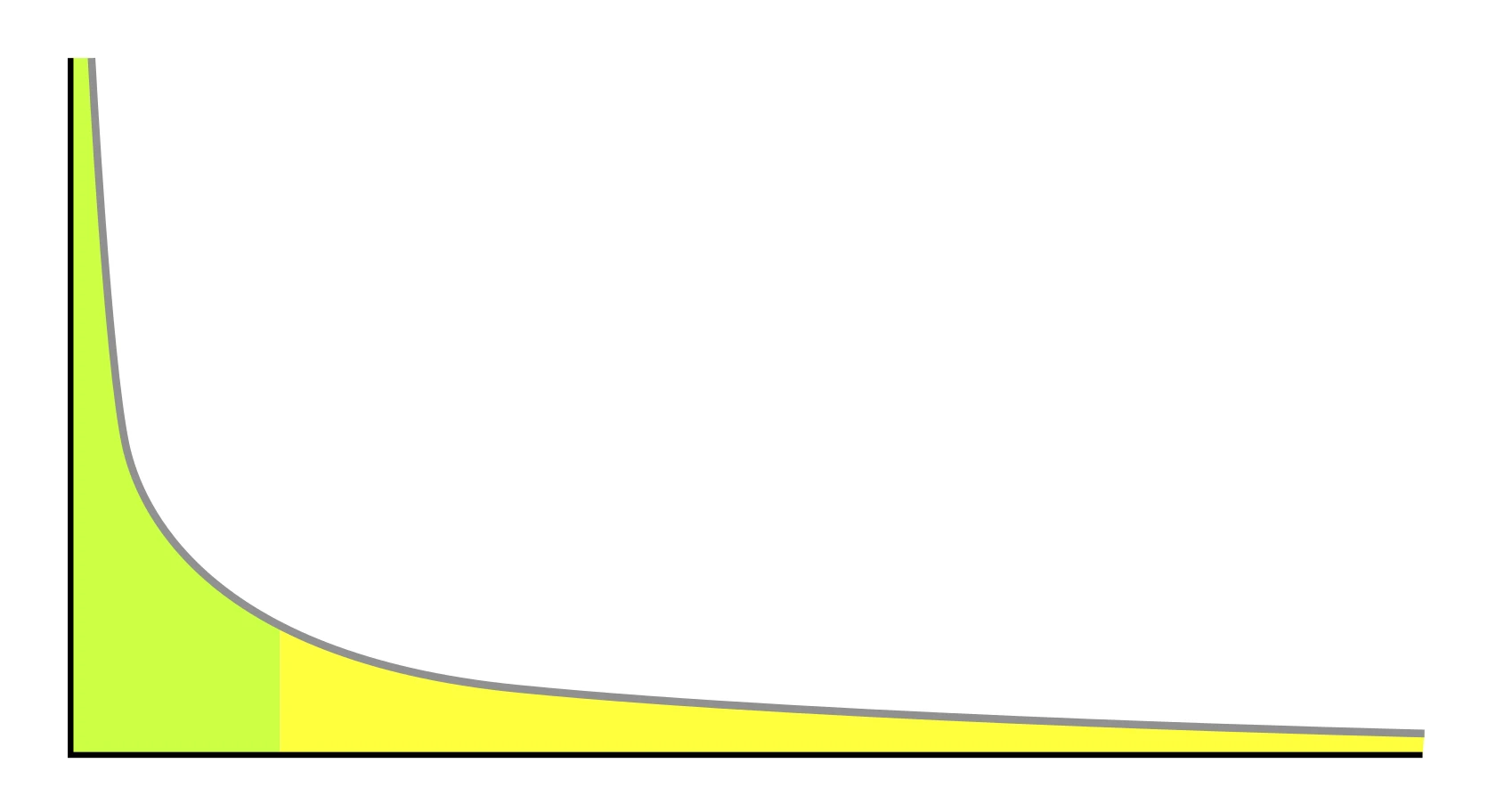
The most important rule for NPI is simple: when there is no history, the forecast is built through similarity (category/brand/price) and hierarchies, rather than “guessing” at individual SKU level. In a long tail assortment, where demand appears rarely and can be irregular, aggregation-based approaches supported by rules are more often the better fit. In such situations, methods such as Croston’s for intermittent demand are used, instead of forcing models that require dense data. This reduces the risk of extreme errors for items that sell sporadically, yet still require operational handling.
- 01No sales historyUse transfer learning
- 02Similarity analysis“Anchor” the forecast in SKUs
- 03Hierarchical forecastsBase them on stable aggregates
The principle of NPI is to build the forecast through similarity and hierarchies rather than manual assumptions.
AI models in demand forecasting: from classical to deep learning
AI models in demand forecasting include classical approaches, machine learning and deep learning, and the choice of solution depends on series stability, available features and the scale of deployment. ARIMA/SARIMA and ETS are fast and interpretable, so they are often sufficient for stable SKUs with clear seasonality, although without automation they are harder to apply to thousands of series. Prophet simplifies modelling trend, seasonality and the holiday calendar, which can work well on weekly data, but with short histories and frequent promotions it requires particular caution. Where you want to take many signals into account at once, feature-based models are often the practical choice.
In production environments, with a large number of SKUs, gradient boosting models (XGBoost/LightGBM/CatBoost) based on lag features, rolling windows and calendar and price features often perform well. Probabilistic models (e.g. quantile regression, NGBoost or approaches with distributions such as Negative Binomial) are useful when, beyond a point forecast, you also need uncertainty intervals for inventory decisions. If operational decisions depend on risk, quantile forecasts (e.g. 50/90/95 percentile) are often more useful than a single “number”. This approach makes it easier to align policies to demand variability, especially at low volumes.
Deep learning for time series (DeepAR, Temporal Fusion Transformer, N-BEATS) can be advantageous when you want to learn jointly across many series, capture non-linearities and use external features, but it requires greater MLOps discipline and tuning. In organisations planning at multiple levels, hierarchical forecasts and reconciliation (e.g. MinT) are important so that forecast totals remain consistent between the store, region and overall level. For intermittent demand, Croston, SBA or TSB methods and probabilistic approaches are used, separating “whether demand will occur” from “what the size will be”. When a team wants to get started faster without extensive data science, AutoML and cloud services (AWS Forecast, Vertex AI Forecasting, Azure ML AutoML) can train multiple algorithms, provided the data is properly prepared and you control cost and interpretability.
Integration of AI forecasts with MRP/ERP systems
Integration of AI forecasts with MRP/ERP systems usually comes down to passing ready-made order recommendations (order proposals) and inventory policy parameters to the ERP in the form of a regular “feed”. In practice, this means feeding solutions such as SAP, Oracle or Dynamics with values that support replenishment decisions, rather than laboriously recalculating the plan in spreadsheets. This implementation approach limits the scale of process changes, because the planner still works in a familiar environment while at the same time receiving a better decision signal. It is also important that the planner can accept recommendations, rather than switching on full automation from day one.
The key condition for a “production” integration is an audit trail: it must be clear which forecast and which data led to a specific order recommendation or parameters (e.g. ROP, safety stock). This allows the organisation to reconstruct the decision path, defend it in the control process and diagnose problems more quickly when the business result diverges from expectations. Such an audit also improves the work of planning teams, as it shortens the time needed to explain “why the system says to order more or less”. As a result, ERP integration becomes not only a channel for distributing numbers, but also a mechanism that strengthens trust and improves decision quality.
Implementing AI in inventory management: challenges and best practices
Implementing AI in inventory management is most effective when it includes the data pipeline, temporal validation of forecasts and continuous monitoring of quality and drift from the outset. Depending on the industry, forecasts may be refreshed daily (e.g. overnight in e-commerce), and for fast-moving SKUs even several times a day, but automation requires control of feed latency and data quality tests (e.g. Great Expectations). It is equally important to avoid “information leakage” through rolling-origin backtesting and to ensure that the features used by the model are known at the moment the decision is made. Without these elements, the results of the experiment may look promising and then diverge from reality after deployment.
- Design data refresh and quality control in the pipeline (including detection of latency and feed errors).
- Use temporal validation (rolling-origin backtesting) and eliminate features that are only known “after the fact”.
- Version models and data (e.g. MLflow Model Registry and data snapshots in Delta Lake/Apache Iceberg) to ensure reproducibility and auditability.
- Roll out changes in stages (waves + A/B tests) and assess not only WAPE, but also stockout rate and inventory value.
In practice, scaling training and scoring to thousands of series remains a significant challenge, which is why global training, distributed processing (Spark, Ray) and batch scoring are used, and the serving architecture is adapted to needs, most often in batch mode, and in real time for more dynamic applications. Consistency between training and production is supported by a feature store (e.g. Feast, Tecton), which reduces the risk of feature definition drift and “training-serving skew”. A model registry and versioning (e.g. MLflow, Weights & Biases, SageMaker Model Registry) make it easier to reproduce a forecast from weeks or months ago. Monitoring data drift (e.g. feature distribution comparisons/PSI) and residual stability helps identify the moment when retraining or switching to a fallback model is needed.
The best deployments do not end with the model itself, but build a recommendation system with an interface for planners that shows not only “how much to order”, but also the rationale and allows controlled overrides together with logging. This speeds up adoption because the planner can handle exceptions and verify recommendations in an operational context. A safe transition from existing tools is facilitated by rollouts in waves and A/B tests on comparable groups of stores/SKUs, while simultaneously measuring forecast quality and inventory KPIs. This makes it possible to quickly spot categories where the model worsens results, and then correct the data, features or the inventory policy itself.
FAQ
Frequently asked questions
How does AI help reduce stockouts and lost sales?
AI forecasts demand and lead time uncertainty more accurately, making it easier to set replenishment policies. This improves service levels and reduces the risk of stockouts.
Why can’t zero sales be treated as zero demand?
Because sales may have been constrained by a stockout, meaning demand was “censored”. In that case, the model will underforecast if it does not account for lost demand.
How does AI separate baseline demand from promotional effects?
Models take promotional features such as discount, display or budget into account instead of analysing all sales as one series. This makes it possible to estimate the uplift in demand during the promotional window and avoid overestimating after the campaign.
Can AI lower average inventory levels without increasing shortages?
Yes, because a better forecast usually makes it possible to maintain the required service level with a lower stock level. The article notes that improving WAPE by a few percentage points can reduce average inventory by 5–15% in highly volatile categories.
How are safety stock and the reorder point calculated in an AI approach?
Safety stock is calculated based on demand uncertainty during lead time, not just the average forecast. The ROP comes from forecast demand over the lead time plus safety stock.
When does AI forecasting work for new products and long tail assortments?
When there is no sales history, AI bases the forecast on similarity to other products and on hierarchical forecasts. For intermittent demand in the long tail, aggregation approaches and Croston’s methods are also used.