
AI implementations in Polish companies most often address two specific challenges: they help customers get to what they are looking for faster, and they reduce the risk of abuse and mistakes in processes. In practice, this comes down to machine learning models working on behavioural and transactional data, whose effect is assessed with hard metrics rather than declarations alone. In this article, we show examples of AI applications that have a real impact on user experience, security and operational efficiency. We describe how the mechanisms work “under the bonnet”, what data feeds into the models, and what challenges need to be considered in production. This makes it easier to assess what can be transferred to your organisation and what implementation conditions a similar project requires.
How does Allegro use AI for recommendations and buyer protection?
Allegro uses AI to suggest products and arrange the results list, based on machine learning models that predict the probability of purchase. The models combine click history, purchases, offer similarity and context, such as device and delivery location, to improve search relevance and the selection of “top offers”. The effects of such solutions are usually measured with metrics such as CTR, conversion and NDCG for rankings. If you want to assess the effectiveness of recommendations and ranking, stick to comparable measures (CTR/conversion/NDCG), because they show the real impact on results and match quality.
Allegro also uses AI to reduce fraud and identify “suspicious” auctions, applying classifiers and anomaly detection to transactional signals. This includes analysing sudden spikes in sales, unusual return patterns, linked accounts and changes in data that may indicate new abuse schemes. Deployments of this type often run in streaming mode (e.g. Kafka) and use continual learning to react more quickly to changing fraudster behaviour. This approach supports buyer protection, because risk can be detected on an ongoing basis rather than only after reports are submitted.
- 01Recommendations and Search ResultsMachine learning predicts purchases.
- 02Data and Context AnalysisHistory, similarity, location.
- 03Measuring EffectivenessCTR, conversion, NDCG.
- 04Protection and Fraud DetectionClassifiers and anomalies.
Artificial intelligence optimises offer relevance while also securing transactions, based on the analysis of multiple signals.
Żabka Nano: how is AI changing the shopping experience in autonomous stores?
Żabka Nano is changing the shopping experience thanks to a combination of AI (computer vision), cameras and sensors that enable shopping without a traditional till. Basket-tracking systems map “take from shelf” events to a specific person and settle purchases automatically. The key difference compared with a traditional store is that product recognition and attribution to the customer happen in the background, and settlement takes place without standard checkout service. In practice, this means that the perceived customer “convenience” follows directly from the quality of the models and the data collected from the environment.
Żabka Nano also has to deal with the typical challenges of computer vision deployments in a physical environment. The most common problems are data quality under changing lighting conditions, distinguishing between similar products and reducing mistakes in charging. These are the elements that determine whether the process is stable and predictable from the buyer’s perspective. As a result, an autonomous store is not just algorithms, but also consistent work on data and “closing off” edge cases in the realities of the sales floor.
Automation and optimisation at RTV Euro AGD: AI in pricing and promotions
RTV Euro AGD uses AI to plan promotions so as to support sales without unnecessary damage to margin. In practice, it uses price elasticity models and demand forecasts, which make it possible to simulate how a price reduction will affect sales volume and then tailor promotions to the objective (turnover vs. margin). Input data usually includes competitor prices, stock levels and delivery costs, which makes it easier to assess the profitability of individual scenarios. The main business benefit is the ability to make promotional decisions based on forecasts and simulations rather than intuition alone.
From an implementation perspective, the solution works as a recommendation system for the pricing team rather than automatic “price setting” without human oversight. The models present proposals that can be compared across categories and periods, and then approved in line with commercial policy. If you are considering a similar project in your organisation, it is crucial to combine demand forecasting with real operational constraints (warehouse and delivery), because these often determine the outcome of the promotion. This setup also makes it easier to define responsibilities clearly: AI calculates the variants, and the business chooses the strategy.
- 01Input dataAnalysis of prices, stock, costs
- 02AI simulationsForecasts of elasticity and demand
- 03Alignment with the goalOptimisation: turnover vs. margin
- 04Recommendation systemDecision support for the team
The key effect: making promotional decisions based on forecasts and simulations, not intuition.
InPost: how does AI affect route optimisation and delivery times?
InPost uses AI to plan courier routes and predict delivery time (ETA), in order to handle variable parcel volumes more efficiently. Demand forecasting and ETA models feed route optimisation algorithms that take into account time windows, vehicle capacity and operational constraints. This translates into fewer kilometres per parcel and more stable deliveries, especially during peak periods such as Black Friday. The value for the customer is practical: more predictable delivery times result from planning based on forecasts, rather than fixed routes alone.
AI also supports investment decisions concerning Paczkomats, indicating where to place a new point and how to select its capacity. Geospatial analysis and demand models combine data on e-commerce order density, parking availability, footfall and distance to the nearest collection points, and the result is sometimes presented as a ranking of locations and ROI scenario variants. The final choice, however, is still verified on site, which reduces the risk of errors resulting from relying on data alone. This is a good example of how, in logistics, AI often “suggests” things, but the decision and responsibility remain on the operational process side.
Orlen and KGHM: predictive maintenance and optimisation of industrial processes
Orlen and KGHM use AI primarily to reduce downtime and to control industrial process parameters more precisely based on data from installations. At Orlen, predictive models on sensor signals (including vibration, temperature and pressure) pick up early signs of equipment failure before work comes to a halt. The effectiveness of such an approach depends not only on the model, but also on what the organisation does with the alert: inspection, load reduction or a planned shutdown. It also requires a coherent OT/IT layer, for example integration of SCADA/PI System environments with analytics.
KGHM uses analytics and decision-support models to increase the amount of metal recovered from the same volume of extracted material. In practice, this includes predicting ore quality (e.g. Cu content) and models supporting flotation and grinding processes in order to select parameters that improve recovery and reduce energy consumption. The data feeding these solutions comes from laboratories, online sensors and process setpoint history, which makes it possible to combine the quality and operations perspectives. The deployment usually also includes training for dispatchers and process engineers, so that the recommendations are properly understood and applied in practice.
At Orlen, AI can also act as a recommendation layer, helping maintain the quality of fuels and refinery products with variable feedstock. Regression models and multi-criteria optimisation suggest process settings and component blends so that quality standards are met while costs are minimised. The key is to take technological and safety constraints into account, which is why recommendations often act as advisory support rather than automatic control. This approach makes deployment easier in a high-demand operational environment, because humans retain control over the decision.
- 01Failure predictionEarly fault detection, reduced downtime.
- 02OT/IT integrationCoherent data from SCADA/PI systems and analytics.
- 03Yield optimisationIncreased metal extraction from ore.
Artificial intelligence and data analytics support operational decisions, minimising risk and maximising production efficiency.
Orange Polska: AI in improving customer service through chatbots and voicebots
Orange Polska improves customer service with AI in the contact centre, where chatbots and voicebots recognise intent and collect key information even before the caller is connected to an adviser. The system identifies the topic of the query (e.g. bill, fault, offer), which reduces the number of transfers between paths and speeds up resolution. The adviser can also use an assistant that suggests answers from the knowledge base thanks to semantic search. The effects of such a deployment are assessed operationally: by shortening AHT (average handle time) and increasing FCR (first contact resolution).
From a technical perspective, contact centre solutions are usually based on NLP platforms (e.g. Rasa, Google Dialogflow) and speech transcription in voice channels. The voicebot takes over routine parts of the conversation and can handle simple processes, and when the situation requires it, escalates the case to an adviser. As a result, the customer reaches the right path faster, and the team can devote more attention to more complex issues. The most practical element of the deployment is accurate intent recognition and efficient handover of context to the adviser, because this reduces the customer “bouncing” between topics.
Voicebot deployments in Poland also require refining speech recognition quality and tuning the system to the language and the proper nouns actually used. Usually, Polish test recordings are prepared, proper noun dictionaries are built and ASR errors are analysed continuously to reduce the number of misunderstandings. This addresses users’ most common questions about privacy and performance quality, without making promises of “error-free” automation. In practice, the stability of such a solution grows as the data and conversation scenarios are iteratively refined.
Infermedica and ElevenLabs: how Polish AI companies revolutionised medicine and media?
Infermedica changed the way patients are handled at the early stage of contact with healthcare by automating triage and symptom interviews before a visit. The system guides the user through a series of questions about symptoms, organises the collected information and directs them to the appropriate level of care, which relieves reception teams and shortens qualification time. In practical deployments in medical facilities, integrations with the registration system are particularly important. It is also crucial to communicate clearly that this is decision support, not a medical diagnosis.
ElevenLabs (with Polish roots) has influenced the way content is created and distributed thanks to advanced text-to-speech (TTS) used in products and media. TTS makes it possible to prepare voiceovers, IVR messages and e-learning materials faster and more cheaply than studio work, while maintaining a consistent brand voice. However, implementation requires sorting out voice rights issues and safeguards against cloning without consent. In many scenarios, it is also important to label synthetic content wherever platform policies require it.
Synerise: marketing personalisation and increasing campaign effectiveness in Polish networks
Synerise increases campaign effectiveness in Polish networks by using personalisation based on predictive segments and real-time communication. The platform creates segments such as purchase propensity or churn risk, and then triggers actions in push, email and SMS channels. A practical example is coupon recommendations in a loyalty app, selected on the basis of basket contents and purchase history. The effect is measured as uplift in a holdout test, which makes it possible to distinguish real impact from “apparent” growth.
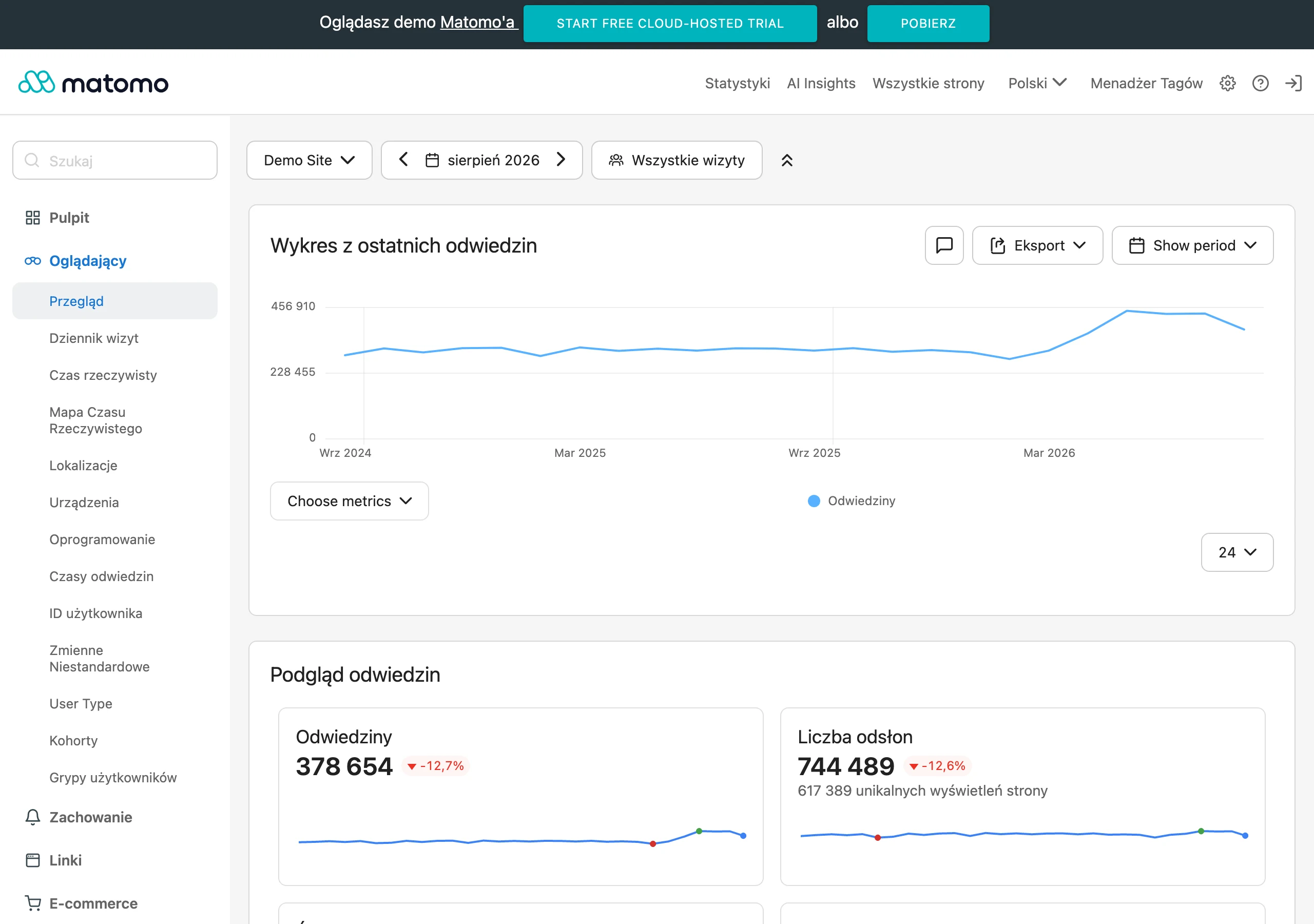
Implementing personalisation in this approach comes down to the fact that the decision about the message is made in the context of the user’s current behaviour, rather than solely on the basis of static segments. The key is to connect predictions (e.g. purchase propensity) with execution across channels so that recommendations reach users at the right moment. This enables networks to improve campaign effectiveness without automatically “sending discounts” to everyone, blindly. The most practical quality criterion is comparison with a control group, because it shows whether personalisation is actually changing customer behaviour.
FAQ
Frequently asked questions
How does Allegro use AI for product recommendations and buyer protection?
Allegro uses machine learning models to suggest products and arrange search results based on click history, purchases and user context. AI also helps detect suspicious listings and fraud by analysing transactional signals and anomalies.
How does Żabka Nano use AI in autonomous stores?
Żabka Nano combines AI, cameras and sensors to enable shopping without a traditional checkout and automatically settle the basket. The key is recognising products and assigning them to the customer in the background.
Why can implementing AI in Żabka Nano be difficult?
The biggest challenge is data quality in changing conditions, such as lighting, and distinguishing between similar products. Another issue can be reducing mischarges.
How does RTV Euro AGD use AI to set prices and promotions?
RTV Euro AGD uses price elasticity models and demand forecasts to assess the impact of markdowns on sales and margin. Data on competitor prices, stock levels and delivery costs helps select profitable promotional scenarios.
How does InPost use AI to optimise routes and delivery times?
InPost uses AI to plan courier routes and predict delivery times, taking into account time windows, vehicle capacity and operational constraints. In addition, models help identify the best locations and capacity for new Paczkomaty.
How does Orange Polska use AI in customer service?
Orange Polska uses chatbots and voicebots to recognise intent and gather information before connecting the customer with an adviser. As a result, handling time is reduced and the number of issues resolved at first contact increases.