
The follow-up after a meeting with a client should organise the agreed points and move the conversation towards a specific decision. A well-written email does not end the conversation, it opens the next, clearly named step. In selling SEO services, content, analytics and implementation, this is especially important because the client usually evaluates several options at once. If the message is too general, too long or too late, interest quickly turns into silence.
How to write an effective follow-up after a meeting with a client?
An effective follow-up is short, precise and leads the client to one next step. Its aim is not simply to thank them for the meeting, but to secure a micro-commitment. This could be approving the summary, naming the decision-maker, setting the date of the next conversation or deciding to get started. That turns the email from a courtesy into a sales tool.
The simplest structure works best if it immediately shows that you have understood the client’s situation correctly. In practice, it is worth structuring the message into a few clear points:
- the business goals the client wants to achieve,
- the problems and constraints identified during the meeting,
- the agreed priorities as well as budgetary and timeframes,
- the proposed solution or a link to the offer instead of multiple attachments,
- one clear CTA with a deadline.
This format makes it easier for the client to quickly confirm the agreed points and pass the message on. The less chaos there is in the content, the easier it is to move towards a decision.
The email must be personalised more deeply than just by name and company name. Referring to the business model, current problems and constraints shows that the offer is not a template. If there are different decision-makers in the process, write it so that an internal ally can easily pass the message on. This is especially important when the operations manager was at the meeting, but someone else signs off the approval.
Why is the timing of sending the message crucial?
Timing is crucial because a follow-up sent within 24 hours makes use of the conversation while it is still fresh in memory. It is best to send it on the same day, while the agreed points have not yet faded. The client confirms facts faster, finds priorities more easily and is less likely to put the decision off until later. After a few days, the same email often requires rebuilding the context from scratch.
Fast sending also matters politically, not just organisationally. If several decision-makers operate within the client’s company, the first concrete email becomes the reference point for further conversations. It helps the champion summarise the topic internally and reduces the risk that the agreed points will be distorted. This is especially important after a discovery call, audit or proposal presentation.
If you do not yet have a full proposal ready, send a short summary and indicate when you will send the rest. It is better to close the day with something concrete than to stay silent until every detail has been refined. There is one condition: the content must match what actually came up in the meeting.
The importance of personalisation in communication with the client
Personalisation determines whether the client treats the follow-up as an accurate summary of their situation or as a template sent to many companies. In practice, what matters is referring to their operating model, goals, constraints and risks that were raised at the meeting. Such an email is easier to defend internally because it reads like a continuation of a specific conversation. The more the client sees their own business context in the message, the lower the chance that they will put the decision off.
Good personalisation is not about inserting the company name in the first sentence. You need to show which problems are most urgent today and what is realistically blocking progress. In SEO or content services, this could be a low share of traffic on offer pages, poor lead quality or a lack of resources for implementation. When you name this precisely, the client will more quickly accept that the proposed actions are tailored, not random.
Personalisation should also take into account the people involved in the decision. If the conversation was led by a manager, but the budget is approved by a director or owner, the message must be suitable for further passing on. That is why it is worth writing clearly, without industry shorthand, and stating who on the client’s side should take the next step. This is especially helpful when you have a champion on the other side, that is, a person supporting the project inside the organisation.
What elements should the summary of agreed points contain?
The summary of agreed points should contain the client’s business goals, the diagnosed problems, the agreed priorities and the budgetary and timeframes. This arrangement organises the conversation and makes it quick to check whether both sides understand the situation in the same way. The client does not need to read between the lines, they can simply see the key facts. That shortens the path to confirmation or correction.
The clearest way is to set this out in short bullet points:
- the main business goals that are meant to change thanks to the collaboration,
- the most important problems or constraints identified during the conversation,
- the priorities at the start and their order,
- the budgetary framework and the expected time horizon for the actions.
Each of these elements has practical significance. Goals show why the project should start at all. Problems justify the need for action, and priorities protect against trying to do everything at once. Budget and time organise expectations, so later it is harder for the offer and what the client considered agreed to drift apart.
A good summary does not end with a description of the situation, but prepares the ground for a decision. If the client wants to improve business results, show the link between the problem and the impact on the company, not just on the marketing channel. Instead of stopping at traffic and rankings, relate the conversation to lead quality, cost of acquisition or impact on sales. This way of thinking strengthens the value of the next step, because the client sees not only the potential gain, but also the cost of inaction.
The most common mistake is that the summary is either too general or too verbose. In the first case, it confirms nothing, and in the second it makes quick reading and forwarding harder. It is better to leave only the points that were really agreed and name them in simple language. If any point is still a hypothesis, make that clear instead of presenting a supposition as a fact.
Translating the proposal into the client’s business goals
The proposal needs to be translated into the client’s business goals, showing the impact on the company’s results, not just on channel metrics. In a follow-up, this means linking the meeting takeaways with specific KPIs that matter to the decision-maker. In selling SEO, content or analytics services, growth in traffic alone is rarely enough as an argument. The client wants to know what this will change in revenue, lead quality, acquisition cost or margin.
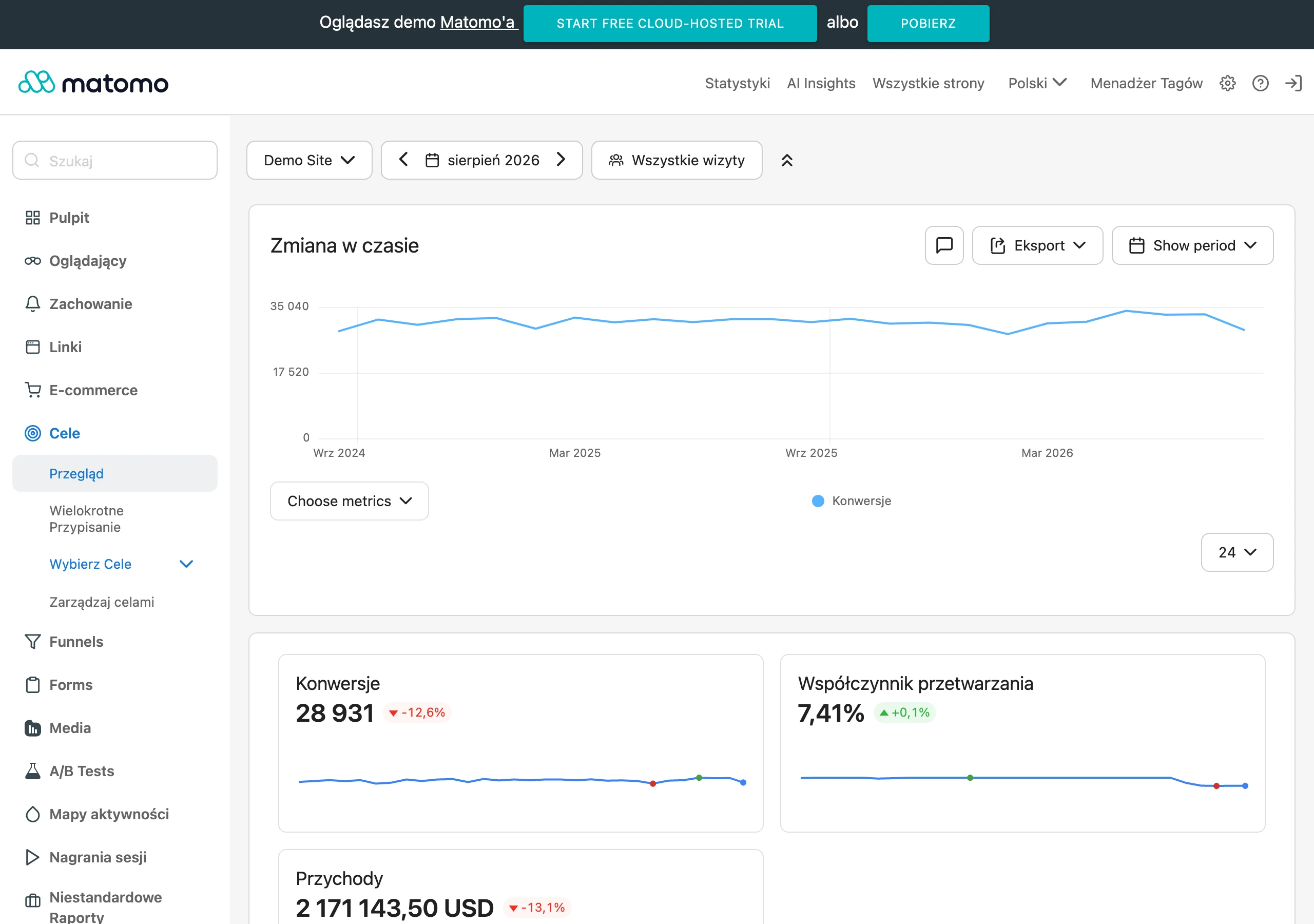
If the conversation raised the issue of low-quality enquiries, relate the solution to improving lead qualification rather than the number of visits from Google. If the client is fighting to lower acquisition cost, show how organic activities or better analytics can reduce dependence on paid traffic. This kind of language makes it easier to defend the project in front of the finance director, board or owner. The closer the email is to the client’s business language, the easier it is to move from interest to decision.
In practice, it is also worth naming the cost of inaction, because not making a decision also has a price. If the company is losing visibility on offer pages, delaying action means further loss of leads and market share. If analytics are not measuring sales sources correctly, the budget will still be allocated based on incomplete data. This is not about scaremongering, but about showing that “doing nothing” is not a neutral option.
The most common mistake is that the salesperson describes the scope of work but does not connect it to the business outcome. Then the client sees a list of tasks, but not the rationale for the investment. It is better to write briefly which problems you solve and which metric this should improve. That way, the next step looks like a logical continuation of the conversation, not a request for approval of an unclear project.
How can you effectively address potential client objections?
Potential objections are addressed effectively when you anticipate them in the follow-up and respond to them in the context of what was agreed during the meeting. It is not about aggressively knocking down resistance, but about reducing uncertainty before the next step. A client is more likely to stay silent because of risk than because of a lack of interest. A well-written email helps to name and organise that risk.
If the objection is price, show the priorities, scope and consequences of delaying action. If the client is worried that SEO takes too long, separate quick wins from long-term results and set out a realistic sequence of work. If the company has an in-house team, explain what you are not replacing, but complementing. And if there has been talk of bad experiences with the previous agency, show the process, reporting method and the division of responsibilities on both sides.
The cleanest way is to refer objections back to the facts from the meeting:
- too expensive — compare the cost with priorities and the impact on business results,
- too long — show the stages, dependencies and realistic timeframe for the first results,
- we already have someone in-house — clarify the division of roles and the missing competencies,
- we were burned once before — strengthen trust with methodology, transparency and an appropriate example.
Objections are best addressed briefly, without over-defending your own offer. A long explanation often reinforces the impression that the problem is bigger than the client assumed. It is better to respond to one doubt with one specific argument and connect it to the proposed next step. A follow-up should remove friction before the decision, not turn into a sales essay.
Also avoid promises that cannot be honestly kept. Guaranteeing rankings in Google or overly fast results may temporarily reduce resistance, but later undermines trust. Precision, a clear plan and proof that you understand the implementation process work much better. This gives the client a sense of control, which is often more important than the promise of the result itself.
The most common mistakes when creating follow-ups and how to avoid them
The most common mistakes are a generic email, no single next step, text that is too long and an offer that does not match what was agreed. Each of them increases decision-making friction, because the client has to fill in the missing pieces themselves. In practice, a follow-up loses not because it was rude, but because it did not make the decision easier. If the client does not know what to do next after reading the message, the email has not done its job.
The easiest way to spot these mistakes is to check the message before sending it against a short list:
- Template without context — refer to the goals, problems and constraints from the conversation.
- No CTA — ask for one specific action with a deadline and an owner on the client side.
- Email that is too long — keep only the agreed points, recommendation, proof and next step.
- Chaos in attachments — instead of multiple files, send one link to the proposal or document.
- Excessive pressure — follow up in a matter-of-fact way, without an ultimatum tone or artificial urgency.
- Mismatched offer — make sure the scope matches the priorities agreed in the meeting.
- Promising rankings or deadlines without basis — build trust through method, process and a realistic plan.
It is also worth watching out for a mistake that appears only after sending, namely the lack of a further contact sequence. No response does not always mean rejection, but it does require a planned reminder. Send the second message with new value, and if that does not work, use another channel, for example the phone or LinkedIn. This keeps the follow-up professional and steadily moves the conversation towards a decision.
FAQ
Frequently asked questions
How do you write a follow-up after a client meeting to make it easier to decide?
The email should be short, specific and lead to one next step. It is best to include a summary of the agreed points, a recommendation and a clear CTA with a deadline.
Should a follow-up after a client meeting be sent the same day?
Yes, it is best to send it within 24 hours, and ideally on the same day. That way the agreed points are still fresh and it is easier to get a quick confirmation.
What elements should a meeting summary with a client include in the follow-up?
It is worth including the business goals, problems and constraints, the agreed priorities, and the budget and time frames. It is also good to add a proposed solution or a link to the proposal, plus one specific CTA.
Why is personalising a follow-up after a client meeting important?
Because it shows that the message comes from a specific conversation, not a template. Referring to the client’s business model, goals and constraints makes it easier for them to treat the email as a relevant summary.
How should you relate the proposal in a follow-up to the client’s business goals?
You need to show the impact of the activities on the company’s results, not just on channel metrics. In practice, this means translating the agreed points into outcomes such as revenue, lead quality, cost per acquisition or margin.
How do you respond to a client’s objections in a follow-up after a meeting?
The best approach is to anticipate the most important doubts and address them with facts from the meeting. Briefly explain the price, time to results, division of roles or scope of responsibility, without an extended defence of the offer.