
The budget for lead generation should be built around sales, not the number of forms alone. This topic comes down to one task: connect the entry source with the later outcome in the CRM and work out which channels deliver real business. A cheap lead that is weak in sales terms usually costs the company more than a more expensive lead that closes into a customer faster. That is why you need to measure not only CPL, but also quality, maturation speed and the full service cost of each channel.
How to define lead quality and why it matters?
Lead quality is the combination of the chance of closing a sale, customer value, fit with the offer and service cost. In practice, a good lead not only leaves a contact, but gives sales a real chance to have a conversation, issue an offer and win. If two channels generate the same number of leads, the better one is the one from which customers are created more often and which requires less qualification work.
This matters because assessing performance on CPL alone very easily distorts the picture. A channel may generate cheap forms, but with a high share of spam, low contactability or poor fit with the product. Such volume burdens sales, extends handling time and drains budget, even though it looks good in the marketing report.
In day-to-day measurement, it is worth breaking lead quality down into stages. Early on, look at CVR to lead, CPL, spam rate, form completeness and contactability. Later, assess MQL, SQL, progression to offer, win rate, revenue, margin, payback and revenue per 100 leads, because only this set shows the true value of the source.
Effective lead acquisition channels: SEO, paid search and others
An effective lead acquisition channel is one that delivers sales and margin, not just a low lead cost. For comparison, include organic SEO, paid search, social, referral, email, direct, partners and traffic from AI. Each of these channels can be valuable, but they attract a different type of intent and a different stage of buying readiness.
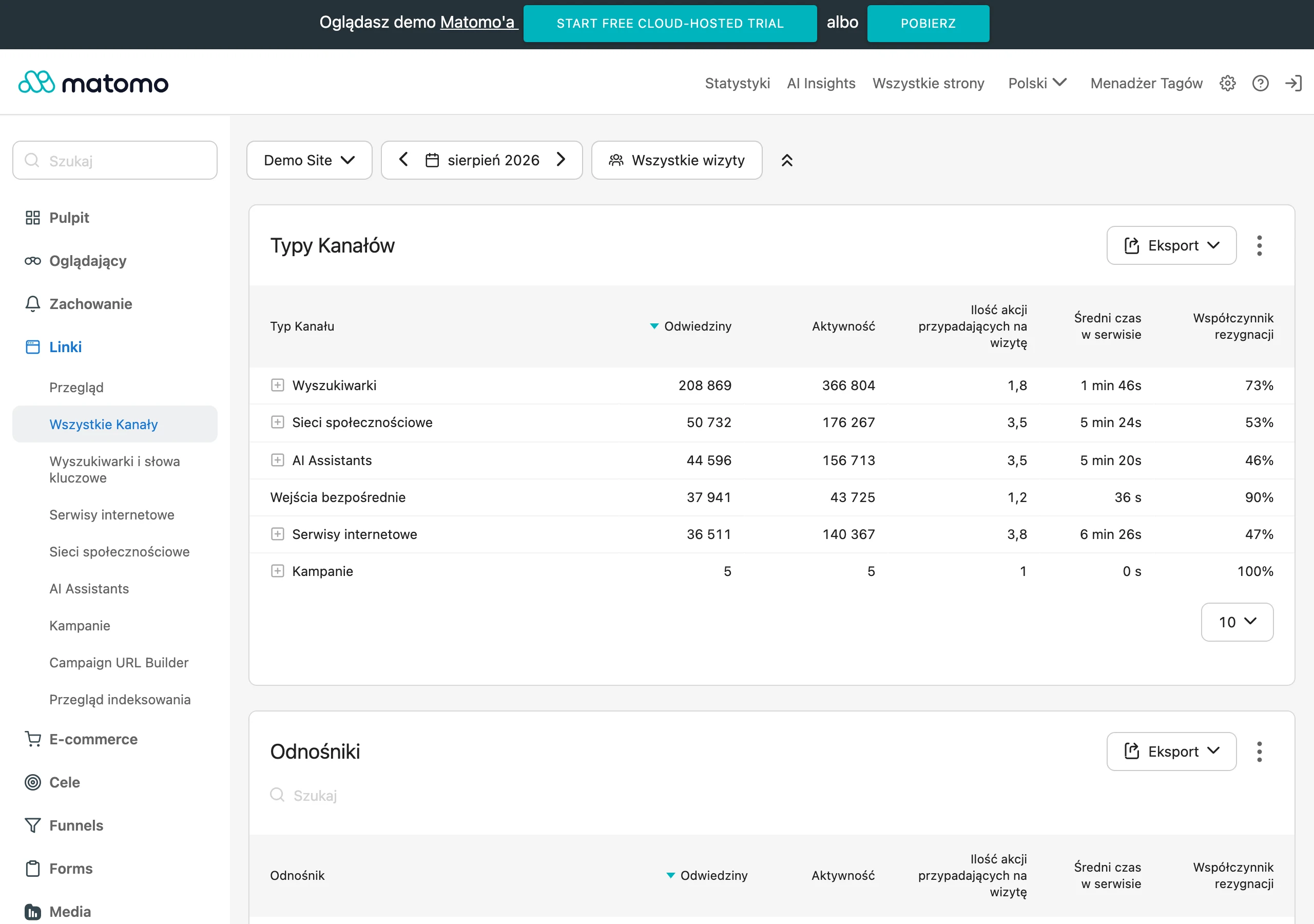
The most common mistake is lumping the whole channel together. In SEO and paid search, you need to separate brand from non-brand, different content types, landing pages and products. In other channels, also analyse geo, device and referral source, because that is where the real quality difference most often emerges.
Traffic from AI deserves particular attention, because some paths become less visible in classic analytics. If referral, direct or brand entries are growing, check assisted conversions in parallel instead of assigning all the credit to the last click. Channel effectiveness is judged by what happens after the lead, not by what the campaign report looks like.
How to build a data path for accurate lead analysis?
A data path is built by linking the entry, the lead, the CRM record, the sales status and the revenue with one identifier. That identifier must move from the form to the CRM and back into reports together with status changes. This makes it possible to see which channel the lead came from, whether it was qualified and how much it ultimately earned. Without such a connection, you are comparing marketing with sales results on gut feeling.
The minimum data set should include source of entry, channel, landing page, acquisition date and product. On the sales side, you need consistent statuses such as MQL, SQL, offer, won and lost. If status definitions differ between teams, the report mixes stages and blurs channel quality. First define one status logic, and only then build dashboards.
In practice, the biggest distortions come from technical gaps. The form may lose the source, the CRM may create duplicates, and the offline import may not pass revenue through. That is why you should regularly check tagging, deduplication, status consistency and missing records. One broken stage is enough for a cheap channel to look brilliant and a valuable one to look weak.
Attribution methods: comparing first touch, last touch and conversion assist
Attribution is best assessed by comparing first touch, last touch and assisting channels in parallel. First touch shows who brings a new contact into the funnel. Last touch shows what closes the conversion in the final step. Conversion assist reveals channels that work earlier or along the way, even though they rarely get the last click.
In budget analysis, each model answers a different question, so it is not worth choosing only one. When a channel wins in first touch and assist, but loses in last touch, it is usually building demand earlier. When a channel dominates only in last touch, it may mainly be capturing already warmed-up traffic, especially brand traffic. This matters for SEO, paid search, email and direct, where the role of closing is often greater than the role of initiation.
The impact of AI search further complicates attribution, because some earlier contacts become less visible. If direct, brand or referral grow, also check assisted conversions and CRM performance. Otherwise, it is easy to shift budget to channels that only collect the final click. Make budget decisions after comparing attribution models with sales data, not on last click alone.
Key lead quality metrics: MQL, SQL, win rate and others
The key lead quality metrics are those that show the journey from contact to sales and revenue. MQL tells you whether the lead meets the basic marketing criteria. SQL shows whether the sales rep sees a real sales opportunity. Then the move to offer and the win rate matter, because only these stages separate seemingly good leads from those that actually buy.
In practice, the raw number of MQLs can be misleading. A channel may deliver a lot of form-qualified leads, but weak ones in the sales conversation. If the share of SQLs is low or leads rarely progress to an offer, the problem is usually not volume, but intent quality or product fit. That is why MQL and SQL need to be read together, not separately.
Win rate is very valuable because it shows how effective the bottom of the funnel is. When two channels generate a similar number of offers, the better one is the one that ends in a win more often. This usually means better customer fit, less wasted sales effort and greater budget predictability. The most useful quality metrics are those that connect a sales stage with a real financial outcome.
To assess channels, you also need value metrics, not just stage effectiveness. The most important ones are revenue, margin, payback and revenue per 100 leads. Revenue shows the scale of the business, margin filters out low-profit sales, and payback shows how quickly the channel recovers the cost of acquisition and handling. Revenue per 100 leads is a good way to compare sources with different volumes.
Earlier signals are still needed because they let you react before long sales cycles close. CVR to lead, CPL, spam rate, form completeness and contactability do not yet say anything about sales, but they show whether the channel is delivering material for further work. If one of these metrics suddenly deteriorates, it will usually be reflected later in SQLs, offers and wins.
Lead scoring helps organise this data into operational action. It combines explicit information, such as product or form, with user behaviour and allows you to separate weak leads from strong ones more quickly. This is especially important when a channel delivers a lot of contacts, but sales cannot handle them all equally quickly. Scoring does not replace CRM, but it improves prioritisation and speeds up quality assessment.
Always compare metrics in segments, not only at the level of the whole channel. Check brand and non-brand separately, as well as content type, landing page, product, geo and device. Often only this split shows that the problem is not SEO or paid search as a whole, but a specific slice of traffic. Without segmentation, it is easy to leave a weak budget in place and cut the part that really sells.
Budget decisions based on lead quality: When should you scale, cut or test channels?
You should scale a channel when, over time, it delivers good sales quality and stands up under full cost. This means not only a sensible CPL, but also a stable share of MQLs, SQLs, offers, wins, revenue and margin. You also need to add media, content or SEO, tools, sales effort and lead handling. Only this picture shows whether budget growth makes business sense.
Scaling makes sense especially where the result remains consistent across successive cohorts. Compare leads after 30, 60 and 90 days, because channels mature at different speeds. If a source looks weak after 30 days but regularly closes sales after 90, cutting it too early would be a mistake. By contrast, a channel with a good start but weak margin and low win rate may only be inflating labour costs.
You should cut a channel when, after enough time, it still does not reach quality stages and does not recover its full cost. Typical signals are a high spam rate, weak contactability, a low share of SQLs, few offers and low revenue per 100 leads. If this pattern repeats across successive cohorts, adding more budget usually only increases the number of weak contacts. However, do not cut based on last click alone or CPL alone, because that is the most common route to a wrong decision.
It is worth testing channels and segments that show a mixed signal. An example might be a source with good SQLs but low volume, or a channel with an expensive lead that delivers high margin. In such a case, it is better to narrow the test to a specific product, landing page, geo or traffic type than to judge the whole channel with one number. A test should answer one question, not change everything at once.
In budget decisions, attribution still matters because some channels support sales even if they rarely close the last click. If a source is strong in first touch and assisted conversions, but weaker in last touch, it should not be assessed like a closing channel. This is especially important when AI search changes the traffic mix and some earlier visits end up as direct, referral or brand. In such conditions, budget should be based on CRM data and quality over time, not on a simple conversion report.
The safest way to make decisions is by three questions: does the channel sell, does it sell profitably, and does it do so at full cost? If the answer to all three is yes, you can think about scale. If not, you need to check the segment, the delay in the result and the quality of the data. Only after that verification should you increase, reduce or move the budget into a test.
Common mistakes in assessing lead quality and how to avoid them
The most common mistakes are assessing channels only by CPL or last click, without CRM data and without segmentation. This shortcut favours sources that close conversions and understates the value of channels that build demand earlier. Another issue is mixing brand and non-brand traffic in one report, because both segments usually have different intent and different sales effectiveness. To avoid this, compare channels in parallel across several views: cost, quality and attribution.
A very common technical mistake is the lack of a consistent data path between the form, analytics and CRM. When identifiers disappear, sales statuses are inconsistent, or offline import does not feed back into reports, the channel looks better or worse than it really is. Duplicated leads work in a similar way, artificially increasing volume and distorting conversion rates between stages. That is why you should regularly check tagging, deduplication, status consistency and tracking gaps before drawing budget conclusions.
An operational mistake is also assessing quality too early and without spam and contactability filters. If a channel has a longer maturation time, a report after 30 days may look weak, even though the cohort closes well after 90 days. In addition, some paths become less visible because of AI search, so more visits go into direct, referral or brand. In practice, the best approach is continuous data verification, cohort analysis at 30, 60 and 90 days, and separate reports for spam and non-contactable leads.
FAQ
Frequently asked questions
how to measure lead quality by channel to assess it for budget planning?
First connect the source of the lead with the record in the CRM and sales, then compare not only CPL, but also MQL, SQL, offers, win rate, revenue and margin. Only this combination shows which channels deliver real business.
is CPL alone enough to evaluate a lead generation channel?
No, because a cheap lead can generate spam, poor contactability and a lot of work for sales. A better picture comes only from combining CPL with quality, the pace of maturation and the full cost of handling.
why can a more expensive lead be better than a cheaper form submission?
Because it may close into a customer faster and generate a higher margin. A cheap lead that is poor at selling often costs the company more through handling and a low share of wins.
which metrics are worth tracking after the lead stage, not just at acquisition?
It is worth looking at MQL, SQL, progression to offer, win rate, revenue, margin, payback and revenue per 100 leads. These indicators show the real value of the source, not just movement through the funnel.
do first touch and last touch show the same thing in channel analysis?
No, because first touch shows the channel that brings a contact into the funnel, while last touch shows the one that closes the conversion. Conversion assist also helps show channels doing work earlier along the way.
when is it worth scaling or cutting a lead acquisition channel?
It is worth scaling when a channel delivers good sales quality, margin and a full cost return over time. It can be cut when, despite the passing of time, it still does not reach quality stages and does not improve the business result.