
Online payment methods in an online store are best selected according to customers’ real habits, because they are what determine conversion in the checkout. First you define who is buying and for how much, and only then do you choose solutions that shorten the payment process and reduce cart abandonment. In Polish stores, fast mobile methods and broad bank coverage take the lead, while for higher basket values the role of cards, instalments and deferred payments (BNPL) grows. Just as important is the operational side: how quickly the funds appear in the account, and how efficiently you handle refunds and any disputes. In this article, you will move from the customer profile and basket value to a practical set of methods that in many cases maximises sales. This will make it easier to avoid both gaps in the payment offering and unnecessary integration complexity.
How to choose the right payment methods for the customer profile
You will choose the right payment methods when you match them to the customer profile and typical basket value. For baskets up to around 150 zł, the most important thing is fast options such as BLIK and instant bank transfers, because they shorten the time needed to decide and complete the transaction in the checkout. For more expensive purchases, the share of cards, instalments and BNPL (e.g. PayPo, Klarna) more often increases, so it is worth including them in your payment expansion plan. First answer the question “who is buying and for how much?”, because that determines which methods will actually increase conversion.
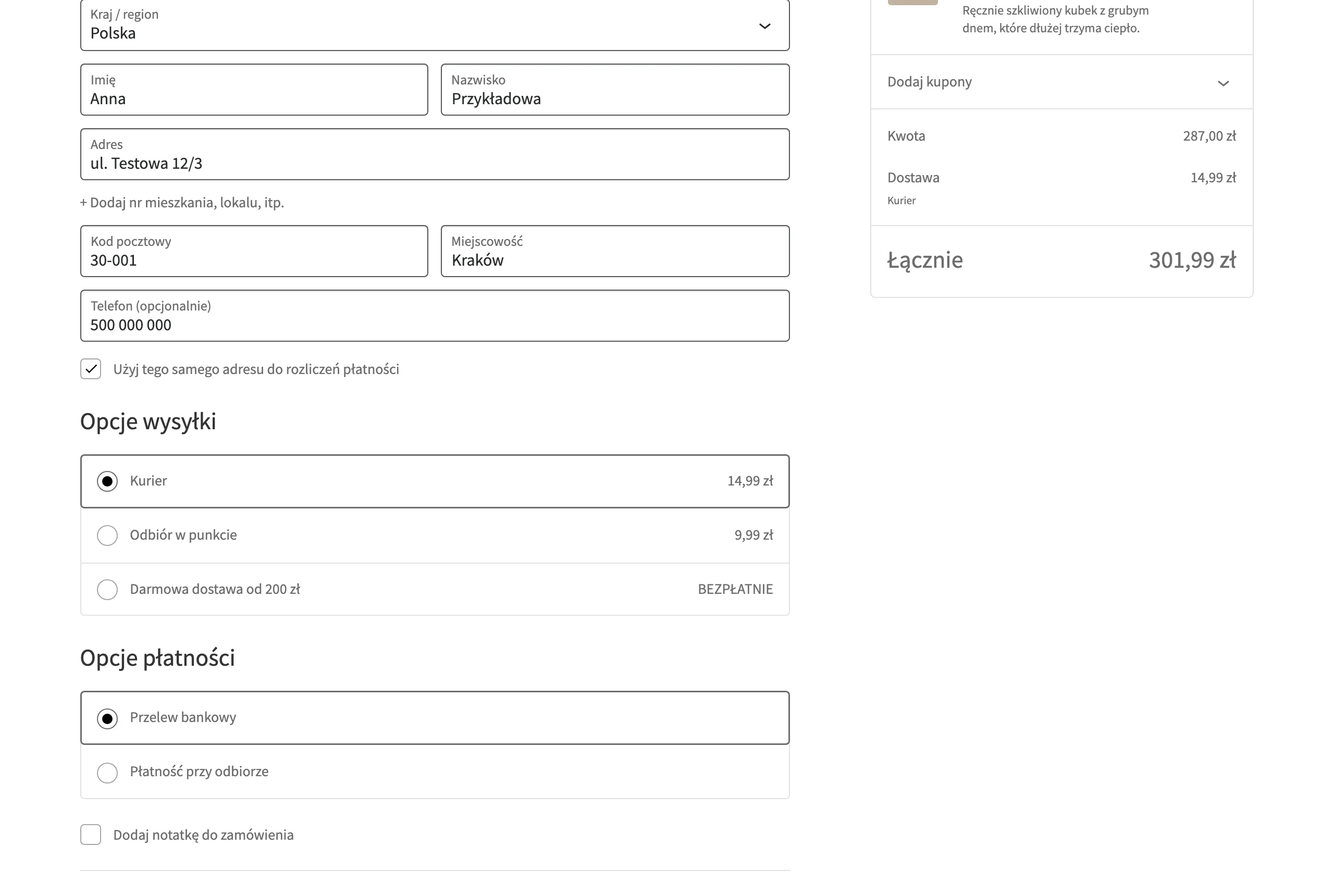
If you run B2B sales, payment methods should match business expectations, such as a traditional bank transfer with a due date and a pro forma invoice. It is also a good idea to make sure that in the event of a technical outage at the bank you have a sensible fallback in the form of a traditional transfer, so you do not stop sales. When you plan recurring sales or subscriptions, check whether the payment provider supports recurring payments (e.g. BLIK) and solutions that allow payment methods to be stored. This reduces situations in which the customer wants to pay but does not see a convenient option.
The optimal set of payment methods to maximise conversion
The optimal set of payment methods that usually helps maximise conversion in Poland is a combination of BLIK, instant bank transfers, cards and mobile wallets. This mix covers the most common shopping scenarios on mobile and desktop, while reducing the number of drop-offs at the payment stage. In practice, the “must-have” is a set that lets the customer pay in 1–2 steps without needing to look for an alternative.
- BLIK
- Instant bank transfers (pay-by-link)
- Payment card (Visa/Mastercard; usually with 3D Secure 2)
- Apple Pay and Google Pay
For stores with a higher average basket value, it is worth extending payments with BNPL (PayPo/Twisto/Klarna) and considering online instalments if you sell products where the customer compares terms and decision time. BNPL increases purchase accessibility, but it requires clear communication of costs and repayment terms to avoid generating returns and complaints. If you fulfil courier deliveries, cash on delivery (COD) can be an additional option that sometimes lowers the barrier to the first purchase, although you need to factor in the collection fee and the risk of uncollected parcels. When choosing a set of methods, also plan consistent handling of returns (including partial ones) and reporting, so that transactions can be easily reconciled with orders.
The importance of payout speed for financial liquidity
Payout speed has a direct impact on a store’s financial liquidity, because it determines when you actually receive funds from transactions into your account. If cashflow is critical, check the provider’s actual settlement times (often D+1/D+2 for transfers and cards) and whether an earlier payout can be arranged for an extra fee. It is also worth asking about weekend payouts, because gaps in the schedule can “freeze” funds during periods of increased sales. Do not compare providers solely on commission — equally important is how quickly and how predictably they pay out the money.
The payout schedule (daily, weekly or “on demand”) affects purchasing, marketing and stock planning, so it should be part of the buying decision just as much as the payment methods. An additional risk to liquidity is a rolling reserve, i.e. a reserve (e.g. a few per cent of turnover for 30–90 days), which can significantly limit the funds available “here and now” as volume grows. If you run several business lines or need to separate funds, ask whether split payouts to several bank accounts are possible. Set KPIs after implementation, such as the time to post payouts and the impact on cashflow, to assess whether the payment configuration is financially effective.
Handling returns and complaints by payment providers
Good handling of returns and complaints by the payment provider means the ability to process refunds efficiently from the dashboard or via API, including partial refunds. Ask directly whether a refund can be made without a manual bank transfer, whether the customer receives an automatic notification, and what the operational process looks like on the store support side. For industries with high return rates, card refund time and the ability to automate via API are also important, because this shortens queues in customer support. The most practical solution is one in which you handle refunds (full and partial) in one place and can easily link them to the order.
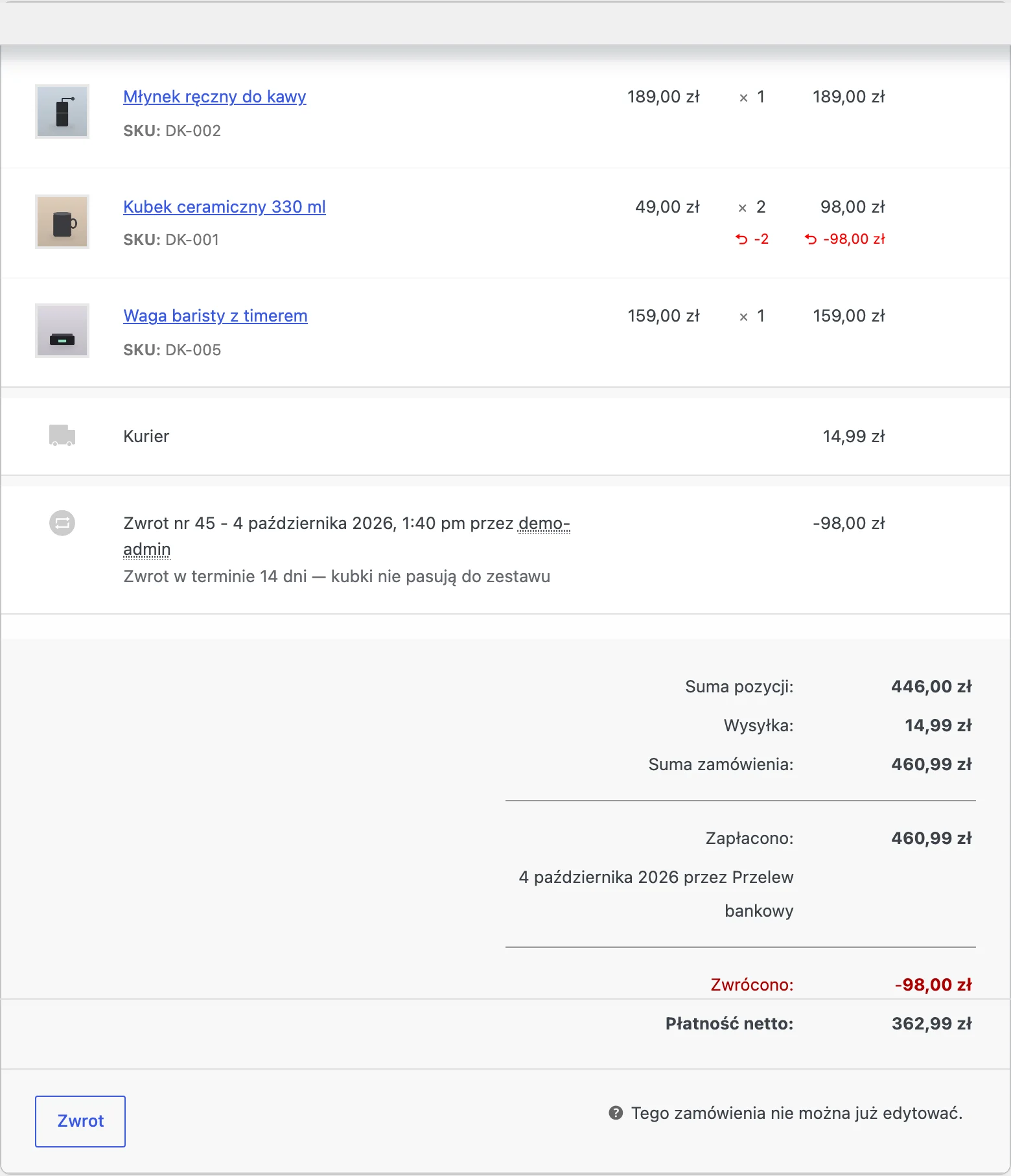
If you sell in multiple currencies, refunds should be processed in the same currency (e.g. EUR/USD) and have clearly described exchange-rate conversion rules, because this reduces the number of complaints resulting from exchange-rate fluctuations. Reconciliation is equally important, because a single bulk payout can cover many transactions, refunds and adjustments, so you need reports containing order identifiers. Ask about CSV exports, integrations with ERP/accounting systems and webhooks so you can automatically match payments and refunds to orders. As a result, you resolve complaints about settlements and payment statuses more quickly, and accounting works with consistent data for control purposes.
How to deal with chargeback risk
You can deal with chargeback risk most easily when you tailor safeguards and the evidence-collection process to the type of sales and the operator’s rules. In practice, card disputes more often concern digital products, tickets and services than standard retail. It also matters whether the operator provides dispute management tools and how much a lost chargeback costs (often in the form of a fixed administration fee). The most important thing is to build a process for gathering evidence and to keep an eye on response deadlines, because that directly determines the outcome of the dispute.
When chargeback risk increases and what it means
Chargeback risk increases when you sell goods or services whose “delivery” is harder to demonstrate clearly and whose receipt is harder to confirm. In such situations, it is worth agreeing in advance which evidence the operator accepts (e.g. delivery logs, confirmations) and in what form you submit it during the dispute. It is also important how many days you have to provide the materials, because the deadlines are set by the card schemes. If you plan to scale sales significantly, also monitor the dispute rate, because a high level of disputes pushes up costs and increases the risk of restrictions.
What to check with the operator and how to set up the process
Before choosing an operator, check what dispute handling looks like in the panel and whether you can efficiently submit the required evidence. Also ask whether card transactions are processed with 3D Secure 2 and when a transaction is reported as “fully authenticated”, because this may affect liability shift rules. It is also important whether the operator provides fraud-limiting tools (rules, scoring, blocks), because some disputes result from abuse rather than genuine complaints. In addition, secure the checkout against card testing attacks (e.g. reCAPTCHA/Turnstile, rate limiting) and require the PSP to be able to block BINs and high-risk countries.
- Check whether your range (e.g. digital products, tickets, services) increases the risk of card disputes.
- Establish what evidence you can collect and send (e.g. delivery logs, confirmations) and how this works in practice in the PSP panel.
- Verify the costs: fees for a lost chargeback and dispute handling rules (including “dispute management”).
- Confirm the deadlines for providing evidence, because the outcome of the dispute depends on meeting the card schemes’ deadlines.
- Check how the operator approaches 3DS2 and “fully authenticated” reporting, and what anti-fraud tools it has.
Comparison of payment operators: PayU, Przelewy24, Stripe
You will compare PayU, Przelewy24 and Stripe most effectively when you assess them in terms of market fit (Poland vs international sales) and implementation and reporting approach. PayU and Przelewy24 are often chosen in Poland because they are associated with a broad set of methods in one place, especially transfers and BLIK. Stripe, on the other hand, tends to be strongest when you need multiple currencies and API-based integration, e.g. for your own checkout or a marketplace model. The choice does not come down to the “lowest commission” — equally important are card approval rates, settlement quality and whether you meet customer expectations in a given market.
PayU – when it makes sense
PayU makes sense when you want to offer a broad set of popular payment methods in Poland in one solution. It is often chosen by shops that need both fast transfers and BLIK without splitting the integration across several systems. In practice, it is worth asking about the availability of Apple Pay and Google Pay and about settlement details, because conditions may vary depending on the sector and volume. This approach also simplifies operations when you want a single panel and consistent reports.
Przelewy24 – strengths and typical implementations
Przelewy24 is particularly practical if you want a solution that is strongly recognisable in Poland and typically associated with fast bank transfers and BLIK. It is often integrated into WooCommerce and PrestaShop shops, which makes implementation easier on popular platforms. On the card payments side, the key is to check whether you will achieve a good approval rate in your configuration. It is also worth assessing what payouts and accounting reports look like, because this affects day-to-day work after implementation.
Stripe – an advantage for international sales and developer experience
Stripe is a good choice when you sell internationally, need payments in multiple currencies and want to build the integration via API. It works well in projects where the checkout needs to be highly tailored (e.g. a custom flow) or when you plan marketplace solutions. Before deciding, make sure Stripe offers local methods in your target countries and how you will meet Polish shopping expectations, because BLIK usually requires a separate provider (depending on the current offer). It is also worth analysing card decline reasons and transaction routing optimisations, because this affects conversion.
Costs and settlement models in online payments
The costs of online payments are easiest to assess when you break them down into their constituent parts: the pricing model for cards and the full list of additional fees. For cards, you will come across either a “blended” rate (a single percentage) or settlement via interchange + scheme fees + the provider’s margin, which makes a quick “at a glance” comparison difficult. As volume grows, negotiating rates makes sense, because even a small difference in percentage points translates into real amounts over the course of a month. At the analysis stage, ask for a fee table covering, among other things, bank transfers, BLIK, cards, chargebacks, refunds and currency conversion.
The settlement model also concerns when and in what form the funds reach your account, so check the payout schedule (daily, weekly or on demand) and the risk of rolling reserve. In addition to commissions, there may be fees for activation, account maintenance, express payouts, refunds, failed transactions, cancellations or additional reports, so it is best to ask about them directly. For cross-border sales, check whether the provider offers multi-currency settlement (e.g. a balance in EUR), or converts each transaction and adds an FX margin. The most reliable test is to calculate the cost per 100 orders in your real mix of methods, rather than comparing a single rate.
Technical integration and checkout UX optimisation
You will finalise the technical integration and checkout UX when you match the implementation to the platform and handle payment statuses and errors correctly. In WooCommerce, Shopify, PrestaShop or Magento, the key thing is the quality and currency of the official plugin, including webhooks, automatic order status updates and correct refund handling. Redirects are often simpler and in line with customers’ habits in Poland, but they can increase abandonment if loading takes too long. Embedded checkout shortens the journey, but it requires proper RWD, performance and handling of fallback scenarios.
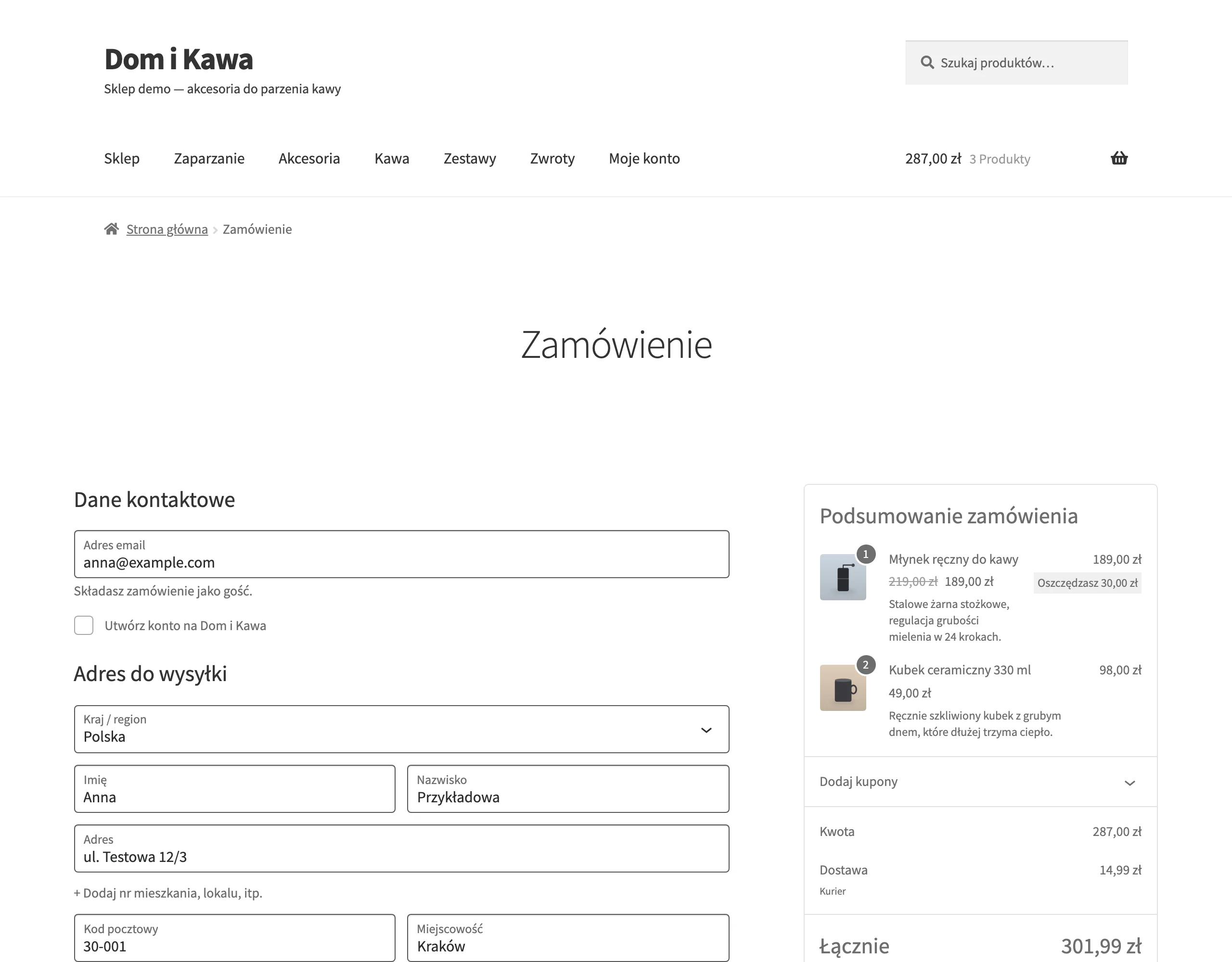
The most common operational problems stem from a lack of support for “pending”, so the integration should correctly process bank payments with intermediary statuses and have event logs for diagnostics. In practice, it is worth planning for a fallback: if one method does not work (e.g. a bank outage), the customer should be able to return and pay another way without any problems, and the store team must have the option to send a payment link from the dashboard. On mobile, what matters is a minimal number of steps and no heavy scripts, so check the impact of the gateways on Core Web Vitals and consider conditional loading. Before going live, test scenarios such as an interrupted payment, double-clicking “pay”, refreshing the page, partial and full refunds, and an international payment, using the sandbox and the provider’s checklist.
FAQ
Frequently asked questions
How should you choose online payment methods for the profile of an online store’s customers?
First check who buys and for how much, because that determines the choice of payments. For lower baskets, faster options work better, while for more expensive purchases cards, instalments and BNPL matter more.
Is it worth having BLIK and fast bank transfers in a Polish online store?
Yes, because in Poland these are some of the most important payment methods, especially on mobile. They shorten the checkout process and help reduce cart abandonment.
When is it worth adding instalments or BNPL to an online store?
When you sell products with a higher basket value and customers more often compare purchase terms. Then the role of solutions such as PayPo, Klarna or online instalments increases.
What payment methods are the best set for maximising conversion?
In the article, the core mix is identified as BLIK, fast bank transfers, payment card and Apple Pay and Google Pay. This set covers the most common purchase scenarios on desktop and mobile.
How does the speed of payouts from a payment operator affect an online store?
It determines when funds actually reach the account, so it has a direct impact on cash flow. It is worth checking the payout schedule, the option to speed up a payout and any rolling reserve.
How do you prepare an online store for returns and chargebacks?
You need efficient returns handling from the panel or API, ideally including partial returns, as well as well-managed dispute documentation. For chargebacks, response deadlines, anti-fraud tools and the ability to collect evidence such as delivery logs or confirmations are important.