

Heuristics versus exact algorithms: when to use them?
You reach for a heuristic when you need a quick, practical result and the cost of full search becomes unacceptable. Exact algorithms (e.g. exhaustive search) ensure correctness or optimum, but at large data scales they can be of limited use, as in the case of TSP for 50 cities. In such conditions, a heuristic can significantly shorten the time needed to make a decision, although it may miss a better solution. This is not “worse mathematics”, but a consciously chosen compromise between time, computing cost and confidence in the result.
The difference is well illustrated by TSP: nearest neighbor selects the nearest unvisited city each time, so it determines the route very quickly, but does not guarantee the best tour. In practice, such a method works well as a baseline, and only later is the route often refined using local heuristics (e.g. 2-opt or 3-opt). In computer science, the term “heuristic” is also used to mean an evaluation function that approximates how far we are from the goal (e.g. in A* h(n) = Manhattan distance in a maze). When it is not possible to define a sensible evaluation criterion or constraints, a heuristic may produce a result that is fast but misleading.
- 01Exact algorithms (optimum)A guarantee of correctness and the best result.
- 02Scale problem (e.g. TSP for 50 cities)Computing cost and time become unacceptable.
- 03Heuristics (a conscious compromise)A quick, practical result, saving time.
- 04Baseline (e.g. nearest neighbor)Significantly shortens decision time, a good starting point.
We choose a compromise between time, computing cost and confidence in the result when full search is impractical.
Effectiveness of heuristics in different contexts
Heuristics perform best when the problem has a clear structure and accurate local decisions often translate into a good global result. In routing, geographical proximity is such a signal, while in many optimisation tasks heuristics are the response to the constraints of computational complexity (e.g. VRP or scheduling). Effectiveness should not be based on “belief”, but on tests on historical data and comparisons with a baseline (e.g. random selection). If stability matters to you, it is worth measuring not only the average quality, but also the spread of results, because heuristics can behave variably.
Heuristics can fail because of systematic errors and excessive simplifications in risk assessment, especially in cognitive decisions. The availability heuristic makes you overestimate the risk of flying more easily after widely publicised accidents, while overlooking the statistics. The representativeness heuristic encourages conclusions based on stereotypes instead of base rates, and anchoring causes the first number (e.g. price) to set the way you assess subsequent offers. It also happens that a heuristic “falls apart” when conditions change if it was tailored to a narrow context (e.g. a different sales channel or seasonality).
The effectiveness of a heuristic is best assessed directly, by comparing quality and running time on the same test set and checking in which situations the method goes off the rails. In practice, it also helps to measure “how much you lose” relative to the best known result (e.g. the average route cost difference and standard deviation across 100 runs). When you use local improvement (e.g. hill climbing), the typical risk is getting stuck in a local minimum, so random restarts, simulated annealing or tabu search are used.
- Test the heuristic on historical data and compare it with a baseline (e.g. random selection).
- Measure the time–quality trade-off and the spread of results (e.g. standard deviation, not only the average).
- Check resilience to changing conditions (seasonality, a different segment, a new channel).
- When local search “gets stuck”, consider escape mechanisms (restart, simulated annealing, tabu search).
Cognitive errors and how to avoid them
Cognitive errors are a side effect of heuristics that simplify the assessment of probability and risk, which can lead to systematic mistakes. The availability heuristic makes readily recalled (e.g. widely publicised) events seem more frequent, so decision-making starts to rely on “loud examples” rather than data. The representativeness heuristic triggers stereotype-based thinking and can cut you off from base rates, increasing the risk of incorrect conclusions. Anchoring, in turn, causes the first number (e.g. a price of 999 zł) to set the assessment of subsequent offers, even if it has no connection with the real value.
Many pitfalls can be avoided when you consciously “tie” heuristics to the data and context, rather than treating them like an oracle. In practice, this means turning to statistics where the availability heuristic tempts you to overestimate risk, and taking base rates into account when the representativeness heuristic suggests an overly confident judgement. With anchoring, it helps to ask directly whether the first number has a real connection to the value, or is merely a point of reference. If a heuristic worked “on a few examples” and then stopped, treat that as a sign of possible overfitting to a narrow context (e.g. seasonality or another segment) and check for data distribution shift.
- 01Availability biasLoud examples over data
- 02Representativeness biasStereotypes instead of statistics
- 03AnchoringThe first number sets the judgement
Reasoning based on facts, not simplifications.
Classical heuristic methods in problem solving
Classical heuristic methods are a set of practical strategies that allow you to quickly build or improve a solution when exhaustive search proves too costly. The simplest approach is the greedy strategy, that is, choosing the best option “here and now”, which speeds up decision-making but does not guarantee the best global outcome. In the travelling salesman problem (TSP), the nearest neighbour heuristic is often used, which each time moves to the nearest unvisited city, making it a good starting point for later improvements. If the priority is to reach a sensible result quickly and refine it iteratively, the combination of a simple start with later improvement usually works best.
In practice, people also readily use heuristics that explore the solution space “locally” and improve the result in small steps. Local search starts from a given solution and iteratively refines it, while the definition of neighbourhood is based on simple moves (swap, insert, reverse) and on assessing which of them most often reduce the objective function. Hill climbing is exceptionally straightforward, because it consistently moves towards improvement, but it can be vulnerable to local minima, which is why random restarts are used and the best result from multiple runs is chosen. When a mechanism to “break out of a trap” is needed, simulated annealing can sometimes accept a worse move depending on the temperature, whereas tabu search limits going round in circles thanks to a tabu list.
- Greedy: quick “here and now” choices, useful as a simple strategy for constructing a solution.
- Nearest neighbour (TSP): rapid route selection as a baseline, often later improved (e.g. 2-opt or 3-opt).
- Local search: gradual improvement of the result through swap/insert/reverse moves and checking what works in a given problem.
- Hill climbing + restarts: simple “always upwards” improvement with multiple starts to reduce the risk of getting stuck.
- Simulated annealing: controlled acceptance of degradations to make it easier to escape local minima.
- Tabu search: memory of recent moves (tabu list) and an aspiration criterion so you do not return to the same solutions.
- Beam search: expanding only the K best partial solutions, which reduces time and memory costs.
- IF-THEN rules: encoding expert experience while keeping an eye on rule conflicts and updates after process changes.
- Divide and conquer (approximate): breaking the problem down (e.g. clustering delivery points) and then solving the parts depending on the parameters.
- Random / Monte Carlo: sampling many solutions (e.g. 10 000 trials) as a cheap baseline, often combined with further improvement.
The choice of method depends on whether the priority is to obtain a decent result quickly, or rather to “squeeze out” quality through successive refinement iterations. Beam search lets you control computational cost with the K parameter, whereas in rule-based approaches the key is to keep the rules consistent and up to date after changes in the process. Divide-and-conquer strategies with approximation (e.g. clustering and then routing within clusters) can significantly shorten run time, although their effectiveness depends on the way the split is made and on the choice of parameters. Random methods and Monte Carlo work well when there is no good model, but you can quickly generate and evaluate many candidates, treating the best variants as a starting point.
Metaheuristics and their applications
Metaheuristics are used when the solution space is so vast that simple heuristics do not provide consistent quality, and exhaustive search becomes impractical. In practice, they answer the question of how to search an enormous area without brute force, while maintaining control over the time–quality trade-off. Unlike a single rule, a metaheuristic is a framework for action that combines exploration (searching new regions) with exploitation (refining the best candidates). You gain the most when a metaheuristic has a clearly defined objective function and sensible constraints, because then the algorithm’s “smarts” really translate into the result.
Classical metaheuristics include, among others, genetic algorithms (GA), PSO and ACO, which search the solution space in different ways. GA is based on selection, crossover and mutation of a population, e.g. in schedule optimisation, where the chromosome is a permutation of tasks and the cost is calculated as (delays + overtime). PSO can be useful in continuous optimisation, e.g. when tuning hyperparameters, when derivatives are unavailable, while ACO helps determine good paths in a graph (e.g. TSP) by reinforcing “pheromones” on better routes and controlling evaporation. Hybrid variants, such as GRASP, combine greediness with randomness (many random starts from a list of the best candidates) and usually finish the result with local search.
Metaheuristics are also often compared with optimisation methods, so that their strengths can be used within a single process. A popular solution is a heuristic as a “warm start” for a MILP solver (e.g. Gurobi, CPLEX, CBC), because a quick initial solution can shorten the time needed to reach a better optimum. In scheduling, priority rules (SPT, EDD) are also used, and the choice depends on the objective: SPT minimises average flow time, whereas EDD limits lateness against due dates. Since the quality of metaheuristics can be sensitive to settings (e.g. mutation rate, tabu length), the standard approach is tuning via grid/random search on a small sample of instances and validation on a separate set, often using Optuna or Hyperopt.
- 01Large search spaceA huge solution space
- 02Exploration vs. exploitationBalancing search and refinement
- 03Clear objective and constraintsA smart algorithm, a real result
- 04Classic examplesGenetic Algorithms, PSO, ACO
Metaheuristics are frameworks for efficient search, combining smart strategies with control over time and quality.
Heuristics in AI and machine learning
Heuristics in AI and machine learning help steer the search and make practical training decisions when not everything can be calculated “exactly”. In A* the heuristic h(n) answers the question “how far to the goal?” and sets node priority, and a classic example is Manhattan distance on a grid without diagonals. When h(n) is admissible (never overestimates), A* finds the optimal path, which matters if the result must be the best one rather than merely fast. In the Greedy Best-First variant, the choice is based on the lowest heuristic value, which can work very quickly but gives no guarantee of optimality and is useful when response time matters.
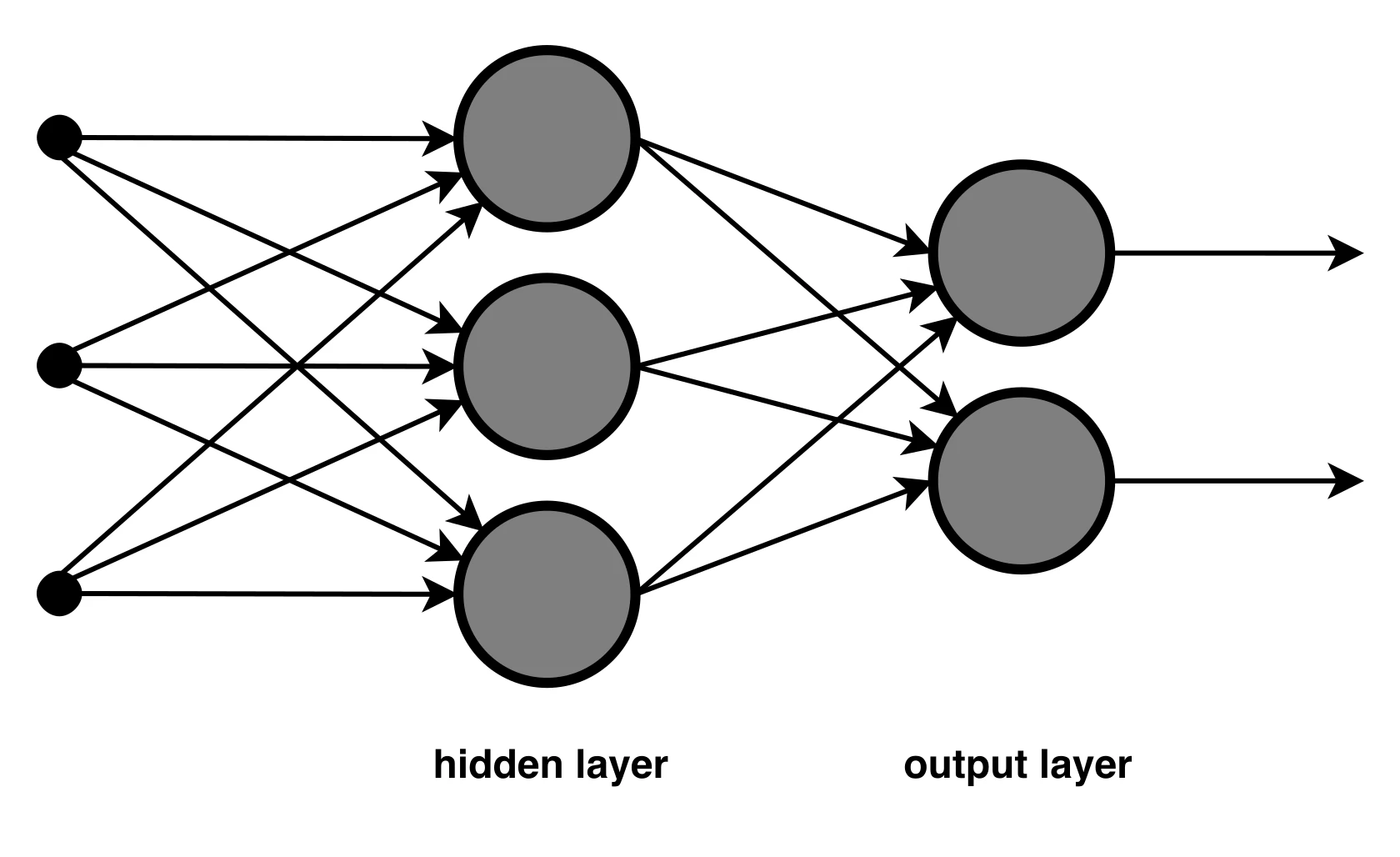
In constrained tasks, heuristics speed up solving because they reduce branching and allow contradictions to be detected earlier. In CSPs, MRV (Minimum Remaining Values) is often used, meaning selecting the variable with the smallest number of options, which in practice improves backtracking in Sudoku or planning. In games, the evaluation function plays the role of a heuristic, and alpha-beta pruning reduces tree search, so not all variants have to be considered. Increasingly, heuristics are not designed manually but learned from data, e.g. a neural network evaluates the state and guides search/planning (as in AlphaZero), while remaining an approximate control function.
In practice, ML heuristics also help reduce computational cost and the risk of overfitting in an everyday pipeline. Feature selection is often carried out heuristically (e.g. a filter based on correlation and missing data) to shorten training and reduce overfitting, especially with thousands of variables. Early stopping answers the question “when should training be stopped to avoid overfitting?”, e.g. by stopping learning after 10 epochs with no improvement in the validation metric (patience=10) and keeping the best weights. With large datasets, subsampling or approximate nearest neighbours are used instead of exact k-NN (e.g. FAISS, Annoy, HNSWlib), and in recommendation systems simple baselines such as “most popular in category + personalisation based on the last 3 clicks” can be attractive because they are cheap, explainable and stable with little data.
Designing and testing heuristics in practice
Designing and testing heuristics in practice starts with clearly defining what a “good” solution means in a given problem. First, write down the objective function (e.g. km cost + penalties for delays) and constraints (e.g. driver working time, capacity), because without this even a fast method can lead to random decisions. A well-defined objective and cost function are a prerequisite for a heuristic to be controllable and comparable across variants. Only then is it worth choosing rules, local search or metaheuristics appropriate to the structure of the task.
Testing a heuristic only makes sense when you measure both the quality and the stability of the results on a set of instances of different scale. In addition to the average, it is worth reporting standard deviation and percentiles (P50/P90), and in graph problems also the number of constraint violations and the number of iterations to convergence. To avoid fitting to one data type, carry out validation on many instances (small/medium/large) — in practice at least on several dozen, and with high variability on hundreds — with random seed control. If the result “cannot be reproduced”, treat it as a sign of a problem in the testing process, rather than merely a manifestation of the “randomness of the heuristic”.
In practice, alongside quality, interpretability is equally important, especially when decisions need to be justified to a client or in an audit. Rule-based heuristics are usually easier to explain, whereas with more complex methods it is a good idea to keep decision logs (e.g. why traffic was accepted) and to describe security constraints precisely. When the rules do not follow intuition directly, you can design them on the basis of domain knowledge (interviews with experts, analysis of exceptions and error data) or learn the heuristic from data, for example with a model predicting cost/risk that controls the order of decisions. In the case of metaheuristics, make sure of reproducibility: set a seed, save the configuration (YAML/JSON), the data and code version (Git), and the number of runs (e.g. 30 repetitions).
Monitoring and adapting heuristics in a production environment
Monitoring and adapting heuristics in a production environment comes down to continuously checking whether the method still works as it did in tests. After deployment, monitor KPIs (e.g. cost, time, errors) as well as data drift, because changes in the input distribution can gradually worsen results. If you notice a drop in quality, trigger a safe fallback (a simpler heuristic) and plan a retuning rather than “waiting for it to come back on its own”. This way you maintain predictable performance even when conditions change.

Heuristics in production also need clear stopping criteria in order to meet time requirements and ensure a consistent response time. Limits are used: by time (e.g. 2 s), by number of iterations (e.g. 50 000) or by lack of improvement (e.g. 1000 steps). In production systems, a time limit combined with a stagnation condition usually works best, because it provides predictable SLA. Such constraints also make it easier to compare heuristic versions between deployments and to control computation costs.
Adaptation should not be a one-off action, but a cyclical process, because parameters and rules become outdated over time as the process and data change. In the case of methods based on parameters and randomness, it is worth maintaining strict control over the configuration (seed, saved settings, data and code versions) so that differences in results can be understood and faithfully reproduced. When the situation calls for it, schedule periodic retuning (e.g. monthly or quarterly), and base modification decisions on KPI monitoring and drift signals. This mode of working reduces the risk that the heuristic will “work only in ideal conditions”, and that in real traffic it will start generating costly exceptions.
FAQ
Frequently asked questions
When is it worth using a heuristic instead of an exact algorithm?
When a quick, practical result is needed and full search is too costly in terms of time or computation. A heuristic can then provide a sufficiently good solution, albeit without an optimum guarantee.
Does a heuristic always give the best solution?
No, because by definition it does not guarantee the optimum. Its purpose is rather to quickly find a good result at an acceptable computational cost.
How does the nearest neighbour heuristic work in the travelling salesman problem?
Each time it chooses the nearest unvisited city. This allows it to determine a route very quickly, but it does not guarantee the best tour.
Why can heuristics lead to wrong decisions?
They can fail if the criteria are poorly chosen or the problem does not have a favourable structure. In cognitive decision-making, availability, representativeness and anchoring biases also come into play.
How should the effectiveness of a heuristic be assessed in practice?
It is best to compare it on the same test set against a baseline, e.g. random selection. It is worth measuring not only average quality, but also runtime and the spread of results.
What methods help to escape a local minimum in local heuristics?
Random restarts, simulated annealing and tabu search are used. These approaches help avoid circling around a single, poor solution.