
what is headless e-commerce and how does it work?
Headless e-commerce is an architecture in which the store’s presentation layer is separated from the sales engine and communicates with it via an API.
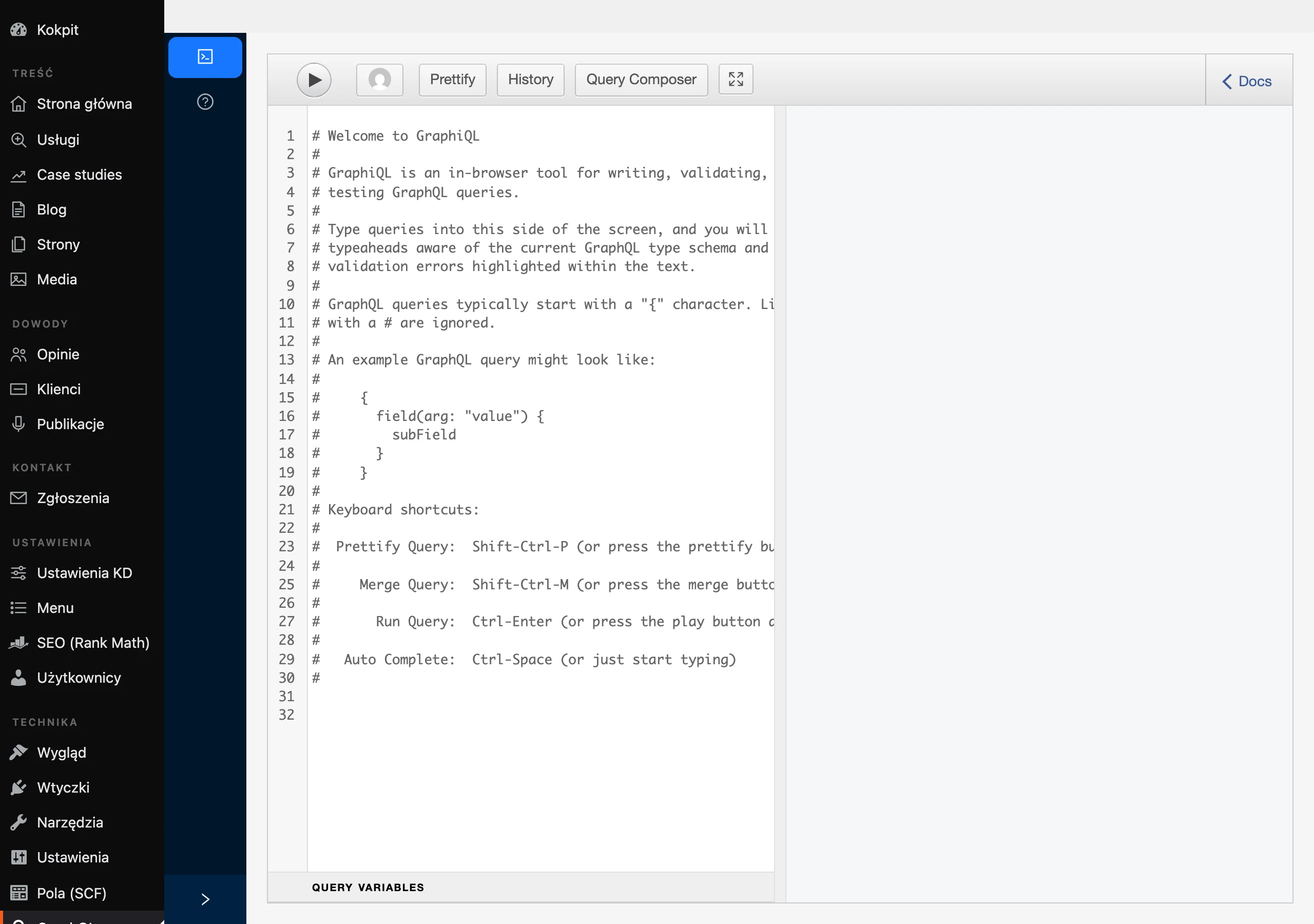
In practice, this means you still have a “store”, except that the interface (e.g. a Next.js app) is not part of the same system as the basket, prices and orders; instead, it pulls them from the back-end via REST or GraphQL. The “API-first” model allows one back-end to power many channels (web, app, POS), provided the platform exposes consistent endpoints and customer identification. This makes it possible to maintain the same basket and purchasing logic across different “heads” (front-ends), depending on how sessions and tokens have been implemented.
Usually, a commerce engine (products, basket, checkout) operates in this setup, and alongside it there are separate tools for content and data, such as a CMS and PIM, as well as search. You do not have to split everything into separate services straight away, but separation can be worthwhile when marketing content and product data have different change cycles and require different tools. The front-end is usually built as an SPA/SSR/SSG (e.g. Next.js, Nuxt, Remix) and hosted on Vercel/Netlify/AWS, which makes it easier to scale the UI layer independently.
The commerce back-end can run as SaaS (e.g. Shopify Plus, BigCommerce), as an API commerce platform (e.g. commercetools) or as self-hosted (e.g. Saleor, Medusa). In environments with multiple services, the BFF (Backend For Frontend) pattern is also often used, which aggregates responses from different systems into a single API tailored to the needs of the views. BFF reduces the number of calls made on the front-end side and simplifies control of permissions and cache. This approach solves a typical headless pain point, namely the situation where the front end would otherwise have to “ask 10 services at once” for the data needed to render a page.
- 01Detached presentation layerA separate front end from the sales engine
- 02Communication via APIData transferred via REST or GraphQL
- 03One engine, many front endsOne backend powers web, app and POS
- 04Consistency of data and sessionsBasket synchronisation and customer identification
Flexibility, independent development and scalable systems.
differences between a monolith and headless architecture
The key difference is that in a monolith, templates, logic and the database are tightly intertwined, whereas in headless the front end is an independent application that uses an API.
In a classic monolith (e.g. traditional Magento/PrestaShop implementations), changes to the look and user experience often require work in the same technology stack as the sales logic. In headless, you can build the UI in React or Vue and base sales on a commerce platform (e.g. Shopify/BigCommerce/commercetools), which allows you to iterate on the interface faster without interfering with order mechanics. This division usually shortens the time needed to make UI changes, but at the same time shifts more responsibility onto the quality of the integration and the stability of the API contract. In practice, this means making sure the API documentation and versioning are properly handled (e.g. OpenAPI or GraphQL schema), so that the front end and back-end can evolve in parallel.
Headless does not always mean “composable commerce”: headless is mainly about separating the front end from commerce, whereas composable goes a step further and connects many specialised services via APIs. So you can have headless on a single commerce platform without breaking everything down into separate microservices such as a separate search, PIM or OMS. At the same time, in headless it is more common to separate the catalogue and pricing, marketing content, checkout/payments, and search and personalisation, because these areas have different requirements and a different pace of change. Many companies leave checkout and payments within the commerce platform to limit risk, and move mainly content and listings to the headless front end.
Benefits of implementing headless e-commerce for business
Headless e-commerce delivers the greatest value to a business when you want to develop UX faster while maintaining a consistent sales logic across multiple channels.
Day to day, it is easier to build a fast front end based on SSR/ISR, CDN and image optimisation, which often translates into better Core Web Vitals thanks to greater control over LCP and INP. The condition, however, is a well-designed cache and limiting heavy marketing scripts, because they can wipe out the performance gains. If SEO and speed are the priority, an architecture with SSR/ISR and considered cache usually makes it easier to achieve stable results. This kind of control is particularly important on mobile, where it is easier to remove typical bottlenecks such as slow filters and an overly heavy DOM.
Headless also makes it easier to iterate on the interface and roll out changes without being held back by the platform’s template constraints, which supports experimentation in the purchase journey. A/B tests and switching UI variants can be carried out faster, e.g. through feature flags (LaunchDarkly) or client-side/server-side experiments. This approach usually shortens time-to-market in mature teams, provided you maintain API versioning discipline and contract documentation. This benefits both product work and conversion rate optimisation.
In headless, it is easier to scale the front layer independently of the back end and prepare in advance for traffic spikes such as Black Friday. This architecture allows you to handle more traffic, but it requires checking the provider’s API limits and implementing cache and queues for more expensive operations. At the same time, you can modernise the shop in stages (the strangler approach), starting with the listing and product page, and only later moving on to the account or checkout. This makes it possible to assess the impact of changes on SEO and conversion before deciding on a full migration.
An important business benefit is often omnichannel, because the same back end can power the web, a mobile app and POS without duplicating promotions or data. In addition, it is easier to add search, personalisation or recommendation engines (e.g. Bloomreach, Dynamic Yield, Segment) without rewriting the entire commerce platform. For recommendations to work smoothly, they are usually rendered server-side or prefetched, rather than blocking rendering with heavy client-side scripts. As a result, you gain more freedom to add new features and services wherever they genuinely support sales.
- 01Faster UX development and consistencyFaster UX development • Agile front end, unified logic
- 02Better Core Web VitalsBetter performance and CWV • Control over LCP, INP, SSR/ISR
- 03SEO stability and speedStable SEO results • Thoughtful cache, fewer scripts
- 04Crucial mobile controlFull mobile control • Eliminating bottlenecks
Main value: freedom to iterate on the interface, full control over performance and consistency across multiple digital channels.
What technologies should you use in headless e-commerce?
In headless e-commerce, technologies are selected so that the front end renders quickly and is SEO-friendly, while the back end provides a stable API for the catalogue, basket and checkout.
On the commerce engine side, you will most often encounter Shopify (Storefront API), BigCommerce (API-first), commercetools (API commerce) and self-hosted Saleor or Medusa. The choice depends on the scope of responsibility: SaaS reduces maintenance on your side, whereas self-hosted gives you more control, but also means patching and scaling on your side. If you are planning several fronts (web, app), consistency of endpoints and customer identification is crucial in order to keep the basket and purchase logic aligned across different channels. In practice, checkout and payments are often left in the commerce platform to reduce risk.
The front end is usually built in Next.js (React) or Nuxt (Vue), because they support SSR and provide solid SEO support thanks to routing and optimisations. With dynamic prices and stock levels, Next.js with ISR and on-demand rendering often performs better than strictly SSG approaches. Hosting the front end on Vercel or Netlify simplifies deployment, and Cloudflare can provide CDN, WAF and edge caching for global speed. The choice between SSR/ISR/SSG should result from which elements can be cached and which ones (e.g. price and stock) need to be refreshed dynamically.
For the marketing layer, headless CMS platforms such as Contentful, Strapi, Sanity or Storyblok are often used so that the team can assemble page modules without interfering with sales logic. Content and product catalogues are usually linked through references: the CMS stores components, while product data is pulled from commerce or PIM. With a large number of SKUs and attributes (e.g. 20–200 thousand), a PIM such as Akeneo, Pimcore or Salsify improves validation, bulk imports and consistent data mapping across channels. This reduces the number of mistakes in descriptions and parameters, especially with multiple variants and language versions.
Search is often offloaded to tools such as Algolia or Elasticsearch/OpenSearch, because they provide faster suggestions, faceting and greater control over ranking. With Algolia, the cost is usually service-based and rises with traffic, whereas Elasticsearch/OpenSearch can be cheaper at larger scale, but requires operational maintenance. In a more complex ecosystem, an integration layer is also useful: iPaaS (MuleSoft, Boomi, Make, n8n) or custom microservices to connect ERP, couriers and marketplaces. If the architecture grows to include several systems, it is worth considering a BFF, so the front end does not have to make many requests and it is easier to control cache and permissions.
In analytics and tags, headless makes it easier to keep control over the impact of tools on performance, e.g. through GA4, GTM server-side or Meta CAPI, as well as a better-defined dataLayer. After migration, it is possible to preserve data continuity, but events need to be designed from scratch (e.g. view_item, add_to_cart, begin_checkout) and mapped against existing reports. As the number of integrations grows, secret management and security become increasingly important: secret managers (AWS Secrets Manager, Vault), key rotation, rate limiting and webhook signatures. Protection against bots is often reinforced with Cloudflare Bot Management or reCAPTCHA in critical areas (login, checkout), while taking care not to harm conversion.
risks and challenges associated with implementing headless
Implementing headless e-commerce is primarily associated with greater architectural complexity and a larger number of elements to maintain than in a classic monolith. You also need a separate front end, API integrations, cache, CI/CD, monitoring and often a BFF layer, which in practice increases the number of potential failure points. This approach can be effective, but it requires observability (logs, metrics, tracing) and contingency plans for critical services. Without these foundations, diagnosing issues in the basket, pricing or availability can take too long.
Headless usually raises the entry cost and the team’s skills threshold, especially when you build your own checkout and connect multiple services. Savings are more likely to appear only at a larger scale of changes and over the longer term, when you can iterate on the UI and processes more quickly. In a SaaS model, there is also the risk of vendor lock-in: API request limits, the provider’s data model and the costs of extra features can have a real impact on development. Even if the front end is easier to replace than in a monolith, migrating orders, customers, promotions and integrations still remains complex.
Headless can also make SEO more difficult if the approach to rendering and navigation is not planned properly. A pure SPA without SSR/ISR can be problematic for indexing, and mistakes in canonicals, pagination, sitemaps or structured data can affect visibility. Performance pitfalls are just as important: aggressive caching speeds up the site, but it can display outdated prices or stock levels, which increases the number of cancellations in checkout. In practice, revalidation, ETag and refreshing critical data (price, stock) are used just before order completion.
Risks also include security and deployment quality, as the attack surface and the number of integrations requiring protection grow. More services mean more API keys, webhooks and secrets, so measures such as secret rotation, WAF and rate limiting are needed, and with your own checkout there are also implementation error risks. In addition, headless makes a “plug in and done” approach harder, because many features need to be implemented in the API and on the front end, rather than simply installing a module. Testing requirements also increase: E2E tests (Cypress/Playwright) and contract tests help reduce regressions in the basket and payments, but they increase the maintenance workload.
- 01Architectural complexityMore elements to maintain.
- 02More failure pointsRisk in integrations and API.
- 03Need for observabilityLogs, metrics and tracing are crucial.
- 04Higher entry thresholdHigher costs and skills.
The effectiveness of this approach requires solid contingency plans and readiness to manage complexity.
when is it worth moving to headless e-commerce?
It is worth moving to headless e-commerce when the limitations of a traditional platform genuinely block the development of UX, performance and multi-channel or multi-market operations. This is most often visible with a large catalogue and demanding listings and filters, where standard mechanisms do not deliver the expected experience and performance. Headless also supports international expansion, because it is easier to connect different domains, languages, currencies, price lists, taxes and deliveries within a single commerce/ERP logic. If sales are driven by campaigns, SEO and content, combining a headless CMS with a fast front end gives an advantage in publishing speed and UX quality.
Headless also makes sense when you are planning omnichannel, a mobile app or other “front ends” beyond the website, while still wanting to keep consistent promotions and sales rules in one back end. In B2B it can be particularly useful when building custom UI (e.g. company accounts, roles, shopping lists, quick orders from CSV), but the back end itself must support this and sometimes that means implementing a dedicated B2B platform or custom services. It is also worth considering a hybrid option if you want to limit risk, for example by launching a new front end for listings and product pages while leaving the checkout hosted. This phased approach allows you to assess the impact on SEO and conversion before a decision is made on a full migration.
- You have a large catalogue (e.g. 20–200 thousand SKUs) and fast filtering and search are crucial, while the current UX is a bottleneck.
- You are entering multiple markets and need consistent handling of languages, currencies, price lists, taxes and delivery methods.
- Content marketing and landing pages are critically important, and the team wants to publish in a CMS with preview and content quality control.
- You are planning omnichannel (website, app, POS) and want to keep one back end as the source of truth for basket, promotions and statuses.
- In B2B you need custom processes and interfaces that cannot sensibly be built on an off-the-shelf template.
With standard requirements (a simple catalogue, a few payment and delivery methods), it is often more sensible to stick with a classic store and invest in optimising the current solution, hosting and data hygiene. Headless can do harm when there is a lack of competence to maintain integrations and tests, because the risk of checkout errors increases and deployment times lengthen. To assess ROI, you usually compare the cost of working around platform limitations and slow change deployments with the cost of building the front end and integrations. In practice, this is measured with KPIs such as LCP/INP, mobile CR, campaign deployment time, maintenance cost, number of checkout regressions and the share of search in revenue.
how to plan a headless migration effectively?
A migration to headless is planned effectively when you start with an audit of processes and a clear identification of the “sources of truth” for data and sales logic. At the outset, prepare a map of areas such as the catalogue, pricing, promotions, checkout, returns and integrations, because without this the implementation can easily turn into ad hoc “patching” of dependencies. The key is to document where the data lives (PIM/ERP/commerce), what the API contract looks like, and which buying scenarios are critical to test. This way, you immediately know which integrations must work reliably and which can be handled asynchronously.
It is worth structuring the migration technically through API design and contracts, so that the front end and back end do not drift apart during development. In practice, the API is described in OpenAPI or as a GraphQL schema, and then versioning, limits and error-handling policy are defined, because this reduces failures caused by incompatible changes. When the problem appears that “the front end does not work even though the back end does”, the root cause is often the lack of contracts or breaking them. Contract tests help catch such risks earlier, before they reach production.
Data migration is effective when it covers not only products, but also accounts and sales history, while also taking password migration limitations into account. Usually order history, vouchers and return statuses are migrated, and when changing platforms customers often have to reset their password, so communication and a secure account activation mechanism are planned. At the same time, it is worth designing event-driven integrations, i.e. webhooks and asynchronous processing, as well as retry mechanisms, dead-letter queues and monitoring, so as not to risk data inconsistency. This is particularly important when price or stock updates have to reach several systems (e.g. PIM, commerce, search).
A migration to headless should not harm SEO, provided that URLs, redirects and the way pages are rendered are planned from the outset. The priority remains preserving addresses or implementing correct 301 redirects, as well as controlling sitemap.xml and canonicals, especially with filters and pagination. The risk of post-migration drops most often comes from incorrect redirects or content changes, which is why staging tests and a crawl (e.g. Screaming Frog) are standard. In addition, the choice of SSR/ISR/SSG and cache strategy should take into account that critical elements (price/stock) often require refreshing closer to the point of purchase.
The migration plan is only complete once it includes regression tests for checkout and observability after launch. The most risky areas are promotions, delivery, payments, taxes and invoices, so it is worth preparing E2E scenarios for the key combinations. After deployment, configure monitoring of the purchase journey (e.g. synthetic checkout tests) and RUM for the front end, because issues often only become apparent in real-world conditions. In practice, this is combined with alerts on API response times and increases in 5xx errors and timeouts.
maintaining and developing a headless platform after implementation
A headless platform is maintained and developed most efficiently when it is treated as a digital product with a continuous technical roadmap, rather than a one-off implementation. After launch, the importance of regular library updates, API cost optimisation and refactoring of the BFF layer and integrations grows. In practice, headless usually requires a permanent team, because without security and performance reviews the benefits quickly fade. This approach makes it possible to keep up the pace of change without accumulating technical debt.
A key element of maintenance is monitoring the entire chain, including the front end, back end and integrations, because a failure in one place affects UX and conversion. In practice, tools for error handling and performance measurement (Sentry/Bugsnag), observability platforms (Datadog/New Relic) and logs and alerts based on API response times are used. To capture the moment when “the API is choking”, SLOs are defined for key endpoints and alerts are set for increases in 5xx errors, timeouts and a drop in CR. This set of practices shortens diagnosis time, especially with multiple providers and a complex network of dependencies.
Stability after implementation is strengthened through test automation and consistent regression control in critical parts of the purchasing journey. Promotions, delivery, payments, taxes and invoices remain the most sensitive areas, which is why E2E tests (Playwright/Cypress) should be maintained and developed alongside changes in the API and UI. In addition, synthetic checkout tests make it possible to catch a problem before users notice it. In a headless approach, the importance of staging environments also grows, because a greater number of integrations translates into more potential failure paths.
Content quality and order in marketing changes after launch are ensured by a well-crafted workflow in the CMS. If content is managed in a CMS, roles, versioning, preview and clear publication rules are needed, because a faulty module can worsen site performance or harm SEO. Most CMS platforms offer preview environments, and the front end can render draft versions on a separate domain, which makes verification before publication easier. This allows teams to work faster without increasing the risk of changes in production.
Security and data consistency after implementation are maintained through integration protection standards, as well as proper handling of events and asynchronous processing. With multiple services, retry mechanisms, dead-letter queues and monitoring are particularly important, because without them it is easy to end up with inconsistent prices or product data drifting between systems. In the security area, secret rotation, WAF, rate limiting and webhook signatures matter, because the number of API keys and integration points grows. At the same time, it is worth regularly reviewing the cache and revalidation strategy so that performance is not achieved at the expense of the freshness of critical information (e.g. price, stock).
FAQ
Frequently asked questions
How does headless e-commerce work in practice?
The front end is a separate application and fetches data about products, the basket or orders from the back end via API, e.g. REST or GraphQL. This means one commerce engine can power many channels, such as a website, app or POS.
Is headless e-commerce different from a monolith?
Yes, in a monolith the presentation layer and sales logic are tightly coupled, whereas in headless the front end operates independently and uses API. This makes it easier to develop the interface, but requires better integration and API versioning.
Why can headless e-commerce improve store performance?
Because it makes it possible to build a fast front end with SSR, ISR, CDN and image optimisation, which helps with Core Web Vitals. However, you need to plan cache properly and limit heavy marketing scripts so you do not lose that gain.
What technologies are most often used in headless e-commerce?
On the front-end side, Next.js or Nuxt are often used, and on the commerce side platforms such as Shopify, BigCommerce, commercetools, Saleor or Medusa. In addition, there are headless CMS, PIM, search, and sometimes a BFF to connect multiple services.
When is it worth moving to headless e-commerce?
When a traditional platform starts blocking UX development, performance or support for multiple channels and markets. The article also indicates that headless makes sense for a large catalogue, international expansion and omnichannel.
What are the biggest risks of implementing headless e-commerce?
The biggest problem is the greater complexity of the architecture: a separate front end, API integrations, cache, monitoring and often a BFF. There are also higher entry costs, the risk of vendor lock-in and greater demands on SEO and testing.