
In the dynamic world of marketing, the effectiveness of a strategy often comes down to understanding customer behaviour and guiding them precisely through the buying journey. The marketing funnel – from the awareness stage to loyalty – is a key tool that enables businesses to optimise campaigns, increase conversions and manage budgets. What are its individual phases, benefits and applications? In this article, you will find a comprehensive guide to one of the most important models in modern marketing.
What is a marketing funnel?
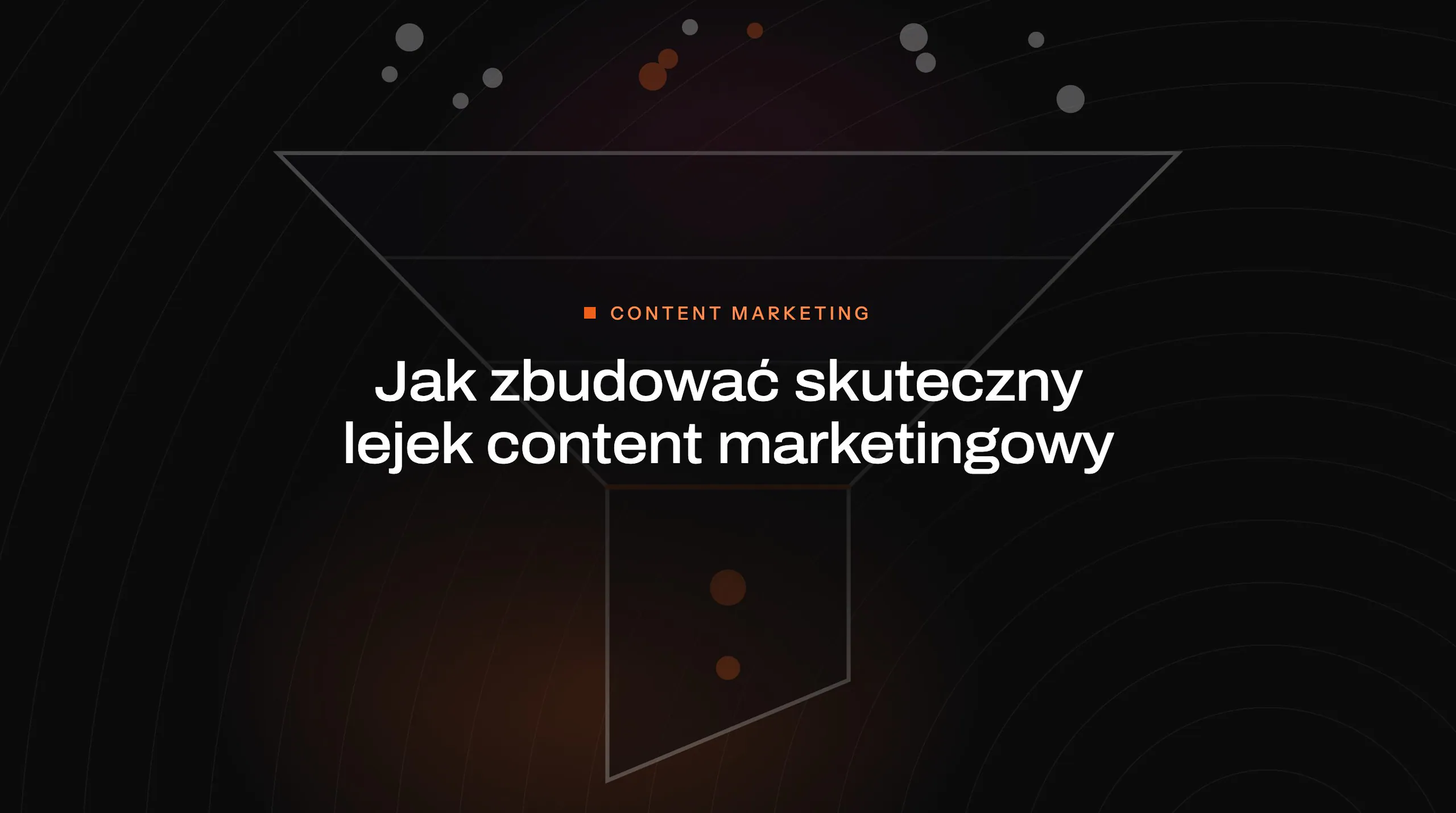
A marketing funnel is a model that illustrates the path of a potential customer – from the first contact with a brand right through to completing a transaction. This tool makes it easier to understand and control the buying journey. At the top of the funnel is the largest group of people who are hearing about the product or service for the first time. As they gain more information and engage with the brand, this number gradually decreases, and only some of them decide to buy.
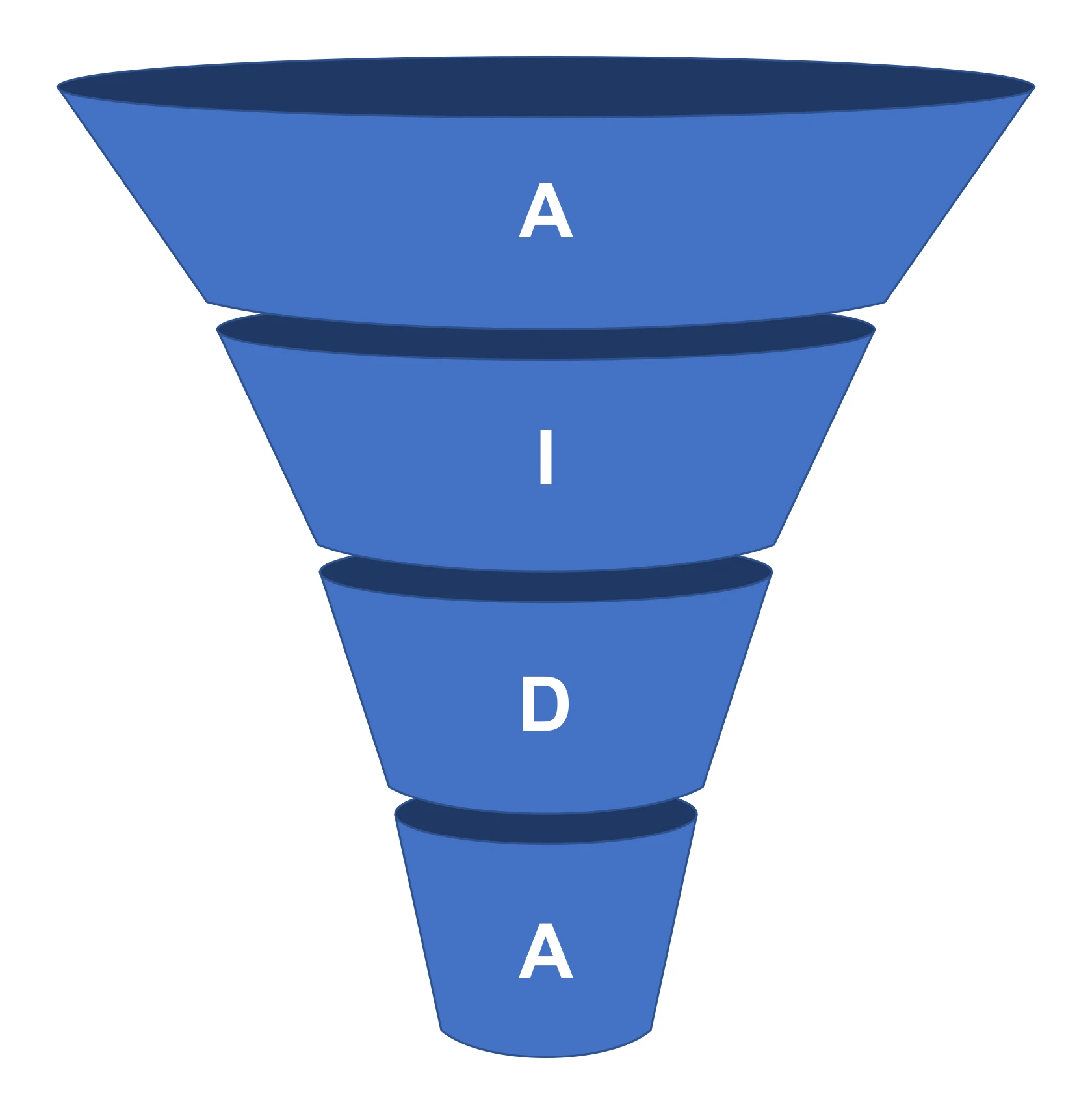
This model consists of several stages corresponding to the phases of the decision-making process:
- at the beginning there are people who are only just discovering the brand (the awareness stage),
- then they move on to considering the offer,
- and finally they decide to buy.
Thanks to this tool, companies can adapt their marketing activities to the needs of customers at every stage of their journey.
The marketing funnel is extremely helpful when planning strategies. It makes it possible to define goals and actions precisely at each stage of the buying process, which allows you to manage budgets more effectively and increase conversions and sales. This tool not only makes customer relationship management easier, but also helps deliver better business results.
- 01Building awarenessFirst contact with the brand, broad audience.
- 02Engagement and educationGathering information and building a relationship.
- 03Purchase decisionCompleting the transaction and conversion.
This is a model illustrating the path of a potential customer from first learning about the brand to purchase, helping with more effective planning of marketing strategies.
Definition and significance of the marketing funnel
The marketing funnel is a tool that helps companies better understand how potential customers move through the different stages before making a purchase decision. Its main purpose is to support the sales process by tailoring marketing activities to the needs of the audience at each stage of their journey. This allows companies to manage budgets more effectively, increase conversions and achieve better sales results.
It consists of several key phases that reflect the customer’s decision-making process:
- the awareness stage, during which the audience first comes into contact with the brand or product,
- the consideration phase, where they compare different offers and analyse the benefits of choosing a particular service or product,
- the purchase decision, which ends with completing the transaction.
The value of the marketing funnel lies in the fact that it enables companies to gain a deeper understanding of customer behaviour and to tailor strategies precisely to their expectations. Analysing the data collected at individual stages makes it possible to optimise activities, which translates not only into greater campaign effectiveness, but also into building lasting loyalty among the audience.
How does the marketing funnel support the customer’s buying process?
The marketing funnel is an effective tool that helps companies guide customers through the individual stages of the buying process. Right from the start, it grabs the attention of potential audiences through advertising campaigns, valuable content and SEO optimisation. Once customers notice the brand, they move into the awareness phase and then into the consideration stage, where they compare the available options and analyse the benefits. The final step is encouraging them to buy through personalised offers and attractive promotions.
Thanks to this tool, businesses can better understand their customers’ needs at every step of their buying journey. Behaviour analysis allows marketing strategies to be tailored, resulting in higher conversion and increased sales. What is more, the funnel helps manage budgets effectively by focusing on customer groups with the greatest potential.
In practice, the marketing funnel uses a variety of communication channels:
- social media,
- e-mail marketing,
- display ads.
As a result, the brand remains visible at every stage of the buying process, building trust and loyalty among its audience. This tool not only makes it easier to acquire new customers, but also helps retain them by regularly delivering valuable content and attractive offers.
- 01AIDA (Classic model)Traditional campaigns, direct marketing
- 02A – Attention (Uwaga)Building awareness, first contact
- 03I – Interest (Zainteresowanie)Generating interest, education
- 04D – Desire (Pożądanie)Sparking the desire to own, emotions
- 05A – Action (Akcja)Transaction completion, purchase, conversion
- 06TOFU / MOFU / BOFU (Digital model)Content marketing, SEO strategies, digital
- 07T – TOFU (Top of Funnel)Wide reach, education, traffic building
- 08M – MOFU / B – BOFU (Middle & Bottom)Lead qualification, offer presentation, sales
Understanding the customer journey and optimising communication at every stage.
The role of the marketing funnel in marketing strategy
The marketing funnel is an indispensable tool in a promotional strategy that enables companies to plan and execute actions precisely at every stage of the customer buying journey. It makes it possible to better understand how prospective customers move from their first contact with a brand to completing a transaction. This, in turn, allows messages and offers to be tailored to their individual needs, which significantly increases campaign effectiveness.
In a marketing strategy, the funnel acts as a roadmap, indicating specific steps at each stage – from building brand awareness to maintaining customer loyalty. Analysing data from every level of the funnel allows budgets to be optimised and attention to be focused on the most effective communication channels. As a result, companies achieve better sales results with lower financial outlay.
Monitoring key performance indicators (KPI), such as conversion rate or customer acquisition cost (CAC), is an integral part of strategies based on the marketing funnel. This makes it possible to flexibly adapt activities to dynamic changes in the market and consumer behaviour. This translates into more effective management of resources and the delivery of long-term business goals.
The marketing funnel also plays an important role in offer personalisation. Analysing customer behaviour makes it possible to create personalised messages that increase engagement and encourage purchase. This tool not only helps acquire new audiences, but also build lasting relationships with existing customers. As a result, their loyalty and long-term value (CLV) increase.
What are the stages of the marketing funnel?
The marketing funnel is a model consisting of four key stages that reflect the customer decision-making process. Each of them requires an individual approach and appropriate actions in order to effectively guide prospective customers through the entire buying journey.
1. Awareness (Awareness)
At this stage, customers first come into contact with the brand, product or service. The main goal is to draw their attention, which can be achieved through various methods such as adverts, content marketing, SEO optimisation or social media campaigns. Examples of tools include blog articles, Facebook posts or display ads.
2. Consideration (Consideration)
At this stage, customers compare available options and analyse different offers. The brand should provide valuable educational content, such as guides, webinars or case studies. This not only builds trust, but also helps it stand out from the competition.
3. Purchase (Purchase)
At this stage, the customer makes a purchase decision. The key elements are personalised offers, attractive promotions and a simple, intuitive checkout process. Tools include e-mail marketing with a clear call to action (CTA), dedicated landing pages and online payment systems.
4. Loyalty (Loyalty)
After making a purchase, the brand focuses on maintaining the relationship with the customer. To this end, it uses loyalty programmes, regular e-mail communications and exclusive offers for repeat customers. The aim is to increase customer lifetime value (CLV) and encourage repeat purchases.
Each stage of the funnel requires a different approach and different tools, which makes it possible to effectively guide customers from first contact with the brand all the way to completing the transaction and building long-term relationships.
- 01x’Define your target groupDefine the audience profile
- 02Get to know the customer’s needsUnderstand the challenges and preferences
- 03Analyse behaviourMonitor the purchase journey
- 04Personalise communicationTailor the offer and message
The key to success lies in precisely matching the strategy to the customer’s needs at every stage of their buying journey
Awareness (Awareness)
The awareness (Awareness) stage is a key moment in the marketing funnel, where the main task is to catch the attention of people who have not yet had any contact with the brand or its products. This is where companies try to reach the broadest possible audience, building awareness of their offering.
In this phase, a variety of ad campaigns are extremely important – both traditional and digital ones. Online banners, display ads or social media campaigns (e.g. Facebook, Instagram) effectively attract users’ attention. Equally important is SEO (Search Engine Optimization), which helps companies appear higher in Google search results, increasing the chance of reaching new audiences.
Content marketing also plays a huge role here. Valuable materials such as blog articles, infographics or educational videos not only attract attention, but also build the first positive associations with the brand. For example, a company promoting eco-friendly products can publish content about the benefits of using them.
It is worth remembering that the aim at this stage is not direct sales. It is more about arousing interest in the audience and encouraging them to explore the offer further. That is why it is so important to create engaging and easily accessible content that will reach a wide range of users.
The awareness stage is the foundation of the entire marketing process. Effective actions at this level translate into a greater number of potential customers moving on to the next stages – consideration and final purchase.
Consideration (Consideration)
The consideration (Consideration) stage is one of the most important moments in the buying process. During this time, potential customers carefully analyse the available options, comparing the benefits of choosing different brands. Although they are already aware of the product or service, they still need additional arguments to make the final decision.
The key at this stage is to provide valuable materials that will make it easier for customers to make an informed choice. These can be:
- practical guides,
- inspiring case studies,
- interactive webinars,
- detailed product comparisons.
Such content not only builds trust in the brand, but also makes it stand out from the competition.
It is also worth using analytics tools to better understand customer behaviour. Data analysis will help tailor communication and offers to their real needs. For example, if you notice that customers often compare prices, you can prepare clear cost comparisons or attractive promotions.
Content marketing plays a key role here. Valuable educational content not only attracts attention, but also encourages further engagement with the brand. You can publish expert articles on the company blog or organise webinars dedicated to topics close to your target group.
Do not forget about personalising your messages. Personalised e-mails with product recommendations or dedicated landing pages can significantly increase the chances of convincing the customer to choose your offer.
The consideration stage is the perfect moment to build relationships with potential customers by providing them with valuable information and personalised solutions. Effective actions at this stage translate directly into higher conversion and completed purchases.
Purchase (Purchase)
The purchase stage is a crucial moment in the marketing funnel, when the customer decides to complete the transaction. It is at this point that companies focus on turning interest into actual sales, which directly affects conversion growth.
To ensure this process runs smoothly, it is essential to provide a simple and user-friendly shopping experience. Tools such as dedicated landing pages, personalised offers or online payment systems play a key role here. For example, emails with a clear call to action (CTA) can remind customers about products left in the basket and encourage them to complete the transaction.
It is also worth monitoring customer behaviour at this stage. Data analysis makes it possible to identify potential obstacles, such as an overly complicated checkout process or limited delivery options. Improving these elements can significantly increase the number of completed orders.
Retargeting tools also play an important role – they remind people about the product if they have interrupted the purchase process. Display ads or personalised emails effectively attract attention and encourage customers to return to the basket.
The purchase stage is also an excellent opportunity to build positive customer experiences. Fast service, clear transaction terms and attractive promotions not only increase the chances of making a purchase, but also influence future brand loyalty. After all, a satisfied customer is often one who comes back for more.
Loyalty (Loyalty)
The loyalty (Loyalty) stage in the marketing funnel focuses on nurturing relationships with customers after a purchase has been made. Its primary goal is not only to maintain long-term loyalty, but also to increase retention, which translates into growth in customer lifetime value (CLV).
To encourage repeat purchases, companies use a range of strategies. Loyalty programmes, such as customer loyalty cards or points-based systems, have long proven to be effective tools. For example, rewarding customers with additional benefits for further transactions effectively motivates them to choose a given brand more often.
It is also extremely important to deliver valuable content and exclusive offers. Personalised emails with product recommendations or special discounts for regular customers not only strengthen the sense of being valued, but also deepen the bond with the brand.
Analysing customer behaviour at this stage makes it possible to continually refine the strategy. Tracking metrics such as purchase frequency or average order value enables a better match between the offer and the individual needs of the audience.
Actions taken at the loyalty stage bring benefits not only in the form of increased customer value in the long term, but also encourage positive recommendations. In this way, a brand can build a strong community of engaged customers.
What marketing funnel models are used most often?
Among the most popular marketing funnel models are AIDA and TOFU, MOFU, BOFU. Both help companies better understand how customers move through the individual stages of the purchase process – from the first contact with the brand to the completion of the transaction.
The AIDA model is a classic marketing funnel framework that has been highly regarded for years. It consists of four key phases:
- Attention (Uwaga) – at this stage, the company tries to draw the attention of potential customers, using ads, content marketing or social media campaigns,
- Interest (Zainteresowanie) – here, the audience begins to show interest in the offer. It is crucial to deliver valuable content that encourages them to explore the information further,
- Desire (Pragnienie) – in this phase, the brand builds emotional engagement by presenting the benefits of the product or service to strengthen the desire to buy,
- Action (Działanie) – the final stage involves encouraging the customer to take a specific decision, e.g. to buy or sign up for the newsletter.
The AIDA model works particularly well in traditional advertising campaigns and direct marketing.
The TOFU, MOFU, BOFU model divides the purchase process into three main phases:
- TOFU (Top of the Funnel) – corresponds to the brand awareness-building stage. The company focuses on reaching a broad audience through educational content and attention-grabbing ads,
- MOFU (Middle of the Funnel) – this is the consideration phase, where customers compare different options and analyse the benefits. At this point, materials such as case studies or webinars are important,
- BOFU (Bottom of the Funnel) – the final stage focuses on encouraging purchase through personalised offers and attractive promotions.
This model is often used in digital marketing, especially in content marketing and SEO strategies.
Both models have their unique advantages and can be used in parallel or separately depending on the company’s marketing goals and the specifics of the industry.
AIDA model
The AIDA model is one of the best-known marketing funnel frameworks, helping businesses understand how customers make purchase decisions. It consists of four key stages: Attention, Interest, Desire and Action. Each one requires the right strategies to effectively guide a potential customer from first contact with the brand to completing the transaction.
The first stage, Attention, focuses on drawing the audience’s attention to the brand or product. This can be achieved through a variety of methods, such as:
- online advertising,
- social media campaigns,
- content marketing,
- SEO optimisation.
Examples of tools include web banners, Instagram posts or valuable blog articles.
Once the customer has noticed the brand, it is time for Interest. At this stage, it is important to deliver educational content and valuable information that will keep the audience’s attention. It is worth using:
- guides,
- webinars,
- case studies.
Such materials not only build trust, but also encourage further exploration of the offer.
Next comes the moment for Desire. Here, the company tries to spark emotional engagement and a desire to own the product or service. Personalised messages and presenting the benefits of choosing a given brand are crucial. It is this stage that strengthens the desire to buy and brings the customer closer to making a decision.
The final step is Action, that is encouraging the customer to take a specific decision – whether to buy a product or sign up to the newsletter. To do this, it is worth using:
- dedicated landing pages,
- clear calls to action (CTA),
- attractive promotions.
These tools are essential for closing the transaction and achieving sales success.
The AIDA model works perfectly well in both traditional advertising campaigns and digital marketing. Its main advantage is the simplicity and clarity of the structure, which makes it easier to plan marketing activities at every stage of the sales funnel.
TOFU, MOFU, BOFU
The TOFU, MOFU, BOFU model is a well-known marketing funnel framework that divides the buying process into three key phases: top (TOFU), middle (MOFU) and bottom (BOFU). Each of these stages requires different actions to effectively guide customers from first contact with the brand to completing the transaction.
TOFU (Top of the Funnel) is the moment of building brand awareness. At this stage, the company tries to reach a broad audience who does not yet know its products. It is worth focusing on educational content, such as:
- blog articles,
- infographics,
- short videos.
Their main task is to attract attention and encourage further exploration of the offer. In addition, display ads and social media campaigns can significantly increase brand awareness.
MOFU (Middle of the Funnel) is the consideration and comparison phase. Customers begin to analyse the available options in more detail and look for the best solutions for themselves. At this stage, it is worth providing more detailed materials, such as:
- case studies,
- webinars,
- guides.
These tools help build trust and persuade potential customers to choose a specific offer. Personalisation of messages and product recommendations play a key role here.
BOFU (Bottom of the Funnel) is the final step before purchase. Here, companies focus on encouraging the transaction to be completed through:
- personalised offers,
- attractive promotions,
- dedicated landing pages.
Tools such as email marketing with a clear call to action (CTA) or retargeting remind people of the product if they have interrupted the buying process. The main goal is to turn interest into actual sales.
The TOFU, MOFU, BOFU model works perfectly in digital marketing and content marketing. It allows you to precisely tailor the strategy to customers’ needs at each stage of their buying journey, which translates into higher conversion rates and better sales results for the company.
What are the benefits of using a marketing funnel?
Using a marketing funnel brings many benefits that significantly affect the effectiveness of activities in business. Above all, this tool allows you to gain a deeper understanding of customers’ needs at every stage of their buying journey. By analysing audience behaviour, companies can tailor their messaging and offers precisely, which translates into more effective campaigns.
One of the most important advantages is better management of the marketing budget. With a funnel, it is possible to identify the most profitable promotional channels and target groups, avoiding wasting funds on less effective activities. Focusing on the stages that generate the greatest value leads to cost optimisation and an increase in return on investment (ROI).
The marketing funnel also affects conversion and sales growth. By guiding customers through the successive stages – from learning about the brand to making a purchase decision – companies can more effectively encourage transaction completion. Personalised offers, dedicated landing pages and clear calls to action (CTA) significantly improve conversion rates.
Another important benefit is building customer loyalty. The funnel does not end with the purchase – it also includes the loyalty stage, where the brand can nurture relationships with customers. Loyalty programmes, exclusive promotions or the regular delivery of valuable content increase customer lifetime value (CLV). This translates into a greater likelihood of repeat purchases and positive recommendations.
Finally, the marketing funnel enables continuous strategy optimisation. Analysing data collected at each stage makes it possible to adapt activities on an ongoing basis to changing market needs and consumer behaviour. This tool not only supports short-term sales goals, but also builds the foundations for long-term business success.
Better understanding of customer needs
The marketing funnel is a tool that allows companies to gain a deeper understanding of customer needs at every stage of their decision-making journey. By analysing consumer behaviour, businesses can precisely adapt their marketing strategies to their expectations. This, in turn, makes personalising messages and offers possible, which significantly increases the effectiveness of campaigns.
A key aspect is the ability to collect and process data. This allows companies to understand customer preferences, pain points and purchase motivations. For example, analysing activity on a website reveals which products attract the most attention and which require additional promotion.
The marketing funnel also facilitates audience segmentation. By dividing customers into groups with similar needs and behaviours, companies can create more personalised strategies. For example, people at the consideration stage may receive educational content, while those closer to purchase – attractive offers or discounts.
The role of customer feedback cannot be overlooked. The marketing funnel makes it possible to collect feedback, which is essential for continuously improving products and services. For example, a post-purchase survey can provide valuable insights into customer satisfaction and indicate areas requiring improvement.
By better understanding consumer needs, companies not only increase conversion and sales, but also build lasting relationships with their audience. This translates into higher loyalty and customer lifetime value in the longer term (CLV).
More effective allocation of the marketing budget
The marketing funnel is a tool that significantly improves promotional budget management, increasing the efficiency of advertising activities. Thanks to detailed analysis of data from the individual stages of the funnel, companies can precisely identify which communication channels deliver the best results. This makes it possible to focus financial resources on areas with the highest potential return on investment (ROI).
For example, if analyses show that social media campaigns generate more conversions than display advertising, the company may decide to shift a larger share of the budget towards social media activity. Such an approach not only lowers customer acquisition cost (CAC), but also significantly improves the effectiveness of the entire marketing strategy.
What is more, the marketing funnel helps avoid wasting resources on ineffective activities. Thanks to audience segmentation and message personalisation, companies can reach target groups with the greatest purchasing potential with precision. For example, personalised emails sent to people at the consideration stage often deliver a much higher conversion rate than general advertising campaigns.
As a result, budget optimisation leads not only to better resource management, but also to achieving higher sales results with lower outlays. This tool not only helps save money, but also maximises the value of every pound invested.
Increasing conversion and sales
The marketing funnel is a powerful tool that can significantly affect conversion and sales growth. By precisely guiding customers through the successive stages of the buying process, companies are able to turn interest into real transactions more effectively. The key to success is adapting activities to audience needs at every stage – from building brand awareness to completing the purchase.
At the beginning, that is at the awareness stage (Awareness), the most important thing is to attract the attention of potential customers. This can be achieved through adverts, valuable content or social media campaigns. This is where the process of building a relationship with the brand begins. When audiences move into the consideration phase (Consideration), it is worth providing them with educational materials such as guides or webinars that will help them make an informed decision.
When customers are ready to act, it is time for the purchase stage (Purchase). At this point, personalised offers, dedicated landing pages and clear calls to action (CTA) are key. Tools such as e-mail marketing or retargeting remind people who have abandoned the buying process about the product, increasing the chances of completing the transaction.
However, the marketing funnel does not end with the purchase. The loyalty stage (Loyalty) aims to maintain the relationship with the customer after the transaction has been made. Loyalty programmes, exclusive promotions or the regular delivery of valuable content encourage repeat purchases and build long-term engagement.
Analysing data from the various stages of the funnel allows companies to optimise their marketing strategies. Tracking the conversion rate or customer acquisition cost (CAC) enables agile adjustments to be made to changing market needs. As a result, a better-managed budget translates into higher sales performance with lower financial outlay.
A marketing funnel is not just a tool for increasing sales in the short term. It is also a way to build lasting relationships with customers, which translates into an increase in their value over the longer term (CLV). Thanks to it, companies can more effectively achieve their business goals and deliver better financial results.
Building customer loyalty
Building customer loyalty is one of the most important elements in the marketing funnel. This is not just about maintaining the relationship after the first purchase, but about creating a lasting bond that translates into an increase in customer value over time (CLV). As a result, the company can count on repeat transactions and positive recommendations, which are priceless for brand growth.
One effective way to build loyalty is through loyalty programmes, such as customer loyalty cards or points systems. They reward consumers for their engagement and regular purchases. For example, bonuses for frequent use of services or exclusive benefits for regular customers can significantly increase the motivation to return.
It is also crucial to deliver valuable content and personalised offers. Emails with recommendations tailored to customer preferences or special discounts available only to loyal customers make them feel valued and special. This not only strengthens their attachment to the brand, but also deepens the emotional bond.
Analysis of customer behaviour plays a huge role here. Tracking metrics such as purchase frequency or average order value makes it possible to better understand audience needs and tailor the offer to their expectations. As a result, loyalty strategies become more effective and better targeted.
Actions taken at this stage bring measurable benefits – not only do they increase customer value in the long term, but they also generate positive reviews and recommendations. In this way, a brand can build a strong community of engaged customers, which forms the foundation of lasting business success.
How to build an effective marketing funnel?
Creating an effective marketing funnel is a process that requires precise planning and adapting the strategy to customers’ needs at every stage of their buying journey. The key starting point is defining the target group. Understanding the profile of potential customers, their needs, challenges and preferences makes it possible to create personalised messages and offers. For this purpose, it is worth using tools such as demographic data analysis or market research, which help to identify the audience precisely.
The next important step is analysing customer behaviour. Monitoring their activity on the website, on social media or during interactions with advertising campaigns provides valuable clues. This makes it possible to identify which content attracts attention and what actions they take before making a purchase decision. That, in turn, makes it easier to understand which stages of the funnel need improvement.
Personalising marketing activities plays a key role in increasing the effectiveness of the entire process. Adapting messages to the individual needs of the audience at every stage – from building brand awareness to completing the transaction – has a significant impact on engagement and conversion. For example, people at the consideration stage may benefit from guides or webinars, while those closer to purchase – from personalised offers or attractive discounts.
The final element is continuous optimisation of the marketing strategy. Regular analysis of results from campaigns and key performance indicators (KPI) allows activities to be adjusted on an ongoing basis to changing market conditions. It is also worth experimenting with different tools and communication channels to find those that are most effective for a given target group.
Thanks to this approach, a company not only increases conversion and sales, but also builds lasting relationships with customers, which translates into long-term business success.
Defining the target group
Defining the target group is a key element in building an effective marketing funnel. By precisely defining who we are directing our activities towards, companies can better tailor strategies to customers’ individual needs and expectations. Analysing demographic data such as age, gender, place of residence or income level makes it possible to create a detailed audience profile. It is also worth paying attention to their buying behaviour, passions and the problems they are struggling with.
Market research plays a key role here – it not only helps identify consumer needs, but also reveals their motivations and obstacles to decision-making. For example, surveying existing customers can provide valuable clues about what influenced their choice of a given brand.
Audience segmentation is another important step. By dividing the target group into smaller subgroups with similar characteristics, companies can create more personalised messages and offers. For example, people at the consideration stage may receive educational content, while those closer to making a decision – attractive promotions or incentives.
Using analytics tools is essential for tracking customer behaviour at different stages of the marketing funnel. This makes it possible to adjust the strategy on an ongoing basis to changing market trends and increase the effectiveness of promotional activities.
Defining the target group is not only the starting point for effective marketing, but also the foundation of long-term business success. This enables companies to better understand their audiences and build lasting relationships based on trust and valuable experiences.
Analysis of customer behaviour
Analysis of customer behaviour plays a key role in building an effective marketing funnel. It makes it possible to track how potential customers move through the successive stages of the buying process – from the first contact with the brand right through to completing the transaction. This in turn enables companies to identify purchase barriers and adapt their strategy to the real needs of their audiences.
At every stage of the funnel, analysis provides important data:
- at the awareness stage, it is worth checking which communication channels attract the most attention – whether social media ads, blog articles or SEO campaigns,
- at the consideration stage, analysis shows which educational content is most valuable for customers,
- at the purchase stage, analysis reveals potential obstacles in the transaction process, such as complicated order forms or a lack of preferred payment methods,
- finally, at the loyalty stage, behaviour analysis allows you to monitor customer satisfaction and the frequency of returns to the brand.
Effective behaviour analysis requires tools such as Google Analytics, heatmaps or CRM systems. They make it possible to track user activity on the website, monitor conversions and identify points where engagement drops off. This enables companies to optimise their marketing strategies and achieve better sales results.
Analysis of customer behaviour is not only a way to increase conversions and sales, but also a tool for building lasting relationships with audiences. It allows you to better understand their needs and expectations, which translates into long-term business success.
Personalisation of marketing activities
Personalisation of marketing activities is the key to an effective sales funnel. By adapting messages and offers to customers’ individual needs, you can increase their engagement, improve conversion and build lasting relationships. Personalisation covers both content and communication channels, which has a significant impact on campaign effectiveness.
At the awareness stage, it is worth focusing on delivering content tailored to the interests of potential customers. For example, social media ads can be targeted at specific age groups or people with particular shopping preferences. Tools such as Facebook Ads and Google Ads allow precise targeting, which increases the chances of reaching the right audience.
In the consideration stage, it is crucial to provide valuable educational materials. Personalised emails with product recommendations or dedicated pages with guides and case studies make audiences feel better looked after and more inclined to explore the offer further.
At the purchase stage, personalisation includes personalised offers, discounts or reminders about products left in the basket. Tools such as retargeting or emails with a clear call to action (CTA) effectively encourage completion of the transaction.
Finally, at the loyalty stage, personalisation involves delivering exclusive offers for regular customers and providing valuable content on a regular basis. Loyalty programmes, personalised emails or special discounts make customers feel appreciated and more willing to come back for more.
Personalisation of marketing activities not only increases conversion and sales, but also builds long-term relationships with customers. Thanks to data analysis, companies can better understand audience needs and adapt their strategies to their expectations, which translates into higher customer lifetime value (CLV).
Optimisation of the marketing strategy
Optimisation of the marketing strategy plays a key role in creating an effective sales funnel. It enables companies to respond better to changing customer needs, which directly affects campaign results and increases sales. This process requires data analysis and flexible adaptation of activities to current market trends.
The first step is monitoring key performance indicators (KPI). Conversion rate, customer acquisition cost (CAC) or customer lifetime value (CLV) are data points that help identify areas requiring improvement. For example, a low conversion rate at the purchase stage may indicate problems with the transaction process – it is worth simplifying it or adding additional incentives.
Another important element is testing different solutions. A/B testing makes it possible to compare the effectiveness of different versions of a website, ads or emails. This allows you to choose the solutions that have the best impact on user engagement. For example, by testing different calls to action (CTA), you can determine which ones more effectively encourage purchase.
Personalisation of communication is another important step in optimisation. Tailoring content and offers to customers’ individual preferences increases their engagement and loyalty. Tools such as CRM or marketing automation make it possible to create personalised messages at every stage of the funnel – from building awareness to maintaining loyalty.
Equally important is adapting communication channels to the preferences of the target group. If most customers actively use social media, it is worth concentrating your advertising efforts there. Conversely, if email marketing delivers a high conversion rate, you should focus on improving that channel.
The final step is continuous strategy improvement. Regular analysis of results and implementing changes based on data allow companies to maintain competitiveness and achieve better business results. Optimisation does not end with one-off fixes – it is an ongoing process that requires flexibility and readiness to adapt.
Thanks to optimisation, companies not only increase the effectiveness of promotional activities, but also build lasting relationships with customers. This translates into long-term business success and stable sales growth.
How to measure the effectiveness of the marketing funnel?
The effectiveness of the marketing funnel can be assessed by analysing key key performance indicators (KPIs). These metrics make it possible to check how well the strategy works at individual stages of the purchasing process. One of the most important KPIs is the conversion rate, which shows what percentage of users moves from one stage to the next. For example, if at the awareness stage 1000 people visited the website and 100 of them moved on to the consideration phase, the rate is 10%.
Equally important is the customer acquisition cost (CAC), that is, the amount spent to acquire one customer. To calculate it, simply divide the total campaign costs by the number of customers acquired. A low CAC indicates efficient budget management.
Another important indicator is customer lifetime value (CLV), which determines the total amount spent by a customer on a company’s products or services during the entire relationship. A high CLV is a sign that the brand is successfully building long-term relationships.
A key role here is played by data analysis. Tools such as Google Analytics or CRM systems help track user behaviour and identify points where engagement drops off. This makes it possible to optimise individual stages of the funnel – for example by simplifying the purchasing process or providing more valuable educational content.
It is also worth paying attention to the retention rate, which shows how many people return to the brand after their first purchase. A high level of retention indicates the effectiveness of activities at the loyalty stage.
Measuring the effectiveness of the marketing funnel therefore rests on analysing data and monitoring KPIs such as conversion rate, CAC or CLV. This allows companies to tailor their strategies precisely and achieve better sales results at optimal costs.
Key performance indicators (KPIs)
Key performance indicators (KPIs) are indispensable tools that enable companies to assess the effectiveness of marketing activities at every stage of the sales funnel. They allow not only progress to be tracked, but also areas needing improvement to be identified and strategies to be optimised in order to achieve ever better results. In the context of the marketing funnel, KPIs cover a range of aspects, such as the conversion rate, customer acquisition cost (CAC) or customer lifetime value (CLV).
One of the key indicators is the conversion rate, which measures the percentage of users moving from one stage of the funnel to the next. For example, if at the awareness stage 1000 people visited the website and 100 of them moved on to the consideration phase, the rate is 10%. A high result is a sign of effective marketing activities.
Another important measure is the customer acquisition cost (CAC), that is, the amount spent to acquire one customer. To calculate it, simply divide the total campaign costs by the number of customers acquired. A low CAC indicates efficient budget management and well-targeted promotional activities.
No less important is the customer lifetime value (CLV), which determines the total amount spent by a customer on a company’s products or services during the entire relationship. A high CLV indicates an ability to build long-term relationships and encourage repeat purchases.
In analysing effectiveness, one cannot forget the retention rate, which shows how many people return to the brand after their first purchase. A high level of retention is evidence of the effectiveness of activities at the loyalty stage and of the company’s ability to maintain customer engagement.
To monitor these indicators, analytical tools such as Google Analytics or CRM systems are essential. They make it possible to track user behaviour on the website and identify points where engagement drops off. This allows the company to adapt the strategy to the needs of the audience and improve sales results.
Key Performance Indicators (KPIs) are therefore indispensable in assessing the effectiveness of the marketing funnel. They make it possible to measure progress precisely and adapt activities to changing market conditions and customer expectations.
Data analysis and customer behaviour
Data analysis and customer behaviour are crucial for assessing the effectiveness of the marketing funnel. Thanks to them, companies can closely track how potential customers move through the individual stages of the purchasing process – from the first contact with the brand right through to the completion of the transaction. This not only makes it possible to identify points where engagement drops off, but also to optimise activities at every stage.
At the awareness stage (Awareness), behavioural analysis helps determine which communication channels attract the most attention. These may be social media ads, blog articles or SEO campaigns. This enables the company to allocate its resources effectively, focusing on tools that deliver the best results.
At the consideration stage (Consideration), data analysis shows which educational content is most valuable to customers. If webinars or case studies generate more interest than guides, it is worth increasing their frequency and adjusting the strategy to audience preferences.
At the purchase stage (Purchase), behavioural analysis makes it possible to detect barriers in the transaction process. This could be a complicated order form or a lack of preferred payment methods. Improving these elements often leads to a higher number of completed transactions and greater customer satisfaction.
Finally, at the loyalty stage (Loyalty), data analysis helps monitor customer satisfaction and the frequency of returning to the brand. Loyalty programmes or exclusive offers for regular customers can be tailored to their preferences, which translates into higher customer lifetime value (CLV).
Effective behavioural analysis requires tools such as Google Analytics, heatmaps or CRM systems. They make it possible to track user activity on the website and identify moments when engagement drops. This allows companies to optimise their marketing strategies and achieve better sales results.
Data and customer behaviour analysis is not only a way to increase conversions and sales, but also a tool for building lasting relationships with audiences. It allows a better understanding of their needs and expectations, which translates into long-term business success.
Customer acquisition cost (CAC) and customer lifetime value (CLV)
Customer acquisition cost (CAC) and customer lifetime value (CLV) are two fundamental metrics that help assess whether marketing activities are delivering the expected results and how effective the sales process is. CAC determines how much a company has to invest to acquire one customer, while CLV shows how much value that customer generates over the entire duration of the relationship. Understanding both metrics is crucial for optimising strategy and maximising return on investment (ROI).
To calculate customer acquisition cost, divide total marketing spend by the number of new customers. For example, if a campaign cost 10,000 zł and brought in 100 new customers, CAC will be 100 zł. A lower figure indicates efficient budget use and well-chosen promotional tools.
In turn, customer lifetime value is the sum of all expenditure a given person makes on the company’s products or services over the entire relationship. To estimate it, multiply the average order value by purchase frequency and the average length of the customer relationship. A high CLV indicates effective loyalty activities and the ability to maintain long-term relationships with audiences.
An important aspect is also the CLV to CAC ratio, which shows the profitability of investment in acquiring customers. The optimal result is at least 3:1 – this means that the value generated by the customer is three times higher than the cost of acquiring them. If the ratio is lower, it is worth analysing the marketing strategy or improving service quality.
Regular analysis of these metrics allows companies to manage budgets better and adapt activities to current market needs. This makes it possible to increase campaign effectiveness while reducing the costs associated with acquiring new customers.
FAQ
Frequently asked questions
What are the stages of the marketing funnel?
The marketing funnel consists of four stages: awareness, consideration, purchase and loyalty. Each of them requires different actions and tools.
What does a marketing funnel give a business in practice?
It helps you better understand customer behaviour and tailor communication to their needs at each stage of the buying journey. This makes it possible to manage budgets more effectively and increase sales.
How does a marketing funnel support the customer's buying process?
At the start it attracts attention with advertising, content and SEO, and later leads the customer through consideration all the way to the purchase decision. Along the way, it also uses personalised offers, promotions and different communication channels.
Why is the consideration stage in the marketing funnel important?
It is the moment when customers compare offers and need additional reasons to choose a brand. At this stage, it is worth providing guides, webinars, case studies and other educational content.
What actions are used at the purchase stage in the marketing funnel?
At this stage, personalised offers, attractive promotions and a simple transaction process are important. Email with CTA, dedicated landing pages and online payment systems are also helpful.
How do you build customer loyalty after purchase?
Loyalty programmes, regular emails and exclusive offers for repeat customers serve this purpose. The goal is to increase retention, repeat purchases and customer lifetime value.