
A content marketing funnel is the foundation of an effective strategy that allows you to smoothly guide customers through the buying process – from the first contact with the brand right through to post-purchase loyalty. How do its key stages work: TOFU, MOFU and BOFU? Find out how the right tailored content can increase conversions, strengthen customer relationships and help your company achieve its business goals!
What is a content marketing funnel?
A content marketing funnel is a strategy that guides potential customers through the next stages – from the first contact with the brand right through to the final purchase. This process resembles the shape of a funnel: it starts with a broad audience and then gradually narrows down to those who show the greatest interest in the offer.
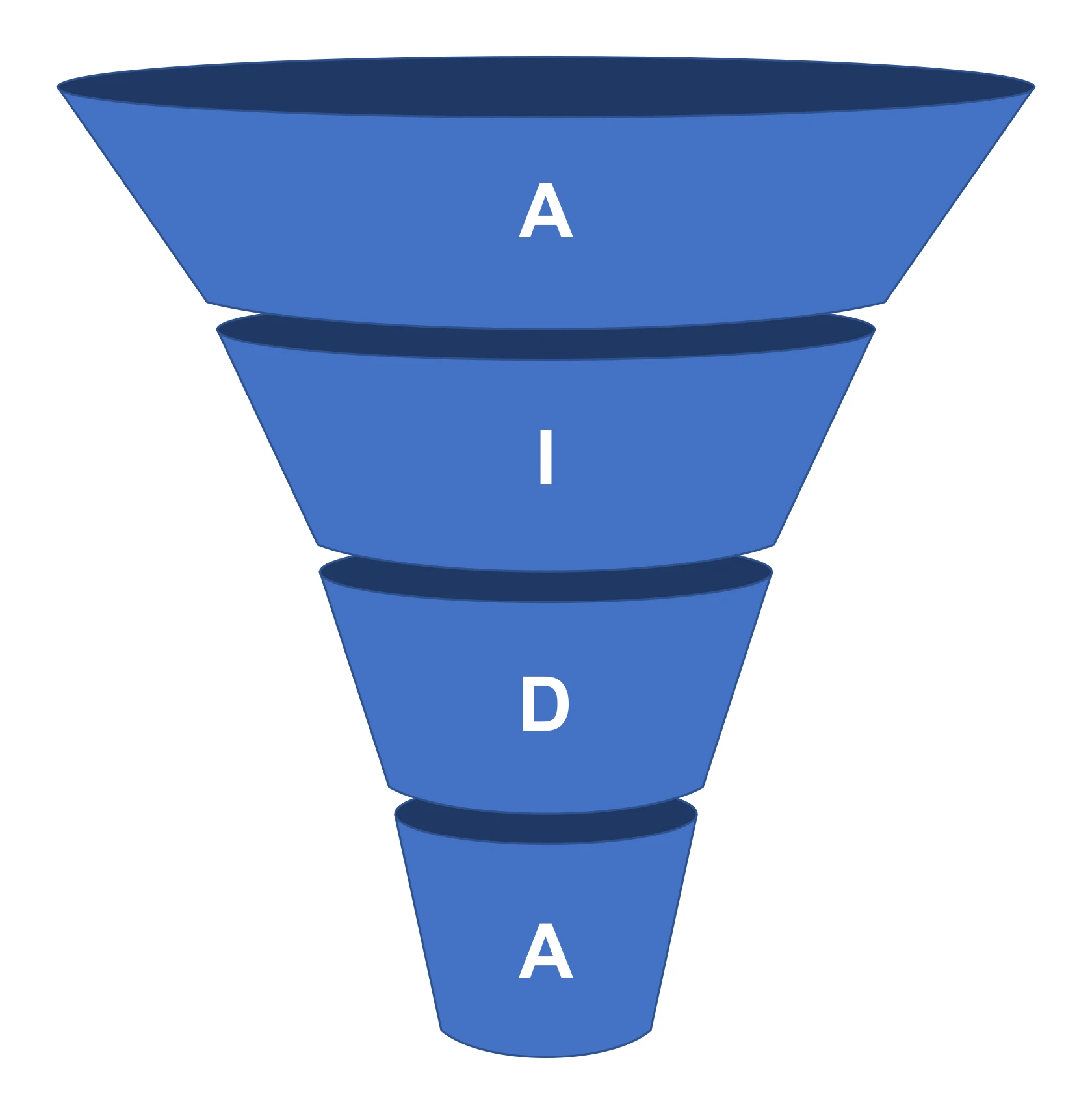
The main aim of this method is to drive traffic to the website, generate leads and increase sales. To achieve this, companies create valuable materials tailored to the needs of audiences at different stages of their buying decisions.
The funnel consists of three key phases:
- building brand awareness,
- conversion,
- customer retention.
In the first phase, the company educates and builds trust through blog articles, infographics or videos. It then presents the benefits of the product or service, encouraging purchase. The final stage focuses on customer loyalty and encouraging them to come back for more.
An effective content marketing funnel requires careful planning, tailoring content to the target group and continuously optimising activities. This enables the company to manage customer relationships effectively and increase the conversion rate. This tool not only attracts new audiences, but also builds long-term relationships with existing customers.
- 01Stage 1: attractingBroad audience, building awareness
- 02Stage 2: educationEngagement, trust, presenting benefits
- 03Stage 3: finalisationFocusing on the interested, increasing sales
The strategy leads potential customers through the cycle from brand discovery to purchase, through tailored content
What are the stages of a content marketing funnel?
The content marketing funnel is divided into three key stages: TOFU (awareness), MOFU (consideration) and BOFU (decision). Each corresponds to a different level of audience engagement, so it requires appropriately tailored content that will smoothly guide them through the entire buying journey.
TOFU stage (Top of the Funnel) focuses on building brand recognition. At this stage, the most important thing is to reach a wide audience and interest them in the topic. It is worth focusing on valuable materials such as:
- expert articles,
- infographics,
- short educational videos.
The aim is not only to present the brand as an authority in the industry, but also to answer the general questions and needs of potential customers.
MOFU stage (Middle of the Funnel) is the moment when audiences begin to analyse the available solutions in more detail. Here, the key is to build trust through more detailed, substantive content. The following will work well:
- case study,
- webinars,
- product comparisons.
These materials not only educate, but also highlight the unique benefits offered by the brand, helping in making an informed decision.
BOFU stage (Bottom of the Funnel) is the time to finalise the buying decision. At this stage, the company should focus on convincing the customer to act. Helpful content will include purchase incentives such as:
- promotions,
- free samples,
- detailed product presentations.
It is also essential to provide easy access to information about prices and transaction terms.
Aligning content with the individual stages of the marketing funnel is crucial to the effectiveness of the entire strategy. This enables a company to smoothly guide potential customers through the buying process, increasing the chances of conversion and building lasting relationships with audiences.
First stage – building trust in the brand
The first stage of the marketing funnel, known as TOFU (Top of the Funnel), is the moment when the brand builds trust and captures the attention of a broad audience. At this time, it is worth focusing on valuable materials such as:
- expert articles,
- infographics,
- short educational videos.
These materials attract interest and encourage further exploration of the offer. The main task is to increase brand awareness and respond to the general needs and questions of potential customers. This allows the company to become an authority in its field, which translates into greater trust from audiences.
It is also worth using viral marketing, which allows content to spread rapidly among users. Another effective tool is webinars, enabling direct interaction with audiences and the delivery of valuable knowledge in an engaging format.
The key to success is adapting content to the needs of the target group and regularly analysing its effectiveness. This enables the company not only to attract new users, but also to smoothly guide them through the subsequent stages of the marketing funnel.
- 01Define the target groupUnderstand needs and challenges
- 02Develop a strategySet measurable goals
- 03Create valuable contentAnswer questions
- 04Effective distributionTailor to channels
The key to success is a well-thought-out strategy, understanding the audience and consistent actions.
Conversion stage – presenting the product’s benefits
The conversion stage, also known as BOFU (Bottom of the Funnel), is the moment when the company focuses on showing why its product or service is worth attention. This is where customers make the purchasing decision, so it is crucial to present specific benefits and value.
At this stage, it is worth focusing on content that relates directly to the offer. These may include:
- detailed product descriptions,
- demonstrations of their functionality,
- reviews from satisfied customers,
- comparisons with competing solutions.
In addition, promotions, free samples or a satisfaction guarantee can prove to be an effective tool.
The unique selling proposition (USP) is extremely important, and it should clearly indicate why a given product stands out from the rest. For example, if a company offers eco-friendly solutions, it is worth highlighting their benefits for the environment and users’ health.
It is equally important to give customers easy access to information about prices and purchasing terms. The transaction process should be intuitive and free of unnecessary complications. It is worth using CTA (Call to Action) buttons that lead directly to the order form or basket.
In short, the conversion stage requires a precise presentation of the product’s benefits and the maximum simplification of the buying process. This enables the company to increase its chances of sales success and achieve its intended business goals.
Customer retention – the key to repeat sales
Customer retention is the final, but extremely important, stage of the content marketing funnel. It is about continuing to deliver valuable content and maintaining regular contact with audiences. This builds loyalty and encourages repeat purchases. Effective post-sale relationship management is crucial to the long-term success of the brand.
At this stage, it is worth focusing on lead nurturing, that is, nurturing relationships with existing customers. How can this be achieved? Here are a few proven methods:
- personalised emails – send messages tailored to the customer’s purchase history, offering products or services that may interest them,
- loyalty programmes – reward regular customers with points, discounts or exclusive offers,
- regular updates – inform them about new products, promotions or useful tips related to the product.
Research shows that acquiring a new customer costs 5-7 times more than retaining an existing one. That is why it is worth investing in activities that increase the satisfaction and engagement of existing audiences. For example, companies using loyalty programmes often record a increase in sales of as much as 20-30%.
It is also crucial to collect opinions and feedback. This way, you will better understand customer needs and adapt your offer to their expectations. Tools such as surveys or product reviews not only help build trust, but also have a positive impact on the brand image.
Remember that customer retention is more than just making a sale. It is above all about building lasting relationships based on valuable experiences. Thanks to this, the brand can count not only on repeat purchases, but also on recommendations from satisfied customers.
- 01Technology and MethodsChoosing tools for each stage
- 02Email MarketingBuilding relationships, personalisation
- 03Delivering ValueContent at every stage (TOFU-MOFU-BOFU)
The main aim is to attract attention, increase engagement and automate the process for final conversion.
How to build an effective content marketing funnel?
Building an effective content marketing funnel is a process that requires a well thought-out strategy and consistent action. To achieve the intended results, it is worth focusing on several key elements that make up a coherent whole.
The first step is defining the target group. Understanding who your potential customers are, what needs and challenges they have, makes it possible to create content that genuinely meets their expectations. To do this, it is worth using analytics tools that provide information about demographic data and user behaviour. This makes it possible to define the audience profile precisely and tailor communication to them.
Next comes developing a content marketing strategy. It is crucial to set goals – whether the aim is to increase sales, generate leads or strengthen brand recognition. The next step is to plan the types of content suited to each stage of the funnel: TOFU (awareness), MOFU (consideration) and BOFU (decision). In the initial stage, blog articles or infographics will work well, while in the decision stage – case studies or special offers encouraging purchase.
Creating valuable materials is another important aspect. Content should not only be rich in substance, but also visually appealing and easy to digest. It is worth experimenting with different formats – from text through videos to interactive tools – in order to reach as wide an audience as possible and maintain their interest.
You cannot forget about testing and optimisation. Regular analysis of results makes it possible to identify areas requiring improvement and better understand user behaviour. Monitoring conversion rates, time spent on the site or engagement levels helps adapt the strategy to the current needs of the market and customer expectations.
Another key element is nurturing relationships with potential customers, i.e. so-called lead nurturing. Personalised messages and the regular delivery of valuable content increase the chances of conversion and build long-term bonds with the audience.
An effective content marketing funnel is a combination of a well-planned strategy, tailored content and continuous analysis and optimisation of actions. This allows the company to effectively guide potential customers through the buying process, achieving its business goals in an efficient manner that is aligned with market needs.
Defining the target group
Defining the target group is the foundation of effective content marketing. To precisely determine who the potential customers are, it is necessary to carry out detailed market research and demographic analysis. This makes it possible to better understand their needs, behaviours and challenges, which in turn enables the creation of content perfectly matched to their expectations.
One of the most effective tools in this process is creating personas – fictional characters representing typical audience members. Personas take into account elements such as:
- age,
- gender,
- profession,
- interests,
- customer problems.
Thanks to them, it is easier to prepare materials that will be not only valuable, but also engaging for a specific group.
It is also worth using analytics tools such as Google Analytics or social media platforms. They provide detailed information about user behaviour, which makes it possible to define the audience profile more accurately and tailor communication to their preferences.
The process of defining the target group does not end at the initial stage of the strategy. Regularly updating data and analysing changes in consumer behaviour are key to maintaining the effectiveness of marketing activities. This enables the company to adapt its content on an ongoing basis to current market trends and customer needs.
Effectively defining the target group translates into better results in lead generation and increases the chances of conversion. It is the foundation of every well-thought-out content marketing strategy.
Content marketing strategy – planning and implementation
Creating and implementing an effective content marketing strategy requires precision and clearly defined business objectives. To achieve the expected results, it is crucial to establish measurable success indicators, such as the number of leads acquired or the conversion rate. The strategy should be ambitious, but at the same time realistic, to ensure efficiency and the ability to achieve the intended results.
The first step is a thorough analysis of the target group’s needs. Understanding who the audience is, what challenges they face and what they expect allows you to create content that genuinely meets their needs. It is worth using analytics tools such as Google Analytics to gather demographic and behavioural data that will help you get to know your audience better.
The next stage is defining strategic objectives. These may include, for example, increasing sales, acquiring new customers or building brand awareness. Each of these goals should be linked to specific KPI (Key Performance Indicators) metrics that will make it possible to track progress and assess the effectiveness of the activities.
Then it is time for creating a content plan. It is important to tailor the types of materials to the individual stages of the marketing funnel: TOFU (awareness), MOFU (consideration) and BOFU (decision). In the initial stage, blog articles or infographics will work brilliantly. In the decision stage, it is worth focusing on case study or special offers encouraging purchase.
Implementing the strategy does not end with publishing content – regular optimisation is necessary. Monitoring results allows you to react quickly to changing market needs. Analysing metrics such as conversion rate or time spent on the site helps you adapt activities to current trends and audience preferences.
Another extremely important element is lead nurturing, that is, nurturing relationships with potential customers through personalised communication and the regular delivery of valuable content. This increases the chances of conversion and builds long-term relationships with the audience, which translates into brand loyalty.
An effective content marketing strategy is a combination of well-planned activities, tailored content and continuous analysis and optimisation. This enables a company to effectively guide potential customers through the buying process while achieving its business objectives in a way that is consistent with market needs and audience expectations.
Creating educational content and premium content
Creating valuable educational and premium content is the foundation of an effective content marketing funnel. At every stage – from building awareness (TOFU), through consideration (MOFU), to the purchase decision (BOFU) – it is crucial to provide the right materials that meet the audience’s needs and guide them through the entire process.
At the beginning, in the TOFU stage, it is worth focusing on educational content that builds trust in the brand. Blog articles, infographics or short videos explaining basic industry issues are excellent tools. Their main aim is to provide valuable knowledge that will interest the audience and encourage them to explore the offer further.
When users move to the MOFU stage, it is time for more detailed materials. Case study, guides or webinars work brilliantly at this stage. They should show the specific benefits of the brand’s product or service. Case study are particularly effective, presenting real customer success stories and increasing the company’s credibility.
In the final stage, BOFU, premium content becomes key, designed to persuade the audience to buy. Exclusive reports, free samples or special offers are just some examples. It is also worth using testimonials and customer reviews that highlight the quality of the product and the benefits it brings.
When creating such materials, it is worth remembering a few principles:
- fit for the target group – the content must address the audience’s needs and problems,
- substantive value – the materials should be reliable and fact-based,
- appealing format – experimenting with different formats, such as video or podcasts, can increase engagement,
- publishing consistency – regularly delivering new content keeps interest in the brand.
Premium content not only increases conversion, but also builds lasting relationships with customers. Thanks to valuable materials, a company can become an authority in its industry, which translates into greater trust and loyalty from the audience.
Testing and funnel optimisation
Testing and optimisation of the content marketing funnel are key elements affecting its effectiveness. Thanks to regular analysis of data such as audience engagement, conversion rates or content effectiveness, it is possible to make the necessary modifications. This allows the strategy to be adapted to the dynamic needs of the market and customer expectations.
During testing, it is worth focusing on a few important aspects:
- traffic analysis on the website – tracking visit sources, time spent on the site and users’ navigation paths,
- conversion rate analysis – identifying the points in the funnel where you most often lose potential customers,
- experimenting with different content formats – comparing the effectiveness of blogs, videos, infographics or webinars.
Optimisation is based on introducing changes on the basis of the information gathered. This may include:
- adapting content to audience preferences – e.g. changing the tone of communication or the form of the message,
- improving the purchase path – simplifying forms or adding clear CTA (Call to Action) buttons,
- personalising the offer – using data about user behaviour to create personalised propositions.
To test and optimise effectively, you need tools such as Google Analytics, A/B tests or heatmaps. These make it possible to precisely determine which elements need improvement and which actions deliver the best results.
Regularly monitoring results and making adjustments is an ongoing process. As a result, the company not only increases the effectiveness of its marketing funnel, but also better understands customer needs and adapts its offer to their expectations.
What are the most common mistakes in creating a content marketing funnel?
Creating an effective content marketing funnel is an art that requires both precision and a deep understanding of audience needs. Mistakes made can not only reduce the effectiveness of your activities, but also discourage potential customers, leading to a drop in conversions. One of the most common problems is mismatching content to the individual stages of the funnel. Each phase – from building awareness (TOFU), through consideration (MOFU), to the purchase decision (BOFU) – requires a different approach. For example, presenting sales offers at the TOFU stage may put off people who are only just getting to know the brand.
Another mistake is ignoring the specifics of the target group. Content should be created with the specific needs, problems and expectations of the audience in mind. A one-size-fits-all approach means that materials often miss the mark, resulting in lower engagement.
Lack of data analysis is another pitfall. Without regular monitoring of results, it is hard to assess the effectiveness of activities and make the necessary corrections. Using tools such as Google Analytics or A/B tests is crucial for identifying weak points and optimising the strategy.
It is also worth paying attention to a lack of consistency in communication. If content at different stages of the funnel is not connected or conveys contradictory information, it can create confusion among the audience and weaken their trust in the brand.
Another challenge is low substantive value of the content. Educational or premium materials should be reliable and based on facts. Publishing superficial or low-quality texts may discourage users from further contact with the company.
Nor should you forget about technical optimisation. Even the best content may fail to deliver the expected results if the site is slow, forms are complicated or there are no clear calls to action (CTA). Simplifying the purchase process and ensuring intuitive navigation are key elements that influence higher conversion.
Avoiding these mistakes makes it possible to create a well-functioning content marketing funnel that effectively guides potential customers through the entire purchase path.
Lack of adapting content to the individual stages
Mismatching content to the individual stages of the content marketing funnel is a common mistake that reduces the effectiveness of the strategy. Each phase – TOFU (awareness), MOFU (consideration) and BOFU (decision) – requires a different approach. Inappropriate materials can lead to a loss of audience interest and a drop in conversions.
At the TOFU stage, educational content that builds trust and brand awareness is key. Blog articles, infographics or short videos explaining basic issues work best. At this stage, you should not push sales too hard, so as not to put off potential customers.
In the MOFU phase, the audience begins to analyse the available solutions more closely. Here it is worth focusing on more detailed materials such as case studies, webinars or product comparisons. The aim is to show the specific benefits of the brand’s offer and build conviction about its value.
The BOFU stage is the moment of the purchase decision. In this phase, content encouraging action is key: promotions, free samples or detailed product presentations. It is also important to ensure easy access to information about prices and transaction terms.
Failing to adapt content to the stage of the funnel can lead to communication errors. For example, presenting sales offers at the initial TOFU stage may discourage people who are only just becoming familiar with the brand. On the other hand, a lack of concrete benefits in the BOFU phase may cause a loss of interest among people ready to buy.
To avoid these problems, it is worth carefully planning the types of content for each stage of the funnel and regularly analysing their effectiveness. This makes it possible to better adapt the strategy to audience needs and increase the chances of conversion.
What tools support building a content marketing funnel?
Building an effective content marketing funnel requires carefully selected tools that support every stage of the process. This includes both technological solutions and communication methods whose main aim is to attract the audience’s attention, increase their engagement and ultimately lead them to conversion.
One of the most effective ways to build relationships with customers is email marketing. Personalised email campaigns make it possible to deliver valuable content at every stage of the funnel – from educational materials in the early stage (TOFU), through detailed information at the consideration stage (MOFU), right up to sales offers in the final stage (BOFU). Automating delivery not only makes contact management easier, but also significantly increases the conversion rate.
In the MOFU stage, webinars work particularly well. Thanks to interactive online presentations, a company can answer the audience’s questions, present the benefits of a product or service, and build trust in the brand. It is a particularly useful tool in sectors where customers need more detailed explanations.
In the consideration and decision stages, it is worth focusing on case studies and product guides. Case studies show real examples of customer success, which strengthens brand credibility. Product guides, on the other hand, help the audience better understand the product and its use, which translates into greater interest in buying.
Another interesting solution is viral marketing, which is based on creating content that users can easily share. This could be funny videos, competitions or infographics that spread quickly on social media. As a result, the brand reaches a wider audience without having to incur high costs.
You should also not forget about social proof, i.e. opinions and recommendations from other users. Reviews, ratings or expert recommendations have a huge impact on purchase decisions, increasing trust in the brand and encouraging transaction completion.
The choice of the right tools should be tailored to the target group and the company’s business objectives. Regular analysis of their effectiveness makes it possible to optimise activities and achieve better results in lead generation and sales growth.
Email marketing and webinars
Email marketing and webinars are indispensable tools for creating an effective content marketing funnel. Thanks to them, you can make direct contact with potential customers, delivering valuable content that not only increases engagement, but also influences purchasing decisions.
Email marketing offers the possibility of personalisation at every stage of the sales funnel. At the initial stage (TOFU), when you are building brand awareness, it is worth sending educational materials, such as articles or infographics, that address the audience’s general needs. In the consideration stage (MOFU), more detailed content will work better, e.g. product comparisons or case studies, which help with making an informed decision. In turn, at the decision stage (BOFU), special offers or free samples encouraging purchase completion may prove effective.
Webinars are an interactive solution perfectly suited to the MOFU stage. Thanks to them, you can present the benefits of your product or service in an engaging way, answer participants’ questions and build trust in the brand. It is also a great method of acquiring new leads through participant registration before the event.
Both tools require consistency and ongoing analysis of their effectiveness. Tracking metrics such as email open rates or webinar attendance allows you to tailor the strategy to the real needs of the audience. This enables the company to effectively guide potential customers through the entire buying process, increasing the chances of conversion and building lasting relationships with the audience.
Product guides and case studies
Product guides and case studies play a key role in the middle stage of the marketing funnel (MOFU). Their task is not only to educate potential customers, but also to build trust in the brand by showing how the product or service performs in real-life situations.
Guides provide detailed information on the features, benefits and practical use of the offer. They can take various forms:
- guides and instructions,
- lists of solutions to specific problems.
Thanks to them, customers more easily see the value of the product, which translates into greater interest in buying.
Case studies are in-depth analyses of situations in which a product or service has brought measurable benefits. They present the company’s achievements, strengthening its credibility and making it easier for potential customers to make a decision. Using numerical data, such as sales growth or time savings, makes this content more convincing and specific.
The key to success is matching both types of materials to the needs of the target group and the stage of the funnel the audience is at. It is also worth ensuring an attractive presentation format:
- infographics,
- videos,
- interactive elements.
Such solutions can significantly increase user engagement and improve the reception of the content.
Regular publication of guides and case studies supports the lead nurturing process and positively affects the visibility of the site in search results. This enables the brand to reach a wider audience and effectively guide them through the entire buying journey.
Viral marketing and social proof
Viral marketing and social proof are two extremely effective tools that can significantly strengthen the effectiveness of a content marketing funnel. The first involves creating content that quickly gains popularity and spreads among users, mainly through social media. These can be funny videos, competitions or infographics that encourage sharing. This enables the brand to reach a broad audience with minimal advertising spend.
By contrast, social proof is based on using the opinions and recommendations of other users. Reviews, ratings or expert recommendations have a huge influence on purchasing decisions – research shows that as many as 93% of consumers check online reviews before buying. This shows how important it is to build trust through authentic recommendations.
In the context of a content marketing funnel, both tools work brilliantly in the consideration (MOFU) and decision (BOFU) stages. In the former, case studies with real examples of client successes can significantly strengthen brand credibility. In the decision stage, reviews from satisfied customers or expert recommendations often prove crucial in persuading those who are undecided to complete the purchase.
To achieve the best results, it is worth integrating viral marketing and social proof consistently with the entire content marketing strategy. Regular monitoring of their effectiveness and adapting content to the needs of the target group makes it possible to increase audience engagement and improve the conversion rate. Testing different content formats is also important – this makes it possible to discover those that resonate best with audiences and generate the greatest interest.
How to measure the effectiveness of a content marketing funnel?
To assess the effectiveness of a content marketing funnel, it is worth looking at key metrics at each stage of the buying process. One of the most important parameters is the conversion rate, which shows how many people move from one stage to the next. For example, if at the TOFU stage (awareness building) 1,000 people visited the website and 100 of them signed up to the newsletter, the conversion rate is 10%.
Another important metric is the number of leads generated at individual stages. This makes it possible to determine which content attracts the most potential customers. It is also worth monitoring user engagement, such as time spent on the website or the number of clicks on the CTA (Call to Action). These data help identify the materials that are most valuable to audiences.
Lead nurturing, that is nurturing relationships with potential customers, also requires regular analysis. Tracking the effectiveness of personalised email campaigns or webinars makes it possible to assess how well the brand maintains contact and guides audiences towards completing a purchase.
You cannot overlook ROI (Return on Investment), that is the return on investment in content marketing. Analysing the costs of creating content and the revenue generated thanks to it helps determine the profitability of the entire strategy.
To monitor these metrics, it is worth using analytical tools such as Google Analytics, HubSpot or Hotjar. They make it possible to track traffic on the website, user behaviour and the effectiveness of marketing activities.
Regular data analysis and making adjustments are the key to optimising a content marketing funnel. This enables the company to better adapt its activities to audience needs and increase the chances of achieving business goals.
Conversion rate analysis
Conversion rate analysis is a key element of assessing the effectiveness of a content marketing funnel. It makes it possible to check how many people move from one stage to the next, which makes it easier to identify areas that require improvement. For example, if at the TOFU stage (awareness building) 1,000 people visited the website and 100 of them signed up to the newsletter, the conversion rate is 10%.
Regularly tracking this metric makes it possible to optimise marketing activities. Analysis helps determine which content attracts the most potential customers and where the biggest losses occur in the buying process. Tools such as Google Analytics or HubSpot allow you to monitor this data in real time.
The conversion rate plays a particularly important role in the MOFU (consideration) and BOFU (decision) stages. A low proportion of people moving from consideration to completing a purchase may suggest the need for a better fit of the offer or improvements to the transaction process.
Optimising this metric often involves testing different content formats and CTA (Call to Action) buttons. Experimenting with copy, graphics or the placement of interactive elements can have a significant impact on user engagement and increase the number of conversions.
Conversion rate analysis is essential for the continuous improvement of a content marketing strategy. It enables the company to better adapt its activities to audience needs and achieve higher sales results.
Lead nurturing and effective customer relationship management
Lead nurturing is the process of building and nurturing relationships with potential customers at every stage of their buying journey. Its main aim is to deliver valuable content that responds to the audience’s current needs, thereby increasing the chances of conversion and loyalty. It is equally important to look after relationships after purchase, as this affects the likelihood of repeat transactions and recommendations.
The key to effective lead nurturing is understanding at which stage of the marketing funnel the customer is:
- at the beginning (TOFU) it is worth focusing on educational materials, such as blog articles or infographics, which build brand awareness,
- in the consideration stage (MOFU) more detailed content will work better, e.g. case studies or webinars, helping with the decision-making process,
- in the final stage (BOFU) it is worth using special offers or free samples, which encourage purchase completion.
Communication personalisation plays a key role here. Emails tailored to purchase history or customer preferences can significantly increase engagement and loyalty. Research shows that as many as 80% of consumers more often choose companies offering personalised experiences.
Regular analysis of data on customer behaviour is another important element of effective lead nurturing. Tools such as Google Analytics or CRM platforms make it possible to track the effectiveness of marketing activities and adapt the strategy to current market trends. This allows the company to better understand audience expectations and optimise its activities.
You should not forget about maintaining contact with customers after purchase. Loyalty programmes, regular information about new products or exclusive offers for regular customers are effective ways to build long-term relationships. Satisfied customers not only return for more more often, but also become brand ambassadors, which translates into increased sales through recommendations.
Effective lead nurturing and customer relationship management require constant attention and flexibility in adapting to changing market needs. Thanks to well-planned activities, the company can not only increase conversion, but also build lasting bonds with its audience, which is the foundation of long-term business success.
FAQ
Frequently asked questions
What are the stages of a content marketing funnel and how do they differ?
The funnel consists of TOFU, MOFU and BOFU. TOFU builds brand awareness, MOFU helps with considering solutions, and BOFU supports the buying decision.
What content works best at the TOFU stage?
At the TOFU stage, expert articles, infographics and short educational videos work best. Their goal is to attract a broad audience and build trust in the brand.
What should you publish in MOFU to help the customer make a decision?
In MOFU, it is worth using case studies, webinars and product comparisons. Such content educates the audience and shows the unique benefits of the offer.
What content increases conversions in BOFU?
In BOFU, detailed product descriptions, feature demos, customer reviews and promotions or free samples work well. It is also important to make prices and purchase terms easy to find.
Why is customer retention important in a content marketing funnel?
Because it helps build loyalty and encourages repeat purchases. The article also emphasises that acquiring a new customer costs 5–7 times more than retaining an existing one.
How do you build an effective content marketing funnel from scratch?
You first need to define the target audience, then plan the strategy and tailor content to the funnel stages. Finally, testing, optimisation and nurturing customer relationships are essential.