

Customer reviews in an online store are not just a decorative extra, but a tool that genuinely works for sales, trust and the quality of the offer. When implemented well, they help the customer make a decision and enable the store to spot issues with the product, delivery or service more quickly. Their value does not end with star ratings on the product, because reviews also provide content for SEO, fuel for ads and concrete pointers for UX optimisation. The most important thing in practice is that reviews must be treated as an operational process, not just a module on the site. What matters is not the number of reviews alone, but their quality, credibility, context and the way the store uses them. These are the elements that determine whether reviews help or merely take up space.
What customer reviews are in the practical context of an online store
Customer reviews in the practical context of an online store are a system for collecting, verifying, publishing and analysing opinions about products, orders, delivery and customer service. That sounds technical, and that is good, because this is not just about a rating on a scale from 1 to 5, but about the whole flow of information after purchase. A well-organised review system gives the store two effects at once: it supports sales and, at the same time, provides data for improving the offer. And that is not a cliché.
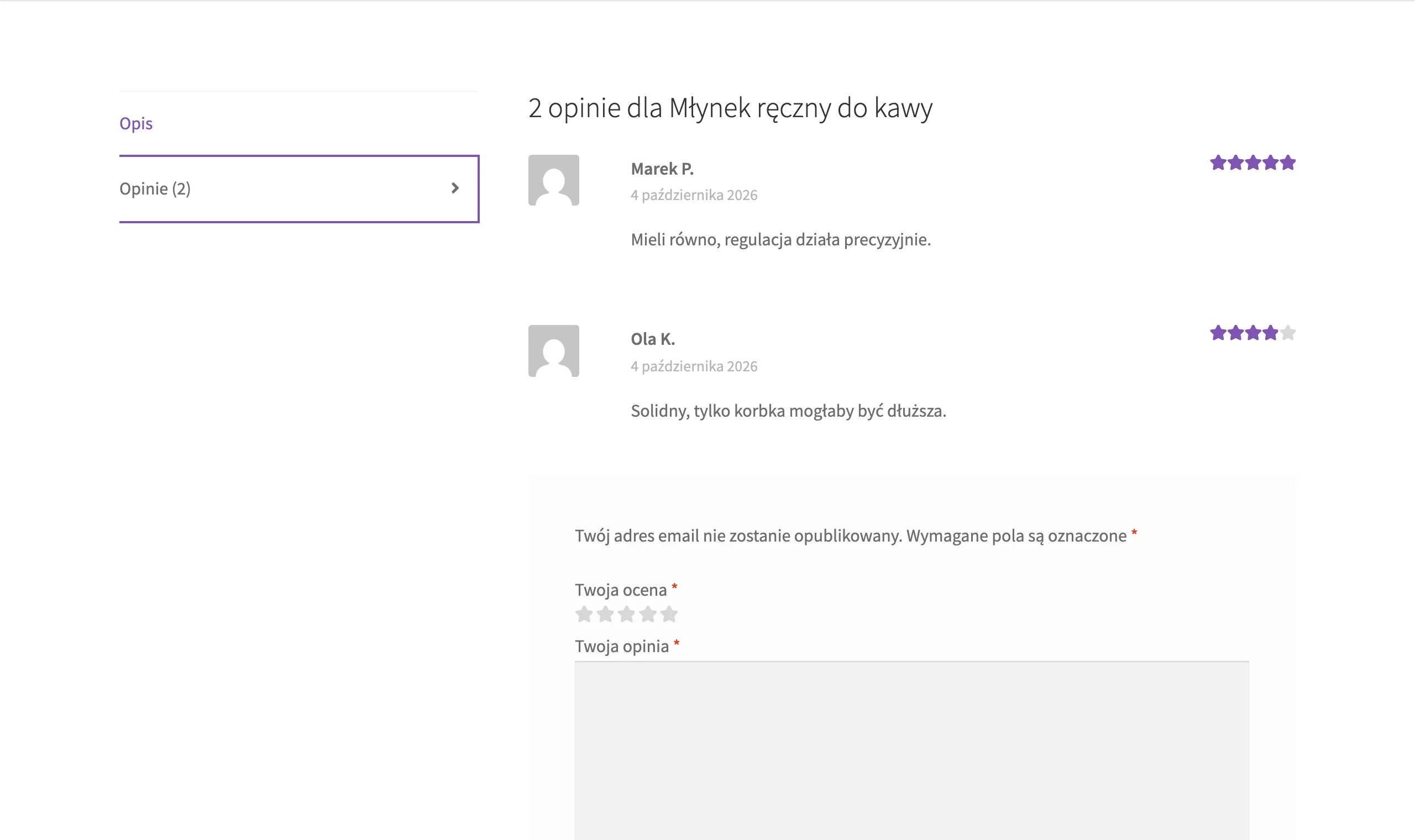
The greatest value comes from reviews linked to a real purchase. They are simply easier to trust and much better suited to analysis. If the store can mark that a review comes from a verified customer, its credibility increases both for the user and for the team analysing the data. This is especially important for higher-priced, technical products or those that regularly raise questions about quality, size or compliance with the description.
In a store, several types of reviews usually operate at the same time: star ratings, text comments, seller replies, questions and answers, customer photos, store reviews and reviews of specific products. The problem is that without clear distinction, everything gets mixed into one noise. And not every negative review says the same thing. One points out a product defect, another delayed delivery, and yet another poor communication after purchase.
A product review and a service review should not be mixed, because they lead to different business decisions. Product issues should go to the people responsible for the range, descriptions, purchasing or quality, instead of being lumped together with logistics. By contrast, delivery and customer contact issues are a matter for logistics, customer service or the e-commerce manager, not the department that improves product pages. Without such a division, reviews become chaotic and difficult to use sensibly. The data speaks clearly: disorder in reviews quickly turns feedback into a cost.
Reviews are also part of the store’s information architecture, because they appear not only on the product page. In practice, they are visible on product listings, in categories, in internal search results, in post-purchase messages and in advertising materials. In practice, reviews work at the same time as social proof, SEO-supporting content and a source of insights for improving product pages. Look at it another way: one section on the site can simultaneously close a sale and open your eyes to what is not working in the offer.
Current operational context and requirements
The context is simple. Reviews must be credible, technically implemented correctly and moderated according to clear rules, because without that the whole structure looks like decoration. Simply launching a review widget is not enough. The customer wants to know whether the review was written by someone who really bought the product, and the store should be able to communicate that honestly.
Today, reviews work for sales, but just as strongly for information. Users look in them for answers to very specific questions: whether the size matches the chart, whether the product is durable, what it looks like in reality, whether assembly is simple and whether delivery went smoothly. And that is exactly why the most useful reviews are the ones with detail, rather than a brief “recommend”.
It also matters where and how these reviews appear in the store. Search engines and ad systems make better use of content that is displayed clearly, assigned logically to the product and implemented without technical shortcuts. The problem is that when reviews are hidden in a heavy script, badly linked to variants or cannot be sensibly filtered, their value for SEO and UX clearly drops. This is not a detail, it is a brake.
A lot depends on the moderation policy. The store should not remove reviews just because they are unfavourable, because that directly undermines the credibility of the whole system. But attention is also needed for spam, profanity, personal data, duplicates and content that is misleading or not related to the product. Good moderation is not about sweeping problems under the carpet, but about separating valuable criticism from content that should not be published.
The scope of actions depends on the sales model. A review system is designed differently for a store with a small number of premium products, differently for a large catalogue with hundreds of variants, and differently again for a marketplace. The broader the assortment, the more important automation, review filtering and correct mapping to a specific SKU or variant become.
In the end, everything still comes down to the store’s technology. You need access to order data, integration with a tool for sending review requests, the ability to mark reviews as verified and a sensible connection with CRM, ERP or the e-commerce platform. The question is: can the system link a review to the right product and the right moment after purchase. If the technology does not allow a review to be assigned to the right product and the right moment after purchase, the whole process quickly loses quality.
How the customer review system works step by step
The customer review system is not a loose add-on, but a structured process. It starts with designing the form and choosing the moment to send the request for a review, and ends with data analysis and real changes in the store. First, you need to clearly define what opinions you collect and why, because without that the whole effort spills into “nice ratings” with no meaning. The journey is structured differently for simple everyday products than it is for clothing, electronics or goods that need to be tested in practice. The most important decision at the start concerns separating product reviews from delivery and customer service reviews, because only then can the data be used sensibly.
Then come the tools and data sources. And that is where the real work begins. In practice, the store connects the review module with the e-commerce platform, order database, e-mail automation system and often also CRM, so the review is not an anonymous note, but a trace of a specific purchase. This makes it possible to assign the review to a product and variant, for example size or colour, instead of putting everything in one basket. Without such mapping, it is easy to draw false conclusions, because a good rating for one variant can hide problems with another.
After the purchase, the customer receives a request for a review, most often an e-mail or SMS with a link to a simple form. The timing of the send must depend on the nature of the product: for quick purchases it may be a few days after delivery, and for products “to be tested” only after real usage time. A request sent too early gives shallow opinions, while one sent too late clearly reduces the number of responses. A form works best when it does not pretend to be a scientific survey, but instead guides the customer through what matters: whether it matches the description, quality, size, ease of use or assembly, if that really makes a difference in the category.
Next, the opinion goes through verification and moderation. Without this, the review module quickly turns into a notice board for spammers. The system should check whether the entry can be linked to an order, and the team assesses whether the content contains spam, vulgar language, personal data or information completely unrelated to the product. Moderation is meant to protect quality, not to whitewash reality, so it cannot rely on hiding every negative review. A store gains more from the fair publication of mixed reviews than from an artificially perfect rating profile.
Once approved, it is worth displaying reviews where they genuinely help the purchase decision. The product page is standard, but listing pages, FAQ sections, the internal search and promotional materials also make sense, provided it is not decoration but useful information. Technically, one thing matters: the content must be correctly embedded, indexable and assigned to the right product. In practice, this means a review widget alone is not enough if the reviews are poorly mapped or invisible to analytics systems, because then you lose the data before you have time to interpret it.
When a negative or problematic review appears, the store should respond publicly and, at the same time, close the issue operationally. This is not a conversation only with the author of the post, but a signal to all future customers who check how the brand reacts to a problem. A good response is factual and brief, without half a screen of explanations, but with a clear next step. It may be an explanation of the size guide, contact with customer support or information about an improved batch of goods, as long as it is not a promise with no substance.
The final stage is analysis and implementation. It sounds technical, but this is where the sense of the whole job is decided: the team should track not only the average rating, but also the number of new reviews, the share of verified reviews, recurring themes and differences between variants, categories or seasons. These numbers and comments lead to specific corrections in descriptions, size charts, photos, instructions, packaging, delivery messages and the returns policy. Reviews have the greatest value when they end in a concrete change to the offer or process, and not just an increase in the number of stars on the site.
Key analyses and decisions in review management
This is not about “managing opinions” alone. Key analyses and decisions in review management revolve around what really boosts or lowers a customer’s rating, how to display reviews in the store and when to hand the issue over to the right team. The average rating alone can be misleading, because it does not answer whether the problem lies in product quality, an incorrect description, delayed delivery or poor variant fit. The problem is that numbers without context easily become a smokescreen, and quotes on their own can clash with reality. That is why you need to read reviews qualitatively and look at the numbers at the same time. Only this combination separates a one-off incident from a recurring issue.
The most important qualitative analysis is simple in principle, harder in discipline. It consists of grouping the themes that recur in comments, rather than latching on to individual, loud opinions. In practice, this means areas such as size, durability, whether it matches the photos, ease of assembly, compatibility, packaging quality or delivery time. If the same complaint appears regularly, then it is no longer one person’s “feeling”, but a signal for change. And one more thing: sometimes a description update is enough, and sometimes a product or logistics change is needed. The repeatability of a comment is usually more important than the emotional tone of a single review.
There is no room for shortcuts in quantitative analysis either. What matters is not only the average rating, but also the number of reviews, the pace at which they are growing, the share of verified reviews, and the differences between SKU or variants. In a store with a broad catalogue, it is worth separating whether a drop in ratings affects the whole category, one supplier, or a specific product variant, because those are three completely different stories. This approach helps you spot problems more quickly after a batch change, a manufacturer change, or a quiet edit to the description on the site. It is also a good move to compare reviews with the level of returns and customer service enquiries, because then you can see what is just “grumbling” and what is genuinely costly.
A large part of the decision-making concerns how to present reviews so that they help sell rather than harm. You need to decide whether the average rating should already be visible on the listing, whether to show a filter only for verified reviews, whether to combine ratings for all variants into one score, and which reviews to highlight on the product page. The question is what should win: the “wow” effect or an answer to the doubts that block a purchase. In practice, it is worth giving prominence primarily to posts that address the most common purchase objections, rather than only the most enthusiastic comments. For products that are harder to buy, seller replies and customer reviews with photos also work well.
It also matters what we do with a review after publication. Some posts should feed marketing as fuel for product pages, email campaigns and ads, while others should go to UX as a signal that the description or page layout does not answer key questions, and still others to the product, purchasing or logistics team. Without this, chaos sets in. If a store does not own the process, reviews turn into dead content within a few weeks, just taking up space. And the problem here is not the lack of reviews, but the lack of decisions after collecting them. That is why a simple working model is needed: topic, responsible team, decision and implementation status.
- Do not ask for a review without matching the timing to the product. Otherwise you will collect comments about delivery rather than real use.
- Do not mix product ratings with service ratings. These are two different sources of problems and two different directions of action.
- Do not hide weaker reviews just because they lower the average. Credibility usually increases conversion more than a artificially perfect picture.
- Do not publish reviews without variant context. Size, colour or product version often changes perception and the rating.
- Do not end the work at publishing the reviews. If no changes in the offer result from the reviews, the process is incomplete.
At the operational level, it is a good idea to keep a few fixed reports. This means rating trends, a map of the most common problems by category and SKU, and a backlog of changes for the store and the offer. Such a set shortens the path from “someone wrote” to “we are making a fix” and allows you to decide more quickly on changes to descriptions, size charts, photos, delivery messages and the products themselves. But note, these are not decorative extras. Well-managed reviews are therefore not just a section on the site, but a permanent feedback channel for the whole e-commerce operation.
Key UX, SEO and CRO actions related to reviews
Reviews support UX, SEO and CRO only when they are shown in the right place, have sensible context and answer real pre-purchase doubts. In UX, the greatest value comes from placing a summary of ratings near the price, variant and add-to-basket button. Why make the user hunt for product quality only at the bottom of the page. If reviews are hidden, hard to filter or do not relate to the selected variant, their impact on the purchase decision quickly drops.

On the product page, it is better to show not only the average rating, but also the number of reviews, information about purchase verification and the ability to filter content by topic. In practice, customers look for specifics, not poetry. The same questions come up most often: does the size fit, is the material durable, is assembly easy, does the colour look like it does in the photos. That is why reviews should be browsable by rating, date, variant and the most common product features, rather than forming a long, unstructured stream of comments.
Good UX starts with order. It also means a simple separation of product reviews from reviews of delivery and service. If a customer gives a low rating because the parcel got stuck on the way, that is not automatically a verdict on the quality of the product itself. This separation improves readability for the buyer and the quality of data for the team that later has to do something with it.
In SEO, reviews only work when they are normal page content, not a widget embedded in such a way that the bot sees mainly technical noise. The search engine must “see” the review text, their connection to the product, and the sensible, logical structure of the whole subpage. Correct implementation of structured data for reviews is also crucial, but only where it genuinely applies and matches the page content. Otherwise it becomes decoration, not a signal.
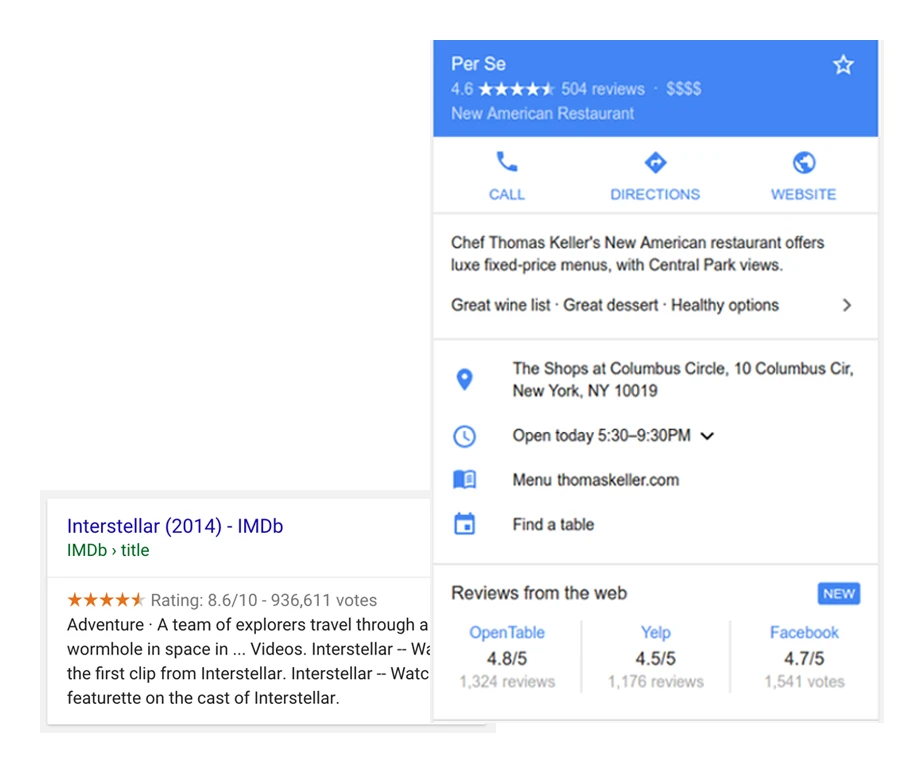
The practical SEO value of reviews does not end with stars and an enhanced result snippet. That is only the tip of the iceberg. Customer content provides the language buyers actually use, and this then feeds product descriptions, FAQ sections and information about use cases, size or compatibility. The most valuable are reviews describing product use in practice, because they cover search intents that the store often does not capture in the official description.
In CRO, reviews do the heavy lifting where buying hurts. In other words, where resistance or risk appears. This applies to higher-priced products, a first purchase in a given category, clothing, cosmetics, electronics and any offers where the customer simply has to believe the manufacturer’s claims. In such situations, it is not a wall of praise that works best, but opinions that remove specific objections: about durability, ease of use, consistency with the description or returns handling.
Effective CRO implementation is not about pasting in one module with quotes. That is not enough. You need to check what actually drives sales: a review summary above the images, a section with the most frequently repeated advantages, the seller’s responses to more difficult comments, or reviews with customer photos. And this is where the crux lies. The greatest impact on conversion usually comes from those opinions that reduce one specific doubt before clicking “buy now”.
Reviews also live beyond the product page. On listings they help with initial selection, in internal search they boost the perceived attractiveness of results, and in ad campaigns and emails they strengthen the credibility of the message. The problem is that this does not happen by itself. For it to work, the shop must know which quotes can be used for marketing, how to connect them to a specific SKU, and when using them does not distort the picture of the product.
The most common mistakes and good operational practice
The most common mistakes when working with reviews come from thinking about them as a decorative element of the site, rather than as a continuous operational process. This is not an add-on at the end. The first problem is poor timing of the request for a review. If the shop asks too early, the customer has not had time to assess the product, and if too late, the response rate drops and the share of reviews written under the influence of frustration after a problem increases, rather than based on genuine product experience.
The second common mistake is lumping different types of opinions together and into one result. Product, delivery and service ratings answer different questions, so they should be assigned to different process owners. When a shop reduces everything to one average, it loses the chance for an accurate diagnosis and starts making misguided decisions about a product that, in essence, has a logistics problem, not a quality one.
Third mistake. Overly aggressive selection of published content. Removing all unfavourable posts can briefly “polish” the site, but in practice it undermines the credibility of the entire review system. The customer is then given a suspiciously perfect picture, and the team cuts itself off from the most important warning signs.
Just as costly is a lack of response to negative reviews. A public reply will not always fix the specific situation, but it shows the service standard and the way problems are resolved, that is, what others are only trying to read between the lines. It is best when responses are short, to the point and lead to a resolution, rather than a tug of war with the customer.
In stores with variants, something even simpler often goes wrong. Reviews are published without indicating which colour, size or configuration they refer to. As a result, the customer reads a comment about a different variant and draws the wrong conclusions, because how are they supposed to know it is not that version. Mapping reviews to variant level is particularly important in clothing, furniture, electronics and everywhere else where differences between versions affect the user experience.
Good operational practice is ruthless in its simplicity. Every recurring remark should have an owner and a next step, instead of disappearing into the general “noise of reviews”. If customers regularly report a sizing problem, the issue should go to the person responsible for the size chart, product description or sourcing. If comments about transport damage multiply, logistics should get the signal, not just the marketing department.
In practice, a simple, consistent working model wins. A clear moderation policy, assigned responsibility, a cyclical review audit and a changes backlog. There is no need to build a complex system, but you do need to keep asking yourself a few hard questions regularly: which SKUs are losing rating, which problems recur most often, whether they concern the product or the service, and what has already been improved. Reviews are only useful when they lead to a concrete change in the offer, description, service or buying process.
Finally, there is quality control of the process itself. You need to monitor whether the integration with orders works, whether reviews are correctly marked as verified, whether the form does not discourage responses, and whether the number of new reviews does not drop after changes in the shop or communication. It is consistency and order that determine whether reviews will be a real tool for managing sales, or just a nice decoration on the site.
FAQ
Frequently asked questions
How do customer reviews help in an online store?
They help build trust and support the purchase decision, while the store spots problems with the product, delivery or service more quickly. In addition, they provide content for SEO, ads and UX optimisation.
Are reviews from verified customers more important than ordinary reviews?
Yes, because they are easier to trust and better suited to analysis. If the store marks a review as coming from a real buyer, its credibility increases for both the user and the team.
Why should product and service reviews be separated?
Because they concern different issues and lead to different business decisions. Comments about the product should go to the people responsible for the offer, while delivery or contact issues should go to logistics and customer service.
When is the best time to send a review request to a customer?
It depends on the product and the point at which it can realistically be assessed. For quick purchases, a few days after delivery is enough, while for products that can only be checked after some time of use, later is better.
Which reviews are most useful for the store?
The most valuable are reviews with detail, not short “I recommend it”. Customers and the store are helped most by comments on whether the product matches the description, quality, size, assembly or durability.
What should the store do with a negative review?
It should respond publicly and at the same time close the issue operationally. Such a reaction shows future customers that the brand takes the problem seriously and can solve it.