

Analysing customer feedback with AI turns scattered comments, ratings and tickets into decisions for customer service, product, marketing and sales. That is the essence. In practice, it is not about simply counting positive and negative reviews, but about understanding exactly what triggers customer satisfaction or frustration. The system collects data from multiple sources, organises it, classifies it and shows which problems need to be dealt with first. As a result, the company sees not only “how things are”, but also “what to do next”. The greatest value comes not from the AI model itself, but from a well-designed process: from data quality, through the topic taxonomy, to implementing insights in day-to-day work. The problem is that without this practical follow-through, review analysis is often useful only on paper.
What customer feedback analysis with AI is
Customer feedback analysis with AI is an operational process of collecting and interpreting comments from multiple channels in order to identify specific problems, their causes and corrective actions. It sounds technical, but it is about bringing order to signals. Data sources can include marketplaces, online store, forms, surveys, social media, chat, email, a helpline or ticketing systems. The key is that all these signals land in one place and only then become comparable, and thus “open for discussion” at the same table.
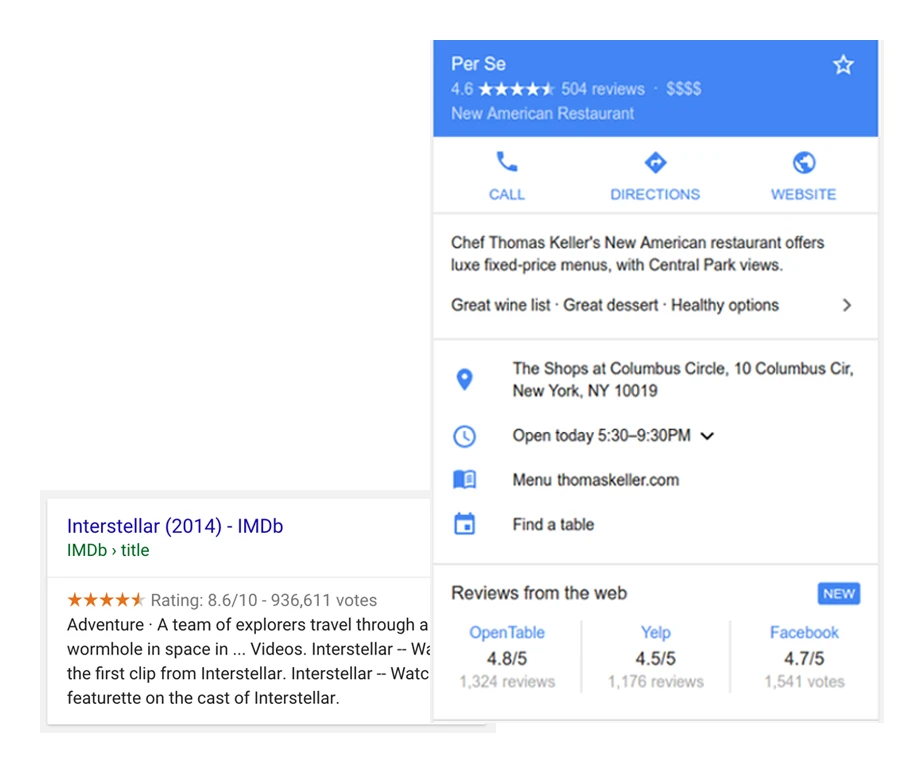
In practice, the system should not stop at simple sentiment. The mere fact that a review is negative says little about whether the issue concerns price, delivery, product quality, a complaint, an app bug or poor contact with support. And that is the catch. Two equally negative reviews can indicate a completely different weight of problem, which is why topic, cause, urgency and business context matter. So the question is not “is it bad”, but “what exactly is bad and how bad is it”.
Technically, such a service usually consists of several layers. First there are data connectors and ETL, which fetch and organise reviews. Then data cleaning, anonymisation and NLP and LLM models come into play, recognising topic, intent, emotion, escalation risk and similarity between statements. Finally, the results go to a dashboard, alerts or directly to the work tools used by teams. Without that final step, instead of action, you get yet another table to tick off.
The best implementations combine a classic rule-based approach with language models. Not “either-or”, but a sensible duo. Rules and classifiers provide repeatability, while LLMs handle nuance better, summarise long statements and tag topics that were not described precisely before. This matters especially where customers write briefly, imprecisely, with errors, abbreviations or mix several threads into one review. That is exactly when technology shows whether it supports operations or is merely a flashy label.
The result of good analysis is not “a nice chart”. It is a set of things that can actually be implemented and measured by outcome. This may include a list of the most common problems, a cause matrix, an alert about a sudden rise in negative reviews, priorities for product changes, draft responses for support or a database of customer questions for FAQ and SEO. If the outcome of the analysis does not lead to an operational decision, then most often the problem lies not in AI, but in the project’s wrong goal or a poor data structure.
There are limitations too, and very concrete ones. The quality of the result depends on the quality of the input: data availability, consistent identifiers, the language used in reviews, correct transcription of conversations and a sensible problem taxonomy. The problem is that even with an excellent model, things can still fall apart over small details. Data privacy, retention, access restrictions and separating analytical data from the data used for direct contact with customers also come into play.
How the customer feedback analysis process works in practice
It all starts simply. You establish which business decisions are to be produced at the end, because that is the first filter that separates a useful project from analysis “just in case”. Without that anchor, analysis can be like a map without a scale. You build a system differently for detecting complaint issues, differently for improving basket UX, and differently again for gathering topics for content and SEO.
The second step is an inventory of sources and defining the unit of analysis. The question is: what exactly are we counting and comparing. You need to know whether the analysis will cover a single review, an entire ticket, a conversation, an order, a product or a customer. Without that, it is difficult to aggregate data correctly, compare channels and avoid false conclusions, such as counting the same issue several times.
Then the data enters the system via API, webhooks, CSV exports or integrations with the database and is normalised into a common format. Fields such as date, source, language, product, location, rating, ticket ID or case status are standardised. And this is where reality, not theory, shows up. At this stage, most of the real implementation problems emerge: inconsistent identifiers, different date formats, mixed languages and gaps in metadata.
The next stage is cleaning and anonymisation. Duplicate entries, spam, empty records, incorrect character encoding, automated posts and technical artefacts are removed, and in the case of recordings, speech transcription and conversation segmentation are used. It is tedious, but unavoidable. In parallel, personal data, order numbers, phone numbers and addresses are masked so that the analysis is useful but compliant with data security principles.
At the end of this part of the puzzle, a topic taxonomy is designed, that is, a practical dictionary of categories and subcategories. This might include delivery, delay, damage, return, contact, payment, interface, missing feature or product quality. The key thing is that this dictionary is shared across the whole company, rather than “everyone putting it their own way”. Taxonomy is one of the most important elements of the entire implementation, because even a good model will not help if the company does not have a common language for describing problems.
Only on such a foundation does proper AI analysis begin. Models can assign sentiment, topic, intent, emotion, urgency, problem type and the expected area of responsibility to reviews, and then arrange this into a coherent picture. Depending on the project, classifiers, entity extraction, clustering of similar reviews, detection of semantic duplicates and LLMs come into play to interpret more complex statements and build summaries.
Classification alone is not enough. The problem is that without business context we get elegant labels, but we still do not know what to do with them. A review only becomes truly valuable when we know which product it concerns, which region, courier, campaign, app version or stage of the customer journey it is linked to. Only then can we distinguish symptom from cause. And suddenly it turns out that “purchase quality” is not being ruined by the offer, but by a payment outage after a specific change in the app.
Then the data needs to be brought together. The system aggregates the results and looks for patterns, that is, it picks out the most common topics, sudden spikes in negative reviews, differences between customer segments, seasonality and new clusters of problems that were not previously in the taxonomy. The key point is that this is not a game of reports after the fact. It is a stage that is particularly important for companies that want to operate close to real time, rather than looking at a monthly summary when the dust has long since settled.
Next comes prioritisation. The number of reviews matters, but attention, it cannot be the only criterion, because a rare problem can be far more operationally dangerous than a frequent but relatively mild one. That is why it makes sense to also take into account the strength of the negative impact, the risk of losing a customer, the cost of support, repeatability and whether a fix can be implemented quickly. Not the “loudest”, but the “most costly” should win.
At the end, the results must reach the right people. Management needs a picture of trends and priorities, operations want alerts and lists of issues to fix, support uses response drafts, and marketing and SEO hunt for recurring questions, purchase barriers and customer vocabulary. The best system is one that does not stop at the dashboard, but passes insights into CRM, the helpdesk, the product backlog or BI tools.
The final stage is validation and continuous learning across the whole process. You need to regularly manually check a sample of results, update the taxonomy, refine exception rules and observe whether the models still properly understand new types of statements. Irony, slang, short comments and mixed reviews still require human oversight, which is why AI in this area works best as an accelerator for the team’s work, rather than a complete substitute for expert judgement. And that is not a cliché, but a practical lesson from implementations.
Key elements affecting the quality of analysis results
The quality of analysis results is determined primarily by the input data, topic taxonomy, business context, human validation and the way AI models are used. That is the foundation. If reviews are incomplete, duplicated or taken out of context, even a good model will start producing conclusions that look sensible but in practice lead you astray. The fact is that most errors rarely come from AI itself, but from the mess in the data. First you need to clean up the sources and data fields, and only then assess the model’s effectiveness.
The quality of the input data is crucial. Full stop. Reviews come in from different places and in different forms: a short comment, a star rating, an e-mail message, a chat log or a conversation transcript, and each one follows a different logic. That is precisely why you need to standardise them, remove duplicates, filter out spam and fix obvious technical errors, otherwise the analysis will be skewed from the outset.
It is also hugely important whether the review comes with sensible metadata. Without it, you are stuck. The comment text alone is usually not enough if we do not know which product it concerned, when it was created, which channel it came from and at which stage of the process the problem appeared. Without linking the review to the product, order, location or stage of the customer journey, it is hard to distinguish the symptom from the real cause.
The second key element is the taxonomy, that is, the dictionary of topics and subtopics. This is not decoration, but a working tool. It must be detailed enough to distinguish, for example, a delayed delivery from a damaged parcel, but not so bloated that nobody will be able to use it consistently. Overly broad categories such as “customer service” or “technical problem” give a nice report, but poorly support operational decisions when you need to act quickly and precisely.
Equally important is how the model copes with customer language. Because these are not textbook sentences. In real data you get typos, abbreviations, irony, mixed emotions, slang and very short comments, for example “drama”, “would not recommend” or “the product itself is fine, but delivery was awful”. The question is whether we want to pretend this can be “neatly” classified without extra support. Such statements usually require exception rules, training examples or manual review of some results, otherwise the model will be guessing instead of understanding.
In practice, the best approach is a combination of several methods. One layer is not enough. Traditional classifiers and rules provide predictability, while LLMs are better at picking up nuances, summarising longer statements and helping with tagging new topics when the language escapes rigid definitions. However, it is not worth basing the entire analysis solely on sentiment, because two negative reviews can mean completely different levels of problem severity.
Human validation also affects the quality of the results. Without it, it is easy to believe in “pretty” statistics. You need to regularly check a sample of reviews and compare the model’s classification with how the business understands the case, because only this confrontation shows where the system is actually getting things wrong. This is especially important for new products, changes in the offer, multiple languages and industry-specific vocabulary, which is not always well interpreted by a general-purpose model.
Usability of the results matters. A good analysis does not stop at a chart showing the number of positive and negative reviews, but instead surfaces the most common issues, their scale, urgency and which team should own the topic. If the report does not show what needs to be improved, who should do it and how to measure the effect, then the quality of the analysis only appears good, but is low from a business perspective.
Preparation for implementation and potential risks
Implementation does not happen by itself. You need to prepare the data model, review sources, a common taxonomy, privacy rules and a way of passing results to teams, because without this the project quickly turns into an analytical experiment with no impact on customer service, product or marketing. The question is: what decisions are meant to be made on the basis of reviews and who is actually accountable for them.
First comes the unit of analysis. You need to decide whether you are analysing a single comment, an entire ticket, a conversation, an order, a product or a specific customer, because that sets up everything else. This affects everything later on: the way data is aggregated, comparing channels, detecting trends and interpreting the number of problems.
The second step is a minimal data model. In practice, it should include at least: review content, source, date, language, product or service, location, rating, stage of the customer journey and an identifier allowing the entry to be linked with the CRM, helpdesk or order. The better the data structure at input, the less manual work and the fewer incorrect conclusions at output.
The third step is a shared topic glossary across departments. Marketing, customer service, UX, product and operations often name the same problem differently, which means the results of the analysis are technically correct, but difficult to turn into action afterwards. The key is to agree definitions of categories, edge-case examples and rules for assigning multi-topic reviews straight away, rather than hoping it will “sort itself out”.
Before launch, you also need a manually labelled sample of data for validation. Such a sample makes it possible to check whether the model correctly recognises not only sentiment, but also the topic, urgency, type of problem and the relevant area of responsibility. And this is particularly important when the reviews are short, multilingual or packed with industry-specific language.
Another area is privacy and data access. Reviews very often contain personal data, order numbers, phone numbers, addresses and complaints information, so you need to plan anonymisation, data retention and the access scope for individual teams in advance. In practice, it is best to separate analytical data from operational data used for direct customer contact, because mixing these worlds usually ends in chaos.
You also need to check the technical constraints before implementation. The most common problems are the lack of a good API, poor CSV exports, inconsistent product identifiers, mixing several languages in one review and low-quality conversation transcription. The problem is that if these issues only come to light after the project has launched, the schedule usually quickly goes off the rails, and instead of analysing, the team starts firefighting.
The biggest risk is not the model itself at all. The problem is that on the company side there is often no response process that turns insights into decisions and actions. If the analysis detects an issue but nobody acknowledges the alert, creates a task and checks whether the fix worked, the whole project will not translate into a real change in the customer experience. That is why, from the outset, you need to identify the process owner, set up an escalation path and clearly describe how you will measure the effect after the recommendations are implemented.
- no deduplication of reviews and artificial inflation of problem scale,
- mixing public reviews with private tickets without distinguishing the purpose of the analysis,
- categories that are too broad and do not lead to specific actions,
- no manual validation of results and blind trust in automatic classification,
- ignoring the context of the product, app version, region or supplier,
- lack of integration with CRM, helpdesk, product backlog or BI reporting.
A good implementation should immediately assume separate use of the results by different teams. Not one view, but several paths. Customer service needs alerts and response drafts, product needs a list of issues and priorities, while marketing and SEO need customer questions, buying barriers and the language people actually use to describe their experiences. And it is precisely this division that means review analysis does not end with one dashboard, but starts supporting decisions here and now.
The importance of integration with the company’s operational systems
Integration with the company’s operational systems determines whether review analysis ends with a report or translates into concrete action. If AI results do not feed into the CRM, helpdesk, ticketing system, product backlog or BI tools, the team can see the problem, but has no convenient path to respond. The question is simple: who should take it on and where. In practice, this is exactly where the biggest difference is made between an interesting analysis and a process that delivers results.
The most valuable implementations connect feedback with business context. The aim is to link the comment to the product, order, app version, location, campaign, courier or complaint status. Only this kind of connection makes it possible to distinguish the symptom from the cause and identify the owner of the problem.
For customer service, it is crucial that the system automatically creates or updates tickets, flags urgency and suggests a draft response. For the product team, what matters is passing topics into the backlog together with review examples and the scale of the issue, rather than “sentiment statistics” alone. For marketing and SEO, separate streams of insight are useful: customer questions, buying barriers, recurring doubts and the vocabulary users use.
Integration has to work both ways. The analysis system not only sends tasks to operational tools, but also pulls back information on the case status, the change implemented and the effect over time. Without closing this loop, it is impossible to check whether the detected problem has been resolved and whether the number of negative reviews is actually decreasing.
In practice, a consistent data model is crucial. Without it, nothing works. The minimum is: review content, source, date, language, product or case identifier, rating, stage of the customer journey and the status of the action on the company side. If these fields are not standardised, automation starts producing noise instead of order.
The second issue is access and privacy. This is not a detail. Operational teams sometimes need the full content of a ticket, but management analytics should rather work on anonymised and aggregated data. A well-designed integration separates these two levels, so the company can move quickly, but without unnecessarily extending access to personal data.
The most common mistakes and limitations in customer feedback analysis
Mistakes come from three places: the data, the way the process is organised, and too much faith in the AI model itself. It sounds technical, but the consequences are very down to earth. The biggest problems appear when a company tries to analyse scattered comments without deduplication, a shared taxonomy and a clear business objective. In such a setup, even technically correct analysis produces conclusions that look nice in a report, but then have no way to “stick” to action.
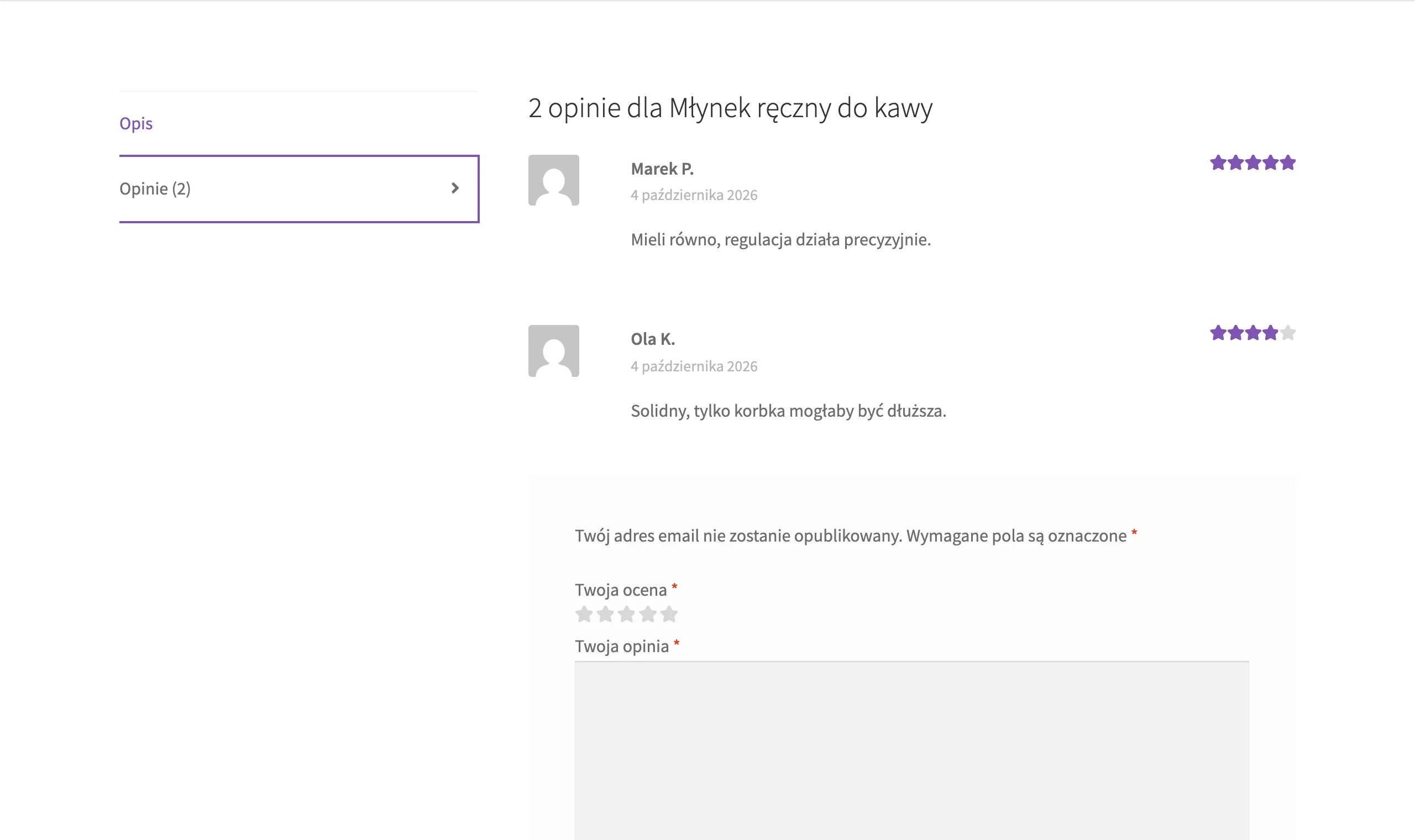
Sentiment as the main output is a dead end. Really. Two negative reviews can have completely different business meanings: one concerns a minor inconvenience, and the other a payment failure or a critical delivery error. Sentiment without topic, weight and operational context is not precise enough for decision-making.
There is also the issue of weak topic taxonomy. And it shows straight away. If the categories are too broad, for example “customer service”, “product” and “delivery”, the team does not know what exactly to improve, because “customer service” can mean everything and nothing. On the other hand, if you start out with too much detail, the classification becomes unstable and hard to maintain. A taxonomy developed gradually, on real reviews and for the real needs of teams, not for an elegant table, works best.
The limitation of AI models remains natural language in its less “tidied up” version. There is no magic here. Irony, abbreviations, typos, slang, mixed emotions, very short comments and multi-topic statements can still fool the model. That is why regular manual validation is needed, especially for edge cases and classes with high business significance.
In multi-channel projects it is also easy to confuse public data with private tickets. And then the chaos starts. A review in a marketplace serves a different purpose than a complaint ticket, even if both sources may talk about the same problem. If the company throws them into one basket without distinguishing the purpose and the stage of the customer journey, the report mixes brand reputation with the operational work of support. Why do that to yourself.
Technical issues can also be a real limitation. Plain and simple, but painful. Not every platform offers a good API, CSV exports are often incomplete, and product or customer identifiers can be inconsistent between systems. On top of that, there is mixed language in a single review or poor-quality call transcription, which makes both classification and later data matching more difficult.
Another mistake is the lack of a business-side process owner. If nobody takes responsibility for approving the taxonomy, assessing result quality and translating insights into action, the project quickly turns into a passive dashboard. Feedback analysis works best when it has assigned owners, response rules and a steady cycle of model and category updates.
Practical tips for optimising the analysis process
Optimising the analysis process is, in essence, work on data quality, classification accuracy, response speed and the usefulness of the outputs for teams. The biggest return usually comes not from tuning the model itself, but from organising the input and the way the results are consumed. When reviews are poorly linked to a product, order or stage of the customer journey, even a good model will produce conclusions from which little follows. First you optimise the process and the data, and only then the prompts, parameters and dashboards.
The first step is prosaic, but crucial: defining a single unit of analysis. In practice, you need to decide whether you are analysing a single comment, a full ticket, a conversation, an order or a customer. Without this, it is easy to inflate the number of issues, duplicate signals from several channels and then compare results between sources as if they were the same thing.
The second step is to simplify and standardise the data model. The minimum is the review content, source, date, language, product or service, location, rating and an identifier that allows the entry to be linked with CRM, the helpdesk or an order. A lack of consistent metadata usually reduces the value of the analysis more than the imperfection of the AI itself.
Topic taxonomy has a major impact on the results. Categories should stem from real business decisions, not merely look neat in a report. Instead of the broad tag “customer service”, it makes more sense to split this into response time, contact quality, missing information, a complaint or a return, because only such a breakdown shows exactly where the pain is and what can be improved.
It is also worth separating sentiment analysis from cause analysis. Two negative reviews can carry completely different weight: one describes a minor inconvenience, while another concerns a payment failure or a delayed delivery. Sentiment is a signal, but priority is only set after combining the topic, the scale of the problem and the business context.
To improve classification accuracy, you need to keep checking a sample manually. Ideally, every so often you should compare the model’s outputs with human assessment for short, mixed, ironic and multi-topic reviews. Such validation quickly reveals which categories are unclear, where the model confuses meanings and which exception rules need to be added, instead of pretending there is no problem.
In multilingual projects, optimisation starts with the basics. The question is: analyse the text in the original language or only after translation. Analysis in a single language makes central reporting easier, but translation can lose nuances, abbreviations and local terminology, that is, the very things that often carry the actual meaning. If language differences really change the meaning of the statement, it is better to stay with analysis in the source language and only then aggregate the results.
Order in analysis does not happen by itself. A good practice is to split streams by purpose, instead of throwing everything into one bucket. One stream should handle operational actions, another SEO and content, and a third UX or product. This way, the team does not mix critical tickets with FAQ questions, and marketing does not work to the same priorities as support or logistics.
SEO and content thrive on specifics. The most useful are customer questions, recurring doubts, product comparisons, purchase barriers and the vocabulary used by users, because this is ready-made material for product descriptions, FAQ, articles and conversion-supporting content. For UX, something else has greater value: mapping feedback to stages of the journey, such as search, basket, checkout, delivery or complaint. And that is exactly when it is easier to pinpoint the place where frustration arises, rather than some general “problem with the experience”.
In the end, it is not only the accuracy of the classification that matters. It is also crucial whether this process actually works in the company, and not just in the report. In practice, it is worth checking whether alerts appear quickly enough, whether issues reach the right owners and whether, after implementing changes, the number of similar negative reviews really drops. The best-performing implementations are those in which review analysis is continuously refined based on new data, changes in the offer and real decisions made by the company.
FAQ
Frequently asked questions
How does customer feedback analysis with AI work in practice?
The system gathers comments from multiple sources, organises and classifies them, and then shows the most important issues and their causes. Finally, the results go into dashboards, alerts or team tools.
Is sentiment analysis alone enough to understand customer feedback?
No, because the simple information that a review is positive or negative does not say what exactly the problem relates to. Topic, cause, urgency and business context all matter.
What data can be analysed using AI?
Sources can include marketplaces, an online store, forms, surveys, social media, chat, e-mail, a hotline and ticketing systems. What matters is that all signals end up in one place and can be compared.
Why is a topic taxonomy so important in feedback analysis?
It is a shared dictionary of categories and subcategories that allows a company to talk about problems in one language. Without it, even a good model will not help, because the results are hard to turn into decisions.
What most reduces the quality of feedback analysis results?
Most often the problem is poor input data: duplicates, spam, missing consistent identifiers, gaps in metadata and incorrect transcription. An incomplete or overly broad taxonomy also has a big impact.
What business outcomes should good customer feedback analysis deliver?
It should identify the most common problems, their scale and urgency, and suggest who should solve them. In practice, it can also feed FAQs, SEO, support, the product backlog and operational alerts.