
AI in e-mail marketing brings order to decisions. And it does so using hard data about audiences, campaigns and sales, not gut feeling. In practice, it is not about “magical” newsletter writing, but about deciding faster and more accurately who to send a message to, what content to show and when to do it. Well-implemented AI can shorten campaign preparation, improve communication matching and cut unnecessary sends to inactive contacts. The greatest value comes not from “AI” itself, but from combining good data, sensible automation and human oversight. The problem is that many functions only start working once the system has access to purchase history, website activity, CRM statuses and properly collected marketing consents. In this article, I focus on what really works operationally and where it is best to start.
How does AI support e-mail marketing in practice?
AI supports e-mail marketing because it calculates faster than we do. It analyses data and automatically suggests who to send what and when, instead of leaving this to manual segmentation. Most often it works as a layer on top of ESP, CRM, CDP or e-commerce systems, rather than as a separate tool that “does everything”. The effect is simple: repetitive decisions are made faster and at greater scale, without laboriously clicking through lists.
The key thing is that AI feeds on input data. It needs send history, clicks, purchases, viewed products, customer statuses and consent information, otherwise it starts guessing. If the system cannot connect an e-mail address with website behaviour and CRM data, advanced personalisation will only be partial. The question is: do your data sources really “see” the same customer.
In day-to-day work, this means less manual segment building. And fewer clunky rules like “everyone active in the last 30 days”, which sound sensible but often miss the mark. Instead, you can assess purchase probability, churn risk, propensity to click or the preferred time of contact. Today, it is better to base decisions on clicks, conversions and onsite activity than on opens alone, because open rates by themselves can be misleading.
AI also supports content production. But beware, it should not operate without supervision, because it is easy to confuse “correct” with “relevant”. It can prepare variants of subject lines, preheaders, text blocks or product recommendations, but a human should still oversee brand tone, promotional terms and communication consistency with the offer. The best model is a combination of prediction, business rules, contact frequency limits and quality control before sending.
In practice, well-implemented AI increases campaign relevance. And, just as importantly, it orders the whole process instead of adding another layer of chaos. It then becomes easier to exclude overheated segments, limit sends to inactive recipients and better predict the performance of lifecycle automations such as welcome, abandoned cart, win-back or post-purchase. That is where the real value is most often visible, because the scenarios are repetitive and based on clear signals, not wishful thinking.
The most important uses of AI in e-mail marketing
In e-mail marketing, AI works best where it hurts most. Segmentation, personalisation, behaviour prediction, send optimisation, content generation and results analysis. These are the areas that usually deliver the fastest operational effect, because they rely on data that many companies already have in their systems. The difference is simple: decisions are no longer based on a few filters, but begin to take real behavioural patterns into account.
- Behavioural segmentation and scoring — the system assesses activity, purchase history, category interest and the customer stage, making it easier to match recipients to a specific campaign.
- Purchase or churn prediction — AI identifies contacts with a high probability of purchase, reactivation or churn, which helps prioritise campaigns and automations.
- Content personalisation — recipients get different subject lines, CTAs, offers, product order or discount levels depending on behaviour and customer value.
- Product recommendations — an e-mail can suggest products linked to the last purchase, the category viewed or predicted interest, instead of a fixed, manually assembled block.
- Send-time optimisation — the system chooses the more likely moment of contact for a specific recipient, instead of sending the whole campaign at one time to everyone.
- Generating variants of subject lines and content — AI shortens the time needed to prepare subject lines, preheaders and draft copy, which is especially useful for frequent campaigns and A/B tests.
- Detecting anomalies and risks — the tool can more quickly spot an unusual drop in clicks, an increase in unsubscribes, a problem with the product feed or a decline in engagement in a specific segment.
The most sensible starting point is 3-5 use cases with a clear impact on results. And that is not a cliché. Usually, this means activity segmentation, send-time optimisation, product recommendations, subject line variants and automations that recover the basket or reactivate the database. It is not worth starting with the most complex models if the data is inconsistent or the team does not have a process for verifying content and results.
The mistakes are also fairly predictable. The problem is that often it is not the model itself that fails, but dirty data mapping, lack of control groups, overly aggressive personalisation or assessing effectiveness solely by open rate. Why pretend everything is working then. If AI generates content, treat it as a draft version, not as finished material to be sent automatically without checking.
In practice, the winners are the uses tied to a specific business goal. Not “AI for AI’s sake”, but AI for results. If the goal is revenue growth, focus on recommendations, customer value segmentation and abandoned baskets. If the goal is database reactivation, engagement scoring, churn prediction and reducing communication pressure will matter more.
What data is key to effective use of AI?
What matters is the data that links an email address with the customer’s real behaviour, their status in the CRM and the sales outcome. What matters most is what can be counted and reconstructed over time: sending history, clicks, purchases, activity on the website or in the app, and the status of marketing consent. Without this, AI only sees a slice of the picture and starts to “predict” from signals that are simply too weak. If the system does not connect email with purchase and onsite activity, most advanced personalisation only works in appearance.
In practice, the biggest impact comes from first-party data, that is, data from your own systems. And that is not a cliché. The question is: where did the customer come from, when were they last active, what did they buy, how much are they worth, which categories did they view, how did they respond to previous campaigns, and what stage of the lifecycle are they currently at. Opens alone are not enough, because today they can be fickle and increasingly unreliable as the sole engagement metric.
Quality beats quantity. Instead of collecting everything indiscriminately, it is better to have consistent user identifiers, correctly mapped fields, standardised event names and cleaned-up duplicates. The problem is that AI will not “guess” messy data; it will only multiply it in its decisions. The most common implementation problem does not come from the model, but from incorrect events, outdated customer statuses or a poorly connected product feed.
There is also a legal and operational layer that cannot be swept under the carpet. The model can only use data that is permitted to be processed for a given purpose and recipient, so consent, data retention and exclusion rules must be built into the system logic, not added at the end. In practice, that means one thing: before implementation, it is worth auditing data fields, sources, consents and the places where information tends to drift between ESP, CRM and e-commerce.
At the end, there is the business context. Only data on products, availability, margin, seasonality and customer status allows AI to make sensible decisions, not just statistical ones. It sounds minor, but it can overturn a campaign. A good prediction without business rules can generate a bad mailing, because the model does not know that the product is out of stock, the promotion has expired or the customer should no longer receive another message that day.
How does AI personalise email content?
AI personalises email content by matching the subject line, offer, recommended products, CTA, send time and message layout to a specific recipient or segment. This is not cosmetic work like “name in the header”, but a redesign of the entire message depending on the customer’s stage and predicted behaviour. As a result, one campaign can have many versions, even though the marketer creates one base template.
Personalisation most often relies on purchase history, browsed categories, clicks, time since last activity, response to discounts and CRM status. A new subscriber gets a simpler message with a starter category, while a loyal customer gets recommendations for complementary products or a renewal reminder. The data clearly shows that demographics are often just background, not the steering wheel. The best results usually come from personalisation based on behaviour and intent, not on demographic data alone.
AI can also stitch together variants of subject lines, preheaders and entire text blocks. This shortens campaign production time, but it does not remove the need for human oversight, because the model does not know all the brand constraints, promotion terms or legal traps that are easy to fall into. The key is therefore a simple division of roles. The system provides a few suggestions, and the team finalises the language, the promise and alignment with the offer.
Product personalisation does a lot of the heavy lifting. The system can reorder products, swap categories, choose the discount level or remove offers that do not fit the customer’s stage. The problem is that this only works when the product feed is alive, not just pretending to be up to date. It needs the data required for decision-making, such as category, price, availability and product attributes.
Personalisation must not mean leaning on the recipient. AI can predict who should receive a message now, who later, and who is better left quiet for a while, so as not to drive up unsubscribes and complaints. The question is: do we know when to hold back when the algorithm suggests silence? Effective personalisation is not just better content, but also a conscious decision not to send an email.
To check whether personalisation is delivering, you need to look beyond open rate. Clicks, conversions, revenue, reactivation, unsubscribes and comparison with a control group all matter, because only that set tells you whether you changed behaviour, not just the subject line. The data says it clearly: opens are nice, but on their own they do not pay the bills. If after “personalisation” only open numbers go up, while clicks and sales do not improve, the problem is usually a superficial copy change, not a real fit of the offer.
The most common mistakes when implementing AI in email marketing
The most common mistakes are surprisingly simple: AI implemented without a clear goal, on poor data and without control over what decisions the system makes. In practice, it often starts with switching on a ready-made feature in the tool, but without checking whether the fields in the CRM are mapped correctly, the events from the website are consistent, and the product feed is actually current. Then the model sees the customer as though through a dirty window. It produces outputs that seem sensible, but are of little practical use. Simply switching on an AI feature does not improve a campaign if the input data is inconsistent.
The second classic mistake is measuring results solely by open rate. That is not enough, because an open does not yet tell you whether the content was relevant, whether the recipient clicked, bought or returned to activity. It is safer to stick to hard signals: clicks, conversions, revenue, unsubscribes, complaints and changes in activity over time. And then there is another element, which many people replace with convenience: the control group. Without a control group, it is difficult to distinguish the real impact of AI from seasonality, promotions or changes in the offer.
It is also a mistake to cram too many goals into one model or one scenario. A campaign that is supposed to sell, reactivate and reduce churn at the same time usually ends up with blurred segmentation logic and a report that tells you nothing. Instead of “one algorithm for everything”, it is better to design separate models for basket recovery, win-back, cross-sell or send-time optimisation. Each of these areas has different signals and different success criteria, so mixing them all in one pot is asking for chaos.
Many teams overrate the value of automatic personalisation. And then they bombard the same people with more and more messages, as if “relevance” alone were enough to save the situation. AI can improve matching, but the problem is that it will not solve excessive contact pressure if there are no frequency caps, campaign priorities and post-purchase or inactivity suppression rules in place. Even good personalisation stops working when the recipient is simply overwhelmed by the number of messages.
The second risk is often less dramatic, but more dangerous. It involves leaving content generated by AI without human review, especially for promotions, discounts, terms and conditions, communication to sensitive segments and high-value offers. The model can write an e-mail that is linguistically correct, but beware: in the same move it may oversimplify the offer terms, shift the brand tone or suggest a promise the company cannot fulfil.
There is also the classic technical blunder. Failing to distinguish between new and existing customers, and weak user identification across channels, can quickly undermine even the best ideas. If the system does not connect the e-mail address with a purchase, a website visit and the status in the CRM, then recommendations, scoring and lifecycle scenarios only work partially. In such a situation, instead of building a complex model that cannot be reliably fed with data, it is better to implement simpler rules supported by scoring.
How to measure the effectiveness of campaigns using AI?
You do not measure AI. You measure the outcome. The effectiveness of AI-powered campaigns is assessed by their impact on business results and communication quality, not by the mere fact of using a model, and that is not a cliché. The most important indicators are those tied to the objective of the implementation: clicks, conversions, attributed revenue, reactivation, number of unsubscribes, complaints, share of inactive contacts and changes in purchase frequency. If AI is meant to improve send time, you look at the result after sending; if it is meant to win back customers, you look at the return to activity and a purchase within a defined time window.
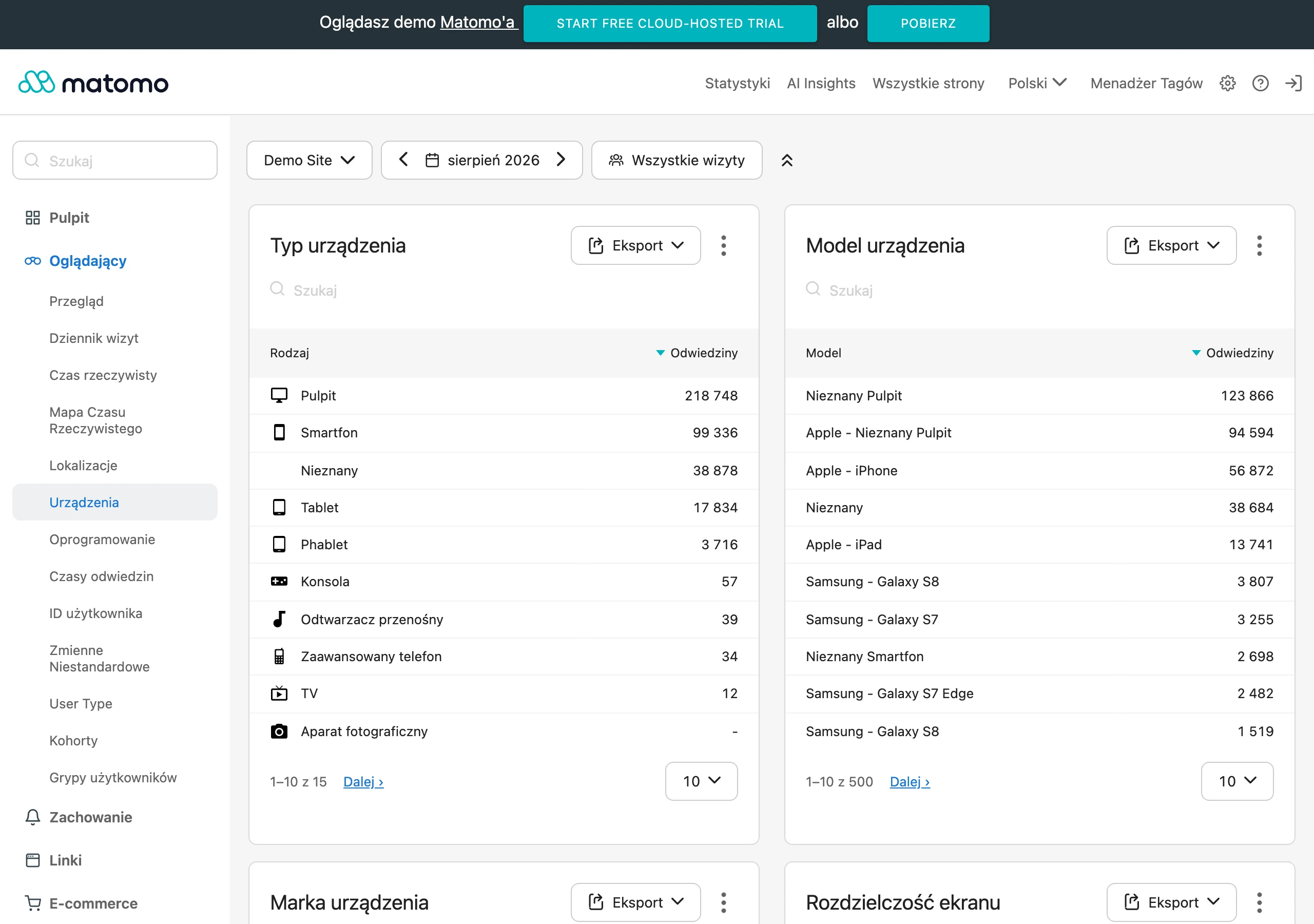
Measurement must always be tied to a specific use case. For product recommendations, what matters will be clicks on the recommendation block, visits to the product page and sales of those products. For win-back campaigns, reactivation, repeat purchase and whether the customer stays active after the first return will matter more than a one-off click. The question is: what exactly is supposed to improve, not “does the model work”.
The most reliable measurement is based on comparison with a benchmark. This can be a control group without AI, an earlier stable period or a comparison of two segmentation logic variants under similar campaign conditions. If you do not compare the model with an alternative, you do not know whether the improvement comes from AI or from other changes in the campaign.
Do not look only at the result for the entire database. The data are clear: AI usually performs unevenly depending on the segment, lifecycle stage, customer value, acquisition source or product category. That is why it is a good idea to break the analysis down at least into new customers, existing customers, active and inactive segments, and key customer value groups. The fact that the model improves the average result does not yet mean it works well in the most important segments.
There is no free lunch in measurement. A campaign may boost revenue for a while, but at the same time add unsubscribes, complaints or a drop in engagement in the following weeks. The question is whether you are looking at it broadly or only at sales. That is why, alongside strictly sales metrics, you also need to keep a constant eye on deliverability, bounces, spam complaints, changes in base activity and the rate at which contacts move into the inactive group.
Good analysis also goes down to the operational level. The point is whether the model works consistently day after day, and not just “nicely” in the report. In practice, you check the quality of input data, the freshness of the product feed, the correctness of event mapping, the consistency of identifiers and whether results do not deteriorate after a change in assortment or season. When the model suddenly performs worse, the culprit is often not the AI logic, but data drift or a simple integration error.
A simple dashboard beats a flashy one. Ideally, it combines three levels of evaluation: campaign performance, segment performance and long-term impact. At the first level, you see clicks, conversions and revenue; at the second, you check which groups AI actually helps; and at the third, you observe retention, reactivation and the health of the database. This setup acts like a ruthless filter: it quickly shows whether the system is improving marketing in a real way or only temporarily boosting a single metric.
Limitations and risks associated with using AI in e-mail marketing
The risks of AI in e-mail marketing do not come from magic, but from the realities of life. They include data quality, measurement limitations, legal risks, deliverability issues and automatic decisions that can go in the wrong direction. The system may look great in the interface and yet still work on an incomplete view of the customer. In that case, segmentation, recommendations and predictions are only an approximation. AI does not fix gaps in data or process errors — it only scales them faster.
The first limitation is simple. The model only sees the signals that have been correctly collected and sensibly connected. If it is not possible to link the e-mail address with a purchase, on-site activity and the status in the CRM, personalisation becomes thin rather than “intelligent”. In practice, this means that many advanced features work poorly in companies with fragmented systems, weak field mapping or an outdated product feed.
The second risk is the illusion of effectiveness. In e-mail marketing, it is easy to mistake model improvements for seasonality, a stronger promotion or a change in the audience group — in other words, for things happening alongside AI. And here the data speak clearly: without control groups and assessment at the level of clicks, conversions, unsubscribes and customer value, you can declare success for something that was only a random uplift. Without control groups and assessment at the level of clicks, conversions, unsubscribes and customer value, something that was only a random uplift can be treated as a success.
A separate category of problems is content generated by language models. AI can prepare subject lines, preheaders and text blocks in a minute, but just as quickly it can add an imprecise promise, throw off the brand tone or simplify the promotion terms in a risky way. Let’s look at it differently: speed is not an advantage here if you then have to put out fires. Any content related to price, terms and conditions, offer duration or communication to a sensitive segment should be reviewed by a human.
The risk also concerns personalisation itself. Overly aggressive tailoring can create the impression of being tracked and undermine trust, even if everything works flawlessly from a technical point of view. It is better to personalise at a level that is genuinely useful for the recipient, for example by interest category, customer stage or purchase moment, rather than flaunting granular knowledge about every move they make.
Another limitation is deliverability. AI can help identify drops in engagement, complaint risk or communication overload, but it will not replace fundamentals such as domain authentication, list hygiene, unsubscribe handling and frequency caps. If the model optimises only for a click or short-term revenue, it may start over-exploiting the most active contacts and worsen the performance of the entire channel.
In practice, you also have to account for model drift. This is a loss of relevance when the offer, season, traffic sources or customer behaviour change, while the system still “thinks” in old data. It sounds abstract. But it is everyday reality after an assortment change, a launch into a new market or a rebuild of the sales funnel. A model that worked well a few months ago does not have to work just as well today if the input conditions have changed.
You also must not sweep privacy and marketing consent issues under the carpet. Models may use only those data and processing purposes that are operationally and legally permissible, and that requires order in consent fields, data retention and the rules for sharing information between systems. The more automated the decision, the more important it becomes that the team understands why a recipient was placed in a given segment and on what basis they received a specific communication.
At the end there is the organisational risk. Many companies buy AI features faster than they build a content verification process, results analysis and accountability for the system’s decisions, and then wonder why “something” is running on autopilot. The problem is that the tool may work, but nobody is making sure whether the logic of segments, campaign priorities and contact pressure still fits the business objectives.
FAQ
Frequently asked questions
How does AI support email marketing in practice?
It analyses audience data and suggests who to send what and when, instead of relying on manual segmentation. As a result, decisions are made faster and at greater scale.
What data is needed for AI to work effectively in email marketing?
Above all, you need send history, clicks, purchases, activity on the website or in the app, and marketing consent status. Without linking email to customer behaviour and CRM, personalisation only works partially.
How does AI personalise email content?
It tailors the subject line, offer, recommended products, CTA and send time to a specific recipient or segment. Personalisation is based mainly on behaviour, intent and interaction history, not just demographics.
Why is human oversight needed when implementing AI in email marketing?
AI can produce linguistically correct content, but it does not know all brand constraints, promotions or offer terms. A person should check the tone of communication, alignment with the offer and legal risks.
When does AI deliver the greatest value in email marketing?
It is most useful in segmentation, behaviour prediction, send-time optimisation, product recommendations and automations such as welcome, abandoned cart or win-back. The best starting point is a few use cases with a clear impact on business results.
What are the most common mistakes when implementing AI in email marketing?
The most common problems are poor or inconsistent data, no control groups and measuring results solely by open rate. Another mistake is overly aggressive personalisation and no contact frequency limits.