
Marketing communication only works when it is grounded in the realities of the business, not in “golden advice” from the internet. You speak differently when you are still checking whether the market even understands the offer, and differently when you already have a structured sales process and several customer segments. And this applies not only to ads or website copy. It is about the whole way of explaining value, advantages and reasons to buy. The most common mistake is simple: a company sticks to one communication style despite moving to a different stage of development, so it loses effectiveness in acquiring and closing customers. The problem is that without aligning marketing, sales, data and operational constraints, the message starts to take on a life of its own. Only then can you build communication that is understandable, consistent and tied to a specific business goal, not to nice-sounding slogans.
What marketing communication tailored to a company’s stage of development is about
It is not magic. It is the matching of the message, channels and arguments to the current business situation, rather than to one universal template. The starting point is recognising whether the company is at the market entry, offer validation, growth, scaling, maturity or repositioning stage. Each of these stages brings a different “main pain” to solve. At the beginning you usually need to explain in plain language what the company does and for whom, and later it is more often about improving conversion, shortening the decision-making process or protecting margin. The question is not “whether to communicate”, but “what should change after the communication”.
In practice, it is not only about writing content. It is about the whole communication system that holds together from the first contact to the sales conversation. It includes the offer, value proposition, brand language, sales arguments, contact sequences, materials for salespeople and channel selection. If a company has a good service but talks about it too vaguely or misses the customer’s actual decision-making moment, results usually drop despite marketing activity. That is why you first establish what communication is meant to improve in real terms, instead of producing “more” for the sake of “more”.
This kind of work is based on priorities, because you cannot communicate everything effectively at once. In one case the goal will be market education, in another demand generation, lead quality improvement, retention growth or entry into a new segment. That, in turn, determines which messages matter most, which content makes sense at all and which channels get the greatest emphasis. Well-tailored communication therefore answers the questions: what to say, to whom, in what order and how to judge whether it works.
There is also the implementation side. The key is for the strategy to be actionable, not just look good in a document. What matters are the team’s resources, data quality, sales cycle length, number of personas, product complexity and legal requirements. An effective communication model has to be embedded in the company’s day-to-day operations, otherwise it remains a presentation rather than a tool for sales and growth. For that reason, adapting to the stage of development is not an image exercise, but a decision about how the company should speak to the market in a useful way.
What the key aspects of the current market and operational context are
The market forces consistency. The current market and operational context primarily demands one narrative across channels and greater discipline in measuring results, rather than a jumble of parallel initiatives. Today the customer comes into contact with the company through the website, ads, SEO, emails, social media and sales conversations, so inconsistencies in communication quickly undermine trust. When an advert promises something different from the landing page, or a salesperson uses a different language from the product page, friction appears and conversion drops. The problem is that many companies still manage channels separately instead of with one communication system.
Privacy matters too. Restrictions on user tracking and changes to privacy rules mean that less and less can be fairly attributed to a single click. As a result, the role of first-party data, the CRM, the quality of the brief and assessing activities at funnel stage level, rather than via one “winning” source, is growing. Instead of focusing only on the number of visits or leads, it is better to check whether the communication attracts the right people and whether it really moves them to the next decision step. This means that clear messaging and good lead-quality signals are often more valuable today than seemingly precise attribution.
AI has poured fuel on the fire. Another important aspect is the growing amount of content created with the use of AI, so mere presence in channels is no longer enough. Audiences are seeing more and more similar messages, generic promises and hollow claims of expertise, so they filter them almost automatically. That is why precise positioning, language based on real customer problems, proof, use cases and content embedded in the actual buying process are crucial. And that is not a cliché. It is especially important where the customer compares several seemingly similar offers.
Not every audience member is “in the same place”. Communication effectiveness now depends heavily on intent and the decision-making moment, because a different message works when someone is only identifying the problem, and another when they are comparing providers or looking for a justification for the cost. In B2B models and complex services, there is also the need to address multiple decision-making roles, such as the user, technical person, finance person and manager. The question is whether your narrative can withstand this tension between the needs of these people. The more complex the purchase, the less a general slogan is enough, and the more you need arguments tailored to specific concerns and selection criteria.
Company maturity also matters. The stage of development itself matters, because the market rewards different things at different levels and instead of A. one universal set of messages, B. a changing arrangement of priorities. At earlier stages, what matters most is the clarity of problem-solution fit and quickly testing messages before budget starts burning on decorative extras. At later stages, the role of segmentation, standardisation, brand management and keeping consistency between departments grows, because scale without order usually takes its revenge in costs. The data clearly shows that the current context is not about choosing a channel, but about adapting the whole way of communicating to the conditions in which the company really operates.
How the communication alignment process works in practice
The communication alignment process starts with a hard diagnosis of the company and ends with implementation plus ongoing adjustments based on market response. First, the offer, lead sources, traffic quality, CRM data, website performance, customer questions and the most common sales objections are examined closely. One thing is key: establish where the problem really comes from. Not in “marketing” in general, but in understanding the offer, in demand, in conversion, or in the break between departments. Without this diagnosis, it is easy to improve messages that are not the main cause of weak performance.
The next step is to identify the company’s stage of growth and choose the communication priority. Simple. In practice, a company rarely has one “marketing” problem as such; more often, the question is what delivers the biggest lever today: educating the market, refining the target group, shortening the decision-making process, or supporting entry into a new segment. The question is what needs to work first and what can wait. This is where overly broad ambitions are cut back and the effect communication is meant to deliver fastest is defined.
Next, audiences and buying situations are mapped out. No illusions. This is not about personas from a slide deck, but about the real roles in the decision, their questions, barriers, language and the moment when they even start looking for a solution. In B2B models, it is usually necessary to separate the argumentation for the user, the technical person, the finance person and management, because each of them looks at the same issue from a different angle. The same product may require several versions of the message if several people with different evaluation criteria are involved in the purchase.
On this basis, the message architecture is built. And this is where the chaos starts to be organised. Core and supporting messages are created, along with a list of benefits, responses to objections, CTAs and message variants for different channels and stages of the funnel. In practice, this is a series of decisions: what should appear on the offer page, what in the advert, what in the email after downloading the material, and what in the sales deck. Good message architecture organises the order of arguments instead of throwing all the advantages in at once.
Then channels and formats are selected according to their function, not fashion. This matters. Some channels are meant to build reach, others to educate, others to provide proof, and still others to close the decision. That is why the website, landing page, SEO articles, paid campaigns, email nurturing, FAQs and sales materials should work together rather than each playing for its own goal.
The final stage is operational implementation and testing. No special treatment. Headlines, offers, CTAs, forms, section order, traffic segmentation variants and follow-up sequences are compared, but results are assessed more broadly than by clicks alone. What matters is lead quality, the speed of progression to the next stage and whether the communication genuinely makes the sales team’s job easier. If traffic grows but the number of meaningful conversations or sales does not, the communication is still poorly matched.
What strategic decisions are most important for effective communication
Communication strategy starts with a few decisions without which everything falls apart. It is about the goal, the right audience and the way you show value, rather than just promise it. The company should first choose one dominant business need, because communication that tries at once to build awareness, sell a new service, change positioning and improve retention usually ends up as a set of contradictory signals. This is not a straitjacket for creativity, but a condition for effectiveness.
The second decision is equally firm: what stage of growth are you at. In the early stage, simplicity wins. You need to clearly show what problem the offer solves, for whom, and why it is worth considering now rather than “someday”. In the growth phase, segmentation becomes more important, as does separating prospecting communication from conversion communication and preparing materials that address typical objections before they come up in the conversation. In mature companies, the focus shifts to message standardisation, consistency between departments and regular checks on whether the brand is speaking too generally about its advantages, because then it sounds like everyone else.
It is also crucial to answer a simple question: who is the company really speaking to. An overly broad target group almost always dilutes the language, arguments and offer, and then the communication is “correct”, but it does not meet a specific need. It is better to have a strong message for a narrower segment than a neutral message for everyone.
Another issue is positioning and the type of value promise. You need to decide whether the brand is meant to win through ease of implementation, safety, speed of results, lower risk, industry specialisation, or another advantage that can be defended in sales, not just described nicely on the website. But beware: if the claim is not backed up by evidence, references, the process or customer experience, it quickly loses force. That is why communication should be based not only on benefits, but also on credible proof points.
Just as important is the relationship between marketing and sales. One conversation can ruin months of work. If marketing promises something different from what the sales team expands on in conversations, the company loses trust and lengthens the decision-making process, because the client starts looking for the “catch”. In practice, the shared language of the offer, the list of objections and responses, and the materials needed before and after sales contact all need to be agreed. Effective communication is a system, not a set of separate pieces of content published by different teams.
Finally, there are execution constraints. And these are often what determine whether a strategy will live or end up in a drawer. The scope of communication should reflect how much data the company has, how long the sales cycle is, how many segments it serves, what resources the team has and whether it operates in regulated markets. An overly elaborate strategy without the ability to implement it quickly turns into a document nobody uses. That is why the best strategic decisions are not only market-appropriate, but also operationally realistic.
What steps should be taken to make communication effective
Effective communication starts with choosing one main business goal. Only then does it make sense. When a company tries at once to build awareness, boost conversion, reposition the target audience and still rescue retention, the message quickly loses coherence. At the outset, you therefore need to decide what matters most today: generating demand, better lead qualification, shortening the sales process or protecting margin.
The next step is to align communication with the company’s stage of development and the real operational constraints. It sounds banal, but this is where things most often fall apart. A company that is only checking whether the market even understands the offer speaks differently from a brand with mature sales and several customer segments. In practice, you need to take into account the length of the buying process, the quality of data from CRM and analytics, the number of personas, the team’s resources, and whether communication supports inbound, outbound or partner sales. The question is: what can you actually base the message on, and what is just wishful thinking.
Then it is time to organise audiences, buying situations and arguments. Without this, you are groping in the dark. That means clarifying who buys, who really influences the decision, what questions come up before the sales conversation and what objections block the decision later on. Good communication does not start with an advertising slogan, but with a clear answer: what problem you solve, for whom, and why your solution makes more sense than the alternatives.
Only on this basis is it worth building materials and choosing channels. First the core, then the packaging. The offer page, landing page, ads, emails, SEO content and sales deck should speak with one voice, only in different formats and with a different level of detail. The greatest effect usually comes from refining a few key touchpoints, rather than producing a large volume of content without a shared logic. Instead of multiplying formats — set priorities and keep consistency.
At the end, you need a simple system for measurement and updates. Without numbers, only faith remains. You need to monitor not only traffic and clicks, but also lead quality, the frequency of the same objections, the effectiveness of sales meetings and the pace of movement between funnel stages. If the offer, segment or market conditions change, the communication also has to be updated; otherwise it quickly stops working for results.
What are the most common mistakes and risks in marketing communication
The most common mistakes in marketing communication stem from a mismatch between the message and the company stage, the audience and the buying process itself. This is not a detail, it is the foundation. It happens that a company speaks too broadly, too generally or too technically, because it wants to sound professional instead of being understandable. The result is predictable: the audience should not have to guess exactly what is being offered, who it is for and in what situation it is even worth considering.
A very common problem is copying the language of competitors or of the whole category. Then the brand sounds like just another one in the line-up and does not build its own comparison context, even if the product is genuinely better. If the message can be swapped, with only minor changes, between three companies in the market, then it usually is not a good message. And that is not a cliché, but a quick test of whether the message has any identity at all.
The second risk is simple: communication based solely on product features. Features, specifications and offer elements alone rarely deliver results if they are not tied to the business consequence for the customer: saving time, lower risk, simpler implementation or better process control. In B2B and complex services, this works like a brake, because different decision-makers hear different questions and expect different answers.
Lack of distinction between funnel stages and personas is also often damaging. Someone who is only recognising the problem needs different content from someone comparing suppliers after a sales conversation. Publishing one type of message for everyone usually lowers both quality reach and conversion. The question is: why aim at the crowd, if the decision is made by a specific role at a specific moment.
A separate risk is a disconnect between marketing, sales and customer service. And that is where it hurts most. When an advert promises something different from what the salesperson develops in a meeting, and the customer experiences something else again after purchase, trust falls and the decision-making process gets longer. The key is for the claims to be backed up by the offer, sales materials and the actual way the service is delivered, instead of ending up as nice slogans without substance.
At the end, you need to watch out for two things: a lack of an update process and incorrect interpretation of results. Companies can keep old messages for months despite changes in the offer, price, target group or advantages, and then assess effectiveness solely by the number of leads. It is better to have fewer contacts, but better matched, than a large volume of traffic that does not translate into sales. The facts are that “a lot” without “good” is the most expensive kind of marketing.
How to measure and optimise the effectiveness of communication activities
The effectiveness of communication activities is measured by the impact on specific funnel stages and by the quality of traffic, leads and sales conversations, not by the number of clicks alone. That is the difference between a metric and a result. If communication is meant to educate the market, different signals will matter than when its job is to increase conversion or shorten the sales process. At earlier stages, it is more often a question of whether audiences understand the offer, whether they react to the problem and whether they move to the next step. At later stages, greater importance is placed on indicators linked to lead qualification, the pace of closing opportunities and the consistency of the message between marketing and sales.
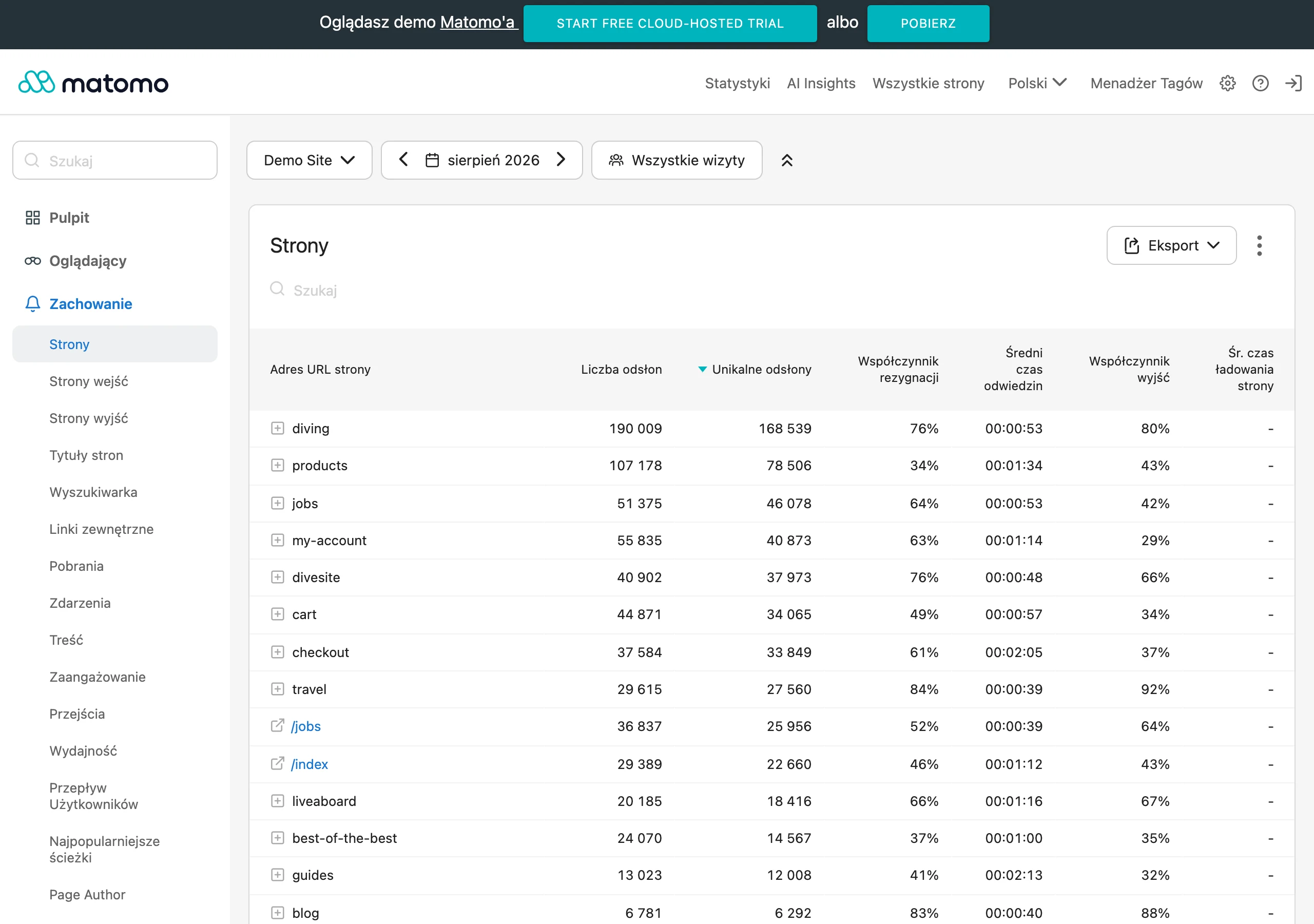
In practice, measurement should consist of data from several places: website analytics, CRM, ad platforms, forms, emails and feedback from salespeople. Media data alone usually shows only a slice, because a high CTR can go hand in hand with poor lead quality. The most useful measurement starts where you can connect the traffic source with the quality of the enquiry, the lead status and the sales outcome. In a longer buying process, you also need to look at intermediary stages, such as responses to follow-up, attendance at the demo, the number of returning users or questions raised before the proposal. Let’s look at it differently: a click is the beginning of the story, not its conclusion.
What is really worth measuring depends on the stage of the company’s development. In the offer validation phase, what matters mainly is whether the message is clear, which objections keep coming back like a boomerang, and which arguments actually trigger contact. In the growth phase, you move up a level and compare the effectiveness of segments, traffic sources, content types and page variants in terms of conversion and pipeline quality. And in a mature company, the stakes rise for order: standardising dashboards, comparing results across channels and checking whether teams are not speaking to the market with conflicting claims that undermine effectiveness at later stages of the sales process.
Optimisation only works when it is based on hypotheses, not on nervous tweaks “because maybe it will work”. Instead of changing everything at once, it is more sensible to test individual elements: the headline, order of arguments, CTA, form, offer, proof points or email sequence. If you change the message, the audience and the channel at the same time, you stop knowing what actually affected the result. With lower traffic, qualitative comparisons, analysis of sales calls and observation of user behaviour work better than formal A/B tests that do not have a large enough sample. The question is: do you want “a change” in the report, or knowledge of what worked.
Results need to be read through the lens of audience intent and the source of contact. An SEO article at an early stage of the funnel should not be measured by the same criteria as a landing page fed with high-intent traffic from a brand campaign or remarketing. Similarly, a lead from a “book a consultation” form is not equivalent to downloading educational material, even if both events appear as conversions in the report. Better communication is not the one that generates more actions in the system, but the one that moves the right audiences to the next sensible stage of the decision. Let’s look at it differently: the event counter may be rising while sales stand still.
A good optimisation process is cyclical and short. You collect data, check where the right audiences are dropping off, look for the cause in the messaging, implement the change and verify the result after an agreed period. It is also crucial to separate the roles of content: some pieces attract attention, others build trust, and still others close the purchase decision. The most common mistake is optimising what is easiest to measure instead of what actually affects sales and customer quality. And that is not a cliché. That is why reporting should end not with numbers, but with a decision: what we keep, what we improve, what we switch off and where new materials are needed for a specific segment or funnel stage.
FAQ
Frequently asked questions
How do you tailor marketing communication to the stage of company growth?
You first need to identify whether the company is at the market entry, offer validation, growth, scaling, maturity or repositioning stage. Each of these stages requires a different objective, a different language and a different type of arguments.
Does one marketing communication work the same in every company?
No, because a company at the beginning of its development usually needs a simple explanation of the offer, and later conversion, segmentation or margin protection matters more often. One communication style used unchanged as the company develops loses its effectiveness.
Why must marketing communication be consistent with the sales department?
Because if marketing promises something different from what salespeople say in conversations, the customer loses trust and the decision-making process becomes longer. The article emphasises that a shared language for the offer, objections and answers is needed.
What should be checked before changing marketing communication?
First, you need to analyse the offer, lead sources, traffic quality, CRM data, website effectiveness and the most common customer objections. This makes it possible to determine where the problem really lies: in understanding the offer, demand, conversion or a disconnect between departments.
Which channels should work together in marketing communication?
The website, landing page, SEO articles, paid campaigns, email nurturing, FAQ and sales materials should work as one system. Each channel has a different function: some build reach, others educate, and others close the decision.
When does marketing communication stop being effective?
When a company uses one communication style despite a change in its stage of development, or when the messaging is not aligned with the real needs of the audience. Effectiveness also drops when communication is too generic, lacks proof and does not support sales.