
Social media can genuinely boost website content. This happens when they direct users’ attention to specific subpages and make it possible to check what actually interests them. It is not just about publishing posts, but about aligning communication across social channels with the site’s goal: reading an article, signing up, getting in touch or moving on to the offer. In practice, this works best where the company already has valuable content, but needs additional distribution and better use of audience data for it. The biggest mistake is treating social media as an end in itself, rather than as a tool supporting specific URLs and specific user actions. A well-set process makes it possible to increase content reach, test messages and improve the site based on real responses at the same time. This approach makes sense for both organic and paid activity, provided it can be measured.
What is support for website content through social media?
Content support on a website through social media is a model in which social channels deliver reach, traffic and data on user interest to the site. Social media do not replace the website here; they help bring the audience to the right content and check whether the message actually works. In practice, this means connecting posts, reels, carousels or ads with specific articles, service pages, landing pages or FAQs. This is not decoration, but an influx of attention.
The key is matching the publication to the goal of the subpage. A different message supports a guide, a different one a service page, and another one downloadable material or a contact form. What matters is not the number of posts, but whether each one leads the user to the right place and promises exactly what the page then delivers. Instead of noise — precision.
This process is not only about publishing, but also about analysis and adjustments. If users click but leave the site quickly, the problem is usually not social media itself, but a weak lead, a poor CTA, slow loading or a mismatch between the promise in the post and the destination content. And when the content on the site is good, but the post does not deliver traffic, you need to test the format, hook, opening line or creative format. The question is: where is the chain breaking.
The greatest value of this solution comes where there is already a content base to promote and develop. Blog articles, guides, case-based content, service pages and educational materials can be broken down into smaller formats and reused, without overcomplicating things. One good article can work as several different social publications, and their results can then be used to update the content on the site itself. It is a closed loop: social media feed the site with traffic, and the site returns a better message.
What benefits does integrating social media with website content bring?
Integration of social media with website content primarily provides an additional, fast distribution channel. And it works straight away. You can also check on an ongoing basis which topics and messages attract valuable traffic, instead of guessing based on intuition. This is particularly important when the site has good content, but it still does not reach audiences widely. Social media can shorten the path from publication to the first user responses.
The second benefit is more subtle, but often more important. It is about a better understanding of audience intent. Comments, questions, sign-ups, clicks and behaviour after entering the site show what is clear and what needs to be clarified. Well-used signals from social media often suggest which FAQ sections to add, which headings to improve and where to strengthen the CTA.
Integration also improves the quality of marketing decisions. Not cosmetic ones, but real decisions. Thanks to UTM links and events in analytics, it is possible to assess not only the reach of a post, but above all whether the user read the content, moved further, came back later or completed an assisted conversion. This is where you can see the difference between publications that look good on the platform and those that actually drive the site’s results.
Another advantage is better use of existing content. Instead of endlessly producing new materials from scratch, you can break one piece of content into several formats tailored to the channel and the stage of the user journey. The side effect is pleasant: less chaos in activity and easier building of a repeatable promotional process. And this applies to both new and older subpages.
In practice, integration also strengthens the effects of other channels. It is not magic. Traffic from social media is often less stable than traffic from search, but it can usefully complement SEO, remarketing campaigns and lead generation activities. The greatest value comes when social media are not the only source of visits, but part of a system that directs the user to a technically and substantively prepared website.
What are the key stages of the process of supporting content through social media?
The key stages are choosing the goal, content audit, matching channels and formats, preparing the website, measurement, publication and optimisation based on traffic quality. It sounds simple, but it is harder to deliver. This process only makes sense when each post supports a specific URL and a specific user action, rather than a “general presence” in the feed. First, you decide why you are directing traffic to the site, and only then do you create communication in social media.
- defining the goal for the subpage: landing on the article, sign-up, contact, downloading a resource, moving to the offer, returning to the basket,
- auditing existing assets: which content has potential, which needs improvement, and which is not yet suitable for promotion,
- assigning channels, formats and CTAs to specific URLs,
- technical preparation of the page and links with UTM tags,
- publishing the message in several variants organically or paid,
- analysing user behaviour on the site and further content optimisation and the conversion path.
Content auditing is there so you do not pump traffic into subpages that are not ready for social media visits. Simple enough. If an article has a weak intro, an unclear heading or no sensible CTA, clicks will not translate into results; they will just bounce off the first screen. The most common mistake is sending traffic to a page that does not fulfil the promise made in the post within the first few seconds of the visit.
At the preparation stage, you need to connect communication with analytics. Without that, you are shooting in the dark. Every link should have UTM parameters, and in the analytics tool you need to measure not only visits, but also scroll depth, CTA clicks, moving to another subpage, form submissions or file downloads. Only then can you see, in black and white, which publication delivers valuable traffic and which merely delivers cheap reach.
After publication, what matters is not so much the reaction on the platform as the user’s behaviour on the site. And that is the real test. If the post gets clicks but people leave quickly, the problem usually lies in a mismatch between the promise, the structure of the first screen, or the weak logic of the next step. Good optimisation is about improving both the post and the subpage, because the result most often depends on both elements at once.
How to adapt content to social media channels?
Content is adapted to social media channels by changing the format, the entry point and the CTA, while keeping the same goal for the landing page. There is no shortcut. You do not publish the same message everywhere in the same way, because each platform presents content differently and builds attention differently, and therefore rewards differently what “grabs” in the first few seconds. What works as an expert comment in one place may work better elsewhere as a carousel, a short video or a simple opening question.
First, you need to establish which part of the website content has the strongest pull. That is crucial. It can be a specific mistake, one strong sentence, a question, a quick benefit, or a contrast between a good and a bad approach, as long as it gives a clear reason to click. It is worth breaking one article into several different entry points, because different users respond to different hooks.
The format should match the way the audience consumes content in a given channel. It sounds obvious, but in practice this is where things most often fall apart. A short insight and a strong hook work well where attention is short, while more structured slides or a sequence of arguments work better where the user wants to quickly scan the topic and grasp the meaning without reading a wall of text. If the goal is to get people onto the site, the CTA must clearly say why they should click and what they will get after they land.
When adapting content, you need to keep consistency between the post and the landing page. The question is whether you deliver on the promise immediately. If the publication promises a checklist, a comparison or a specific answer, the user should see it straight away after landing, without digging through the middle of the article. A mismatch between the message and the destination content reduces engagement faster than weaker reach.
Content adaptation also includes technical details that only become visible once the link has been pasted. The preview needs a sensible title, image and description, and the page itself has to load smoothly on mobile and lead the user onwards without friction, instead of stopping them at the door. Even a well-written post loses effectiveness if, after the click, the user lands on a slow, unreadable or badly formatted subpage.
The most practical approach is simple. Test constantly. For the same content, check different opening sentences, argument order, copy length, thumbnails and CTA type, and then compare not only clicks, but also the quality of the session on the site. Only then do social media become real support for content, rather than a separate channel for publishing “anything”.
How to measure the effectiveness of traffic from social media on the site?
The effectiveness of traffic from social media on the site is measured above all by what the user does after landing, and whether the subpage delivers on its goal, not by the number of clicks alone. A visit has value only when the user reads, moves on, signs up, submits a form or takes another expected step. The number of reactions under a post does not yet say whether the content on the site worked. So the question is: what happens after the click. That is why analysis should start on the site, not on the social platform.
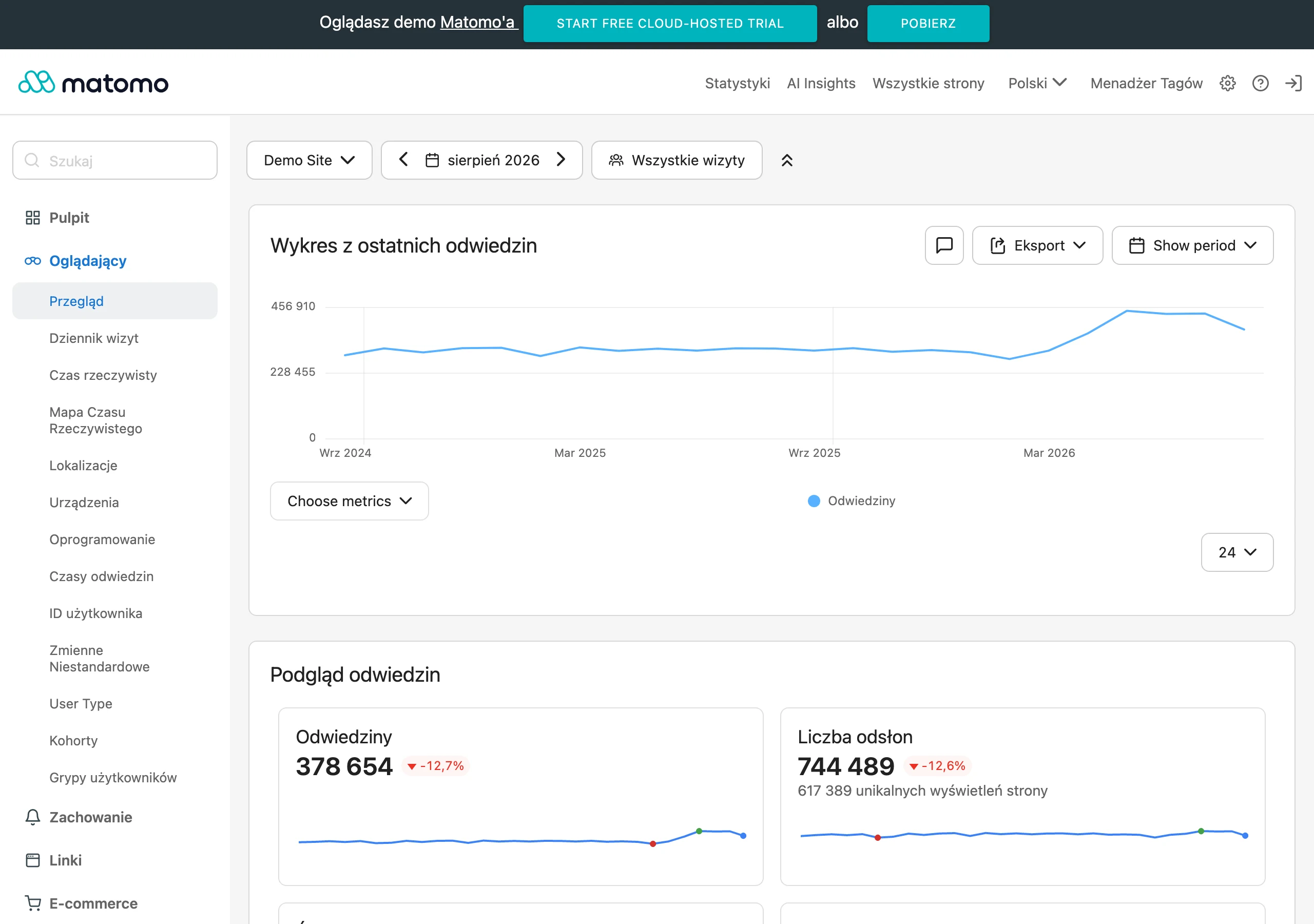
The benchmark should result from the function of a specific URL. For an article, time on page, scroll depth, moves to other content and returning users matter, because these show real “reading”, not just a visit. For a service page, clicks on the CTA, moving to the form, contact or visiting the offer will be more important. First decide what should happen on a given subpage, and only then assess whether the social media traffic was good.
To measure this reliably, you need proper source tagging. Every social media link should have UTM parameters, and in analytics you need to configure events such as scroll, button click, file download, newsletter sign-up or form submission. Simple mapping is also crucial: which post, in which format, led to which URL. Without this, you won’t be able to distinguish an effective message from a random outcome, and you’ll be optimising blindly.
In practice, compare not only channels, but also variations of messages leading to the same content. One post may generate lots of visits and poor engagement, while another brings fewer clicks but much better visit quality, and that difference quickly translates into business results. It is often the second variant that is more valuable. Effectiveness is determined not by cost or the number of visits, but by what the user does after landing.
In analysis, you also need to take devices into account and the site’s real readiness for mobile traffic. A post may perform on desktop, but on mobile people leave after a few seconds because the culprit may not be the message or the creative, but slow loading, a poor “above the fold” section, or a CTA hidden so that nobody sees it. And when users read the article but do not take the next step, usually all it takes is improving internal linking, the lead, the FAQ section, or laying out the next steps in a more obvious way.
How to avoid common mistakes when using social media?
Mistakes with social media only disappear when every post has its own purpose. And a specific URL, sensible measurement and a message tailored to the channel rather than the author’s convenience. Most problems start when we do it the other way round: publish first, then frantically wonder what the post was for in the first place. The result is predictable. The traffic becomes random, difficult to evaluate and rarely works towards the site’s real goals.
The second classic mistake is judging results solely by reach, likes or the number of comments. These metrics are useful, but they remain supporting signals and cannot replace data from the site itself. Equally risky is posting the same message in every channel, as if audiences were one single mass. Platforms favour different formats, and people react differently to a short insight, a carousel, a video or an expert article. The same link can perform well or poorly depending on how it is presented, not on the destination content itself.
- Sending traffic to an underdeveloped subpage: a weak headline, no clear CTA, slow loading or an unreadable mobile version quickly reduce campaign performance.
- No UTM and no analytics events: without source tagging, you cannot reliably assess which publications truly support the site.
- A mismatch between the promise in the post and the content on the page: if the user clicked for a specific answer, they should find it immediately, not after several screens.
- Promoting only new materials: older evergreen articles, FAQs and service pages can often be refreshed and redistributed effectively.
- Not using comments and user questions: this is ready-made material for updating leads, headings, FAQ sections and CTAs on the page.
A good practice is simple: treat social media as a testing ground for content on the site. If audiences react strongly to a particular problem, question or argument, that is a signal to move that topic into an article, a service page or a landing page. Comments on social media often show what is missing from the content more precisely than traffic analysis alone.
It is also worth keeping operational consistency under control. A publishing calendar, a sheet mapping posts to URLs, a consistent UTM structure and regular review of results usually deliver more than chaotically adding more posts. The number of publications can become a fetish. Most often you do not need to publish more, only to connect each publication better with a specific subpage, a goal and later optimisation.
What are the best technical practices for sites supported by social media?
The best technical practices are simple. You need to prepare the site so that after a click from social media the user immediately sees the right content, can use it comfortably and it can be measured flawlessly. Most problems are created not in the post itself, but only after entering the subpage. If the page loads slowly, looks poor on mobile or fails to deliver on the publication’s promise, the traffic disappears within seconds. A technically solid subpage must be ready for quick mobile visits, short attention spans and immediate assessment of content usefulness.
The first area is speed and the mobile version. And this is not a detail, because most visits from social media happen on smartphones, and there patience is the shortest currency on the internet. The page should load quickly, not shift layout while loading and not hide content behind aggressive pop-ups. If the first screen is heavy, overloaded or illegible, the user often bounces before reading even the lead. In practice, you need to keep images lightweight, typography readable, spacing sensible and forms easy to fill in with a thumb.
The second area is consistency between the message in social media and the content on the subpage. The question is: do the heading, lead and first CTA confirm within three seconds that the user has landed exactly where they wanted. The most common technical-content mistake is sending traffic to a page that does not immediately expand on the promise made in the post. Instead of guiding the user, the page makes them look for meaning between paragraphs. That is why you refine the above the fold section, the order of information, the visibility of buttons and logical internal linking to the next step.
The third area is link preview and the basics of content embedding. Every important subpage should have the meta title, meta description, featured image and Open Graph data set, so that when the link is shared it looks predictable and encourages clicks. When the platform pulls the wrong title, a random image or an empty description, the quality of the visit drops even before the user reaches the site. That is the first filter. A properly set link preview is not a detail, but part of effective distribution.
The fourth area is analytics and traffic tagging. Links from social media should have consistent UTM parameters, and on the site you need to measure not only page views, but also scroll depth, clicks on CTAs, transitions to subsequent subpages, form submissions or file downloads. Without this, it is impossible to distinguish a publication that generates clicks only from one that genuinely supports the business goal. And when context is missing, optimisation becomes a lottery. If you cannot attribute a visit to a specific post, channel and URL, optimisation becomes guesswork.
The fifth area is the reliability of conversion elements. Everything has to click. Buttons need to work from the first tap, forms should be short and sensibly validated, and the journey must not multiply unnecessary steps. These are small things, but without them there is no result. After publication, the site needs to be regularly checked in practice: how it looks on different phones, whether the link leads to the correct address, whether the CTA really stands out and whether analytics tools record the events. The question is: how many times does a campaign “fail to deliver” because someone missed one error. In practice, it is precisely such faults that most often cut the effect of traffic from social media more strongly than the campaign reach itself.
FAQ
Frequently asked questions
How can social media support content on a website?
They work when they drive traffic to specific URLs and support the site’s goal, such as reading an article, signing up or getting in touch. This makes it possible to increase reach and check what really interests users at the same time.
Is publishing posts on social media alone enough to strengthen on-site content?
No, publishing alone is not enough. What matters is linking the communication to a specific subpage and user action, not just being present in the feed.
What benefits does integrating social media with website content bring?
Above all, it provides a fast distribution channel and lets you see which topics attract valuable traffic. It also helps you better understand audience intent based on clicks, comments and on-site behaviour.
How should content be adapted to different social media channels?
You need to change the format, entry point and CTA, while keeping the same goal for the landing page. The same material can work as a carousel, a short video or an expert comment, depending on the platform.
How do you measure the effectiveness of traffic from social media on a website?
The most important thing is what the user does after landing on the site: whether they read, click through, sign up or submit a form. Analysis also requires UTM tags and events in analytics, e.g. scroll, CTA click or file download.
What are the most common mistakes when using social media to promote content?
Most often it is a lack of a clear goal, no link tagging and judging results only by reach or likes. Another issue is driving traffic to an underdeveloped subpage or a mismatch between the promise in the post and the content on the website.