
Company blog and social media work best when they are not run as two separate worlds, but as one coherent content process. The blog organises knowledge. It answers customer questions and gives the company its own place to generate traffic and conversions, without depending on the whims of algorithms. Social media shorten the path to the first contact. They help capture attention and regularly send people back to content that is already waiting on the site. Without a clear transition from a post to a specific article, form or next step, even a good publication rarely delivers a real business result. So the key is not publishing itself, but how the channels are connected, how transitions are measured and how the message is matched to the audience’s stage. And that is not a cliché. It is precisely this setup that determines whether content merely gathers reach, or genuinely works for traffic, leads and purchase decisions.
What is the connection between a company blog and social media?
Connecting a company blog with social media is one content system. Not two parallel tracks. In this setup, both channels have different but complementary roles, and the company stops improvising and starts building a process. The blog is the place for a full answer, building visibility in search and directing the user to take action on the site. Social media are responsible for distribution, attracting attention and consistently bringing the audience back to the content.
In practice, it usually looks simple. First, a core piece of content is created on the blog, and then it is broken down into shorter formats for social media, so that the topic has several lives instead of one shot. From one article, you can prepare several posts, a carousel, a short video, a graphic with a quote or a question for the community. The blog becomes a source of content, and social media become the mechanism for spreading and testing it. Instead of chasing novelty, you get a repeatable cycle.
Such a model is not about dropping a link to a new article and waiting for clicks. The problem is that without a plan, it usually ends in silence. It is about designing a path: from the first contact on social media, through to entering a specific article, and then to the next step, for example signing up to a newsletter, downloading a resource or contacting the company. This way the content does not die in a single post. Nor does it disappear from the feed after a few days.
Connecting these channels makes sense especially when a company wants to build recognition, generate traffic from search and educate customers before purchase at the same time. It works. A user often sees the topic first on social media, and only later searches for the expanded version on the site, because that is where the “meat” is, not just the headline. If the blog and social media are not linked, that journey usually breaks down. The reach remains, the effect disappears.
From an operational point of view, this means a shared topic plan. Then consistent CTAs, correct link tagging and regular updates to posts, because content should age like wine, not milk. The blog should contain destination content: guides, FAQs, comparisons, forms and internal linking. Social media should provide different entry points to this content. And audience reactions should feed back into planning the next articles, instead of getting lost in the comments.
What benefits does integrating a blog with social media channels bring?
Integrating a blog with social media channels is a simple lever. It allows you to squeeze the maximum out of one piece of content, in multiple places and at different stages of the audience’s decision-making, instead of producing separate versions for every channel. One well-prepared article can work longer than a single social media post and, at the same time, deliver search traffic, visits from posts and returning users. The result is measurable. Editorial efficiency increases without the need to do everything from scratch.
The second benefit is less spectacular, but more important. It is about the quality of traffic. Social media are great at capturing attention, but the blog provides space to clarify the problem, develop the answer and show the next step, instead of leaving the audience with just a headline. If a user lands from a post on an article that answers their question exactly, the chance increases that they will stay longer, go further and complete a micro-conversion. It works for a reason. It is a matter of context and continuity.
The third benefit is speed. More precisely, faster testing of topics and messages without shooting blindly. Reactions to posts, comments, private messages or the performance of different formats quickly show which questions really matter to the audience and which only sound good in the author’s head. That is valuable information when planning the blog. It allows you to develop content with proven demand instead of guessing what will work.
Connecting channels extends the life of good materials. And that is not a cliché. A blog post can be updated, promoted again and reused in different campaigns, instead of being published once and ticked off. This is especially important for evergreen content that addresses recurring customer problems and can regularly return in distribution. Instead of a one-off firework display, there is long-term content work.
There is also a more “technical” benefit, but one that is crucial for the business. It is greater control over data and conversion. On social media, the company operates in someone else’s ecosystem, with limited influence over reach and how content is presented, which in practice means over who sees what. On the blog and website, you can measure user behaviour more precisely, collect sign-ups to the mailing list, carry out segmentation and check which platforms really deliver valuable visits, not just clicks. Not X, but Y. Not reach, but results.
In practice, well-connected channels shorten the path from interest to decision. Instead of groping in the dark, there is step-by-step guidance. A post directs the user to an article, the article to the next piece of content, and that one to a form or contact, so the audience does not have to piece together the journey themselves. It is precisely the coherence of the journey, rather than mere presence across many channels, that delivers the most real benefits. The less friction along the way, the more sense there is in the whole setup.
What are the key stages of implementing a blog + social media strategy?
The key implementation stages are defining the objective, audience analysis, content audit, choosing the operating model, producing the base material, distribution, measurement and optimisation. This order keeps everything under control. Without it, it is easy to slip into publishing random content that leads to no next step, and only “looks nice” in the calendar. First you need to decide whether the blog + social setup is meant to support leads, market education, sales, customer service or visibility building. Only then does it make sense to map out topics and formats, instead of hoping the algorithms will sort out the rest.
Then you check what questions and objections are really on the audience’s minds. The best sources are simple and brutally honest: sales conversations, customer service, Search Console, GA4, comments and social media messages. If a topic does not grow out of real user questions, it usually delivers neither in search nor on social media.
The next step is an audit of assets. In other words, a quick, ruthless check of what you already have and what can realistically be recovered. In practice, you look closely at existing posts, their freshness, organic traffic, the presence of CTAs, internal linking and which topics actually travelled well across social channels. On that basis, you choose the working model: blog as the main source of content, social as a testing ground, or a hybrid option.
Once the model is set, the base material is created on the blog. This should be a text that structures the problem, answers it in full, guides the user step by step and ends with a specific CTA matched to the stage of the decision. Traffic from social media should land on a specific post, landing page or form, not on the homepage.
Next, the base content is repurposed for social media. One article can produce several separate communication angles: a mistake, a myth, a short how-to, a FAQ snippet, an expert quote or a question to the audience. And that is where the difference between “posting” and distribution begins, because every platform rewards a different way of presenting content. Copying the same post everywhere sounds convenient, but the effect is usually poor.
After publication comes the stage many companies fail to deliver. This is about measuring cross-channel journeys. You need to tag links with UTM parameters, keep campaign names consistent and check not only visits, but also session quality, scroll depth, CTA clicks, sign-ups and downloads. The most useful report shows not just the post’s reach, but whether the user went further and completed a micro-conversion.
In the end, optimisation remains. Regular, boring, effective. Based on the data, you improve post headlines, post hooks, thumbnails, publication order, CTA placement and the frequency of republishing evergreen content. In practice, it is iteration that determines whether the blog + social system becomes a predictable process, or just a collection of individual actions.
How to plan content so it supports both channels?
Content is planned from the source material to channel variants, not the other way round. Instead of two independent calendars — one backbone and many branches. The blog is meant to take the topic to completion, while social media are there to capture attention, test the narrative and direct people to the next step. First you create a strong base post, and only then do you map out a series of shorter publications from it.
The easiest way to structure this is in topic clusters. One pillar article takes on the broad problem, while supporting posts break down the details: questions, comparisons, common mistakes and instructions. This gives the blog structure and visibility, while social media get many natural entry points into one subject area. The only question is whether you prefer to have a system, or to rely on bursts of effort.
For each topic, immediately attach formats, CTAs and the audience stage. Something else works for the first contact, something else closes the decision, and something else only makes sense after visiting the website. The content plan should include at least:
- the main problem and user intent,
- a base article or supporting post on the blog,
- social media formats, for example a post, carousel, short video or graphic,
- a target CTA, for example going to the post, newsletter sign-up, form or downloading material,
- a way of measuring the result, i.e. UTM, events in GA4 and the most important micro-conversion.
Good planning also takes into account the second life of content. One post should not “live” only on the day of publication, because social algorithms can quickly cut the reach of some materials. Instead of hoping for a miracle, it is better to map out several publications around the same topic straight away: the launch, a reminder, a different communication angle and a return after updating the post.
The plan cannot be deaf to feedback. If a particular post gathers questions, comments or private messages, that is not noise, but a signal to expand the FAQ, add a new section to the article or create a separate supporting post. Social media are a very good tool for validating topics, but business value only appears when those signals come back to the blog and the website.
You have limited resources. That is not offended. In that case, it is best to plan narrowly and regularly: one topic cluster, one pillar article per month, several derivative social publications and one CTA path. And the question is, what is better: a broad plan you will not deliver, or a simple setup that works week after week. Consistency and a coherent structure beat not ambition, but a large number of uncoordinated publications.
How to measure the effectiveness of combining a blog with social media?
The effectiveness of combining a blog with social media can be seen in the quality of cross-channel journeys and in whether the user takes the next step on the website. The number of post views or article pageviews alone says very little if you do not know what happens next. In practice, the whole chain matters: publication on social media, visit to the blog, engagement with the post, CTA click and possible conversion. What matters most is not how many people saw the content, but how many went on to take a meaningful action.
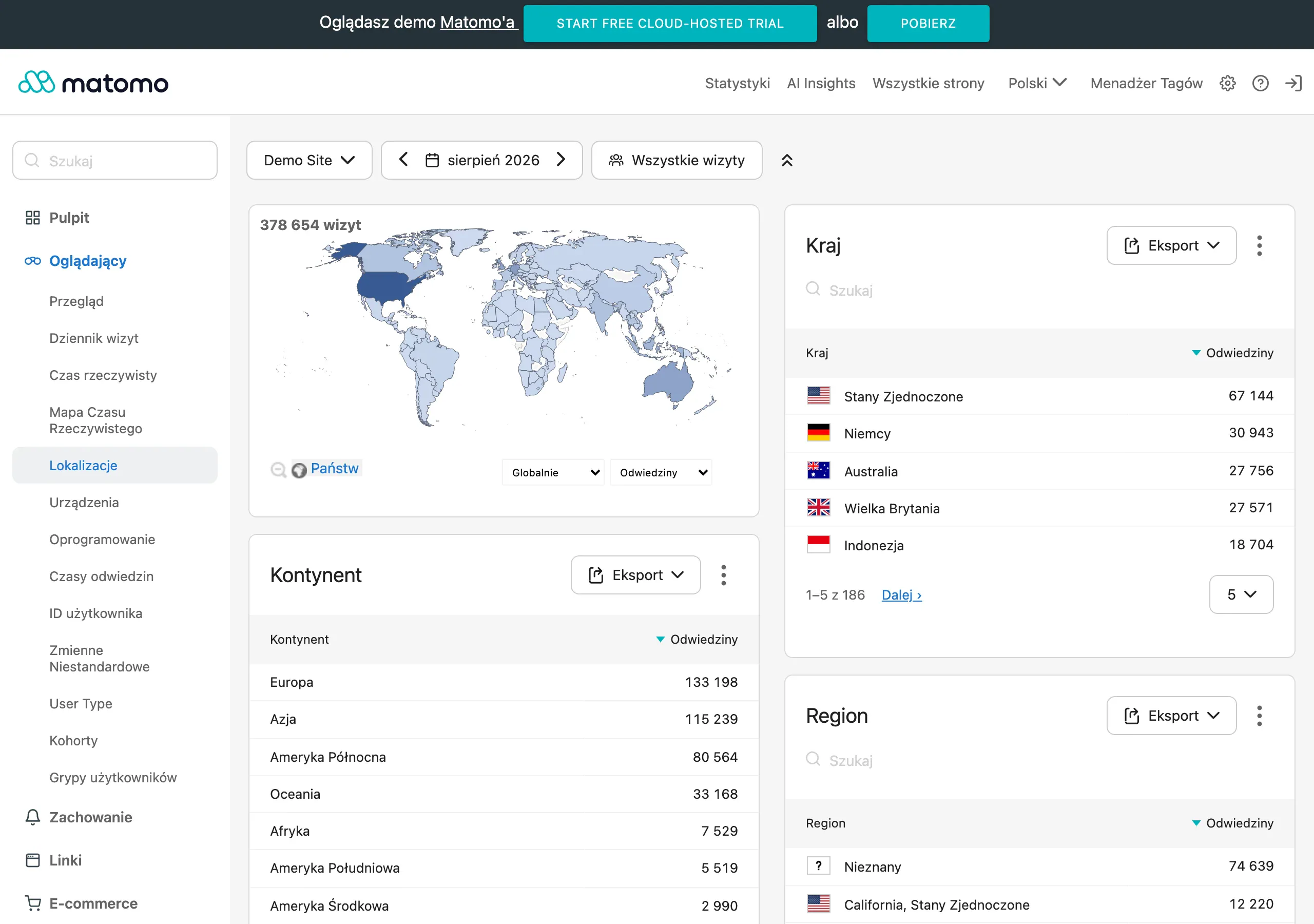
The starting point is assigning metrics to a goal. If the goal is to educate the market, the focus will be article entrances, engagement time, scroll depth and clicks through to further content. If the goal is leads, you need to measure CTA clicks, newsletter sign-ups, material downloads, submitted forms and the quality of those entrances from specific platforms.
Without UTM parameters, the data is worthless. If every link from social media has consistent tagging, GA4 immediately shows whether traffic came from LinkedIn, Facebook, Instagram, a paid campaign, a repost or an organic publication. Without consistent UTMs it is easy to misjudge the channel, because traffic from different activities gets mixed into one source.
- entrances to a specific post from a given social channel,
- engagement time and scroll depth on the article,
- clicks on the CTA in the post,
- movements between articles and to service pages,
- sign-ups, downloads and submitted forms,
- comparison of traffic quality from individual platforms,
- the difference between organic, paid and repost traffic.
Good measurement requires one more move: splitting content into funnel stages. A post whose job is only to spark curiosity should not be judged solely by the number of leads. By contrast, a blog post that directs users to a demo or a form needs to be assessed by transitions to that specific step, not just by pageviews.
In practice, a simple dashboard in GA4 or Looker Studio works best. And that’s it. Then you regularly compare three things: which topics bring in traffic, which posts hold attention, and which CTAs complete the transition. The report does not need to be grandiose, but it does need to be clear and repeatable. If you cannot quickly check which post led to an entrance on a specific article and what the user did next, the measurement system is too weak.
The most practical value comes from weekly or monthly analysis, but only if it ends with decisions about changes. On that basis, you improve post headings, the first paragraphs of articles, CTA placement, thumbnails, publication order and platform choice. First cosmetic tweaks, then corrections, and finally hard cuts. Measurement should serve content refinement, not just reach reporting.
How to avoid common mistakes when integrating a blog with social media?
Mistakes disappear only when the blog and social media have separate roles, a shared plan and a measurable path of transition. It sounds banal, but the problem is that companies publish in parallel, only without a bridge between the content. As a result, the post lives for one day, the blog post does not get distribution, and the user is left asking: what next. Integration is not about being present in two channels, but about leading the audience from one place to another.
The number one mistake is predictable. Driving traffic to the homepage instead of to a specific target piece of content. If a post is about a specific problem, it should lead to an article, checklist, form or service page that develops that problem. The shorter and more logical the path, the greater the chance the user will take the next step.
The second classic mistake is copy-pasting the same message into every channel. A blog article, text post, carousel and short video do different things, so they require a different way into the topic. The same thesis can work everywhere, but the format, hook and CTA should be tailored to the platform. Not everything at once, not the same everywhere, only where it makes sense.
- publishing without a clearly set goal for a specific piece of content,
- no CTA in posts and articles,
- driving traffic to a subpage that does not match the topic,
- no UTMs and chaos in campaign naming,
- failing to update older posts,
- giving up on reposting evergreen content,
- not responding to questions and comments from social media,
- creating topics without checking what the audience is actually asking about.
Publishing is not the end of the story. In many companies, results slip away because they treat uploading the material as the end of the work, even though after publication the more important stage begins: moderation, replying to comments, analysing questions and updating the post when new threads emerge. And that is exactly where ideas for FAQs, new supporting articles and better communication angles are born.
Without an operational process, everything falls apart. If there is no designated owner for the topic, approval rules, access to the CMS and analytics, and a deadline for content updates, the system will not last long. Who is holding it all together. Even a good content plan will not work for long if the company does not have a simple workflow for publishing, measurement and improvements.
With limited resources, it is better to narrow the scope rather than try to do everything at once. One topic cluster, one pillar article per month, a few derivative publications and one CTA path is a safe start that does not pretend to be “full scale” on paper. This model is easier to maintain, measure and systematically improve without a drop in quality.
The rule is simple and unforgiving. First check whether the basic sequence topic — article — distribution — CTA — measurement works, and only then expand the scale, because otherwise you are adding bricks to a crooked wall. The question is: after the content, does the user know what to do next. Most mistakes come not from a lack of content, but from a lack of consistency between the content, distribution and the user’s next step.
FAQ
Frequently asked questions
How do you connect a company blog with social media so they work together?
The best approach is to treat them as one content system: the blog as a source of full answers, and social media as a channel for distribution and testing. From one article, you can prepare several formats for publication and direct the audience to a specific post or CTA.
Why shouldn’t a company blog and social media work separately?
Because then content often ends at reach, instead of leading to traffic, leads and purchase decisions. Connecting the channels gives a more coherent journey from the first contact to the next step on the site.
What benefits does integrating a blog with social channels bring?
It allows you to get more out of one piece of content, increases the efficiency of editorial work and extends the life of evergreen materials. It also makes it easier to test topics and improves traffic quality, because social media direct users to the expanded version on the blog.
How should you plan content so it supports both the blog and social media at the same time?
First, create the core piece on the blog, and only then break it down into shorter formats for social media. In the plan, it is worth including the topic, formats, CTA, audience stage and measurement method from the outset.
How do you measure the effectiveness of connecting a blog with social media?
You need to look not only at reach, but above all at transitions between channels, engagement, CTA clicks and micro-conversions. UTM tags, GA4 and analysis of traffic quality from individual platforms help with this.
What content works best on the blog, and what in social media?
On the blog, best results come from target content, such as how-to guides, FAQs, comparisons, forms and internal linking. Social media should provide shorter entry points to that content, for example posts, carousels, video, graphics or questions to the community.