

Corporate blog can deliver sales. But it will not do it by itself. In practice, it works when it is built into the customer acquisition process, rather than pretending to be an autonomous repository of text. Simple growth in traffic from Google usually does not deliver results if the user does not get a straightforward path to the offer, contact, or next step. The most important thing is whether the content answers the buyer’s real questions and leads them on, not how many views it gets. That is why a blog should be seen not as a channel “for publishing”, but as a sales tool integrated with SEO, analytics and lead handling. That shifts the emphasis. It changes how topics are chosen, how you write, and how you measure results.
What a corporate blog is in practice
Corporate blog is meant to lead the user from question to decision. Sometimes that will be the offer, sometimes contact, and sometimes immediate purchase. So it is not about posting articles regularly, but about building content with a specific business goal. A good blog combines search visibility with clear navigation to services, categories or a form. If an article does not have a sensible route to the offer, it usually ends with traffic that has no sales value.
The biggest value of a blog comes when the topics are tied to the stages of the buying decision. First you help identify the problem, then you compare options, later you remove the risk, and finally you structure the costs and implementation. This means the user lands on material matched to the moment they are really in. And that makes a difference especially in services, B2B, and everywhere else where the client does their research first and only then gets in touch with the company.
It is not the article alone that drives sales. It is the whole surrounding setup. You need links to service pages, clear CTAs, forms, contact modules, downloadable materials and trust-building signals. The article should answer the question, but at the same time show what to do next. The content educates, and the elements around the content take over the intent and turn it into action.
A blog works in two ways. Directly, when someone reads an article and then goes to the offer and sends an enquiry. Indirectly, when the article has already addressed the client’s typical questions, shortened the sales conversation and reduced the number of objections. In e-commerce, it more often supports product discovery and long-tail traffic, while in a service model it more often builds trust and makes it easier to close the decision.
To make it sustainable over time, the blog must be integrated with the rest of the system. In practice, that means connecting it with the CMS, web analytics, Search Console, CRM and a sensible process for updating content. Without that, it is hard to assess which topics really support sales and which ones only inflate views. Publishing is only the start. Not the finished solution.
Current operational context
Today, a blog’s effectiveness is not about simply delivering organic traffic. What matters is whether the content quickly leads the user to a specific action, because increasingly part of the answer is already given to them in the search results. Entering the site has therefore become more selective than it used to be. That means one thing: from the first sentences, the article needs to match intent and show the next step. Counting sessions and Google rankings alone says too little about the real impact on sales.
Users increasingly land on one specific article, not on the blog as a whole. They read a chunk, scroll to the section that interests them and decide within seconds whether to stay or close the tab. The question is: will your content withstand that patience test. That is why a clear structure, substance in the first paragraphs and matching the search query matter, not pretty introductions. The article has to work on its own, because for many users it will be the only contact with the brand at that stage.
In many industries, the purchase is preceded by independently comparing solutions. And that is not just a cliché. In practice, the best-performing content answers questions about cost, risk, scope of service, implementation, mistakes, limitations and usage effects, rather than circling around general advice. Such materials attract users who are closer to a decision than classic how-to articles. The closer you get to the customer’s real objections, the greater the chance that the blog will support sales, not just visibility.
Credibility is equally important. Content should be up to date, consistent with the offer and written from a practical perspective, not just for keywords. A publication date, clear expert authorship and alignment with the company’s real sales process all help here. But be careful: if an article promises something different from the offer page or smooths over awkward limitations, it starts to lower trust instead of building it. And trust cannot later be “boosted” by ads.
The impact of a blog on sales increasingly has to be measured indirectly. An article view is rarely the last click before purchase, so it makes sense to analyse transitions to the offer, clicks on CTAs, consultation bookings, material downloads, returning users and the role of the content in the full conversion path. If you do not measure micro-conversions, you will not see which content really helps commercially. This is especially important where the decision takes longer and is spread across several visits. Without that, you are left with traffic that “looks good” but does not close.
In the end, there is the uncomfortable question of the readiness of the site and the sales process. A blog will not fix an unclear offer, a poor form, the lack of a CTA or a slow response to leads. If these elements are weak, even good content will lose potential, point by point. In practice, the profitability of a blog depends not only on the topics, but also on whether the company can take over and handle the interest that the blog generates.
How a blog supports sales step by step
A blog sells when it has a plan. Every article should be designed around a specific business action, so at the start you decide what is supposed to happen after the content is opened: contact, booking a consultation, going to a service, downloading a resource or making a purchase. The question is simple: what should the next step be. Without a clearly defined sales goal, even a good article will only be a source of traffic.
The second step is getting down to earth. You gather real customer questions, rather than guessing topics solely on the basis of phrases from tools. The best sources are Search Console, CRM, sales conversations, emails, chats and customer service questions. This creates content that targets what really blocks the decision: cost, implementation time, risk, differences between options or technical requirements.
The topic must have its place in the funnel. You then assign it to the offer and the stage of the buying decision, because some content helps to understand the problem, others compare solutions, and still others close the contact or purchase. This is not a game of “we write because we should”, but of structuring the user journey. If a topic has no logical connection to a service, category or next step, its sales impact will usually be low.
Without a brief, it is easy to drift off course. Before publication, prepare a brief that organises not only the text itself, but the entire mechanism behind the article. In practice, it should include user intent, a list of questions to cover, a plan for links to the offer, a place for a CTA, expert sources and rules for later updates. The result is simple: fewer situations where the content is linguistically correct, but does not support the buying decision.
Implementation is not clicking “publish”. At this stage, sales integration matters, not just dropping a post into the CMS. The article should have a clear structure, sensible internal linking, a contact module or lead magnet and a section leading to the related service or category. Content only starts working for sales once the user sees a clear next step and can take it without friction.
After publication, the article cannot live in Google alone. Good content can be used in newsletters, remarketing, sales replies, nurturing sequences and materials for existing customers. And this is not cosmetic work, but a lever. In services and B2B, one piece of material can simultaneously educate, reduce objections and shorten the sales conversation.
Views are not enough. Measure the blog’s impact more broadly than positions and traffic, because in practice data on visits to the offer, CTA clicks, lead quality, assisted conversions, returning users and the differences between new and returning traffic are more valuable. The fact is: often an article does not close the sale on its own, but plays an important role earlier in the journey.
At the end there is optimisation, not magic. The final stage is based on data, not intuition, so most often you improve the heading, the beginning of the article, the FAQ section, links to offers, CTA copy, examples and the material’s alignment with the current offer. But note, this is where the most money is on the table. In many cases, improving existing content delivers a bigger effect than publishing more texts without analysis.
What to do to make the blog truly support sales
For a blog to genuinely drive sales, you need to connect the topic, the offer, the CTA and measurement into one process. Not into four separate drawers, but into one path the user actually follows. It is best to start with topics close to the buying decision, that is, those that answer questions about choosing a solution, implementation, limitations, costs, mistakes and comparisons. These are the ones that most often attract people ready to take a step beyond just reading a guide.
First, check the fundamentals. Is the website actually ready for traffic from the blog. If the offer is unclear, the form too long, the CTA too generic and the lead response time poor, content alone will not save the sales process. The blog strengthens a good process, but rarely makes up for its basic shortcomings.
- Every important article should be assigned to a specific service, category or type of lead.
- The CTA must match the intent of the content, rather than being the same everywhere.
- Analytics should measure clicks to the offer, forms, downloads and other microconversions.
- Marketing and sales should exchange information about customer questions and objections.
- Content should be updated when the offer, implementation process, pricing or industry realities change.
Without a plan, chaos quickly sets in. A good content plan usually starts with a topic map tied to the offer, because otherwise you write “nice” texts that do not deliver results. It shows which articles are meant to build visibility, which are meant to support consideration, and which should drive direct contact. This organises editorial work and cuts out publishing materials that generate traffic but no business value.
The mistakes are repetitive. And that is exactly why they hurt twice as much. The most common are measuring only views, publishing topics disconnected from the offer, lacking links to sales pages, weak CTAs and not using the content by salespeople. A separate problem is keyword cannibalisation, i.e. creating many similar articles that compete with each other instead of strengthening one strong piece.
There is no single cost for investing in a blog. The scope of work depends on the industry and the buying process, because the rates and friction along the way are different. The longer the decision, the more questions along the way and the greater the need to compare options, the more sense there is in systematic work on content. In e-commerce, a blog more often supports product discovery and long-tail traffic, while in services and B2B it works more strongly through education, risk reduction and building trust before contact.
The decision “develop or drop it” should not be based on belief. It is better to check three things: whether customers are actually looking for answers before buying, whether it is possible to measure transitions from content to the offer, and whether the team has the resources to update materials regularly. The question is: can you handle that traffic, not just attract it. A blog makes sense when the company can not only publish, but also use the content in real sales work.
The most common mistakes and limitations of a company blog
The most common mistake is embarrassingly simple. A blog is treated as a separate content channel, rather than as part of the sales process that is meant to lead the reader to the next action. The result. Articles are created that generate traffic, but do not lead to an offer, contact or any “what next”. If a topic has no logical connection to a service, category or consultation, the blog usually ends up generating informational traffic with no real impact on sales.
The second problem is measuring the wrong things. Raw views, rankings and traffic growth look good in a report, but they do not tell you whether the content is working for sales. What matters is something else: visits to service pages, clicks on CTAs, return visits, lead quality and the share of articles in the conversion path. The data make it clear: these are the indicators that show whether the blog is delivering or just generating noise.
Topic selection set on autopilot also does a lot of damage. Overly general posts attract people who will never become customers, and texts that are too similar start competing for the same queries and dilute visibility. And that is still the lesser problem. The issue is that updates are often missing, so the article keeps drawing traffic, but it sends out-of-date information about the offer, costs, implementation or scope of the service.
The limitation of a blog is not the format. The limitation is the conditions around it, that is, what happens after reading. A blog will not fix an unreadable offer, weak forms, slow lead response, a lack of analytics or a lack of cooperation between marketing and sales. If the user cannot see a clear next step after reading the content, the problem usually lies outside the article itself.
You also need to look at it without sentiment. Does a blog even make sense in a given sales model. It works strongest where the customer compares options before buying, looks for answers to objections and needs trust in the provider or product. But beware, its impact will be smaller for very simple, impulsive purchases or where the company does not have the resources to update content regularly and deliver expert knowledge.
There is also a practical limitation, namely technology and process. A poor CMS, no ability to implement CTAs, no event tracking, no CRM integration or no owner for the update process mean that even good content is not used operationally. Instead of a tool supporting sales, you end up with a library of articles. Quiet, organised and, in essence, with no impact on the result.
How to measure the blog’s impact on sales
The blog’s impact on sales is measured with traffic, but not the traffic counter. It is measured by observing transitions from content to sales actions, because that is where the business begins. First you need to establish which action matters commercially: visiting a service page, submitting a form, booking a demo, downloading a resource, calling, adding to basket or purchasing. The question is what exactly is meant to be the “win” in your model. Without a defined micro-conversion and final conversion, it is impossible to assess reliably whether the blog supports sales.
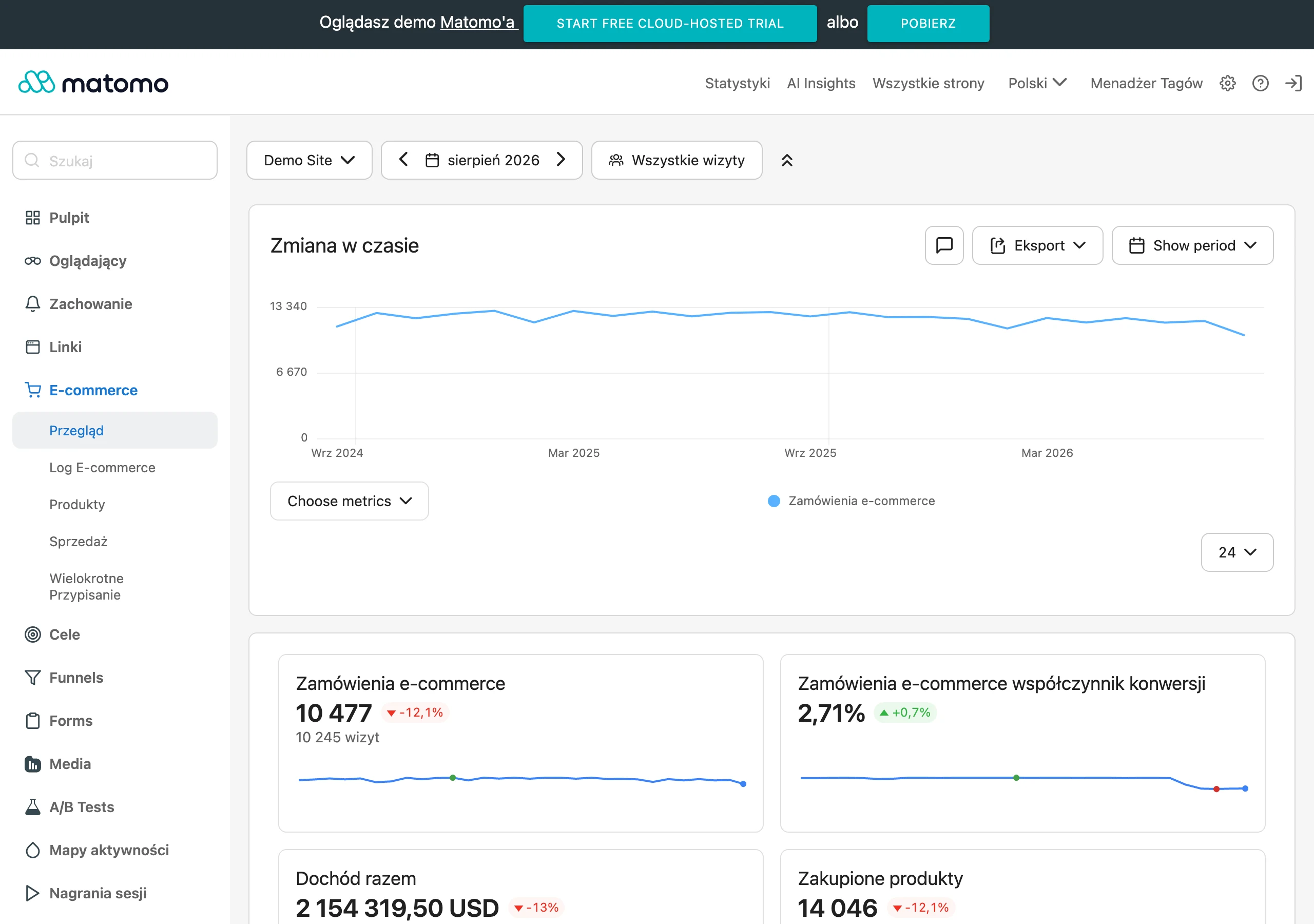
In practice, you need to bring together data from web analytics, Search Console and CRM. Without that, you are operating in the dark. Analytics will show user paths, CTA clicks and visits to the offer, while Search Console will add the queries from which people land on a specific article. CRM is like a sieve here. It lets you check whether the leads from those paths make business sense, or only inflate the number of contacts without any real sales potential.
The most important metrics are not just the number of visits. What also matters is the share of visits with purchase intent, CTR from the article to the offer, clicks on contact elements, the number of assisted conversions, time to conversion and lead quality. Scroll depth and engagement time can help, but they should not drive the assessment. The problem is that a long time on page can be misleading. It may indicate interest, but it can just as easily signal that the user did not find a quick answer and wandered around without effect.
It is worth breaking the blog down by content type, rather than treating it as one bucket. That makes a difference. Articles answering questions about cost, comparing solutions or implementation should be assessed differently from broad educational materials that build reach but less often close the topic. Decision-stage and comparison content usually has lower traffic volume, but often greater sales value than broadly informational text.
Analysing the indirect impact is also very important. And that is where naive faith in the “last click” ends. An article is rarely the last contact before a sale, especially in services and B2B, where decisions mature over weeks. So the key is to look at multi-touch paths. A user reads a post, comes back a few days later via the brand, visits the offer and only then sends an enquiry. The question is: can you see that in the data at all, or are you just guessing.
The most useful model is a simple dashboard combining content with business results. It should be clear, not flashy. For each article or topic cluster, it is worth seeing: search visits, queries, visits to the offer, CTA clicks, number of leads, close rate and whether the content needs updating. The data make it clear that mass production does not always win. Often, improving an existing article and its CTA delivers a greater increase in sales impact than publishing more new posts.
Key decisions when investing in a company blog
The most important decisions revolve around one thing: whether the blog should genuinely support sales in a given business model. And that is not a cliché. You need to establish exactly what it is supposed to generate, and whether the company is ready to measure that and then maintain it, month after month. Not every company needs an extensive blog, but many companies need content that answers questions arising before contact or purchase. If a customer compares options, checks costs, risks, implementation or limitations before making a decision, the blog can be strong support. If there are no such questions, or the decision is made immediately, a better return may come from refining the offer, forms, ads or lead handling.
The first decision is simple. The blog is meant to support a specific sales action, not exist “for the sake of it”. The question is: what should the reader do after reading, go to the service page, submit a form, book a consultation, enter a category or download a resource. Without this, the distinction between a valuable topic and text that only pumps traffic becomes vague. The blog should not be an end in itself, but a tool for moving the user on to the next step.
The second decision concerns the operational readiness of the website and the team. The problem is that if the offer page is weak, CTAs are unclear, the form works badly, and salespeople do not use the content in conversations, the blog alone will not fix the sales process. In practice, it is better first to check whether you can track transitions from the article to the offer, assess lead quality and clearly assign responsibility for content updates. And that is not a cliché, but the boundary condition for the whole setup. Investment in a blog only makes sense when there is a technical and organisational ability to make use of the traffic.
The third decision is the scope of the investment. In some companies, a small, precise blog based on a dozen high-intent topics is enough, rather than broad content production around hundreds of keywords. This is usually a better solution in specialist services, B2B and where the sales cycle is long and each lead is highly valuable. In e-commerce, the scale may be greater, because the blog can additionally support product discovery, linking to categories and long-tail traffic.
The fourth decision: build broadly from the outset or start with a pilot. The safest approach is to start with a few topics strongly tied to the offer and check whether users move on, return and convert better than traffic from other content. Such a test quickly reveals where the real bottleneck is, in topic selection, article quality, the offer or the contact path itself. The question is not “how many texts will we deliver”, but “does it work for sales”. A small series of content tied to analytics and sales is better than a large blog without an owner and without measurement.
The final investment decision should be based on three simple questions. Do customers actually search for answers before buying, can the company measure the impact of content on sales, and can the team regularly maintain the quality and freshness of the materials. If the answer to one of these questions is “no”, the blog can still make sense, but it usually should not be the first priority. In that case, it is wiser first to sort out the offer, analytics and lead handling, and only then scale the content.
FAQ
Frequently asked questions
How can a company blog support sales in practice?
It works when it leads the user from a question to a specific step: contact, going to the offer, downloading material, or buying. An article alone rarely is enough — you also need CTAs, links to services and a clear path forward.
Is Google traffic alone enough for a blog to sell?
No, because traffic growth does not produce results if the user has no simple route to the offer or contact. What matters is not only the visit to the page, but what the content does after it has been read.
Why should a blog answer the real questions of a buyer?
Because the best-performing content is close to the purchase decision and resolves specific objections: cost, risk, implementation, differences between options, or limitations. Such material brings users closer to buying than general guides.
What elements besides content are needed for a blog to drive sales?
You need links to service pages, clear CTAs, forms, contact modules and downloadable materials. The content is meant to educate, and these elements are meant to capture the intent and turn it into action.
Does a blog help more in e-commerce or in services and B2B?
In e-commerce it more often supports product discovery and long-tail traffic. In services and B2B it builds trust more strongly, reduces objections and helps close the decision before contact.
How do you measure whether a blog really supports sales?
It is not enough to look at pageviews and Google rankings. It is worth analysing clicks through to the offer, CTA clicks, consultation sign-ups, material downloads, lead quality and the role of articles in the conversion path.