

SEO · Ruda Śląska
SEO in Ruda Śląska
I start SEO in Ruda Śląska by checking how visible your company is in the local market today, which queries it can realistically answer and what is blocking growth. I work as a freelancer, so I combine strategy with implementation: I tidy up the website architecture, develop content, improve local signals and plan off-site activities. The goal is not traffic in itself, but a better presence where clients actually look for services.
About the service
SEO in Ruda Śląska for companies that want to grow from search
About the SEO service in Ruda Śląska
A few service details- Analysis of local demand and intent
- Tidying up the site structure and navigation
- Optimisation of content, metadata and headings
- Growing local visibility off the website
- Preparation for AI Overviews and chatbots
- Ongoing implementation priorities and consultations
Location
Local SEO: Ruda Śląska and the surrounding area
- City
- Ruda Śląska
- Region
- Silesian
- How we work
- Remote

Work process
How I work on local SEO and a company’s visibility in search results
I start by assessing the starting situation, then I set priorities and move on to implementation. I do not base the collaboration on general reports with no business relevance, but on activities that put the website in order, strengthen the local presence and make the site easier to understand for search engines and answer-generating systems.
- 01/ 03
Diagnosis and scope
At the beginning I check which services are worth strengthening, what the website’s current visibility looks like and where opportunities for local traffic are slipping away. I also establish the geographical scope, the state of the content, the quality of the pages and whether the site is ready for further implementations without multiplying unnecessary costs.
- 02/ 03
Priorities and implementation
After the diagnosis I put together a work plan: what to fix first, which pages to expand, which local signals to strengthen and where the content or structure needs rebuilding. As a result, the activities do not drift apart between the technical side, content and business expectations.
- 03/ 03
Growth and adjustments
SEO does not end with one-off optimisation. After the implementations I observe how visibility changes, which keywords are picking up traffic and where an adjustment is needed. In practice this means further expanding the content, improving internal linking and matching the activities to user behaviour.
Getting started and agreeing the scope
Well-run SEO starts with putting the basics in order. At the start I establish which services are really a priority, which pages are meant to support sales, what area the company operates in and whether the goal is to win enquiries, phone calls, visits or recognition in a specific niche. Without this it is easy to get into activities that generate traffic but do not support business decisions. In local SEO you also need to understand whether the company operates in one city only or serves a wider area, and how to show this on the website without artificially multiplying pages.
At this stage it is also important to establish what we are starting with: whether the site is up to date, who will implement the changes, what the content approval process looks like and where the biggest constraints are. A start like this brings order to the collaboration and makes it possible to match the scale of the activities to real capabilities. From a freelancer’s perspective this is key, because SEO makes sense when it can be implemented consistently, not just discussed. This makes it clear straight away which tasks are quick, which require a rebuild and which are better postponed so as not to scatter attention.
Input data for decisions
To set the direction of the work well, reliable input data is needed. I am interested not only in which keywords the website is visible for, but also in which services are the most profitable, where enquiries come from, which pages have potential and where the user gets lost before getting in touch. I look at the site’s current content, the menu structure, service descriptions, forms, contact details and the consistency of information published in different places. This makes it possible to separate technical problems from communication and sales problems.
The business context is just as important: seasonality, the area of operation, the type of client, the advantages of the offer and the way leads are handled. In practice this information often decides which content to develop, which services to strengthen and where to build local signals. If the goal is also better discoverability in AI-generated answers, clear definitions of services, precise descriptions of use cases and a readable relationship between the service, the location and the client’s problem are needed. Without good input data, even technically correct SEO tends to be too general.
Audit of current visibility
I treat the audit as a stage for identifying obstacles, not for producing a long list of the obvious. I check whether the website has a logical structure, whether the service pages are not competing with one another, whether the content answers user intent and whether the site is not losing potential through indexing errors, internal duplication, weak headings or unclear internal linking. I also assess whether the local pages are genuinely useful or exist only to contain the city name. Such an audit shows where a fix will bring a real improvement in quality.
Assessing the credibility and completeness of the information is also important. I check whether it is easy to find on the website the company details, the range of services, the area of operation, answers to typical questions and content that helps the client make a decision. This matters for the user as well as for the search engine and generative systems, which better interpret pages that are semantically organised and based on consistent information. So the audit does not end with the technical side. It also covers whether the site is understandable, convincing and ready for further expansion without deepening the chaos.
Local keyword analysis
Keyword analysis in local SEO is not about collecting every possible variant containing the city name. It is far more important to recognise how users describe the problem, the service and the expected outcome at different stages of the decision. So I look not only for the classic service-plus-location combinations, but also for queries about urgent needs, comparisons, prices, reviews, use cases and specific problems. Such analysis makes it possible to create content that answers real intent, instead of artificially cramming keywords onto one page.
I also take into account the language in which the client asks questions in the search engine and in conversational tools. Increasingly, queries take the form of full sentences, problem questions and requests for a recommendation, which is why the content of the website should also be prepared for this way of discovering services. This does not mean writing for chatbots instead of for people, but building the content so that it is unambiguous, precise and easy to cite or summarise. Both classic SEO and potential visibility in answers generated by AI systems benefit from this.
Designing the site architecture
Good website architecture decides whether the search engine understands which services are the most important, which pages are meant to support local visibility and how the user is to move around the site. I design the structure so that every key service has its own place and the local context is introduced naturally, without creating dozens of almost identical pages. What counts is logic: moving from the general offer to the specifics, the right naming of pages, a sensible menu and internal linking that strengthens the priority areas of the site.
In practice, architecture supports not only rankings, but also conversion and the discoverability of content by AI tools. If it is easy to read from the website what the company does, who it works for, where it operates and which problems it solves, then both the user and a system analysing the content get to the point faster. That is why I pay attention to the layout of sections, the order of information, the connections between services and the presence of supporting content. It is on a well-designed structure that content, FAQs, guides and local pages can then be developed safely.
On-page and local implementations
On-page implementations cover everything that directly affects the readability and usability of the pages. I improve titles, descriptions, headings, the order of sections, internal links, service naming and the content itself, so that it is specific, helpful and set in the local context. It is also important to refine the contact pages, the descriptions of the area of operation and the elements that help the user move quickly from searching to a decision. This is the stage at which SEO meets UX and the communication of the offer, not just technical fixes.
In parallel, I strengthen local signals off the website, looking after the consistency of company details, logical connections with external profiles and a presence in places that really support credibility. Off-site activities in local SEO make sense when they complement a well-prepared website, rather than trying to mask its weaknesses. If the goal is also better interpretation of the site by AI Overviews or other answer systems, consistent information, clearly described services and sources that strengthen trust in the brand are needed. That is exactly why I plan on-page and off-site implementations as one coherent process.
Testimonials
What clients and the industry say
Feedback from clients and industry people I have worked with on SEO projects.

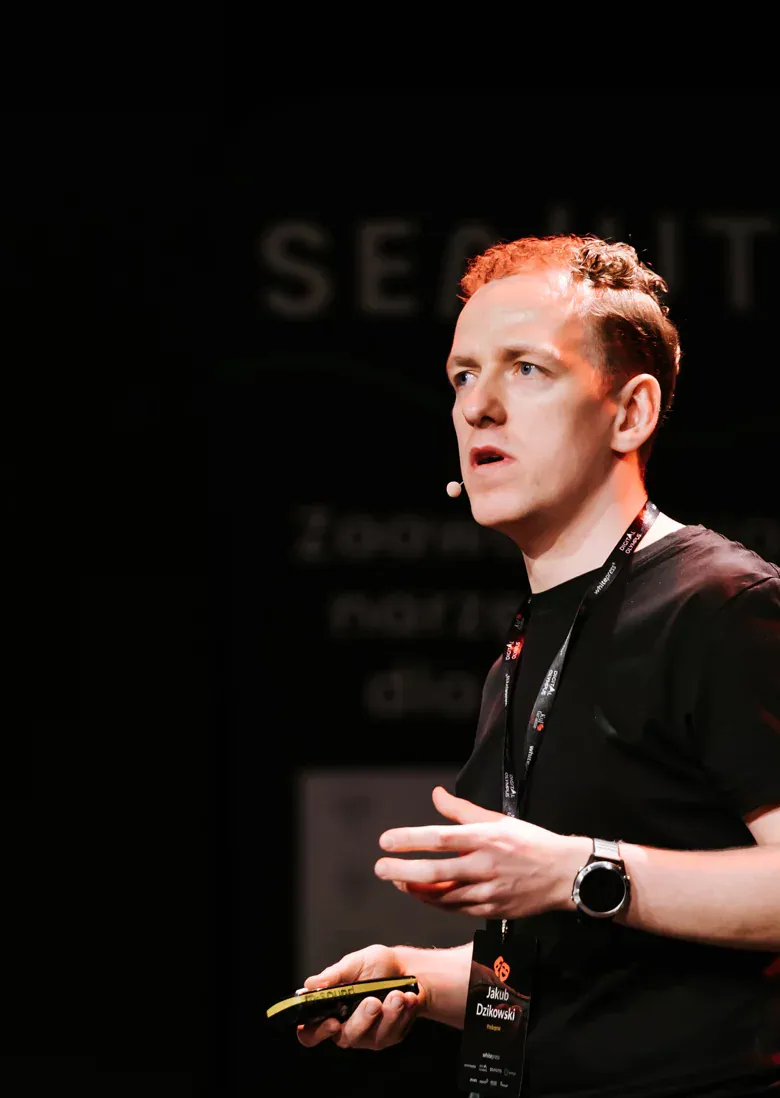
I had the chance to work with Kuba at Kulturalnie o SEO, an event I organise. Kuba did a great job as a speaker and received high marks from the audience. He showed professionalism and broad knowledge. In other projects at Vestigio, Kuba shows enormous commitment, a willingness to explore and implement new ideas, and excellent organisation of his work.

01 / 08
Local
SEO in your city
- SEO Białystok
- SEO Bielsko-Biała
- SEO Bydgoszcz
- SEO Bytom
- SEO Częstochowa
- SEO Dąbrowa Górnicza
- SEO Gdańsk
- SEO Gdynia
- SEO Gliwice
- SEO Gorzów Wielkopolski
- SEO Katowice
- SEO Kielce
- SEO Kraków
- SEO Łódź
- SEO Lublin
- SEO Olsztyn
- SEO Opole
- SEO Poznań
- SEO Radom
- SEO Ruda Śląska
- SEO Rybnik
- SEO Rzeszów
- SEO Sosnowiec
- SEO Szczecin
- SEO Toruń
- SEO Tychy
- SEO Warsaw
- SEO Wrocław
- SEO Zabrze
- SEO Zielona Góra
You talk to me, not a salesperson
Tell me what you want to achieve. I’ll reply personally
I work as a freelancer: the same person reads your message, prepares the quote and then runs the project. No sales team in between.