

SEO · Gorzów Wielkopolski
SEO in Gorzów Wielkopolski
I treat SEO in Gorzów Wielkopolski as work on real local demand, not on random keywords. The starting point is the state of the website, the offer, the competition in the results and the way customers search for services in the city and the surrounding area. I combine solid technical SEO, decision-oriented content and off-site work to improve visibility where it matters for the business.
About the service
SEO in Gorzów Wielkopolski for companies that want to grow locally
About the SEO service in Gorzów Wielkopolski
A few service details- SEO audit and starting point
- Analysis of local queries and intent
- Optimisation of content, meta and linking
- Tidying up the architecture for local services
- Off-site work and brand credibility signals
- Preparing content for AI answers
Location
Local SEO: Gorzów Wielkopolski and the surrounding area
- City
- Gorzów Wielkopolski
- Region
- Lubusz
- How we work
- Remote

Work process
How I run local SEO step by step
I do not start with a package, but with a diagnosis. First I check what already works, where the website is losing visibility and which queries make sense for local sales. On this basis I set the order of work: technical matters, structure, content, local signals and off-page activities. As a result, SEO is organised and can be implemented without chaos.
- 01/ 03
Diagnosis and priorities
At the start I analyse the website, the offer and the current visibility, and then set this against the intent of local queries. The point is to quickly separate what is important from what is secondary: which pages are worth strengthening, what is missing from the structure and which technical problems really limit the results.
- 02/ 03
Plan and implementation
After the diagnosis I put together a work plan that can be carried out step by step. It covers on-site fixes, content development, local trust signals and off-site work. Instead of a list of generalities, the result is a practical scope of changes that can be implemented on the website and tied to a business goal.
- 03/ 03
Development and adjustments
Local SEO does not end with a single implementation, because search results, the competition and the way questions are asked keep changing. That is why I watch which keywords and pages are gaining, where gaps appear and how to refine the content, structure and linking so that the traffic is better matched to the offer.
Kick-off and defining the scope
At the beginning I establish exactly what the SEO is to cover and where the company wants to be visible. In practice this means a conversation about the services, the customer groups, the area of operation, the type of queries and which pages matter most from a business point of view. SEO is run differently for a company with one service and differently for a brand with several categories and additional service locations. Without this, it is easy to end up with actions that look correct but are poorly connected to real sales.
At this stage I also put in order the expectations of the website and the scope of implementation. I check whether the goal is to strengthen existing pages, build new sections, improve local visibility for service keywords, or perhaps tidy up the whole thing before developing the content further. Such a start makes it possible to avoid a random list of tasks. Instead, a sensible order of work emerges, matched to how the company operates and how users search for services in Gorzów Wielkopolski and the surrounding area.
How I collect input data
Good SEO starts with input data, not with guesswork. I need to know which services the company lives off, which of them matter most, where it operates, what the current website looks like and what content is already on it. I also analyse what can be read from the history of visibility, traffic and the queries that bring users to the website. This is not about dry charts, but about understanding which topics have traction, where gaps appear and which pages have the greatest potential for improvement.
Equally important is information from outside the website itself: how customers are served, the language used by the sales team, the questions that come up before contact, the area of operation, and whether the company has materials that can sensibly be used in the content. As a result, the later SEO work does not rest on generalities. The content is closer to real conversations with customers, and the site structure better answers the specific needs of searchers, instead of merely repeating the standard service descriptions found on many local websites.
Audit of current visibility
I start the audit by checking whether the website gives the search engine good material to interpret. I look at indexing, URL architecture, headings, duplicated content, metadata, internal linking, the quality of the service pages and potential technical barriers. I am interested not only in whether the website is “technically correct”, but in whether it supports gaining visibility for local queries. Often the problem is not one big error but several smaller elements that together weaken the understanding of the offer and lower the chance of a good match in the results.
The second part of the audit concerns how the brand functions in the search results themselves. I check which queries the website already appears for, which pages are gathering visibility, where the competition answers better and whether the content has the potential for wider discoverability. This also applies to areas related to AI-generated answers. It is not possible to guarantee a presence in AI Overviews or chatbot answers, but it is possible to assess whether the website is clear, organised and credible enough to be easier to use in such contexts.
Analysis of local keywords and intent
Keyword analysis in local SEO is not just about collecting queries containing the name of the city. The key is recognising the intent: whether the user is looking for a specific service, comparing providers, trying to understand a problem, or is already close to a decision and wants to get in touch with a company quickly. That is why I divide keywords into groups related to services, problems, the decision stage and the local context. In the case of Gorzów Wielkopolski, it is also important to distinguish when it is worth targeting the city itself and when the company’s wider area of operation.
This analysis directly affects the structure of the website and the content plan. Not every keyword should get a separate page, but every important intent should have its place in the information architecture. This makes it possible to avoid two common mistakes: stuffing the location into every paragraph and creating many similar pages with no real difference in content. Well-planned keywords lead to precise service pages, FAQ sections, supporting content and better internal linking, which supports both the user and the search engine’s interpretation of the website.
Designing the architecture of service pages
Once I know which queries and intents matter, I move on to designing the site architecture. The point is for the offer to be presented in a logical way: main services, detailed pages, explanatory sections, content that supports the decision and elements of local trust. Good architecture is not expanded for the sake of expansion. It is meant to lead the user from question to answer, and then to contact. In practice this means order in the menu, the right relationships between pages and a clear assignment of topics to specific URLs.
This is also an important stage from the perspective of visibility in AI-based systems and of the brand being discovered through chatbots. Models understand better those websites on which information is unambiguous, well titled and set in a clear context. That is why I create the content structure with short, specific answers, service definitions, explanations of the process, question-and-answer sections and consistent company data in mind. Such order helps classic SEO, and also increases the chance that the content will be easy to interpret beyond the list of traditional results alone.
On-page, local and off-site implementation
On-page implementation covers everything that happens directly on the website: refining titles, headings, descriptions, service content, internal linking, contact elements and the local context. What matters to me is that every important page has its own goal, its own topical scope and a clear connection with the user’s intent. If a website is to be visible locally, it has to speak specifically: what it offers, to whom, in what area, and why the given page is the right place to get an answer. This usually produces a better result than adding keywords en masse to existing blocks of text.
In parallel I look at off-page activities, because local SEO does not end with editing content. Trust signals, consistency of company data, presence in sensible sources and the natural strengthening of domain authority matter too. I run off-site work carefully and selectively, without artificially pumping up links. What counts is the quality of the context and the fit with the brand. Only once on-page work, local signals and off-site activities are combined does the website begin to form a coherent picture of the company, which has a greater chance of being rated well both by the search engine and by a user comparing several offers at once.
Testimonials
What clients and the industry say
Feedback from clients and industry people I have worked with on SEO projects.

I had the chance to work with Kuba at Kulturalnie o SEO, an event I organise. Kuba did a great job as a speaker and received high marks from the audience. He showed professionalism and broad knowledge. In other projects at Vestigio, Kuba shows enormous commitment, a willingness to explore and implement new ideas, and excellent organisation of his work.

01 / 08
Local
SEO in your city
- SEO Białystok
- SEO Bielsko-Biała
- SEO Bydgoszcz
- SEO Bytom
- SEO Częstochowa
- SEO Dąbrowa Górnicza
- SEO Gdańsk
- SEO Gdynia
- SEO Gliwice
- SEO Gorzów Wielkopolski
- SEO Katowice
- SEO Kielce
- SEO Kraków
- SEO Łódź
- SEO Lublin
- SEO Olsztyn
- SEO Opole
- SEO Poznań
- SEO Radom
- SEO Ruda Śląska
- SEO Rybnik
- SEO Rzeszów
- SEO Sosnowiec
- SEO Szczecin
- SEO Toruń
- SEO Tychy
- SEO Warsaw
- SEO Wrocław
- SEO Zabrze
- SEO Zielona Góra
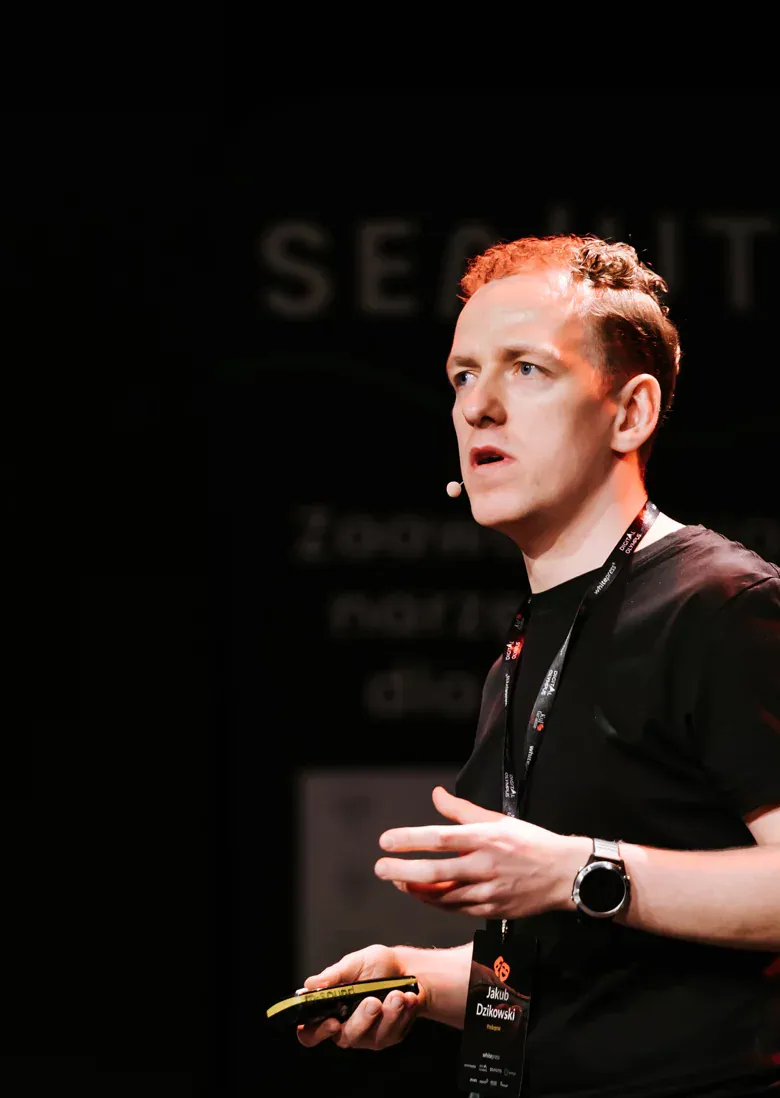
You talk to me, not a salesperson
Tell me what you want to achieve. I’ll reply personally
I work as a freelancer: the same person reads your message, prepares the quote and then runs the project. No sales team in between.