

SEO · Gdańsk
SEO in Gdańsk
I start SEO in Gdańsk by understanding the company, the offer and the real competition in the local results. I don’t sell packages blindly. First I check where opportunities are being lost today: in the site structure, content, indexing, local profiles and external signals. Then I put together a work plan that makes business sense and can realistically be implemented, even with limited resources on the company’s side.
About the service
SEO in Gdańsk for companies that want to grow locally and sensibly
About the SEO in Gdańsk service
A few service details- SEO audit and starting point
- Analysis of local search intent
- Content and structure optimisation
- On-site and technical implementation
- Off-site without artificial promises
- Preparation for AI and chatbots
Location
Local SEO: Gdańsk and the surrounding area
- City
- Gdańsk
- Region
- Pomeranian
- How we work
- Remote

Work process
What working on local SEO for a Gdańsk company looks like
I work in stages, because local SEO is not about dropping in a few keywords with the name of the city. First I establish what is really limiting visibility and conversion, then I put the architecture, content and local signals in order, and finally I develop the links, the business profile and the materials that support presence in the search engine and in AI-generated answers.
- 01/ 03
Diagnosis and priorities
At the start I check the website, the business profile, the existing service pages and the way the brand appears for local queries. I also set the priorities: whether the technical foundations need fixing first, the offer needs refining, or separate pages need building for specific services and locations.
- 02/ 03
Designing the changes
I create a plan of changes that combines technical SEO, content and local context. I define the content layout, the internal linking, the scope of on-page optimisation, and the elements that support trust and make the site clear to the user, the search engine and answer-generating systems.
- 03/ 03
Implementation and growth
I implement the changes or coordinate their implementation, and then watch how visibility for service and local keywords changes. On that basis I develop further pages, fill in content, tidy up off-site and strengthen the areas that genuinely make sense for further growth.
Where I start the cooperation
At the beginning I don’t assume that every company needs the same scope of work. I establish which services are to be promoted, in which areas the company actually operates and which queries matter most from a sales point of view. SEO is planned differently for a single location than for a company serving several districts, the whole Tricity or customers from the region. I also check whether the website is meant to support the first enquiry, closing the decision, or both goals at once, because the content layout and the priority of individual pages depend on it.
This stage puts the scope of the work in order and helps avoid a common mistake: spreading the effort across too many keywords, services and sections of the site at once. If the offer is broad, I divide it into the areas that have the greatest business potential or are least developed on the site. As a result, SEO is not a collection of random tasks but a plan in which it is clear what we do first, what can be postponed and what makes no sense at all at the brand’s current stage of development.
How I collect input data
To work sensibly on local SEO, I need more than a list of services and a logo. I analyse the current website, its structure, the page names, the quality of the content, the visible advantages of the offer and the elements that build the user’s trust. Operational information matters too: the area of operation, the contact model, opening hours, a physical location or the lack of one, typical customers and the questions most often asked before a purchase. It is from this kind of data that content is created which answers real intent rather than just repeating keywords.
I also collect signals from the brand’s surroundings: how the company communicates on its social media profiles, in directories, in its business profile and in other places where a user can check it before getting in touch. What counts is the consistency of names, addresses, phone numbers, service descriptions and the way the offer is presented. For the search engine and answer-generating systems this is important context. If the information is inconsistent or too general, it is harder to build a clear local presence and a credible picture of the company.
Audit of current visibility
An audit should not end with a general statement that the site is fast or slow. I check whether the search engine crawler understands the structure of the site, which pages are indexed, where topics are duplicated and whether the most important pages have a chance of competing for the right queries. I look at titles, headings, internal linking, content cannibalisation, the quality of the service descriptions, and whether a user landing on the site quickly understands what the company does and in which area it operates.
In a local audit it also matters how the site works together with the business profile and whether the brand’s presence in the results is split between several inconsistent entities. I check whether the site supports queries with the name of the city, districts, the type of service and questions about the area covered. This is the stage at which problems that are not visible at first glance come to light: a lack of dedicated pages, an overly general menu, unclear service sections, poor metadata, or content written in a way that makes it hard to use both in SEO and in AI-generated answers.
Analysis of local keywords and intent
Local keywords are not just a combination of a service and the name of a city. In practice, users also search by problem, type of service, urgency, district, neighbourhood, time of day or audience group. That is why I analyse not only keywords but also the intent behind the queries. Different content is prepared for informational queries, different content for service pages, and different again for comparisons and the purchase decision. A well-drafted topic map makes it possible to build a site that answers the different stages of the customer journey.
In local SEO it is also important to distinguish the keywords that make business sense from those that only look good on a list. Not every popular combination will turn into a valuable enquiry. That is why priority goes to queries related to the real offer, the area of operation and the way customers actually search for services in Gdańsk. On that basis I create the layout of the main, service, location and supporting pages, so that each of them has a clear role and does not duplicate the intent of another page.
Designing the page structure and content
A well-designed site structure helps both the user and the search engine. Instead of a single general tab with the offer, what usually works better is a clear division into services, areas of operation, sections explaining the process, customer questions and elements confirming credibility. I design the architecture so that the most important topics are easy to reach from the menu, logically connected by internal links and described in language that does not leave people guessing what the company actually does. This puts traffic in order and makes it easier to develop the site in the following months.
Preparing content for SEO does not mean writing for robots. The texts have to be readable, specific and set in the real context of the service. I make sure the site includes answers to questions about the scope, the way of working together, the area of operation, the differences between services and the possible contact scenarios. Such a structure helps not only in the classic search results. It is also easier to interpret for answer-generating tools, which look for clear definitions, relationships and credible information about the brand.
On-site, local and off-site implementation
At the implementation stage I focus on changes that can be justified in business and technical terms. This covers corrections to headings, metadata, content, internal linking, URLs, contact details, local sections and elements that support conversion. If the site needs more thorough tidying up, I prepare the scope of work for the developer or the person responsible for the CMS. What matters to me is that the implementations are not random but follow from a previously agreed strategy and order of priorities.
I treat off-site as a complement, not a magic solution. What counts is the quality of the brand’s surroundings, the consistency of local information, sensible sources of mentions and links, and the company’s presence in places that genuinely help the user verify the offer. Combined with a well-prepared website and business profile, this gives a more solid basis for visibility. This way of working supports classic SEO while also building materials and signals that can be used by systems answering questions in the style of chatbots and generative search.
Testimonials
What clients and the industry say
Feedback from clients and industry people I have worked with on SEO projects.

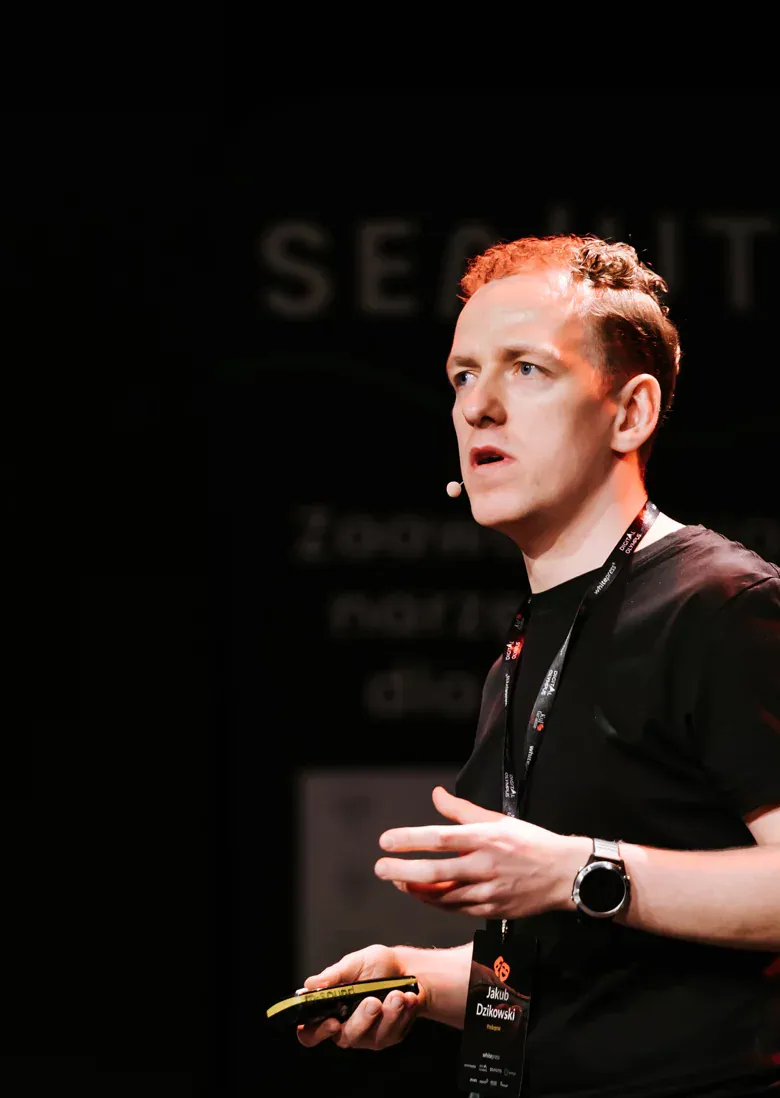
I had the chance to work with Kuba at Kulturalnie o SEO, an event I organise. Kuba did a great job as a speaker and received high marks from the audience. He showed professionalism and broad knowledge. In other projects at Vestigio, Kuba shows enormous commitment, a willingness to explore and implement new ideas, and excellent organisation of his work.

01 / 08
Local
SEO in your city
- SEO Białystok
- SEO Bielsko-Biała
- SEO Bydgoszcz
- SEO Bytom
- SEO Częstochowa
- SEO Dąbrowa Górnicza
- SEO Gdańsk
- SEO Gdynia
- SEO Gliwice
- SEO Gorzów Wielkopolski
- SEO Katowice
- SEO Kielce
- SEO Kraków
- SEO Łódź
- SEO Lublin
- SEO Olsztyn
- SEO Opole
- SEO Poznań
- SEO Radom
- SEO Ruda Śląska
- SEO Rybnik
- SEO Rzeszów
- SEO Sosnowiec
- SEO Szczecin
- SEO Toruń
- SEO Tychy
- SEO Warsaw
- SEO Wrocław
- SEO Zabrze
- SEO Zielona Góra
You talk to me, not a salesperson
Tell me what you want to achieve. I’ll reply personally
I work as a freelancer: the same person reads your message, prepares the quote and then runs the project. No sales team in between.