

Information architecture (Information Architecture, IA) is a key element in today’s digital world, combining both website design and search engine optimisation (SEO). It is the process of organising and structuring information on a website in such a way as to increase its usability and findability. In this article, we will look at how IA affects SEO and why it is so important for modern websites.
What are the goals of information architecture?
- Findability (łatwość znalezienia) – IA aims to organise information in such a way that it is easily accessible to both search engines and site users. Well-organised information usually ranks higher in search results.
- Usability (użyteczność) – this is a combination of the user interface (UI) and information architecture (IA). Good IA provides a better user experience, which can affect a site’s position in search results.
- 01FindabilityOrganised and accessible content.
- 02UsabilityA better user experience.
- 03Higher rankingsBetter results in search engines.
Good IA combines ease of finding content with a positive user experience, which affects search results.
Techniques and practices related to IA
Techniques and practices related to IA concern the methods and strategies used in information architecture to optimise a website’s structure. It is worth knowing how to organise and present content correctly so that it is intuitive and accessible to users, while also improving site visibility in search results.

Understanding the purpose of each page/subpage
- Navigation pages – direct users to where they want or need to go.
- Consumption pages – contain blog posts and information about products or services.
- Interactive pages – encourage users to take action, for example to sign up or make a purchase.
- 01Initial assessmentGoals and strategy
- 02StructuringCategory hierarchy
- 03Design and layoutEasy navigation
The key to a natural flow of information and intuitive navigation.
Creating a logical information structure
- User research helps to understand how visitors search the site.
- The structure should reflect page priorities, while also enabling easy navigation for both users and search engines.
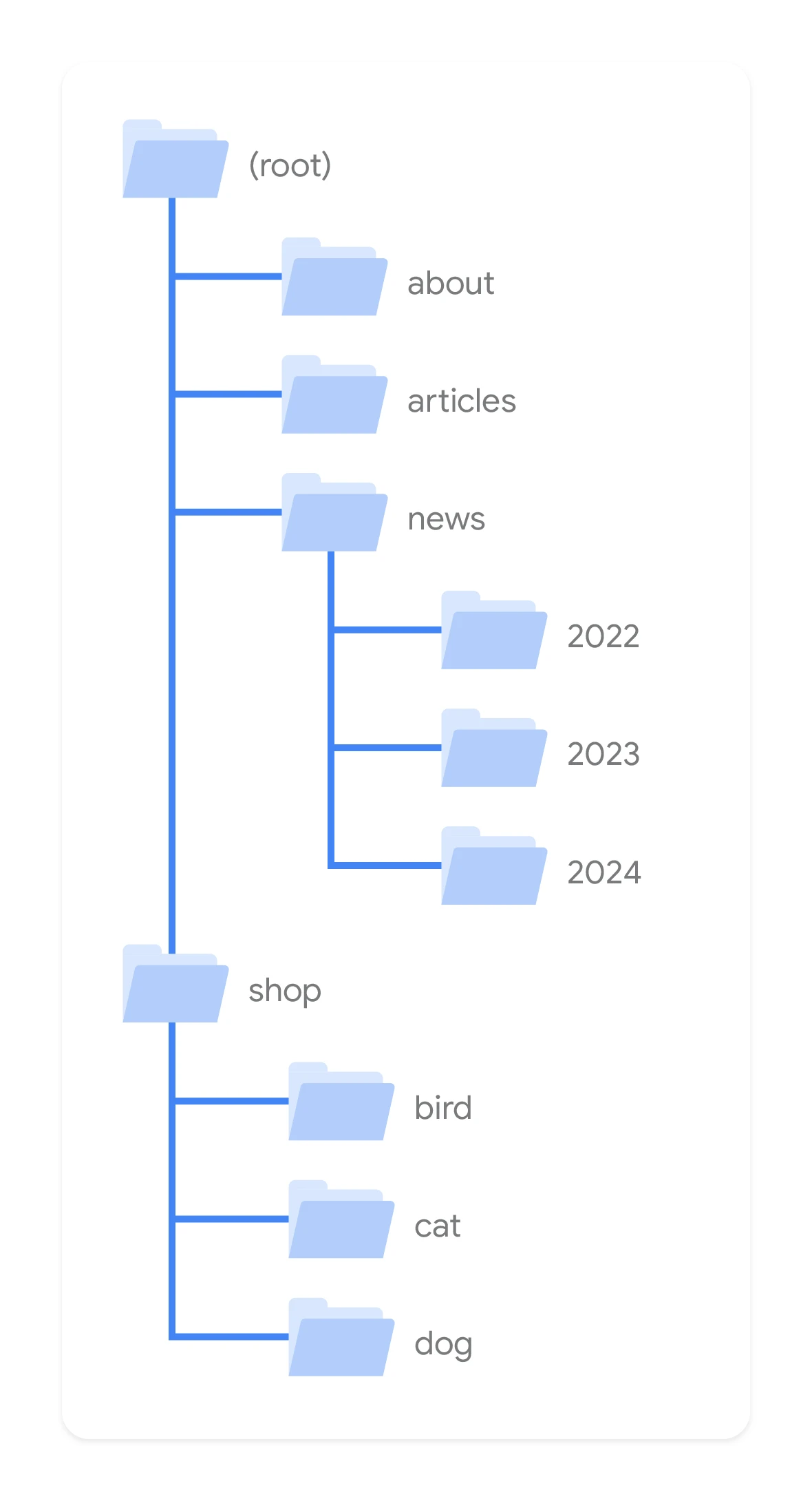
“Flat” site architecture
- Every page should be reachable in fewer than three clicks, which simplifies navigation.
- 01Get to know the userUnderstand needs, behaviours and expectations.
- 02Create a prototypeVisualise the structure and test it on a mock-up.
- 03Organise the contentAttractively and accessibly, the key to success.
Effective information architecture starts with understanding the user, prototyping the structure and logically organising valuable content.
Ensuring usability and link relevance
- Links should be understandable and lead to the right places.
Protection against duplicate content
- Duplication can harm a page’s position in search results.
Building and maintaining a sitemap
- A sitemap helps search engines find information more quickly.

IA implementation
- Initial assessment – defining goals, brand strategy and customer needs.
- Structuring/organisation – defining page levels, priorities, categories and hierarchy.
- Design and layout – implementing the structure through a natural flow of information and easy navigation.
- Labelling – consistent naming of links and pages.
- Content – structuring content through appropriate titles, heading tags and paragraphs.
Cognitive design
Cognitive design is an innovative approach to information architecture that uses the principles of cognitive psychology. It helps us understand how the human mind processes information and how it reacts to different sensory stimuli.
How does cognitive psychology affect IA?
- Amount of information – cognitive psychology helps determine how much information should be presented to users and when. For example, for new users it is better to present a limited amount of information on the homepage, and place more detailed data in links or tabs.
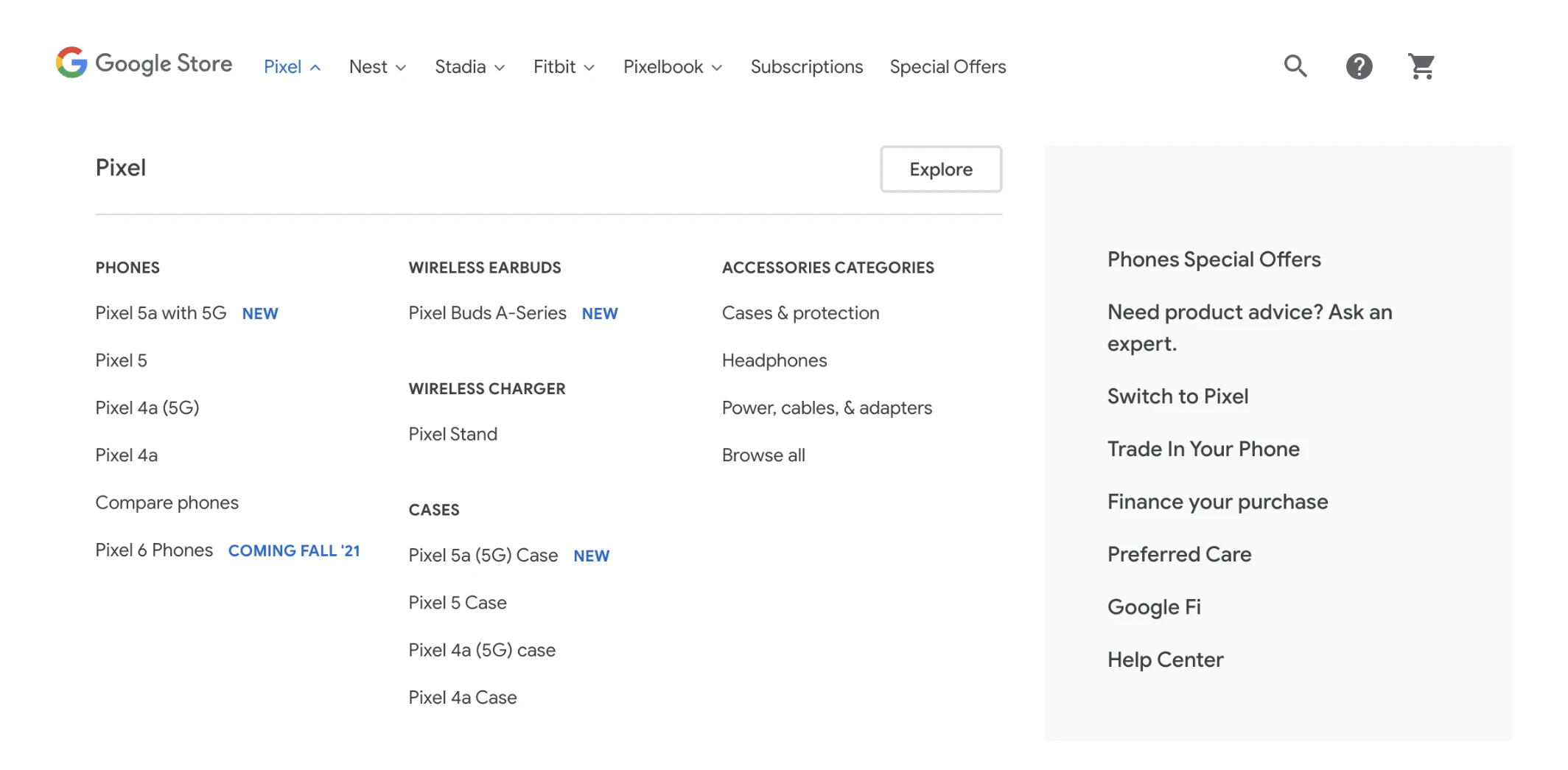
- Layout design – research shows that the human eye begins searching for new information from the left edge of the page, skipping most of the content on the right-hand side. That is why it is important for key elements such as the logo or menu to be placed on the left-hand side.
How to apply information architecture in practice?
Before we move on to specific actions, it is worth following a few of the aspects below, which can make our work much easier.
Analysing user needs
Before we start designing the site structure, we need to understand what our users need. Analytics tools, surveys or direct conversations with customers can provide valuable insights into their behaviours and expectations.
Creating prototypes
Before we make changes on a live site, it is worth creating prototypes or a site mock-up. This will make it possible to visualise the planned structure and test it with a selected group of users.
Content optimisation
Content is king, but it must be presented properly. Good information architecture will help place content appropriately so that it is attractive and easily accessible to users. It is important for the content to be unique, valuable and properly optimised for SEO.
Mobile optimisation
In today’s world, more and more users browse websites using mobile devices. That is why it is important for information architecture to be adapted to different screen sizes and devices.
Ongoing monitoring and updates
Information architecture is not a one-off process. Regular monitoring of user behaviour, data analysis and implementing the necessary updates are key to maintaining an effective and up-to-date site structure.
Challenges related to information architecture
- Changing technologies – new technologies and tools can affect how we present and organise content. We need to be flexible and ready to adapt to new solutions.
- Complex content – some sites, especially industry or specialist ones, may contain complex content that is difficult to organise in an intuitive way.
- Diversity of users – different user groups may have different needs and expectations. Understanding and meeting their needs can be a challenge.
In summary
Information architecture is not only a technical aspect of creating a website, but above all a way to understand and meet user needs. A properly designed site structure can bring benefits not only in terms of SEO, but also in increasing user engagement and conversions. In the age of digital transformation and growing competition online, investing in good information architecture is the key to the success of every website.
FAQ
Frequently asked questions
How does information architecture affect a website’s SEO?
It organises content so it is easier for search engines and users to find. This can translate into better visibility in search results.
Does good information architecture improve website usability?
Yes, because it combines UI with a logical content structure. As a result, users can navigate the site more easily and find the information they need faster.
What are the main goals of information architecture?
The article points to two main goals: findability, meaning how easy it is to find information, and usability, meaning ease of use. Both affect how a website is perceived by users and search engines.
When is it worth starting to plan a website’s information architecture?
It is best to do this at the stage of analysing user needs and designing the structure, before changes are implemented on a live website. That makes it easier to create a logical layout and test it on prototypes.
How is information architecture implemented in practice?
The process includes evaluation, structuring, design and labelling. User-needs analysis, prototyping, content optimisation and the mobile version are important too.
Why is a flat website structure important in information architecture?
Because every subpage should be reachable in fewer than three clicks. Such a structure simplifies navigation and makes it easier for search engines to access content.