

Google Penguin (Pingwin) is a Google search algorithm update created to combat link spam and manipulations in the link building process.
Soon after the Panda algorithm was published in 2011, Google released “webspam algorithm updates” to better catch sites that try to unfairly improve their search results. The algorithm called Penguin places particular emphasis on manipulative link acquisition techniques, such as link schemes and keyword stuffing. Its Penguin 4.0 update now operates in real time as part of Google’s core algorithm.
What is Google Penguin?
At its core, Google Penguin is an algorithm update aimed at optimising Google’s search engine. What matters is that the updated algorithm now pays attention to quality, not quantity. The better, more relevant links point to your site, the more authority it gains.
On the other hand, the greater authority a given site has, the better links it provides for other websites. Links can be assessed for quality, among other things, by taking into account anchor text, age, domain trustworthiness, site trustworthiness, context, etc.
- 01Quality over quantityGreater site authority
- 02Better links = authorityTrust and relevance
- 03Link analysisContent, age, trustworthiness
- 04Rewards and penaltiesPromotes value, penalises manipulation
Penguin optimises Google by focusing on the quality and authority of links.
When does the Penguin algorithm activate?
The Penguin algorithm pays attention to two specific types of practices:
- link schemes – developing, acquiring or buying backlinks from low-quality or unrelated websites. This creates an artificial picture of popularity and importance and is an attempt to manipulate Google into giving the site a high ranking position. For example, an insurance company in Warsaw may flood internet forums with spam comments containing links to its site with anchor texts such as “best insurance company in Warsaw”, falsely increasing its significance by using such unnatural links. The same company may also pay for links placed under the phrase “best insurance company in Warsaw”, which will be published in unrelated articles about dog care on external sites. Such content has no connection to the site’s subject matter,
- keyword stuffing – building a website’s popularity by using a large number of keywords or their repetitions in order to manipulate rankings by creating the impression of relevance for specific keywords.
The Penguin algorithm not only penalises sites that are found to be using prohibited techniques. This solution also rewards sites that publish high-quality content and have natural backlink profiles.
What was happening before the Penguin algorithm was introduced?
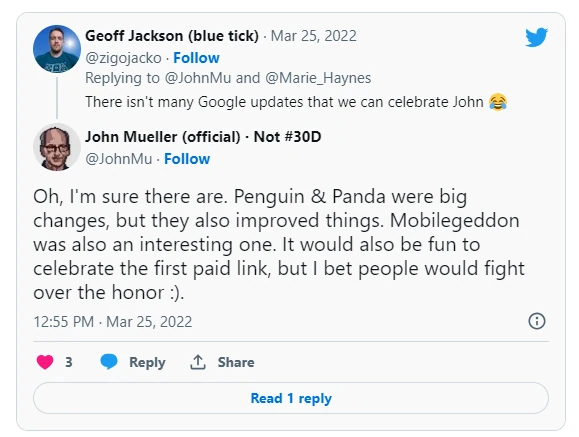
Before Penguin was introduced, Panda was the algorithm responsible for understanding and recognising high-quality content. The 2011 Panda release met with many complaints because its effect was to penalise entire websites. Penguin also met with some complaints.
Before the Penguin algorithm began to operate in real time, penalised sites had to wait for the next update to reverse the negative impact, such as loss of visibility or traffic.
- 01Penguin vs. manual penaltyAutomatic filter vs. manually imposed penalty.
- 02Spam reportsManual penalties for spam and reports.
- 03Drops and updatesTraffic drop on the day of the Penguin update.
First rule out other causes of traffic fluctuations before attributing them to Penguin.
What changed after Google Penguin was introduced?
Since the Penguin algorithm was introduced, it has become clear what good link building is and what is needed for it. Many of the changes involve Penguin discrediting links that lead to inappropriate sites.
Of course, links are still important ranking factors in search engines, but greater emphasis is placed on their quality. Above all, any link that is considered spam will not contribute positively to improved rankings. These changes made it possible to clearly separate prohibited techniques from permitted optimisation actions.
What does the Pingwin 4.0 algorithm do?
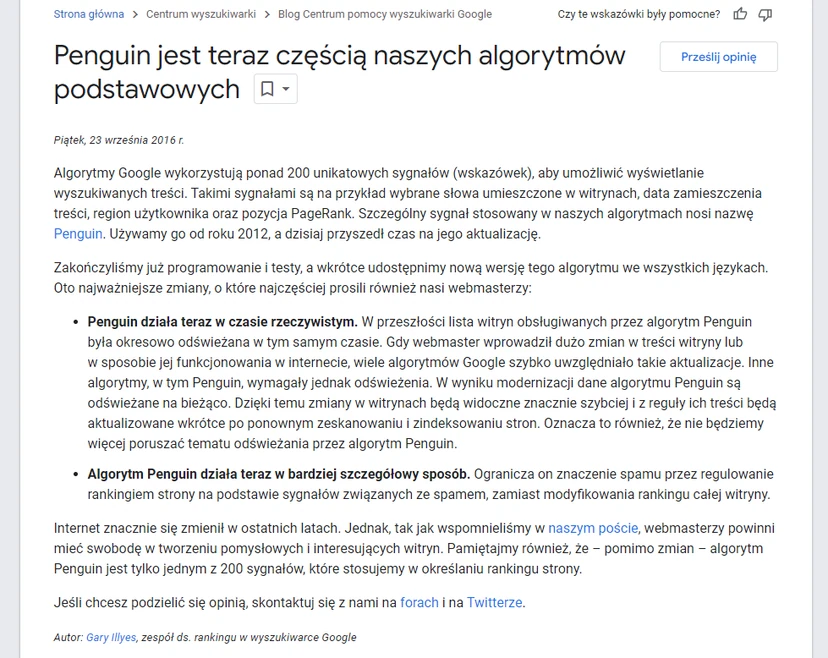
In 2014, Penguin became part of the core algorithm and began operating in real time. Its name was extended to Penguin 4.0. This update enables constant filtering of Google queries and ensures a more efficient impact on effective work in the area of link building and clean-up. Before the introduction of Penguin 4.0, filtering of queries was entirely manual. It could take months or even years before further updates to the Penguin algorithm were introduced.
The Pingwin 4.0 algorithm also has more specific aims. Before this update, Pingwin affected an entire website. Currently, this algorithm affects specific URLs. The update does not assign negative value to bad links. Instead, they are simply not taken into account, so they do not have a negative impact on a given URL.
- 01From filter to coreIntegration with the main algorithm (2016)
- 02Impact on the whole siteLoss of trust for the entire website
- 03Change in version 4.0Less stringent penalties for domains
Penguin evolved from a separate filter into a less stringent but key element of the algorithm.
How do I check whether my site has been penalised by the Pingwin algorithm?
First of all, it is important to distinguish the action of the Pingwin algorithm from a manually applied penalty for unnatural linking. In short, Pingwin is a Google index filter applied to all websites, whereas a manual penalty is applied to an individual site that Google has deemed to contain spam. Such manual penalties may result from users reporting a given site to Google for spam. In addition, it is speculated that Google manually monitors certain industries (e.g. loan companies) much more closely than others (e.g. bakeries).
If site analysis shows a drop in rankings or reduced traffic on a date associated with a Penguin update, then it may have been penalised by this filter. Of course, seasonal traffic fluctuations on the site should first be ruled out (e.g. less traffic on a Christmas tree site in April). It is also necessary to carefully assess whether keyword optimisation or link acquisition activities were not considered spam by Google.
Remedial actions after being penalised by the Pingwin algorithm
Unlike a manually imposed penalty, where you have to submit a reconsideration request to Google after resolving the issues, in the case of a penalty from the Pingwin algorithm there is no need to submit such a request. Remedial action must be taken so that the penalty is lifted the next time the Google crawler visits the site. Such actions include the following tasks:
- removing all unnatural links over which you have control, including links created yourself or placed on external sites,
- disavowing spammy links over which you have no control,
- reviewing the site content to eliminate the effects of over-optimisation, ensuring that keywords have been placed naturally, rather than in a meaningless way, with frequent repetitions or automatically on pages that are not related to the topic and the keywords used.
It can be seen that the Pingwin algorithm was created to eliminate serious weaknesses in the Google system that made it possible to fool the algorithm with a large number of low-quality links or excessive keyword optimisation on pages. To avoid reducing the value of a site in Google because of spam, published content should reflect natural language, and link acquisition activities must be “safe”.
Other information about the Penguin update
- Penguin was initially introduced as a separate “filter” through which search results passed, but in September 2016 Google announced that Penguin had become part of the search engine’s core ranking algorithm,
- Google employee John Mueller described Penguin as an algorithm affecting the whole site. This meant that the presence of a large number of low-quality links pointing to one page of your site could cause the entire site to lose trust in Google. However, some SEO specialists noted that the introduction of Penguin 4.0 meant that the filter became less stringent and does not impose penalties on entire domains.
FAQ
Frequently asked questions
How does the Penguin algorithm work in SEO and what does it focus on?
Penguin detects link spam and manipulation in link acquisition, such as link schemes and keyword stuffing. Link quality matters most to it, not quantity.
Does Penguin penalise all links pointing to a site?
No, the main issue is unnatural, low-quality links or links from unrelated sites. Good-quality links can strengthen a site’s authority.
Which link building techniques can trigger the Penguin filter?
This mainly concerns developing, buying or acquiring backlinks from low-quality or unrelated sites. Penguin also reacts to link schemes and spam in anchors.
How is Penguin different from a manual Google penalty?
Penguin works as an algorithmic filter for all sites, while a manual penalty is applied to a specific site deemed spammy. In the case of a manual penalty, you need to submit a reconsideration request, unlike with Penguin.
How can you check whether a drop in traffic is the result of the Penguin algorithm?
You need to compare the drop in rankings or traffic with the date of the Penguin update and rule out seasonality. It is also worth checking whether the problem stems from unnatural links or excessive keyword optimisation.
How do you fix a site after being penalised by the Penguin algorithm?
You should remove unnatural links that you control and disavow spammy links that you cannot remove. You also need to improve the content and use keywords naturally, without excessive repetition.