When optimising websites for search engines such as Google, many people would like to take the easy route by using various manipulative tactics aimed at improving a site’s rankings. Some believe that since search engines use keywords to match pages to queries, the best approach is to stuff them in as much as possible on a single page. This is the phenomenon known as keyword stuffing.
Keyword stuffing – a concept that can cause serious trouble
According to Google’s guidelines, the definition of keyword stuffing means the practice of excessively filling a website with keywords. The aim of this is to trick the search engine’s ranking system.
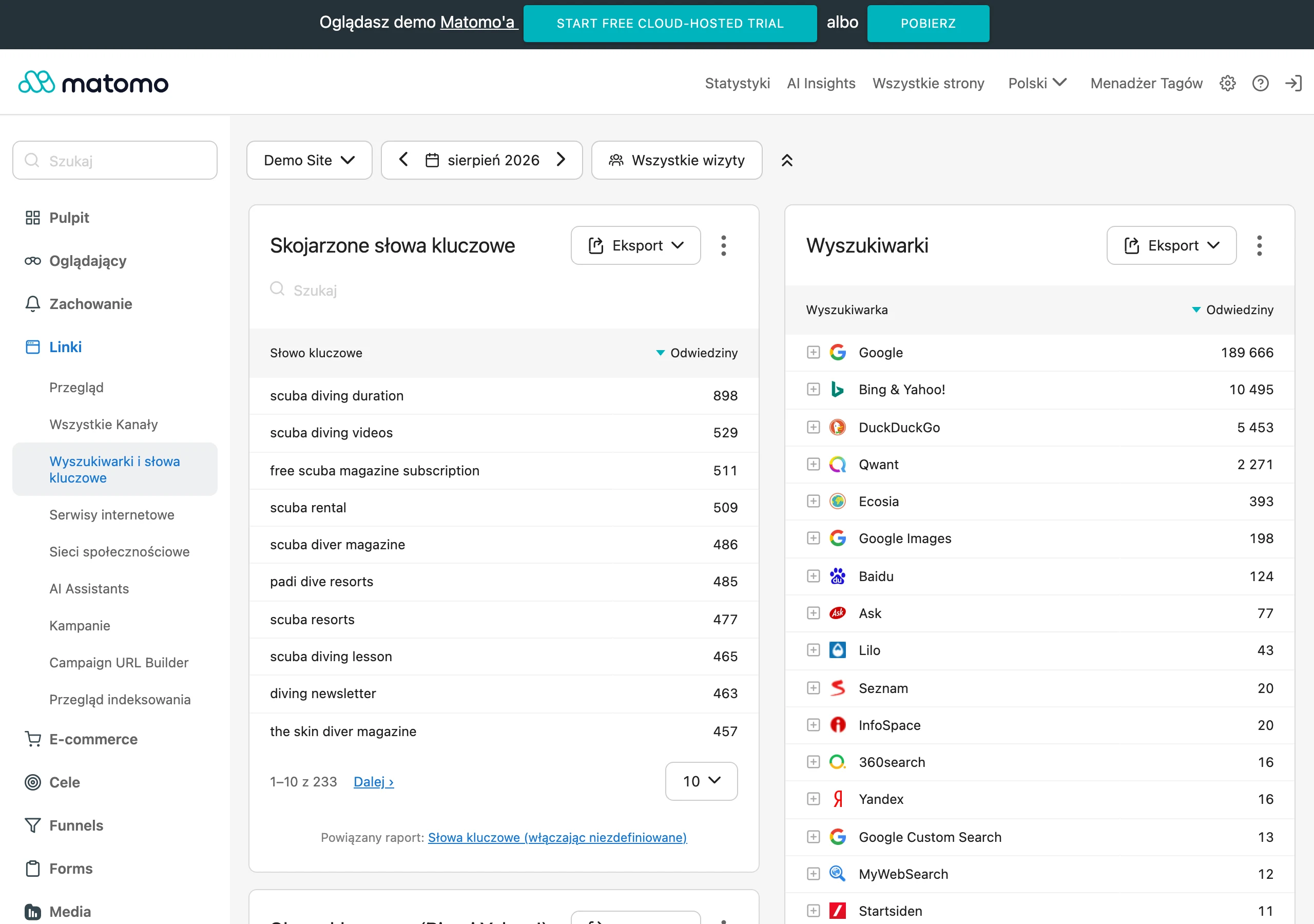
ExampleOrganic traffic split by search engine and phrase: you can see Google’s share against the others and how many queries remain undisclosed. Public Matomo demo (sample data), own screenshot
In addition, similar guidelines on keyword stuffing are provided by Bing.
In the past, this practice was a fairly effective method of increasing a website’s visibility in search results. However, it should be remembered that search engines have become smarter and have therefore started to penalise pages that use keyword stuffing.
Marketing blogKeyword stuffing – a concept that can cause serious trouble
01DefinitionExcessive use of keywords.
02GoalTo trick the ranking system.
03PastA formerly effective method.
04NowSearch engines have become smarter.
05ConsequencesPenalising pages using this practice.
The practice of manipulating keywords, known as keyword stuffing, is now detected and penalised by Google and Bing, leading to a drop in visibility.
Examples of keyword stuffing
Today, many people involved in content creation and SEO may still stuff keywords on pages without knowing the consequences that may affect them.
Below are examples of keyword stuffing that help better understand what it actually is. In this way, everyone will be able to tell whether they are doing something like this on their websites.
Keyword stuffing can be divided into two main groups: visible and invisible. It is worth taking a closer look at both of these groups.
Examples of visible keyword stuffing
If someone unnaturally repeats a particular keyword many times without context in a given piece of content and readers can see it, we are dealing with visible keyword stuffing.
For example, if a household goods store wants to quickly achieve high results in the SERP for the term “best vacuum cleaner”, then an example of keyword stuffing will look as follows:
SEO & content qualityCan keyword stuffing help a website?
01Keyword stuffingUnreadable content
02Poor user experienceQuick exit from the page
03High bounce rateA signal for the search engine
04Drop in rankingThe final, negative effect
A short-term manipulation leads to a long-term loss of position and trust.
Examples:
Do you need the best vacuum cleaner? If so, you’ve come to the perfect place where you can buy the best vacuum cleaner. Our company offers the best vacuum cleaner you could dream of. Our lightweight yet powerful product is the best vacuum cleaner, meeting all your needs. The best vacuum cleaner!
An example with winter tyres can look similar too:
Looking for winter tyres for a car? We offer a wide selection of winter tyres in our store. Winter tyres are essential in winter road conditions, because they provide excellent grip on slippery surfaces. Our winter tyres are made from high-quality materials, which will definitely improve your mood and save you money. Choose the best winter tyres for your car and enjoy a good, worry-free day.
Examples of visible keyword stuffing include placing blocks of text that only repeat the keyword and spamming links. It is known as spamdexing and may not be direct keyword stuffing, but its principle is the same. It involves filling content with various links, which is treated by search engines as keyword stuffing.
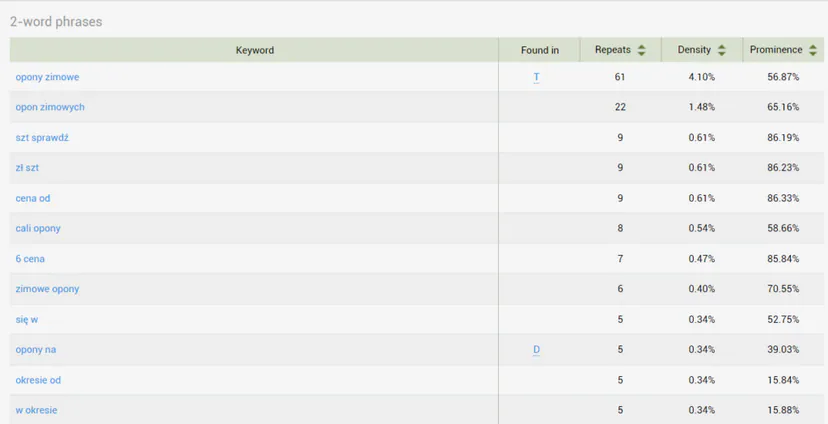
Analysis of keyword density using the free Chrome SEOquake extension
Examples of invisible keyword stuffing
Some content creators are clever enough not to affect user experience negatively. As a result, instead of stuffing words in front of their eyes, they consistently create spammy content that cannot be read and is hidden in the text.
There are many ways to hide keywords from readers, but not from search engine bots. For example, you can set the text colour to the same as the background colour, but the text on a website, regardless of colour, style and type, is still HTML code. This means that in fact it will be noticed by search engines when their bots crawl and index the page.
In addition, keywords can be stuffed into a website’s HTML code. They may therefore appear in comments, meta tags and alt tags, where they can also be found by search engine bots.
The conclusion is that when content creators practise keyword stuffing, we are dealing with optimising a website only for search engines, not for real audiences, i.e. people. However, search engines are designed to serve people, so they can see such attempts at manipulation, and their response is to lower the site’s ranking.
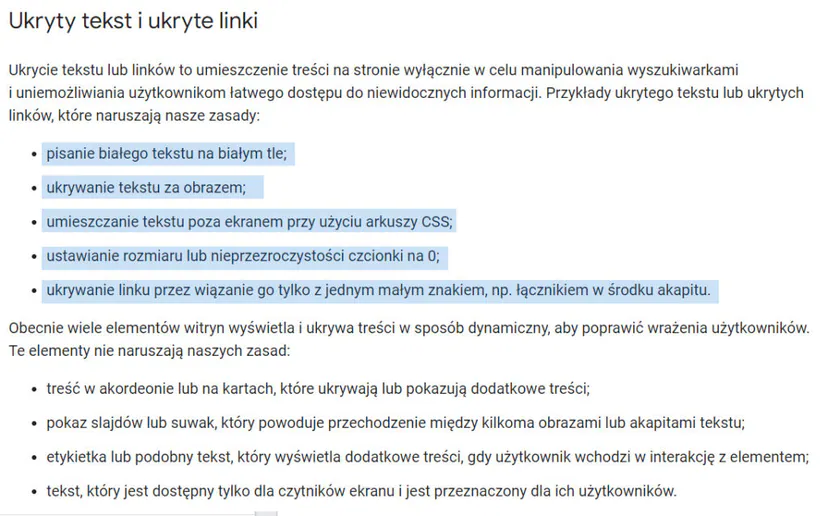
A fragment of Google documentation Google Search spam policies and a reference to the thread titled hidden text and hidden links
Can keyword stuffing help a website?
The practical rule is that stuffing a website with keywords will not help achieve a higher ranking position. The effect may be the opposite of what was intended and harm the site’s position in the SERP, because content packed with keywords is simply unreadable for users.
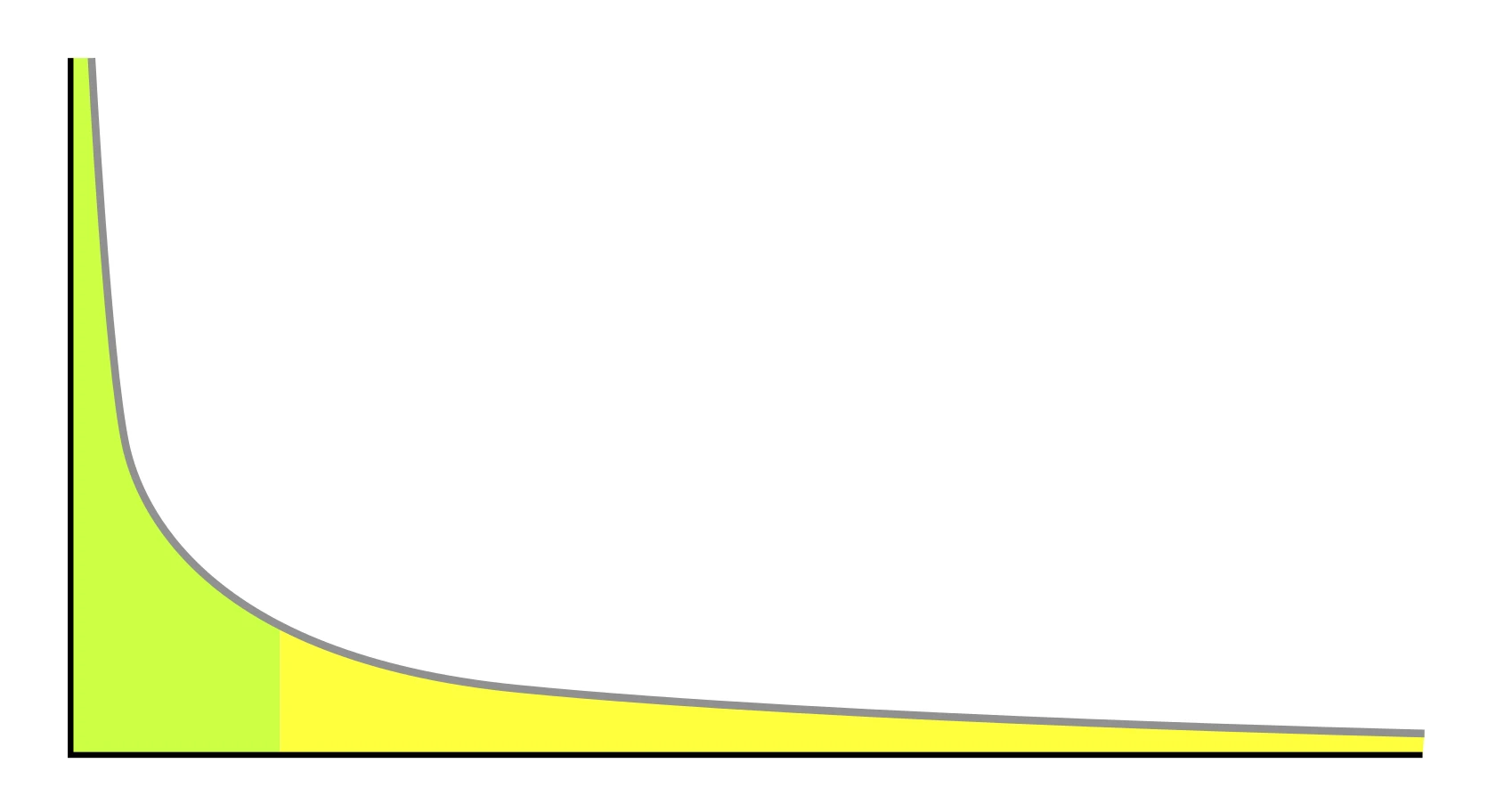
DiagramThe green section represents a few popular phrases, the yellow one — the long tail: thousands of niche queries that together generate comparable or greater traffic.Source: User:Husky, Wikimedia Commons, public domain
In addition to the ability to understand written content, search engines also pay attention to searchers’ interaction with the page and its content.
Let’s assume that a newly published page stuffed with keywords appears quite quickly among the top search results due to the use of manipulation tactics. However, users will quickly leave it when they see the mess on it. Ultimately, this will lead to a significant increase in the bounce rate, which will signal to the search engine that such a page does not provide users with what they want to receive.
It is likely that despite stuffing keywords, there are other reasons why the page is simply valuable to users. After all, many complex factors are analysed in SERP rankings.
Keyword stuffing is linked to earlier times, when it was enough simply to place keywords in the content for search engines to know what the text was about. However, after many algorithm updates, including the Hummingbird update, the search engine began to understand content much better.
At present, the search engine understands synonyms, typos, and what the user wanted to find when entering a query into the search engine, that is, user intent.
In other words, content creators should forget about using exact-match keywords and should focus on creating naturally written content. Although it is tempting, you should not force keywords into your content. Instead, it is better to optimise it for search engines and for what people want.
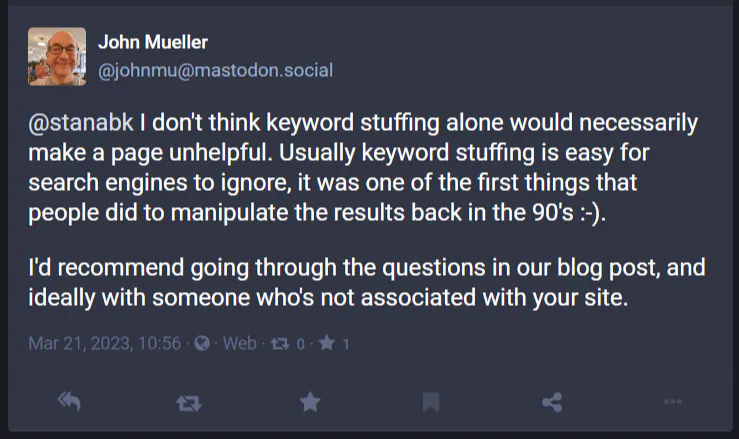
An interesting statement by John Mueller on keyword stuffing and an unhelpful page
How do you carry out proper keyword optimisation?
It is already known that keyword stuffing has no significant effect on a website’s position in the rankings, but keyword optimisation does. It is therefore worth checking once again what Google recommends on this topic:
You should focus on creating helpful, information-rich content that uses keywords correctly in the proper context.
Clearly, keywords still need to be used, so you should not stop using them altogether. They must be used, but in a restrained way. A practical rule says to write for people, not for robots.
The latest BERT algorithm update has made Google focus its attention on people, not search engine bots. People who think Google will return to the old system are simply wrong.
Anyone who wants to achieve a high ranking for a website in search results for a specific keyword should optimise the page for that keyword instead of stuffing it into the content. The art lies in using the keyword in the place where it matters most for search engines, while maintaining natural content that is valuable for readers.
The following stages have been outlined below, which need to be completed in order to properly optimise a website for a given keyword.
1. Creating comprehensive content
Content is most likely to gain more attention from search engines if it covers a given topic in detail. It is worth thinking through the topic being described and covering it in detail. However, it is worth remembering not to paraphrase issues already discussed in the article.
2. Using synonyms and long-tail keywords
You can also help search engines make sure that a given page is related to the topic of the target keyword by using synonyms and long-tail keywords in the content. Using such phrases gives search engines additional context, ensuring more signals related to the website’s main topic.
Long-tail keywords not only provide additional context, but also allow search engines to find out whether the content contains answers to questions. If it does, then there is a good chance that the content will appear in the People also Ask section.
3. Adding the target keyword to page elements
Another useful thing to do (very useful in the eyes of search engines) when optimising a page for a keyword is to place the target keyword in the right places, in various website elements such as the meta title, hX headings, image alts or even the meta description.
This informs search engines what the subpage is about. If the target keyword is present in the main content and metadata, it provides a strong, consistent signal to search engines about the main topic of the content. This may lead the page to achieve a higher position in search results.
FAQ
Frequently asked questions
01How can you recognise keyword stuffing on a website?
It is usually visible through unnatural, repeated use of the same keywords without context. It can also appear in hidden form, e.g. in comments, meta tags, alt tags or text in the same colour as the background.
02Does keyword stuffing help in SEO and positioning?
No, according to the article, keyword stuffing does not help achieve higher rankings. It can even lower a page’s ranking, because the content becomes unreadable and looks manipulative.
03Why do search engines penalise keyword stuffing?
Because keyword stuffing optimises a page for robots, not people. When users quickly leave such a page, the search engine takes this as a signal that the content does not meet their expectations.
04When was keyword stuffing effective in SEO?
In the past, when search engines largely relied on keywords alone, this practice could work. After algorithm updates, including Hummingbird, search engines understand content and user intent much better.
05How should keywords be optimised properly without keyword stuffing?
You need to write for people, create useful and comprehensive content, and use keywords naturally and in the right context. Synonyms, long-tail keywords, and placing the phrase in the meta title, headings, alt text and meta description also help.
06What does using long-tail keywords in content give you?
Such phrases give search engines additional context and help them match the page to the topic more accurately. They can also increase the chance that the content appears in the People Also Ask section.