
Throughout its operations, Google has introduced many conveniences for users, as well as for people planning SEO for websites. Among the important elements are special fields with other users’ questions, known as People Also Ask. It is worth finding out more about effective SEO using them.
What is People Also Ask
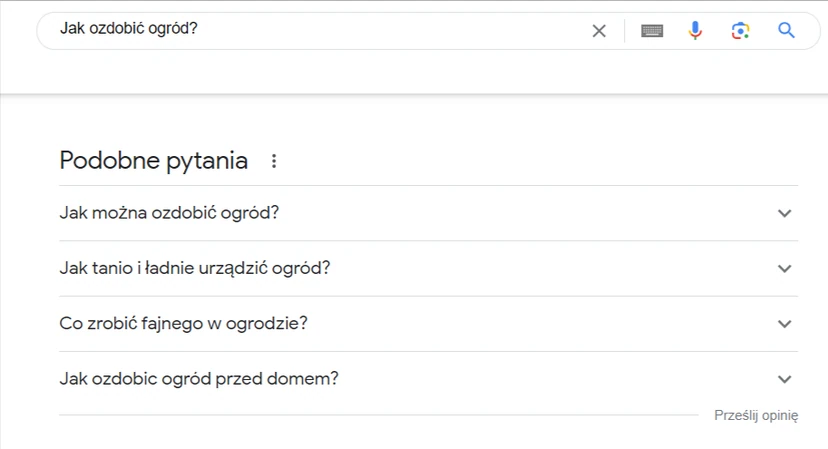
Google’s People Also Ask (PAA) feature presents a list of questions related to the initial query and potentially interesting to the user. Usually, such questions are presented in the form of a list and allow the user to expand it in order to find additional questions and answers.

The PAA feature mentioned uses machine learning algorithms to analyse search queries and identify popular related user questions. The generated questions are thematically related to the user’s query and are ranked based on their relevance and popularity.
This feature is updated in real time and provides users with the most relevant and up-to-date information possible.
- 01Query analysisMachine algorithms examine the query.
- 02Related questionsA dynamic list of related topics.
- 03Live updateThe most current and relevant information.
The PAA feature provides users with a real-time list of relevant, related questions and answers, using machine learning.
How do PAA fields help users?
Google is constantly looking for ways to improve user experience. One of them is helping to refine queries entered into Google Search. The better a user can phrase their question, the better the search results will be.
Because Google wants to provide the right answer, Natural Language Processing algorithms analyse queries. However, Google does not always do this correctly. That is why subtle semantic differences in the way questions are asked can occur. These differences can in turn lead to significantly different search results.
To provide support, Google introduced the People Also Ask field, which presents queries related to the overall search topic. According to Google representatives, providing users with related questions can help people who use unusual keywords and terminology in their queries to identify keywords and terms that are more commonly used to describe their intent.
Put simply, if someone is looking for something using unusual language, they may not find satisfactory results. To solve this problem, Google suggests a list of popular questions that users have asked in the past.
People Also Ask SEO – how do you optimise your content?
In the case of semantic SEO there is an almost infinite number of tactics that can be used. The key issue is creating a strategy that delivers the greatest business benefits in the shortest possible time.
People Also Ask boxes can give a site potential targeted wins that require minimal implementation effort. One effective strategy works when PAA questions appear about a given brand.
Using this strategy is quite straightforward. You need to type the promoted brand name into Google and check the PAA boxes. If there are any PAA questions about that brand, it is important that that very brand and company answers all of those questions. If that is not the case, it means that other brands are benefiting from keywords and may be taking users who decide to visit competitors’ sites.
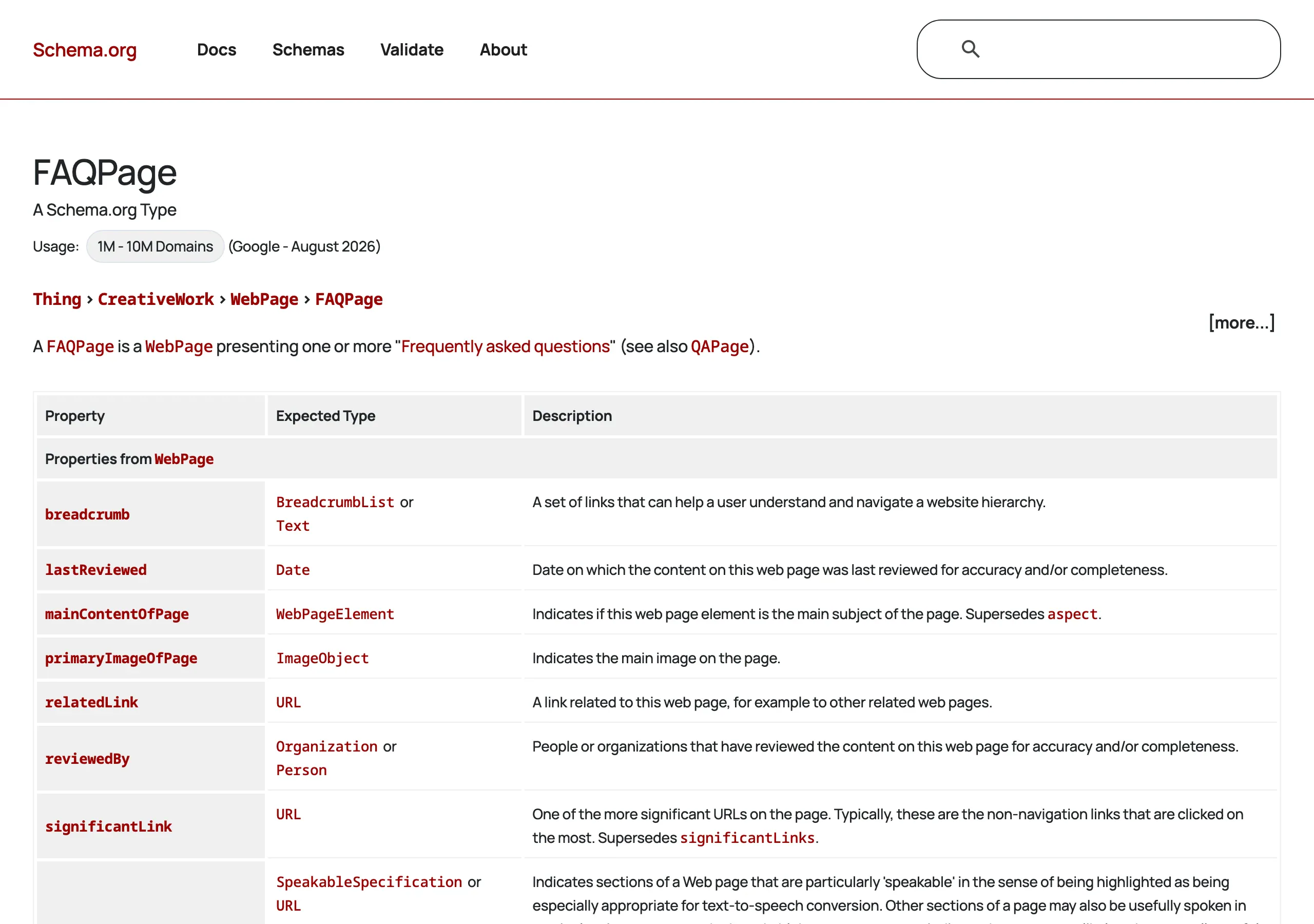
As a result, you should create an FAQ section on your site that answers all the questions appearing about that brand. After answering those questions, you should periodically check the brand keywords. Of course, you should also answer any new questions that appear.
To check what other questions Google suggests about a specific page, it is worth trying to search for all the questions that appear in the PAA box in the brand SERP. This way, you can find more questions about the brand or related to the given industry.
You should answer all of those questions in the FAQ section on your site. After giving those answers or if there are no questions at all in PAA about the brand, you should focus on providing answers to questions related to a specific niche. This is a long-term process that can deliver significant wins, especially for brand-related queries.
- 01Effective strategyMaximum business benefits.
- 02Use PAAMinimal implementation effort.
- 03Take over the questionsYour brand answers.
An effective PAA tactic involves answering questions about your own brand directly so that competitors do not capture the traffic.
Finding SEO opportunities in PAA
First of all, it is important to optimise brand queries. Once you have collected a list of brand keywords, you should move on to questions related to the niche. To do this, you need to check your rank-tracking tool and determine where a given URL is ranking in the SERP, while only competitors appear in the PAA boxes.
It is important to start by creating Above The Fold content (the area visible immediately after the page loads, ATF). Once you have exhausted those keywords, you can move on to optimising lower-down pages. This allows you to prioritise the elements you need to work on first.
SERP analysis
The first thing you need to do is a small SERP analysis, which is free and easy to carry out. You simply need to enter the query into Google and check the questions appearing in the PAA box. However, you should not look only at the questions at the top. It is worth clicking through the results to get more of them. The more clicks you make, the more results will appear.
If you perform the above action for a longer period of time, Google may also show questions that are not entirely in line with the target keyword. Such irrelevant questions indicate the limit of Google’s topical understanding of the query.
For example, after searching for a query about flying kites and repeatedly clicking the People Also Ask box, Google may after some time start showing questions about kitesurfing. In the case of kitesurfing, we are dealing with a different search intent, so this is some kind of marker of the limit of Google’s query database.
Once you reach this point, you can see all the questions that Google considers topically relevant to the initial query. In this way, you can easily create a set of suitable content based on such queries. You can also click on a question to see how Google presents the answers. This will allow you to create your own content that is meant to rank for such questions.
- 01Limited dataNo statistics from Google.
- 02Low interaction~3% according to Backlinko.
- 03Variable rangeUp to 13.6% for some queries.
- 04Interaction ≠ clickExpanding is not a click.
Key point: there are no reliable data, and interactions (expansions) rarely translate into direct clicks.
Analysis of SERP features
When analysing the SERP for different keywords and competitor pages, it can be seen that in PAA fields some questions are fixed, while others appear and disappear. It is worth focusing on those that are fixed.
Such queries are considered by Google to be highly relevant, which is why they are displayed consistently. This means that the answer provided on a given page is considered by Google to be good for that question.
By having your URL in such a question-and-answer set, you can ensure constant brand promotion. However, it is necessary to provide a better answer compared with the competition. You therefore need to pay attention to snippets, which are constantly changed by Google with consideration for titles, descriptions and rankings.
Using your own opportunities
To rank via the PAA field, the content must contain the most relevant answer possible to the target question. This means that when such a question is entered into Google, the created content should appear in the top part of the search results.
If you do not have a top position for your target query, you need to create new content in order to rank on that SERP page. If you are already in the top ten, there is a strong chance of ranking in the PAA field with relatively little effort.
Is it worth trying to rank in People Also Ask fields?
Unfortunately, there is very little information available on how often people interact with and click the sources in PAA fields. This is probably because Google does not show us its data in Google Search Console, and there is no other reliable source.
In fact, there is only one external study in this area, which comes from Backlinko. This analysis indicates that in only 3% of cases do searchers interact with the PAA field. However, this figure is quite variable and some queries have an interaction rate of 13.6%.
It is also worth remembering that interactions are not the same as clicks. Expanding the answer may be treated as an interaction, so the group of people clicking the source of the answer is probably much smaller. Worse still, PAA fields show 3-4 answers by default, giving searchers a greater choice and greater competition between websites.
In the optimistic scenario, the assumptions are as follows:
- 3% average interaction rate.
- 40% of interactions result in a click on the source.
- Interactions are split evenly between four questions (e.g. 25% each).
This may sound discouraging, but there are some points worth remembering:
- Google often shows the same question in the PPA field for hundreds of queries. In addition, the search engine pulls the answer from the same source, which appears for keywords with high search volume.
- Google can use a given page as a source of many answers. This is possible if the page answers, for example, a huge number of popular queries. If Google shows these questions for many queries, the number of clicks and views may increase significantly.
It is also worth bearing in mind that traffic on the website is not everything. Gaining 50 or 100 extra clicks to a page with a high conversion rate or Value Per Visitor can significantly improve business results. As such, it is worth considering optimisation for PAA fields, especially in the case of high-value pages.
FAQ
Frequently asked questions
How does the People Also Ask feature work in Google?
Google shows a list of questions related to the initial query and lets users expand them to find further answers. The questions are ordered by relevance and popularity and updated in real time.
Why does People Also Ask help users search for information more effectively?
Because it suggests more commonly used phrasing and helps refine unusual queries. As a result, it is easier to find an answer that matches search intent.
How do you optimise content for People Also Ask questions?
First, it is worth checking PAA questions for the brand, and then creating an FAQ section that answers those topics. If there are no brand questions, you need to move on to niche-related questions and create content for them.
Is it worth starting People Also Ask SEO with brand queries?
Yes, because it is the quickest route to making use of existing SEO opportunities. The article points out that you should answer brand questions first, and only then expand into niche topics.
How can you check which questions Google shows in the PAA box?
Simply enter a query in Google and review the questions in the People Also Ask box. It is also worth clicking through the next expansions, because further related questions appear then.
Is it worth ranking in People Also Ask despite low click volume?
Yes, because even with limited interaction, PAA can deliver business benefits. Google can show the same question for many queries, so one good answer can generate additional traffic from different sources.