

Search terms are specific phrases that users enter into Google, a store’s search engine or a site’s search field. They best show what people are actually looking for, how they describe their problem and what stage of the buying decision they are at. In practice, they can be more valuable than the planned keyword list itself, because they reveal the audience’s authentic language. The most important thing is that search terms help match the right content or the right page to a specific intent, rather than just to the wording of the phrase itself. This makes it easier to decide whether a guide, category, service landing page, FAQ or an adjustment to an ad campaign will work better. Well-analysed search terms also make it possible to pinpoint more quickly where traffic without conversions comes from.
What search terms are and how to understand them in practice
Search terms are real queries entered by users, not just keywords listed in an SEO plan or campaign settings. The difference matters operationally: the keyword list says what you want to target, whereas search terms show what the user actually expects. It is in these phrases that you can see the customer’s language, their problem, their level of knowledge and the expected response format.
In practice, a search term is worth reading as a signal of intent. The phrase “buty do biegania damskie” suggests readiness to choose a product, whereas “jak dobrać buty do biegania” indicates a need for a guide or educational section. This difference determines whether the user should land on a category, an article, a service page or a local page.
It is not worth analysing search terms only literally, because one need can have many linguistic versions. A user may enter “prawnik rozwód Warszawa”, “adwokat rozwodowy Warszawa” or “pomoc przy rozwodzie Warszawa” and still be looking for a similar service. That is why, in practice, phrases are grouped into semantic clusters instead of creating a separate page for every variation of a query.
The full meaning of a search term only becomes clear in context. Device, location, season, the layout of results in Google and what the user did after landing on the site all matter. The same phrase can work differently on mobile, differently locally, and differently again when Google shows mostly maps, products or informational answers.
Search terms can come from several sources, and each reveals a different part of the user journey. Data from Google Search Console shows queries leading to organic results, reports in Google Ads reveal real entries from campaigns, and the site’s internal search suggests what the user did not find straight away. This matters because only by combining these sources do you get a coherent picture of what people are looking for before clicking and after landing on the page.
- 01Real queriesA signal of user intent.
- 02Not keywordsThe customer’s language and problem.
- 03The right formatAn answer to the need.
Analysing search terms is the key to tailoring content to real expectations, not just the plan.
What factors influence the effectiveness of search terms
The effectiveness of search terms results primarily from the consistency between user intent and the type of page they land on. When someone expects a comparison and ends up on a product page stripped of context, traffic may appear, but the impact on business results is often minimal. The mere presence of a phrase in the content is not enough if the page does not respond to a specific need.
The format of results in the search engine is also very important. For some queries, Google boosts guides; for others, product categories, local maps, video or question-and-answer sections. Before assigning a search term to a page, check the real SERP, because it shows what kind of answer the search engine and the user expect.
Results are influenced by the quality of matching the content to the query cluster, not by mechanically repeating one phrase. A well-prepared page covers the main topic, the most common refinements, typical objections and the user’s follow-up questions. As a result, one subpage can effectively handle several close search term variants without artificially stuffing in keywords.
The stage of the buying decision is also important. Informational phrases often bring traffic at the top of the funnel, but they do not necessarily convert immediately, whereas transactional phrases are usually more specific and easier to assign to an offer. The mistake is to measure all search terms with one yardstick, without distinguishing whether they are meant to build visibility, leads or sales.
Effectiveness also depends on local relevance, seasonality and device. A local query usually requires a page with clear information about the service area, and a seasonal phrase may mean that content or a campaign needs to be prepared in advance. In many industries, a mobile user expects a quick answer, a simple layout and easy contact, so even a good phrase will not perform well on a poorly designed page.
Ultimately, the value of a search term is determined not only by the traffic itself, but also by what happens after the click. If a query generates visits without conversions, the cause may be a mismatched intent, too broad a phrase, a lack of key information or a poorly matched landing page. The most useful search terms are not the most popular ones, but the ones that can be handled by the right page and translated into a specific result.
Practical steps in analysing and optimising search terms
Analysis and optimisation of search terms boils down to gathering real queries, organising them, assigning them to the relevant pages and verifying which of them genuinely support the goal. It is best to start with data from several sources at once: Google Search Console, search term reports in campaigns, the site’s internal search, customer questions and site logs. Each of these sources shows a different stage of the user journey, which is why a single report usually gives an incomplete picture.
After gathering the data, it is worth filtering out the noise first. This applies to duplicates, queries completely unrelated to the offer, variants with no business relevance and phrases so general that it is impossible to answer them sensibly with one page. The most common mistake is analysing everything at once without filtering out queries that only inflate the number of visits but add nothing.
Next comes grouping similar queries into semantic clusters. In practice, you do not optimise separately for every small variation of a phrase, but for a set of queries describing the same need. This matters because users enter various variants, while Google usually expects one strong answer rather than many near-identical subpages.
When the clusters are ready, you need to verify whether the existing pages actually match the intent. Sometimes it is enough to refine the title, headings, section layout, internal linking and CTA. Other times the problem is more fundamental: a category page is trying to answer an informational query, or a blog post is attracting transactional traffic that it cannot convert into contact or sales.
Optimising search terms is not about adding phrases to the text, but about better matching the page format to the user’s need. That is why, before implementation, it is worth checking the real SERP for the most important queries: do guides, categories, service pages, local results or definitional answers dominate? If the type of results does not match the type of your page, editing the text alone is usually not enough.
Finally, you need to measure the results. You analyse not only clicks and positions, but also behaviour after entry, internal searches, clicks through to other subpages and conversions. A search term that drives traffic with no business value is not a success and often should lead to a content adjustment or exclusion in a paid campaign.
- 01Gather data from multiple sourcesGSC, campaigns, search, logs
- 02Filter out noise and duplicatesRemove irrelevant and too general
- 03Assign and verify goalsMap queries to goal pages
The key is combining multiple data sources and filtering before deeper analysis for a full picture of the user journey.
How to correctly map user intent to content
Correctly mapping user intent to content means assigning each important query type to a page that responds to the real need and matches the format of the results in search. It is not about the words merely looking similar, but about what the user wants to achieve: learn, compare, buy, order a service or find a local solution. If two phrases sound similar but lead to a different user decision, they should not be mapped to the same page.
In practice, you first identify the main intent type and only then choose the content format. The following split is used most often:
- informational queries — best handled by a guide, definition, how-to or an extensive FAQ,
- comparative queries — usually require a page comparing options, features, uses or variants,
- transactional queries — most often should lead to a category page, product page, pricing page or service landing page,
- local queries — require a local page, contact details, service area and clear geographic signals.
The simplest mapping test is checking which results already dominate the SERP. If Google shows mainly product categories for a given phrase, a detailed blog article will usually not be the right answer. Just because content is substantively good does not yet mean it matches the intent of the search term entered.
Many problems result from trying to serve different intents with one subpage. A service page that simultaneously wants to act as a guide, FAQ, pricing page and local page usually becomes chaotic and converts poorly. It is better to clearly separate page functions and then connect them with logical internal linking.
When several search terms have the same intent, it is worth directing them to one strong page and structuring it into sections for the most common question variants. This limits keyword cannibalisation and makes further content expansion easier. You should only create a separate page when the query requires a different type of answer, a different scope of information or a different action after entry.
Good mapping ends with verifying whether the page is complete. The user should quickly find the problem definition, scope of the offer or solutions, conditions, answers to objections and a clear next step. If search terms generate visits but users return to the results or continue searching on the site, it usually means the intent has only been captured partially.
Avoiding mistakes and pitfalls when working with search terms
Avoiding mistakes and pitfalls when working with search terms mainly comes down to distinguishing the user’s real intent from the wording of the phrase itself. The same goal can be phrased in several ways, and similarly looking queries can hide completely different expectations. The worst decision is creating a separate landing page for every variation of a phrase without checking whether the user expects the same type of response. In practice, you compare the SERP first, and only then decide whether a new page is needed.
A common mistake is assessing search terms solely through the lens of search volume. A phrase may be popular, but if it is too broad or misaligned with the offer, it usually brings traffic without results. Far more important is whether it can be handled by a specific page, whether it matches the stage of the decision-making process, and whether the user can take the next step after landing on it.
The problem is also often combining several intents on one page. If one landing page tries at the same time to answer a definitional question, compare offers and sell a specific product, it loses clarity and converts less effectively. When different search terms carry different expectations as to the content format, it is better to split them across separate pages than cram everything into one place.
In paid campaigns, a common pitfall is leaving broad match types without regularly reviewing the search terms report. As a result, the budget gets taken over by educational, too broad, or completely unrelated queries. It is essential to add exclusions systematically and adapt ad copy to the language users actually use, rather than to the internal list of terms from planning.
It is also worth being careful with data taken out of context. A search term without information about device, location, seasonality, result type and behaviour after the click shows only part of the picture. If a phrase looks good in the report but lands on a page with a high bounce rate, short engagement time or zero conversions, the problem is usually not the traffic itself, but a mismatch in intent or landing page.
- 01Understand intentDistinguish real intent from the wording of the phrase.
- 02Compare the SERPCheck the results before creating a new page.
- 03Avoid too many pagesDo not create landing pages for every variation of a phrase.
- 04Quality mattersRelevance is more important than search volume alone.
The key is analysing user intent and real results, not just search volume.
Monitoring and measuring the effectiveness of search terms-related activities
Monitoring and measuring effectiveness in search terms-related activities comes down to checking whether specific queries lead to the right clicks, behaviour and conversions. An increase in impressions alone means very little if the user does not find an answer or does not take the next step. Measurement should combine data from SEO, paid campaigns, site analytics and internal search.
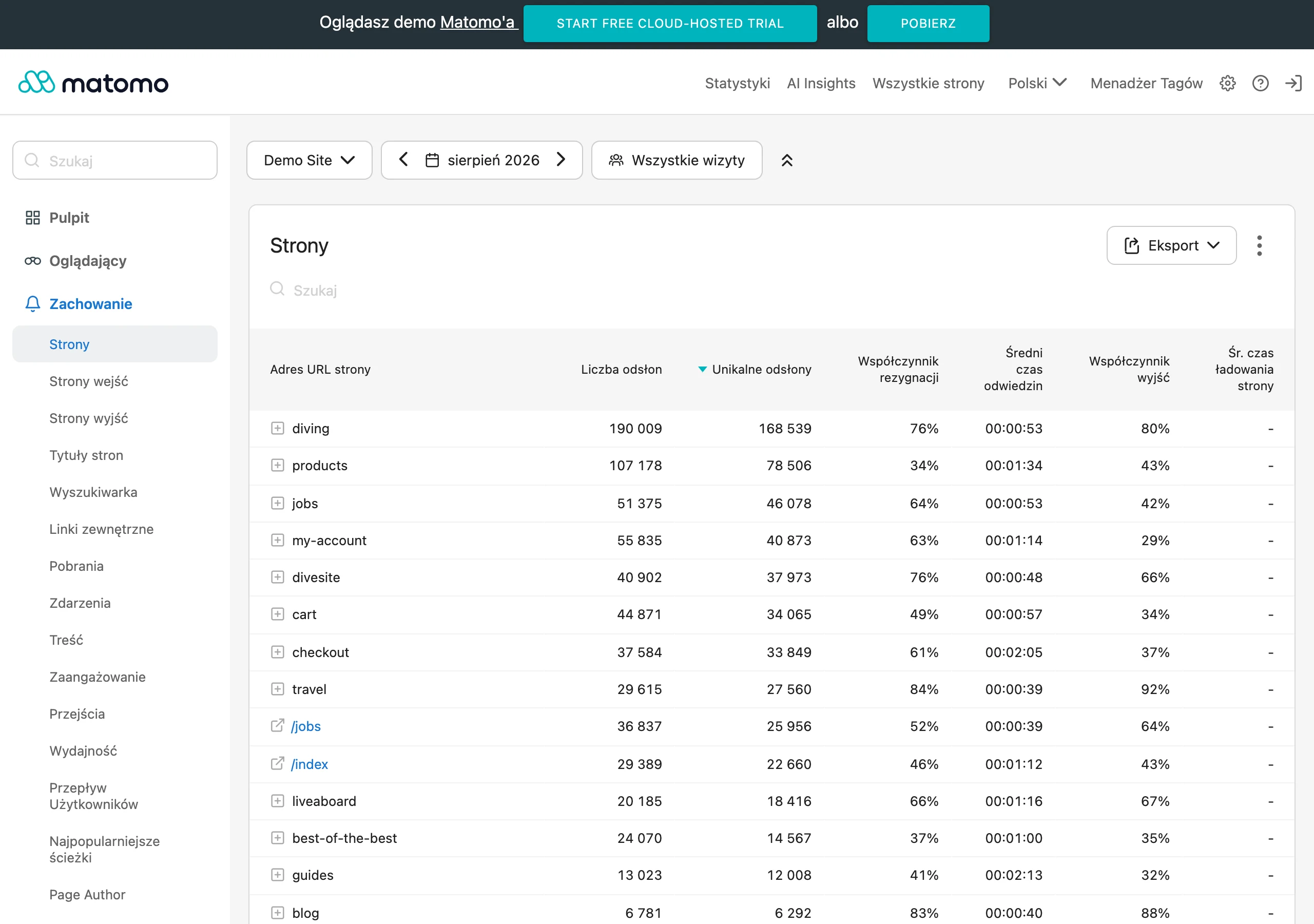
At the traffic acquisition stage, it is worth tracking impressions, clicks, CTR and average position, but always in relation to query groups and the pages assigned to them. A drop in CTR with a stable position often suggests that the title or description does not match what the user is looking for. Conversely, an increase in clicks without an improvement in traffic quality may mean that the page is attracting the wrong intent.
At the behaviour level, the signals that appear after the visit matter, not the visits themselves. It is worth checking whether the user scrolls through the content, moves to other sections, uses filters, clicks CTAs, uses internal search or returns to the results. Search terms that generate traffic but do not lead to any meaningful action are often the best source of information about content gaps or poor page mapping.
At the business level, you measure whether a given query cluster supports the site’s goal. For services, this may be contact, a quote or a phone call; for e-commerce, adding to basket and purchase; and for informational content, moving to an offer page or signing up. It is best to analyse not a single phrase, but a set of similar queries, because then it is easier to separate a trend from random fluctuations.
Good monitoring also includes queries that should not perform well. If specific phrases consistently generate cost but do not bring results, you need to decide whether to improve the page, separate the intents, or abandon them completely. Not every visit is worth saving — some search terms are better excluded or dropped if they are permanently misaligned with the offer and the goal.
Measurement only makes sense when it translates into concrete adjustments. After implementing changes, it is a good idea to compare “before” and “after” results for the same query group, the same page and a comparable time frame. Only then can you assess whether the increase comes from better alignment with search terms, or rather from seasonality, SERP changes or a general rise in demand.
Using search terms in paid campaigns
In paid campaigns, search terms are used to verify which actual queries trigger ads and which of them have real business value. This is one of the key reports in Google Ads, because it shows not assumptions, but users’ actual behaviour. Thanks to it, you can quickly spot whether the campaign is reaching purchase intent, or whether it is collecting traffic that is too broad, educational or accidental. It is precisely at the search terms level that you most often see where unnecessary costs come from and why clicks do not translate into leads or sales.
In practice, the search terms report supports three decisions: what to add, what to exclude and what to refine. When relevant queries appear that are not yet in the account structure, it is worth adding them as separate keywords or treating them as a starting point for new ad groups. If the report reveals phrases that do not match the offer, are too generic or purely informational when the goal is sales, exclusions should be added. The third area concerns message alignment: the ad copy and landing page should match the user’s language, not just the service name copied from the company price list.
The most value comes from analysing search terms alongside the business result. A click on its own is not a measure of success, because some queries can have a good CTR while at the same time producing a low conversion rate or poor lead quality. That is why it is worth looking at cost, conversions, conversion value, post-click traffic quality and fit with the offer together. A phrase that delivers cheaper traffic does not have to be better if it attracts users at the wrong stage of the decision process.
Search terms also help to organise match types and campaign structure. If a broad match campaign captures too many queries that are far apart in meaning, the report will quickly show whether exclusions are needed, ad groups should be narrowed, or topics should be split into separate campaigns. Conversely, when many valuable queries are lumped together, it may make sense to create separate groups for transactional, comparison or local intent. This usually improves control over bids, ad copy and the landing page.
- add valuable queries as separate keywords when they have clear intent and their own conversion potential,
- exclude phrases that do not match the offer, are too educational or are too broad in meaning,
- adapt ad headlines to the most common, real user wording,
- check whether a given search term should lead to a different landing page than it does now,
- review the report regularly, because new queries appear as the season, the offer and the matching algorithms change.
This is particularly important in automation-based campaigns, where the system can expand reach more broadly than the keyword list alone would suggest. In such situations, search terms are one of the few tools that let you check whether the algorithm is actually reaching the right audiences. When you notice recurring, missed queries, a bid adjustment alone will not solve the problem. First, you need to correct the intent match: through exclusions, changes to the campaign structure, refining the ad, or choosing a different landing page.
In well-managed campaigns, search terms combine demand analysis with cost control. They show how the user describes their problem, what they expect after clicking, and whether the ad responds to that need with enough precision. This is useful information not only for the ads specialist, but also for SEO, content and the sales team. If the same queries appear regularly in campaigns and convert well, it is often worth moving them into organic content and product or service pages as well.
FAQ
Frequently asked questions
How should search terms be understood in everyday SEO practice and ad campaigns?
They are the real queries entered by users, not just phrases from the keyword plan. They show what people actually expect and at what stage of the decision they are.
Are search terms more important than a keyword list?
In practice, often yes, because they reveal the audience’s authentic language and the real intent. The keyword list says what you want to target, while search terms show what the user is looking for.
How can you match content to search terms so it better answers intent?
First you need to determine whether the query is informational, comparative, transactional or local. Then you choose the page format: a guide, category page, landing page, FAQ or local page.
Why is it not worth creating a separate page for every search term variation?
Because many variants can describe the same need and it is better to handle them with one content cluster. Separate pages often lead to keyword cannibalisation and chaos.
How can you check whether search terms are working well and delivering results?
You need to look not only at clicks and rankings, but also at on-site behaviour and conversions. If there is traffic but no business result, the problem is usually intent or a mismatched landing page.
What should you do when search terms generate traffic without conversions?
First it is worth checking whether the query matches the page type and the real SERP. If not, you need to adjust the content, page layout or exclude the phrase in a paid campaign.