
Broken link building is one of those link acquisition methods that only work when carried out with great care. You start by identifying a real error on someone else’s site, and you end by suggesting replacing the link with a better, up-to-date resource. It is not a technique based on mass emailing, but on sensibly matching content to a specific context. The biggest difference is made not by the number of 404 errors detected, but by the relevance of the replacement page and the quality of the site from which you want to earn a link. In practice, four elements matter: the quality of prospecting, a thorough analysis of the broken link, a sensible replacement, and concise, specific outreach. If any of them is lacking, the campaign quickly loses momentum.
What broken link building is and how it works in practice
Broken link building is a link acquisition method that involves finding a broken link on someone else’s site and suggesting your own, suitably matched content in its place. The aim is not merely to point out a 404 error, but to replace the link with a URL that still solves the reader’s problem. In practice, every link opportunity includes the source domain, the broken address, the link context and the page you can offer as a replacement.
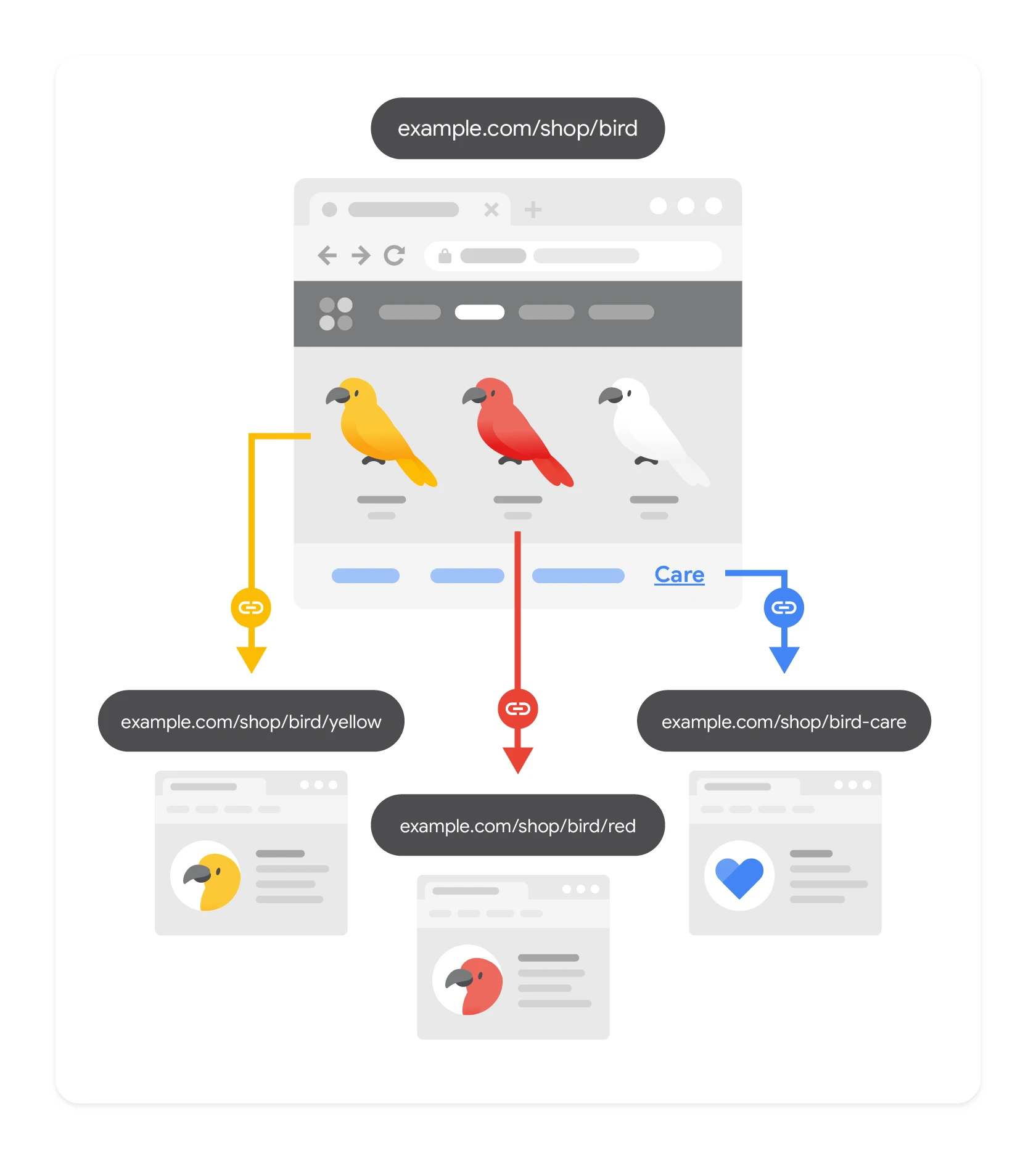
The process most often starts with finding pages that regularly link out to external sources, such as guides, bibliographies, tool lists, collections of resources or older educational articles. Then you verify whether the link is actually broken, whether it leads to an expired domain, a faulty redirect or an outdated resource. This matters because many seemingly promising cases, after a quick check, turn out not to be worth further work.
The next stage is to establish where the original link led and why it was placed in that particular spot. Internet archives, anchor text, the title of the removed page and the surrounding paragraphs all help with this. The better you reconstruct the link’s original intent, the easier it is to prepare a replacement that the editor will consider natural. Sometimes the client already has suitable content, but just as often it needs to be expanded, refreshed or created from scratch.
Only at this stage is it worth contacting the site owner or editor. The message should point to the specific error, the exact place on the page and a ready replacement URL that fits the context. The most common mistake is proposing the homepage, a category page or a sales offer where there used to be an educational resource. Such outreach looks like a request for promotion, not genuine help in tidying up the content.
In practice, the effectiveness of this method comes primarily from the quality of the match, not from the mere fact that an error exists. If the source page is weak, has a low editorial standard or the link was not very visible, the chance of a worthwhile result clearly drops. It also happens that the editor simply removes the broken link instead of replacing it, especially when the topic has ceased to be current.
- 01Finding the errorBroken link (e.g. 404)
- 02Analysing the contextDomain, link context, content
- 03Suggesting a replacementYour own, relevant content, solution
- 04Replacing the linkActive, valuable URL
The aim is to replace the link with a URL that still solves the reader’s problem, not merely to point out the error.
Strategies for effective prospecting and link analysis
Effective prospecting and link analysis are about choosing those pages and those errors that can realistically end with replacing the link on a valuable domain. The point is not to collect as many 404s as possible, but to identify situations in which you have a sensible replacement and contact details for the person who can actually make the change. That immediately narrows the scope of activities and saves time.
The best results come from areas where references to external sources naturally appear in large numbers. These are usually older guides, resource pages, educational articles, tool rankings, collections of materials and posts that have been updated for years. Mass collecting hundreds of addresses without manual selection more often lowers effectiveness than genuinely increases scale. At present, a shorter list of well-chosen opportunities works better than a large database of random errors.
- Topical relevance of the domain and subpage to your content.
- Visibility and indexability of the linking page.
- The editorial standard of the material and the level of content moderation.
- The number and nature of outbound links on the page.
- The likelihood that the owner or editor actually updates the materials.
- The visibility of the broken link in the content, not just its presence.
The analysis of the error itself should combine a technical perspective with context. You need to verify the HTTP status, redirects, expired domains and whether the problem is permanent rather than temporary. At the same time, it is worth assessing whether the link was an important source for the reader or rather an insignificant addition. Not every 404 page is a good opportunity, because sometimes replacing it adds nothing to the material.
Equally important is reconstructing the former content of the resource the link led to. If the original link pointed to a definition, a study, a checklist or an instruction, the proposed replacement should fulfil the same role. Link analysis should end with a simple decision: we have a ready-made equivalent, we update the existing content, or we first create new material. Without such a decision, prospecting ends up as just a list of addresses rather than real link opportunities.
At the end, it is worth assigning each opportunity to one, as best matched as possible, URL. This forces you to assess the quality of the content even before outreach and quickly exposes gaps. If you do not have a good replacement page, it is wiser to stop at the analysis stage than send a weak proposal that will undermine credibility in future contacts.
How to prepare attractive replacement content
Attractive replacement content addresses the same need as the broken link, but does so more fully, more up to date and in a more readable form. In broken link building, it is not the “most general” page that wins, but the one that best fits the place where the link is to be replaced. That is why you first need to establish the original intent of the link. The anchor, the surrounding paragraph, the subpage title and the archived version of the removed resource all help with this.
The most common mistake is attaching the first random subpage that only marginally touches on the topic. If the broken link led to a guide, report, definition or list of tools, the replacement should also be informational in nature. The homepage, a category page or a sales offer rarely work as a replacement for an educational source, even when they are topically related.
The replacement content should be polished and ready long before contacting the editorial team. In practice, this means a working URL, a sensible title, a clear structure, up-to-date data and no technical obstacles related to indexing or loading. If the editor clicks through and lands on an unfinished or weak page, the chance of replacement usually disappears straight away.
It is worth taking a cool-headed view on whether it is better to refresh an existing piece or prepare a new one. Updating is often the fastest route when you already have content close to the topic and only need to expand it. A new piece is justified when the current resources do not answer the user’s question precisely enough or when the link context requires a specific format, such as a list of sources, a step-by-step instruction or a definition of a term.
The best replacements have a few common features:
- they refer precisely to the topic of the removed resource, not just to a broad category,
- they are complete, but without unnecessary fluff,
- they give the impression of being editorially solid and are not aggressively sales-driven,
- they allow the content to be scanned quickly thanks to headings, examples and a clear structure.
Not every situation requires writing content from scratch. Sometimes it is enough to refine an existing article so that it better matches the intent behind the old link. The key is to match the specific context of the linking page, not merely to “have an article on a similar topic”.
- 01Establish the original intentAnalyse the anchor, context and archive
- 02Match the type of resourceKeep the same character (guide, report, definition)
- 03Create a better versionMore complete, more up to date, more readable
- 04Avoid sales offersThe homepage is rarely a good replacement
The key is to deliver the greatest value and perfectly match the user’s original need, while avoiding purely sales content.
Key principles of personalisation and outreach
Effective outreach in broken link building is about pointing out a specific problem and suggesting a replacement that the editor can assess in a few seconds. The message should be short, factual and based on one case, rather than a general request for a link. Three elements matter: where the problem lies, what exactly is not working, and which URL can sensibly replace it. Personalisation is not just about inserting a first name into a template, but about referring to a real place on the page.
A well-written message saves the recipient’s time. It is worth providing the subpage address, the section name or the anchor where the broken link appears. This means the site owner does not have to find the problem themselves and can immediately see that contact is not being sent in bulk. This usually works better than a long introduction about the brand, expertise or “great cooperation”.
The replacement proposal has to sound credible. Do not send several different links “to choose from” and do not try to suggest a page with a different intent from the original source. If you are writing about a guide, show a guide. If it concerns a definition or a comparison of tools, send exactly that kind of material, not a service page with a contact form.
In practice, a good outreach message should contain:
- a specific URL of the page with the error,
- an indication of where the broken link is located,
- a short description of the problem, without unnecessary technical jargon,
- one relevant replacement with a short explanation of why it fits the context.
It also matters who you address the message to. It is best to write to the editor, site owner or the person responsible for content updates, rather than using a general contact form without context. If you reach the wrong person, even a good opportunity may be overlooked. The wrong recipient is one of the most common reasons for no reply.
Follow-up makes sense, but only if it is measured. One reminder after a few days is usually enough, especially if the first message was clear. Repeated chasing, changing the arguments or adding more links reduces credibility and can look like a mass campaign.
The best campaigns are based on a simple framework: contact, response status, editorial decision and later checking of the implemented link. It is worth verifying whether the link was actually added, whether it leads to the correct URL and whether it was later removed or marked differently than expected. Outreach only ends once you have a confirmed result or a clear reason for rejection.
How to avoid the most common mistakes and limitations
The most common mistakes in broken link building are avoided through better content alignment, more careful selection of opportunities and more precise outreach. In practice, many campaigns lose effectiveness not at the sending stage, but earlier, when the source page is misjudged or a weak replacement is chosen. The mere presence of a 404 error does not yet create a valuable link opportunity. If the subpage is low quality, outdated or overloaded with random external links, it is usually not worth spending time on it.
A very common mistake is proposing a page that does not match the original intent of the link. If the editor previously linked to a guide, a definition, a list of tools or an educational resource, they are unlikely to want to replace it with a sales page, category page or general offer. The closer the replacement recreates the function of the lost resource, the greater the chance of acceptance. That is why, before contacting them, it is worth checking the archived content, the anchor and the context of the paragraph, and only then matching the right URL.
The second limitation concerns the quality of prospecting. Many teams compile extensive domain lists, but do not filter them by topic, indexability, editorial standard or whether the content is actually updated. As a result, a campaign may look good in a spreadsheet, but in practice it brings no replies or replacements. It is better to have a shorter list of manually verified opportunities than an extensive database of random sites.
Often the problem is not the email itself, but a lack of preparation on the landing page. When the proposed resource has content gaps, outdated data, a weak title, technical errors or needs improvements only after the link has been acquired, the credibility of the whole campaign suffers. The site owner then sees extra work and is more likely to remove the link rather than replace it. That is why the replacement content should be polished and ready before outreach, not only after the first response.
A limitation can also be the wrong contact or an overly general message. If you do not provide the exact URL, the place on the page or the specific broken link, the editor has to find the problem themselves and usually will not do so. Likewise, repeatedly sending the same message without meaningful personalisation is not very effective. Good outreach reduces the recipient’s work to a minimum: it points out the error, its location and a ready, relevant replacement.
It is also worth accepting that some opportunities will not result in a link despite a properly executed process. Some sites are abandoned, others have no one responsible for updates, and some editors will decide that the old link is no longer needed. That is normal. The goal is not 100% effectiveness, but a system that quickly distinguishes promising opportunities from those that only seem promising.
- 01Better content alignmentConsistency with intent
- 02Careful selection of opportunitiesQuality, not just 404
- 03Precise outreachRelevant communication
Many campaigns lose effectiveness at the stage of source evaluation and replacement selection, not only during sending.
Evaluating campaign results and key success metrics
The results of a broken link building campaign should be assessed not through the number of messages sent, but through the quality of verified opportunities, replies, link replacements and the value of the domains acquired. The scale of outreach alone means very little if the contacts were sent to weak sites or the proposed replacement was off target. What matters is how many real opportunities made it through the whole process, from detecting the error to the implemented link. This kind of measurement makes it possible to see where the campaign is working and where it is losing momentum.
The basic metrics include the number of verified opportunities, the number of outreach messages sent, the response rate, and the acceptance rate of replacements. It is worth analysing them separately for different types of sites, topics and email templates, because it then becomes easier to identify segments delivering the best return on work. If there are few responses, the problem usually lies in contact selection or personalisation. If there are responses but links are not increasing, content fit for the replacement more often fails.
The quality of the acquired links is crucial. It is worth verifying whether the link comes from a topically relevant, indexed page, whether it is placed in a logical context, and whether it does not lead to a subpage overloaded with random links. Securing a link alone does not yet guarantee a good result. One relevant link from a solid site is often more valuable than several replacements from places with low editorial value.
In practice, it is also worth measuring the time needed to secure a link and the reasons for rejections. If many opportunities fall through because of a lack of suitable content, the problem lies not in outreach, but in the content base. When a lack of responses repeats despite good-quality domains, you usually need to refine the choice of contact person or the way the message is phrased. Such a diagnosis gives more than a general statement that the campaign was “good” or “bad”.
Evaluation does not end at the point when the link is published. You need to monitor whether the link is still working, whether it has not been removed, marked as nofollow or replaced with another URL. A good standard is to keep a campaign register with the contact history, the editorial decision status and the current link status. The most useful report shows not only the result, but also the whole decision-making process and the points where the campaign lost efficiency.
The importance of the quality of linking sites in broken link building
The quality of linking sites determines whether broken link building will deliver real SEO value or merely increase the number of low-value contacts. Not every link replacement is worth the effort. When the source domain is weak, has low editorial quality or publishes random content, such a link usually adds little. In practice, it is better to reject a large share of opportunities than to collect links from places that do not build credibility.
Thematic relevance of the site and of the specific subpage on which the broken link appears is the most important factor. A link from an article that naturally develops the same topic is more valuable than a link from a generic resources page lacking clear context. It is worth assessing not only the domain as a whole, but also whether the given subpage is indexed, whether it has a sensible structure and whether the link was embedded in a substantive fragment of content.
The way the site links out is also highly important. If the page is overloaded with links, publishes low-quality guest posts or looks like an link farm, the risk rises. Such an opportunity may look good in a prospecting spreadsheet, but performs poorly in manual review. The outbound link profile often says more about site quality than the domain metric itself.
It is worth making sure that the site owner really keeps content up to date. Editorially “dead” sites, with no new publications and no signs of moderation, are less likely to respond to outreach and less likely to make updates. By contrast, active sites, industry guides, universities, organisations, foundations or well-run expert blogs more often replace outdated sources if they receive a concrete and relevant suggestion.
Quality assessment should come down to a few simple questions: does the site have a sensible reputation, is it topically close, does the subpage with the broken link have visibility, and was the link actually useful to the reader? When the answer to any of these questions is “no”, such an opportunity usually drops down the priority list. This way, the campaign does not waste time on domains that will not strengthen the link profile or translate into a meaningful business outcome.
In broken link building, it is not only the acquisition of the link that matters, but also where it comes from. That is why, before sending outreach, it is worth manually assessing the source in terms of content quality, indexability, organic traffic and the overall naturalness of the site. The best results come from sites where replacing the link solves a real editorial problem on a valuable subpage.
FAQ
Frequently asked questions
How does broken link building work in practice?
It involves finding a broken link on someone else’s site and suggesting your own content in its place, which better matches the context. The aim is to replace the link with an up-to-date URL, not merely point out a 404 error.
Does every 404 link qualify for broken link building?
No, because the mere presence of an error does not yet create a good link opportunity. It is worth choosing only those cases where you can sensibly recreate the intent of the original link and suggest a relevant replacement.
How do you find good sites for broken link building?
The best approach is to look where links to external sources naturally appear, that is, in older guides, educational materials, resource lists or tool round-ups. A short, manually verified list is more effective than mass collecting random addresses.
How do you prepare replacement content for a broken link?
It should answer the same need as the original resource and have a similar format, for example a guide, definition or roundup. Ideally, it should be complete, up to date and matched to the linking page’s context.
How do you write effective outreach for broken link building?
The message should be short, specific and indicate the exact location of the error as well as one relevant replacement URL. Personalisation means referring to a real section of the page, not just dropping a name into a template.
Why does broken link building sometimes not deliver results?
Most often the problem is poor prospecting, an irrelevant replacement or an overly generic message. It also happens that the editor simply removes the broken link instead of replacing it.