

Keyword selection for a website consists of linking real user queries with specific subpages. It is therefore not about picking out the “most popular words”, but about selecting phrases that sensibly connect with the offer, the site’s purpose and the type of content published. In practice, three elements need to be aligned: what you offer, what your audience is searching for, and what format of response Google returns for a given query. The most important outcome of a properly carried out analysis is a map of phrases to URLs, which shows which subpage should be optimised, which should be expanded, and which still needs to be created. This brings order to SEO, content and the site structure. Without such organisation, it is easy to create materials that do not answer real demand or start competing with one another within the same website.
What is keyword selection for a website?
keyword selection for a website is the choice of phrases matched to the content and purpose of specific subpages. Every important URL should serve a defined function: the homepage usually covers a broad topic and the brand, service subpages handle offer-related phrases, categories respond to product queries, and guides address users’ questions and problems. This makes it clear what content should be on a given page and what searches it should answer.
In practice, the result of this work is not a mere list of words, but a map of phrases assigned to URL addresses. Such a map shows which subpage is the primary one for a given topic, what its main keyword is, and which supporting phrases are worth weaving into the content. This matters because without assigning phrases to specific pages, it is easy to end up with several subpages targeting the same area and starting to weaken one another.
Keyword selection should not be based solely on query popularity. What matters is alignment with the offer, the user’s stage in the decision-making process, the type of page and whether a given subpage can genuinely be the best answer to a specific search. A phrase with a smaller reach, but better matched to intent and offer, often has greater value than a broad, generic word with a high search volume.
It is also an operational decision for SEO and content. The analysis shows which subpages only need refinement, which require expansion, which are worth combining, and for which topics it pays to create new URLs. That is why keyword selection is the starting point for sensible optimisation, not an extra step carried out at the end.
How does matching search intent affect phrase selection?
Matching search intent affects phrase selection in that it determines what type of subpage should answer a given query. This is a key filter when selecting keywords, because Google assesses not only the expression itself, but above all whether the page fulfils the user’s goal. If someone wants to buy, they expect a different page than when they intend to compare options, check a price or organise their knowledge about a topic.
In practice, this intent is best verified directly in the search results. For one phrase Google may display service pages, for another shop categories, for yet another guides, local listings or question-and-answer sections. If the SERP is dominated by guides, assigning that phrase to a sales page will usually be a wrong move, even if the phrase itself sounds appealing.
Intent also makes it easier to judge whether one subpage is enough or whether it is better to split the topic into several parts. Phrases with very similar meanings and arising from the same user need can usually be grouped into one cluster and covered with a single URL. However, if the queries lead to different goals, it is more sensible to separate them into distinct subpages, because one piece of content rarely meets several different expectations well at the same time.
The simplest rule usually works best: one subpage should have one dominant intent and one main keyword, plus a set of supporting phrases. This makes it easier to write coherent content, set headings and limit topic dilution. The more clearly a page responds to a specific user need, the easier it is to optimise and reliably assess the results.
Matching intent also matters when auditing an existing website. It happens that a page already appears for certain queries, but the content answers them only superficially or addresses a different problem from the one the user is looking for. In such a situation, instead of “adding more keywords”, it is better to refine the answer itself: the scope of the material, the information layout, the offer, the FAQ section, local elements or the subpage structure.
How does the practical keyword selection process work?
Practical keyword selection starts with defining the page’s goal and checking which subpages are actually meant to drive traffic, leads or sales. Keyword selection for a service page is done differently, for an online store differently again, and differently still for a blog or a local page. At this stage, it is important to clearly establish whether a given subpage should answer transactional, informational or local queries. Without that, it is easy to choose keywords that generate impressions but do not translate into business results.
The next stage is a site inventory, that is, compiling a list of existing URLs and determining what role they play. It is worth checking which pages are indexed, what headings and titles they have, and whether their content can be expanded around a specific topic. Keyword selection only makes sense once you know which subpages you can assign them to without creating a mess in the site structure.
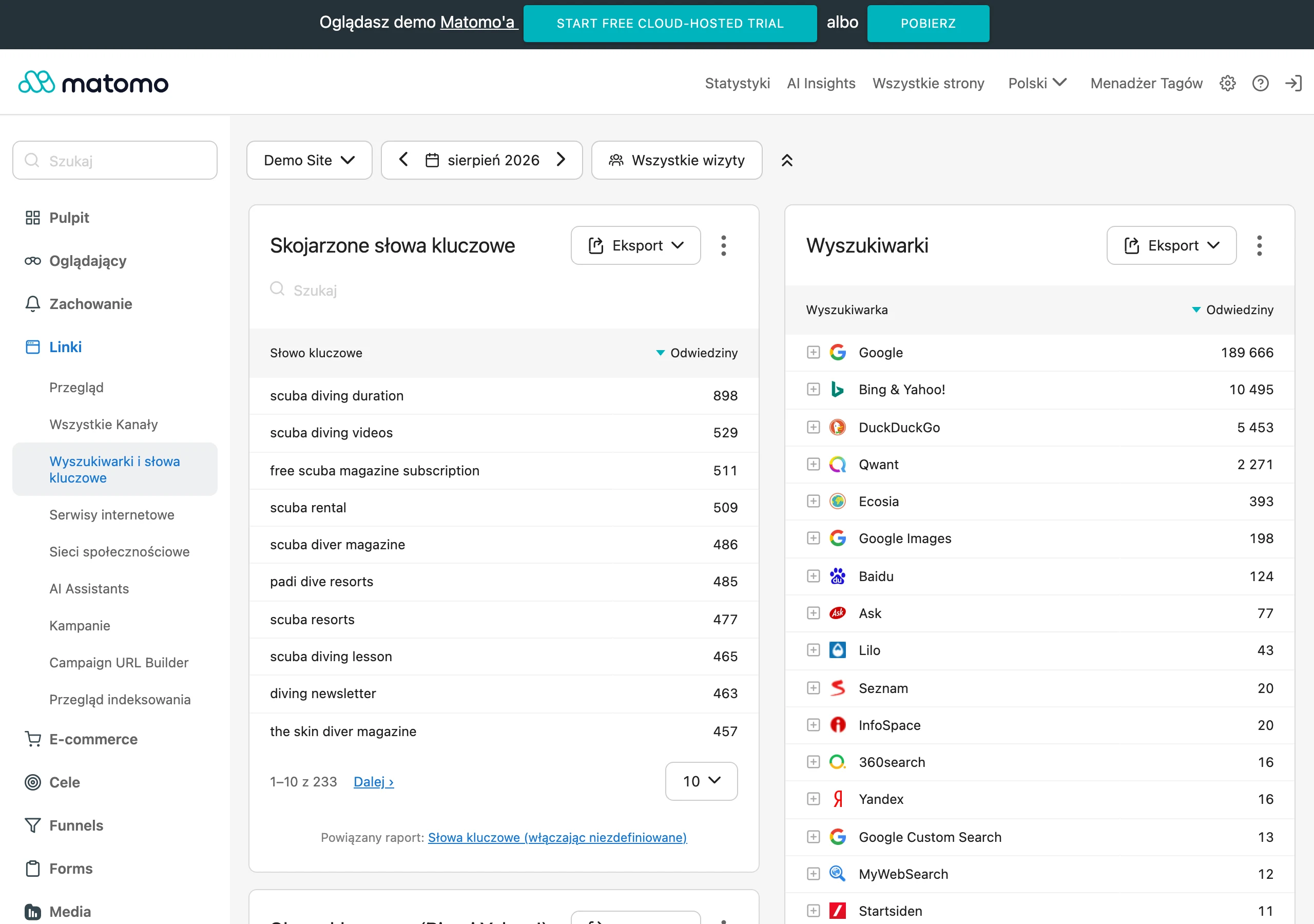
Next, a list of seed phrases is created based on the offer, the menu, customer language, commercial queries, Search Console data and search suggestions. These should not be limited to service or product names alone, but should also include users’ problems, use cases, features, naming variants and locations. This means the list from the outset better reflects how people actually search, rather than how the company internally describes its offer.
The list is then expanded with more detailed phrases, questions, synonyms and variants with different intent. At this stage, the aim is not to “pad” the spreadsheet as much as possible, but to capture the full spectrum of topics that are genuinely worth covering with content. Very often, a more precise phrase closer to the user’s decision stage is more valuable than a broad term with large reach but a poor fit for the subpage.
Finally, each phrase is verified in practice: does it fit the offer, what kind of results does Google show, is there already an appropriate subpage, and will it clash with another URL. Only after such an assessment can you decide what to optimise, what to expand and what to create from scratch. This is precisely the stage that distinguishes a mere list of words from a useful SEO analysis.
What are the key stages of keyword analysis and mapping?
The key stages of keyword analysis and mapping include assessing fit, grouping by intent and assigning each cluster to one specific URL. First, it is worth establishing whether several phrases effectively mean the same thing and whether the user expects the same answer from them. If so, separate subpages are not created; instead, one cluster is handled by one page. This reduces keyword cannibalisation and organises the content structure.
After grouping comes mapping, that is, assigning clusters to existing or planned URLs. For each subpage, it is a good idea to indicate one primary keyword and several supporting keywords that refine the topic and allow different search patterns to be taken into account. One subpage should usually answer one main intent, because combining several different goals on one page reduces its readability for both the user and the search engine.
In practice, three typical decisions arise during mapping. First: keep the current URL and improve the content. Second: merge subpages that are too similar into one stronger topic. Third: build a new page when the current structure leaves no room for an important keyword cluster. These decisions cannot be made accurately without manually checking the search results for the most important queries.
A well-prepared keyword map should function as a working implementation document, not as analysis that ends up in a drawer. It usually contains the URL, the purpose of the subpage, the primary keyword, supporting keywords, intent, content type and work status. Such a spreadsheet quickly reveals gaps in the site, duplication of topics and areas where the content does not match actual demand.
The final stage is post-launch verification. You need to check whether the subpage is indexable, whether it starts to gather impressions for the assigned keywords, and whether Google is driving traffic to a different URL than expected. If that happens, it usually means a mismatch in the content, a topic that is too broad, or a conflict between subpages that needs to be corrected in the map and in the site structure itself.
How to avoid the most common mistakes when choosing keywords?
The easiest way to avoid typical mistakes is to choose a keyword for a specific subpage, rather than “in advance” for the whole site. In practice, problems usually start when the keyword list is created without deciding which page is meant to respond to them. The result is messy content, weaker relevance and no clear direction for further optimisation.
A very common mistake is choosing keywords solely through the lens of their popularity. A high search volume does not yet mean that the query fits the offer, the user’s decision stage and the type of subpage. It is better to focus on a more specific phrase, but one consistent with the real service or product, than on a general topic that will attract the wrong traffic.
The second recurring problem is ignoring what is actually visible in the search results. If, after entering a query into Google, guides, rankings or local maps dominate, a sales page alone may not match that intent. Before assigning a keyword to a URL, manually check the SERP and assess which content format Google considers appropriate.
The third mistake is keyword cannibalisation, i.e. directing several subpages at the same or very similar intent. This often happens in sites with similar services, several posts about the same topic, or extensive categories where the content overlaps. When two pages answer the same user question, it is worth designating one as the main page and merging, redirecting or clearly narrowing the other thematically.
It can also be problematic to create separate subpages for phrases that practically mean the same thing. Different language variants, inflections and close synonyms can usually be covered by one well-prepared page. If the user expects the same answer, it is more sensible to build one strong keyword cluster than to maintain several nearly identical URLs.
Many mistakes also stem from a mismatch between the keyword and the offer. A page may pick up impressions for queries that sound promising, but they do not lead to contact or sales because the company does not provide that service or delivers it on a different scale. This is particularly important with local, price-related and problem-based keywords, where the user often already has a very specific need.
It is also worth being careful with overly broad subpages that try to answer informational, service-related and local questions at the same time. Such content can be unclear for the user and ambiguous for the search engine. One subpage should have one main intent, and additional topics are best separated into standalone URLs or supporting content.
Finally, it is a good idea to look into your own site data. Google Search Console often shows that a page is already gaining impressions for queries that nobody had previously considered, or, conversely, that it does not appear for keywords thought to be key. Such analysis makes it quicker to spot a mismatch between the content, demand and the way Google actually interprets a given subpage.
What optimisation actions support keyword selection?
Keyword selection is most effectively supported by refining a specific subpage around one dominant intent and one main topic. A list of keywords on its own will not deliver results if the page does not clearly communicate what question it answers and why the user should stay on it. In practice, this means that the content, structure and technical elements should speak with one voice and reinforce the chosen keywords.
The first step is to organise the basic page elements: the SEO title, H1, headings, main content and URL. The main keyword should appear naturally in these places, without forcing it and without repeating the identical form in every section. Effective optimisation is not about repeating the keyword, but about clearly showing the topic and scope of the page.
It is also important to expand the content with language variants, user questions and supporting keywords. This means the subpage is not set up around one wording only, but covers the topic more broadly and in a more practical way. This is especially important when users search for the same service under different names or combine the query with a problem, location or a specific use case.
Keyword selection is also strengthened by sensible internal linking. If a category, service or guide page is linked from logical places within the site and described with relevant anchors, the search engine can more easily understand its role. In practice, this makes it easier to build topic clusters, where a broader subpage leads to more detailed content and those pages support each other.
Technical matters cannot be overlooked either. The subpage should be indexable, embedded in the site structure and easy to find without several unnecessary clicks. If the URL is blocked, orphaned or unsupported internally, even well-chosen keywords will not translate into stable visibility.
An important element is aligning the content with the page’s business objective. On a service or product page, the mere presence of keywords is not enough if the user cannot clearly see the offer, the scope of the service, the service area, the advantages or the way to get in touch. Good optimisation therefore supports not only visibility, but also the move from search to action.
After implementation, it is worth checking whether the assigned keyword is actually starting to work on the right subpage. The best approach is to monitor impressions, clicks and queries assigned to a given URL in Search Console and assess whether competition between your own pages is appearing. A keyword map is not a closed document — it requires adjustments when the SERP, the offer or user behaviour changes.
How do you monitor the effectiveness of selected keywords?
The effectiveness of selected keywords should be monitored by checking whether the assigned subpages are actually generating impressions, clicks and traffic from the queries they were planned for. The most convenient source of information is Google Search Console, as it shows the actual queries, average positions, CTR and URLs visible in the results. This matters because placing a keyword in the content does not yet determine anything. What matters is whether Google associates a specific subpage with the right user intent.
First, make sure the correct URL is indexed and that it is the one gathering impressions for the given keyword cluster. If a different subpage appears for the same query than the one you expected, this usually points to a problem with mapping, internal linking or overly similar content in several places. It is a clear signal of keyword cannibalisation or a mismatch in intent, rather than merely a “worse position”.
A rise in positions alone is not enough to assess the results. For a service page, what may be crucial is whether the keyword attracts sales enquiries, and for an online store whether it leads to visits to a category or product page. So monitor not only the ranking, but also whether the traffic lands at the right stage of the buying decision and whether the user carries out the expected action.
A good practice is to compare data in two views: by queries and by pages. The queries view will show which keywords you are starting to appear for, while the pages view makes it easier to assess whether each subpage is fulfilling its function. If impressions are growing and clicks are flat, the cause may be a low CTR, an overly general title, an irrelevant description or a change in the type of results in the SERP.
It is also worth observing whether the nature of the search results is changing. It sometimes happens that a keyword once drove traffic to a service page, but over time guides, local results or questions and answers sections begin to dominate. When the SERP shifts the intent, text optimisation alone may not be enough — then you need to change the content format or assign the keyword to a different URL.
Monitoring should lead to decisions, not end with a report. If a subpage gets plenty of impressions but is getting few clicks in the results, improve the SEO title and headings. If it is not appearing for the right queries, expand the content with missing sections, user questions and related language variants. A simple spreadsheet works best, where you record the main keyword, URL, current results and a specific decision: keep, expand, merge or change direction.
FAQ
Frequently asked questions
How do you choose keywords for a website so they match the content and site goal?
First, you need to connect the offer, user needs and the type of subpage that should answer a given query. Only then do you assign phrases to specific URLs, creating a keyword map.
Is it worth choosing keywords only based on search popularity?
No, because popularity alone does not guarantee a fit with the offer or user intent. Often, a more precise phrase is better if it fits the page and business goal more closely.
How do you match phrases to user search intent?
You need to check what content format Google shows for a given query: a guide, a service page, a category or a local result. If the SERP promotes a different type of page than the one you plan, the phrase may be assigned incorrectly.
How does the practical process of mapping keywords to URLs work?
First, define the site’s goal and inventory the existing subpages, then create a list of seed phrases and more detailed variants. In the end, each phrase is assigned to a specific URL after verifying the fit and the risk of overlap.
How do you avoid keyword cannibalisation on one website?
You need to assign one dominant intent and one main keyword to one subpage. If several URLs answer the same user question, it is better to merge them, narrow them down or choose one main page.
What optimisation actions help you make use of well-chosen keywords?
It is important to refine the SEO title, H1, headings, content and URL address around one main intent. It also helps to expand the text with language variants, user questions, internal linking and ensuring the page is indexable.