

The selection of local keywords determines whether your company appears at the moment when someone is looking for a service in a given city, district or simply in the nearest area. This is not about firing off keywords at random, but about sensibly organising the offer, location and user intent in a way that can be translated into the website and the company profile. The key point is that relevant local keywords stem from the services you actually provide and the real area you operate in, not just from a list of city names. In practice, it is about understanding how customers actually search for a service and which queries have business justification. This determines the structure of subpages, local content, service descriptions and whether you create unnecessary, near-identical pages. The better you match keywords to the way the business operates, the easier it will be to measure results later and improve visibility.
What are local keywords and how do they affect SEO?
Local keywords are phrases that combine a service or product with a specific location or with a user’s local intent. They most often take the form of “dentist Kraków”, “mechanic Wola” or “plumber near me”. In practice, a location may mean a city, district, region, and sometimes also a service area. This matters because a user does not always enter the city name, and the search engine still recognises that the result should be local.
Such phrases affect local SEO, because they help match the website and the company profile to a specific query. They determine which subpages are worth preparing, how to name services, which headings and meta data to develop, and where local content is needed. If a company operates from a physical location, the structure is built differently than in the case of a mobile business or one serving several cities. The very selection of keywords therefore translates directly into the site architecture.
Keyword selection should not start with a tool, but with the offer. First, it is worth establishing which services are actually provided, in which locations and how customers refer to them. The same service may be searched for using formal, colloquial, industry-specific language or by describing the problem the user wants to solve. If you restrict yourself solely to the official service name, it is easy to miss queries that genuinely generate enquiries.
The importance of local keywords does not end on the website. These phrases should work in tandem with the company profile, business categories, address details, contact section and service area description. Good alignment between the website and the business profile makes it easier for the search engine to understand where you operate and which queries it should show you for. By contrast, a lack of consistency often weakens visibility, even if the website content itself looks fine.
- 01DefinitionService + specific location
- 02Query examples“Dentist Kraków”, “near me”
- 03Impact on SEOMatching the page to the query
- 04Content strategyDedicated subpages, headings
Summary: Local keywords are the key to visibility for businesses operating from a fixed location or on the move, enabling precise alignment of the offer with user intent in a given area.
How does the process of choosing local keywords work?
The process of selecting local keywords comes down to comparing the company’s real offer with the area of operation and the language customers use, then assigning those phrases to specific subpages and elements of local visibility. At the start, you list the services and organise them as they are searched for, rather than according to the internal names used within the company. Later, you define the reach: one city, several cities, districts, a region or travel to the customer. This is the point that determines whether one strong local page is enough, whether separate service subpages are needed, or whether it is worth preparing separate pages for branches.
The next stage is to build a phrase base from different combinations. This includes not only the “service + city” pattern, but also variants such as “service + district”, “problem + location”, “category + location” and queries without a location marker. Next, the intent is verified: whether the user wants to contact the company quickly, compare offers, find an answer to a question or book a service. A phrase is only good once it is clear which page it should lead to and what goal it is meant to achieve.
At this stage, you also reject phrases that are too broad, misleading or beyond the scope of the services offered. This is a common problem when a business tries to “capture” more traffic by choosing queries that describe a different service than the one it actually provides. It is better to focus on a shorter list of relevant phrases than on a broad set that misses the mark and may mislead the user. In practice, this selection saves time when creating content and reduces the risk of building weak subpages.
At the end, you assign phrases to specific assets: the service page, location page, FAQ section, area-of-operation description, contact page and business profile. Only then does a working implementation map emerge, i.e. an indication of what to optimise, where to add local context and which phrases have the highest priority. After publishing, it is worth still monitoring which queries generate impressions, calls, map visits and direction requests. Choosing local keywords is not a one-off task, but a process that is adjusted on the basis of real data.
What factors affect the effectiveness of local keywords?
The effectiveness of local keywords is determined above all by how well the phrase matches the real service, location and user intent. If someone enters a query intending to get in touch or make a quick purchase, a phrase assigned to a specific service page or business profile will work better than a general article. The mere presence of the city name is not enough if the content does not answer what the user is actually looking for.
A great deal also depends on how the business actually operates. A set of phrases is arranged differently for a single physical location, differently for several branches, and differently again for a mobile business that serves a wider area. The most common mistake is to create a list of phrases as if every business operated identically. If you work in the field, you need to communicate the service area clearly, rather than limiting yourself to the address of the headquarters.
Effectiveness also depends largely on the language your customers use. The same service may be searched by its formal name, a colloquial name, an industry term or simply a description of the problem to be solved. Good local phrases usually grow out of the customer’s language, not the naming used inside the company. For this reason, it is worth including synonyms, abbreviations and different spelling variants.
It also matters what type of results appear after a given phrase is entered. Some queries mainly trigger maps and business profiles, others lead to service pages, and still others display guides. If you are trying to rank a service page for a phrase for which the search engine prefers a local map result, the results may be modest even with well-crafted content.
The quality of the page or subpage to which you assign the phrase also has an impact. Such a page should clearly present the service, local context, area of operation, contact details and trust-building elements. It is better to have one solid service page with local relevance than many nearly identical pages for successive cities. Duplicate content usually weakens implementation and makes it harder to assess which page should rank.
You should also not overlook the consistency of the company’s details online. The address, phone number, opening hours, business categories and access information should match between the website and the business profile. If a phrase suggests local availability but the operational data does not confirm it, the strength of the relevance signal drops. This is particularly important for queries without a city name, when the search engine independently assesses whether the offer is locally appropriate.
- 01Phrase-intent matchService, location, contact, purchase.
- 02Content answers needsNot just the city name, but a real answer.
- 03Depends on the operating modelOne location, branches or a service area.
- 04Avoid universal listsEvery business is different; communicate the area.
Effectiveness depends on precise matching of phrases to real services and the nature of the business, not just the presence of the city name.
What steps should be taken to optimise local keywords?
To optimise local keywords, you need to match the right phrases to the relevant pages, business profile and local content, and then check whether this reflects user intent. It is not about mechanically adding the city to the text, but about sensibly linking the service, location and place on the page. Optimisation works when a phrase has a specific purpose assigned to it: contact, a visit, a phone call, directions or an enquiry.
- List all services in the wording your customers use, not only the company.
- List the locations you genuinely serve: headquarters, branches, cities, districts, service areas.
- Build a base of phrases from service + location, problem + location, and location-free variants.
- Check the intent of each important phrase and assess whether it fits a service page, local page, profile or supporting content.
- Remove phrases that are too broad, misleading or do not match what you actually offer.
- Assign each priority phrase to one main asset and set the implementation order.
Once you have a phrase map, match your site architecture to it. With one location, a well-prepared homepage or service page with clear local context is usually enough, whereas with several branches you need separate location subpages. For area-based businesses, one solid service page with a description of the service area often works better than a series of “thin” pages for every city.
The next stage is to implement the phrases in the key elements of the page. Place them where they genuinely help the user understand the offer: in the page title, heading, URL, service description, contact section and information about the service area. The phrase should organise the message, not look like a artificially pasted set of words.
At the same time, refine the company profile and make sure the data is consistent. Categories, business description, photos, opening hours, phone number and address should reinforce the same services and locations you show on the website. If the company operates on a mobile basis, make that explicit in the content and settings, because otherwise some local phrases will not match reality.
Finally, check which phrases actually deliver results. Look not only at rankings, but also impressions, calls, website visits, requests for directions and map queries. If a phrase has traffic but does not generate contacts, the problem is often not the keyword itself, but the wrong page type or mismatched intent. In practice, optimising local phrases is about continuously fine-tuning the mapping of words to how users really search for and choose services.
What are the most common mistakes when choosing local keywords?
The most common are: choosing phrases that are too broad, copying locations without value, ignoring user intent and failing to assign a phrase to a specific page. In practice, this looks like a company wanting to be visible “for everything”, but not creating any subpage that actually answers a specific query. The result is simple: lower relevance, a blurred site structure and weaker results both in the search engine and in maps.

A very common trap is using the company’s language instead of the customer’s. The customer types a colloquial service name, a problem name or an abbreviation, while the page is optimised for a formal term that almost nobody uses. A good list of local phrases should always include variants of real queries, not just official service names.
The second mistake is preparing many almost identical subpages for each city or district. When the content differs in practice only by the location name, such a page usually does not give the user anything meaningful and does not make the decision easier. A better solution is one well-crafted service page with a clearly described service area rather than a dozen weak variants.
Query intent is also often assessed incorrectly. The phrase “hydraulik Mokotów 24h” requires a different type of page than the question “jak odpowietrzyć grzejnik”, even if both concern the same industry. If you assign a contact-oriented phrase to a how-to article or vice versa, traffic may appear, but it will not translate into a phone call, form submission or visit.
- Choosing phrases that do not reflect the company’s real offer.
- Adding locations that the company does not actually serve.
- Omitting phrases without a city name, even though they have a clear local intent.
- Splitting many very similar phrases across many similar pages.
- Failing to connect the phrase with the company profile, service page, contact section and business details.
Another mistake concerns the company’s operating model. A physical premises, a branch network and a mobile service business should not rely on the same set of phrases or the same site architecture. Local phrases must be consistent with how the company actually operates: where it receives customers, where it travels to and which locations make business sense.
- 01Too Broad PhrasesNo local focus
- 02Ignoring intentThe customer searches differently
- 03No landing pageA general page does not work
- 04Company language vs. customer languageFormal names, not colloquial ones
Key: match the phrase to a specific, valuable page and the customer’s real language
How to monitor and measure the effectiveness of local keywords?
The effectiveness of local keywords is monitored by checking whether specific phrases generate impressions, visits, calls, directions requests and contact from the right locations. Position alone is not enough, because in local SEO the result also depends on maps, the device, the user’s location and the match with the Google Business Profile. What matters is not only whether the phrase ranks, but whether it prompts action.
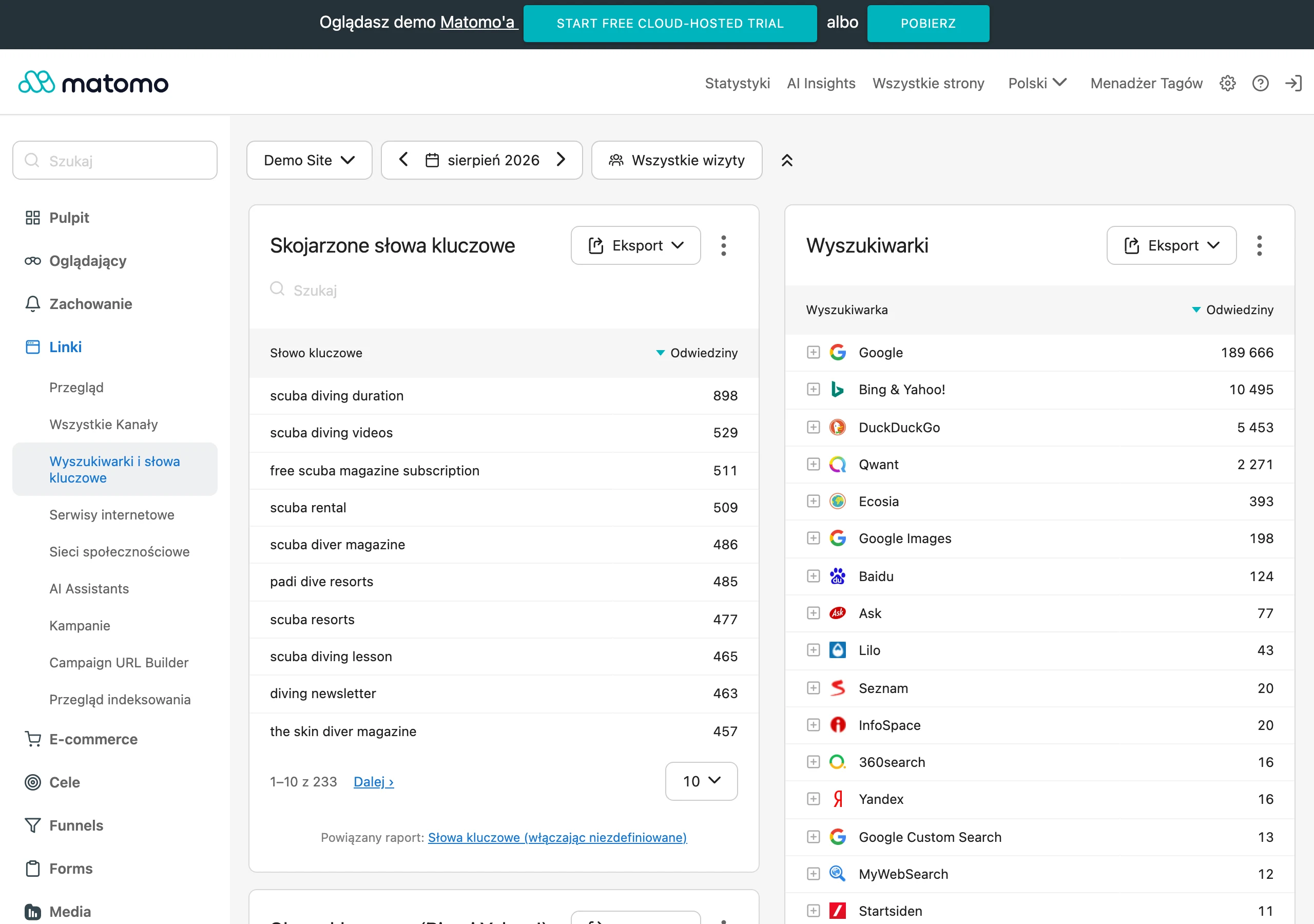
The easiest way to measure this is in parallel across several levels. In Google Search Console, you can check the queries and pages that are generating impressions and clicks. In Google Business Profile, you can see whether calls, website clicks and directions requests are increasing. In website analytics, it is worth tracking forms, clicks on the phone number and visits to local subpages.
It is crucial to attribute results to specific assets. If one phrase is meant to drive traffic to a service page in a given city, evaluate that page, not the whole website. The best local SEO monitoring comes down to combining: phrase, intent, assigned page and real business outcome.
- Impressions and clicks from local queries in Search Console.
- Visits to service and location pages from organic results.
- Phone calls, forms and clicks on contact details.
- Activity in Google Business Profile: calls, directions, website visits.
- Changes in visibility for phrases containing the city name, district name and variants without a location modifier.
It is also worth periodically verifying which queries generate only impressions and which actually convert. Sometimes a phrase has lower volume, but better matches a specific service and area of operation, which means it brings more enquiries than a broad generic term. This is a valuable clue when updating content, page titles and setting SEO priorities.
When results are poor, do not start by adding more keywords. First check whether the phrase leads to the right page, whether the content clearly describes the service and local coverage, and whether the company details remain consistent. In local SEO, the problem often does not lie with the phrase itself, but with a mismatch between the page, the Google Business Profile or the user’s intent.
FAQ
Frequently asked questions
How do you choose local keywords for a business website?
First, you need to map out the services actually provided, the locations and the language customers use. Only then do you assign phrases to specific pages and local visibility elements.
Is it enough to add the city name to every service?
No, the city name alone is not enough if the content does not answer the user’s real need. The phrase must match the service, location and search intent.
Why do local keywords need to match the company’s offer?
Because phrases that go beyond the actual scope of services mislead users and weaken the page’s relevance. A good keyword list should reflect what the company really does and where it operates.
When is it better to create separate location pages instead of one page?
When a company operates in several cities or has several branches, separate pages help better match phrases to a specific location. For a business working across a wider area, often one strong page with a description of the service area is enough.
What makes a local phrase effective in SEO?
Effectiveness depends on matching the service, location, user intent and the type of page it points to. Consistency with the business profile, contact details and service area is also important.
How do you track the results of local keywords?
It is worth checking not only rankings, but also impressions, clicks, calls, directions requests and map queries. The best approach is to assess results for a specific phrase, the assigned page and the real business outcome.