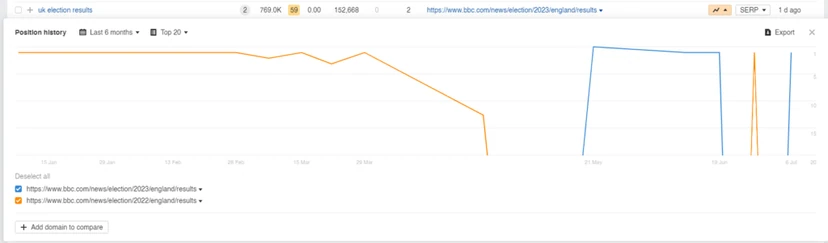
When optimising articles around similar terms, a page’s position in the rankings can suffer because of keyword cannibalisation. In this way, you “eat into” your own chances of improving your position in Google. Especially as a site grows, there is a chance that its content will start competing with itself.
What is keyword cannibalisation?
Keyword cannibalisation means having different blog posts or articles on a site that can be ranked for the same query in Google. This is caused by content that is too similar in topic or by optimising content for the same keywords.
DiagramThe related questions block expands short answers directly in the results — this is a clue as to which questions are worth covering in the content.Source: Google Search Central, CC BY 4.0
In the case of optimising posts or articles for similar queries, they then “devour” their own chances of SEO. Usually Google shows 1 to 2 results from the same domain for a given query. If you have an Authority Domain, you can get 3 results.
SEO blogWhat is keyword cannibalisation?
01Competing postsToo similar a topic
02Mutual devouring“Devour” ranking chances
03Limited resultsUsually 1-2 results
04Authority Domain3 results possible
Your own content competes with itself in Google, limiting visibility
Example of keyword cannibalisation
Blog post [Best features of Apple iPhone 15 128GB Black] VSproduct page [Apple iPhone 15 128GB Black]
The blog post “Best features of Apple iPhone 15 128GB Black” focuses on a detailed description of the innovative features of the iPhone 15, such as camera quality, battery life and processor, targeting the keywords “iPhone 15 features”, “iPhone 15 review”, and “Apple iPhone 15 128GB Black”.
By contrast, the product page “Apple iPhone 15 128GB Black” for the same model presents specifications, price and purchase options, targeting similar keywords, including “buy iPhone 15 128GB”, “iPhone 15 review” and “Apple iPhone 15 128GB Black”, which leads to potential SEO cannibalisation when both pages compete for the same queries in search engines.
SEO cannibalisation between the blog post “Best features of Apple iPhone 15 128GB Black” and the product page “Apple iPhone 15 128GB Black” arises from both pages targeting very similar keywords.
This includes phrases such as “iPhone 15 features”, “iPhone 15 review”, and “Apple iPhone 15 128GB Black”, which means that both pages compete for the same queries in search engines. As a result, search engine algorithms may struggle to determine which page better matches the user’s query, potentially lowering the ranking of both pages.
Why is keyword cannibalisation bad for SEO?
When your own keywords are cannibalised, you end up competing with yourself for position in Google rankings. If you have two posts on exactly the same topic, Google is unable to distinguish which article should be ranked higher for a given query.
In addition, important factors such as backlinks and CTR are split across several posts instead of one. As a result, both posts are likely to rank lower. Therefore, particular attention should be paid to optimising the post for the keyword used earlier keyword.
A useful alternative when assessing keyword cannibalisation can be AhrefsSEO strategyWhy is keyword cannibalisation bad for SEO?
01Competition with yourselfTwo posts, the same topic, the same goal
02Splitting ranking factorsLinks and CTR are spread across several pages
03Lower position in GoogleBoth articles rank lower
As a result, Google does not know which article to promote, and the split signals weaken the visibility of both pages, which requires optimisation.
Keyword cannibalisation and how to solve this problem
Keyword cannibalisation is an SEO problem that happens when multiple subpages of one website compete with each other in the same Google rankings.
Pages compete when they are targeted at the same keyword and match the same search intent, meaning they serve the same purpose or Google interprets that they do.
SEO keyword cannibalisation may appear in the following cases:
publishing similar content from time to time,
publishing a new version of a page without a redirect from the old one,
creating different URL slugs leading to the same product category,
optimising similar pages for the same keyword.
How to identify keyword cannibalisation?
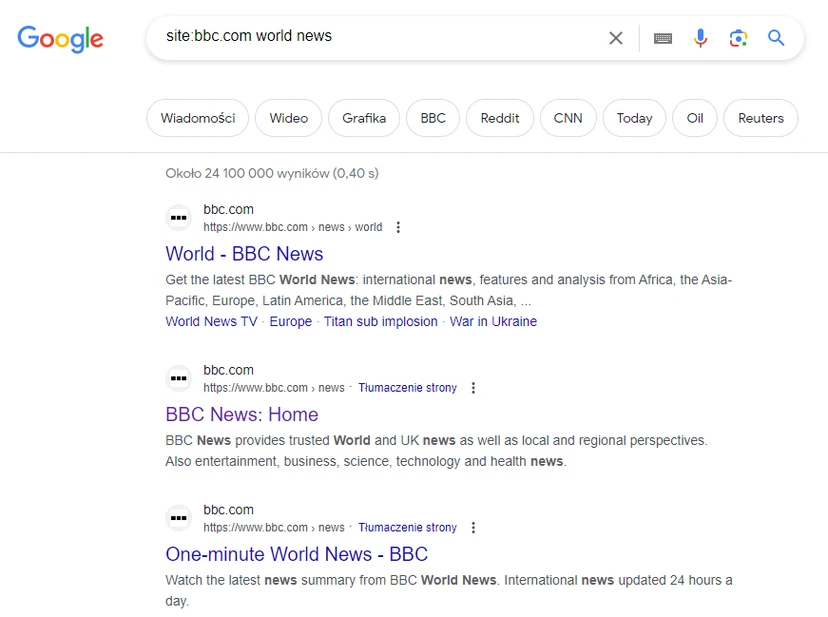
Checking whether a given website has a keyword cannibalisation issue is easy. You simply need to search your own site for the keyword in question that is suspected of having multiple results.
Typing into Google “site:domain.com „keyword”” will provide a straightforward answer to whether the website has a keyword cannibalisation problem. You can verify your finding by entering the same keyword in Google.
How to fix keyword cannibalisation?
Below is the general idea behind fixing the keyword cannibalisation problem:
One of the preferred pages should be selected (often referred to as the “main” or “primary” page) for each problematic keyword. This preference then needs to be explained to Google. This way the search engine knows which page should rank higher.
The best way to indicate such preferences depends on the circumstances.
The most popular solutions are listed below:
Implementation method
Best for…
Redirects
Similar or duplicate pages that you do not want to keep
Of course, if two of the pages hold positions #1 and #2 in the rankings for a given keyword, then there is no problem. However, if they are, for example, in positions #7 and #8, then this needs to be addressed.
Checking potential cannibalisation using the site + keyword operator
Solving such problems requires four important steps:
Conducting a content audit
Analysing content performance
Deciding which content to keep
Action: combining, deleting, redirecting
The first two steps will help decide which articles should be kept and which need to be combined or removed. In many cases, the fourth step involves combining and removing articles, as well as improving the internal linking on the site.
Combining articles
If two articles attract the same audience and talk about the same thing, then they should be combined. It is worth using two posts to write one article of excellent quality. This will positively affect SEO (Google prefers longer and well-written content) and solve the keyword cannibalisation problem.
Improving internal linking
Google can be helped to determine which article is the most important by creating the right internal linking structure. This means linking from less important posts to the entries that are the most important. In this way, based on the links, Google can determine which pages should appear higher on the search results page.
FAQ
Frequently asked questions
01How do you identify keyword cannibalisation on a website?
The easiest way is to check Google for the operator site:domain.com “keyword”. If several of your own subpages appear after entering the query, it may indicate cannibalisation.
02Can content cannibalisation lower a site’s positions in Google?
Yes, because several subpages compete with each other for the same query and Google may not know which one to show higher. As a result, their ranking potential is split.
03Why is keyword cannibalisation harmful for SEO?
Because instead of one strong page, Google sees several similar ones and splits backlinks and CTR between them. This usually makes all such subpages rank lower.
04When does content cannibalisation occur on a website?
When you publish similar content, create a new version of a page without a redirect from the old one, or optimise different subpages for the same keywords. The problem also appears with different URLs leading to the same product category.
05How do you fix a keyword cannibalisation problem?
You need to choose one main page for a given keyword and clearly signal it to Google. Redirects, canonical tags, noindex, content optimisation and internal linking all help with this.
06Is it worth combining two similar articles into one?
Yes, if both texts attract similar audiences and cover the same topic. Combining them into one better article can improve content quality and solve the cannibalisation problem.