When looking for information on keywords in relation to SEO, you can be bombarded with information about keyword research. Of course, this is important for anyone who cares about optimising a website. However, it is important to understand the basics, namely what a keyword is and how and where to add keywords as part of SEO.
What are keywords?
Keywords are the ideas and topics that define what a piece of content is about. From an SEO perspective, they are the words and phrases entered into search engines by users in order to find content. They are often referred to as “search queries”. After analysing images, video, content and other elements, the basic keywords are simple words and phrases.
DiagramRelated searches at the bottom of the results are a ready-made list of related queries that users use to refine the topic.Source: Google Search Central, CC BY 4.0
Website owners and content creators want the keywords on their pages to be properly matched to what users are searching for. This gives a greater chance that they will find that content on the search results page (SERP).
DefinitionWhat are keywords?
01Defining the topicThey describe the content.
02User queriesEntered into search engines.
03Simple phrasesBasic words and expressions.
04Visibility in SERPMatching increases the chances of being found.
Key to matching content to users’ needs and helping them find it online.
Why are keywords important?
Keywords are important because they form the connection between what people are searching for and the content provided to meet those needs. Your goal in search engine optimisation is to drive organic traffic to your site from the SERP. The target keywords you choose (including, among other things, those that will be placed in the content) determine the type of traffic you attract.
For example, if you own a shop for golfers, you may want to optimise your site for the keyword new golf clubs.
Keywords are closely linked to the audience as well as the content, because they may describe what you offer in a different way from how your audience searches for it. To create content that ranks well organically and drives visitors to your site, you need to understand the needs of those visitors, the language they use and the type of content they are looking for.
You can do this by talking to customers, using social groups and forums, and carrying out your own keyword research with a tool such as Senuto or Ahrefs.
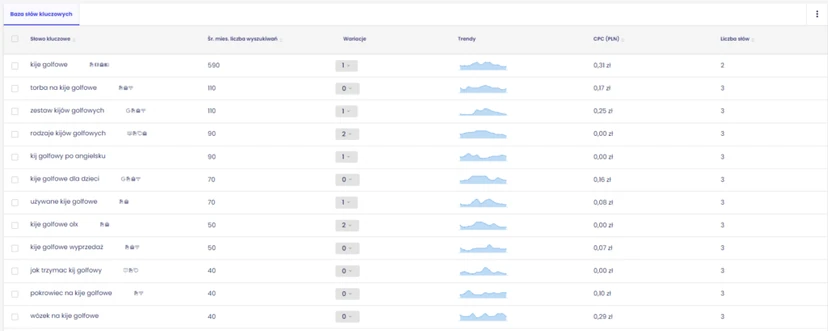
Example of the phrase kije golofowe based on a query in the keyword database in Senuto
What are long-tail keywords?
Keywords can be broad and have a wide reach (they are usually known as head keywords or seed keywords – generic keywords) or they can be a very specific combination of many words. They are often referred to as long-tail keywords.
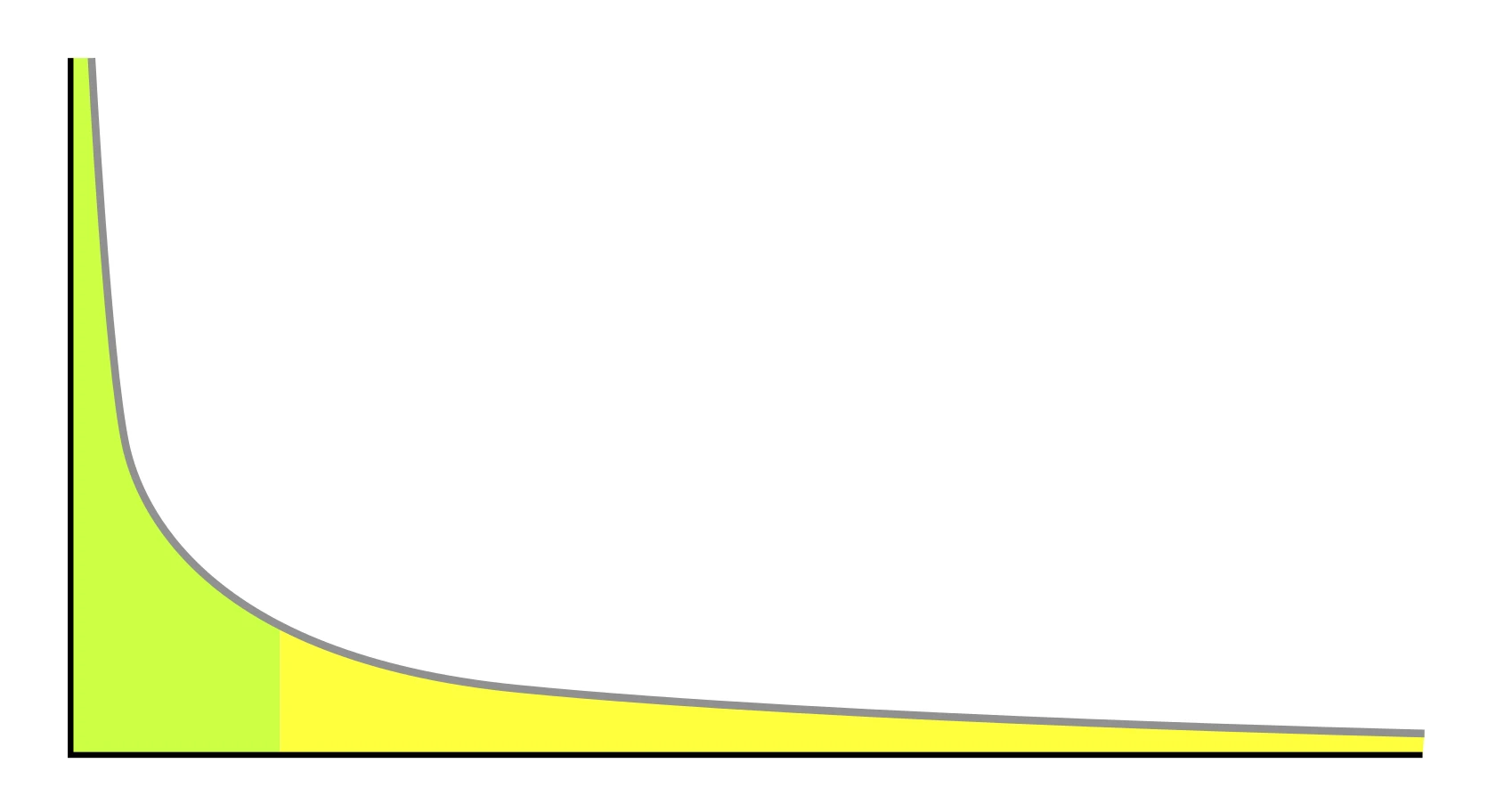
DiagramThe green section represents a few popular phrases, the yellow one — the long tail: thousands of niche queries that together generate comparable or greater traffic.Source: User:Husky, Wikimedia Commons, public domain
SEO and targeting single keywords may seem like the primary goal, because their search volume is broad, which means many people search for them. On the other hand, such keywords usually have strong competition. For example, the owner of a clothing store may want to optimise their site for the keyword “clothes”, but it will be difficult to compete and rank their store higher than websites such as H&M, Anserw or Shein.
Aside from such strong competition, single keywords can be frustratingly vague. If someone types the keyword dog into a search engine, it is not clear whether that person is looking for a list of dog breeds, information about dog food, a place to buy a collar, or perhaps simply nice photos of dogs.
Long-tail keywords usually have clearly defined intent. For example, “the best organic food for a puppy” or “affordable dog walking services in Warsaw”. It can be seen that long-tail keywords have weaker competition, which provides an excellent opportunity for smaller websites to appear on the search results page.
Long-tail is an unlimited number of keywords with low search volume and low competition. SEO tactics related to long-tail focus on competing for many keywords with low search volume rather than competing with a small group of keywords with high search volume.
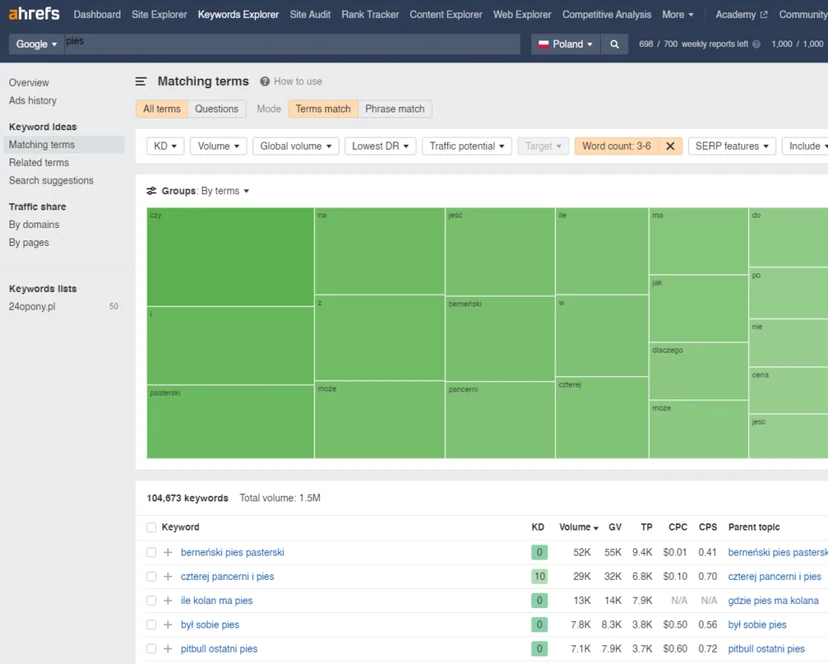
Example of the Ahrefs tool and limiting search to 3 to 6 words in a given querySEO in briefWhat are long-tail keywords?
01General keywordsBroad reach, high competition.
02Ranking difficultyA tough battle with giants.
03Long-tail keywordsSpecific, less competition.
Long-tail is precision and a chance of success in a niche.
Where to use keywords in SEO?
There are certain basic rules for using keywords that should be followed. Unique keywords should be used on every page in places that are crawled by robots and people, to reassure them that they will get the information they are looking for.
The key places where keywords should be placed are as follows:
URL addresses,
meta title,
meta description,
hX headings
main content,
image alt attributes.
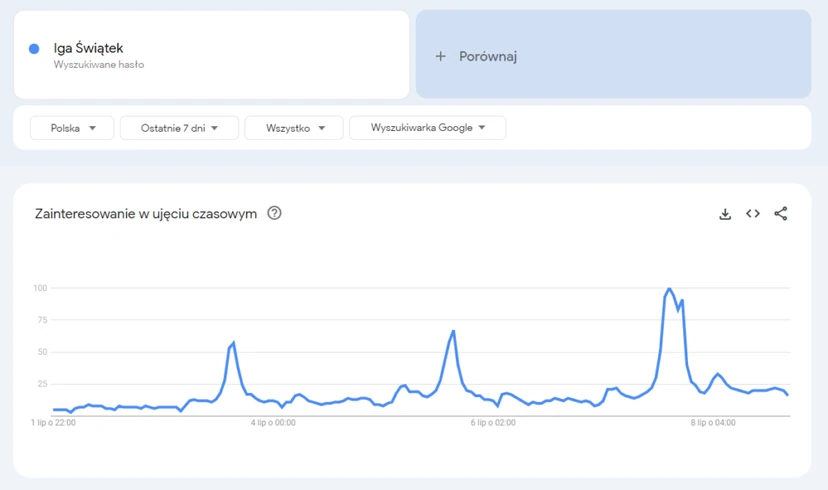
A well-known and free solution for keyword analysis is Google Trends
Best practices for keyword research
keywords should be checked in order to better understand the audience and to compile a list of keywords relevant to a given industry,
keywords should be matched to user intent (user intent),
it is important to use core keywords in title tags, page content, H1 tags and, where possible, in the page URL, meta description and alt attributes – if such actions make sense. You must not stuff keywords into places where it makes no sense whatsoever,
keywords should be checked regularly in order to stay up to date with current trends.
KeywordsBest practices for keyword research
01Understanding the audienceGather keywords.
02User intentMatch to the goal.
03Content optimisationPlace them in tags.
04Ongoing analysisCheck regularly.
Effective alignment with needs and continuous updates are key.
DiagramThe related questions block expands short answers directly in the results — this is a clue as to which questions are worth covering in the content.Source: Google Search Central, CC BY 4.0
How to use keywords?
In the past, it was possible to place many keywords on pages and in posts, and to use old-fashioned keyword stuffing (keyword stuffing). This made it possible to achieve higher positions in search engine rankings. Unfortunately, text with many identical or similar keywords is not pleasant to read.
Because such content is difficult for users to read, Google also considers it worthless. That is why SEO through keyword stuffing has fortunately become impossible or very difficult. Nowadays it is necessary to create interesting, valuable content, in which keywords are placed naturally.
Using them in moderation
Achieving the right amount of keywords on a page means finding a balance. If too few keywords are used, it will be difficult to rank the page for a given phrase. On the other hand, overusing the keyword phrase can make the page unreadable and be regarded as spam, which in turn will also make SEO more difficult.
You therefore need to find a middle ground, meaning appropriate but not excessive use of keywords. Above all, do not stuff them into almost every sentence.
Using keywords naturally
Beyond trying to use the right amount of keywords in moderation, you need to make sure they are placed naturally. Keywords should be part of logical, coherent sentences that convey certain information to users on a given topic. Do not force keyword phrases into the content (or headings) if it does not make sense or if they do not add any value for readers.
That is not all. You need to make sure that keywords are well distributed throughout the text. Do not place all the keywords only in the first paragraph. They should be naturally distributed across the whole page or post.
Where to add a keyword?
In addition to placing keywords in the text, there are also other places where you should include your keyword. Of course, keywords should always be added in moderation, with readability taking priority above all else!
page title and SEO title:
you should always add your keyword in the page title. It is best if it appears at the beginning of the title, especially if it is long. The same rule applies to the SEO title and the meta title,
headings:
you should place the keyword in certain headings (H2 and H3), but not in all of them. The rule is similar to keywords in the main content. You should use the keyword in the main heading and a few additional headings, depending on the length of the post or the size of the page,
introduction/lead:
the introduction is the first paragraph of the main content on the page. It should get straight to the point, because this way Google and readers will know what the content is about. This is an excellent opportunity to include the keyword phrase,
image alt text:
it is important for the page or post to have illustrations related to the topic being described. You should add alt text to the illustrations and try to include the keyword in it naturally,
URL slug:
the so-called “slug” is the second part of the URL (web address), which identifies a specific page. An example would be the address https://stronainternetowa.com/czym-jest-slowo-kluczowe. The part “czym-jest-slowo-kluczowe” is the aforementioned slug. You should try to create clear, descriptive elements of this kind for each page. Where possible, you should include keywords in them.
FAQ
Frequently asked questions
01What are keywords in SEO and what are they for?
They are words and phrases entered by users into search engines that describe the topic of the content. In SEO, they help connect what people are searching for with the right page.
02Why are keywords important for website positioning?
Because they determine what organic traffic can land on a page from search results. Well-chosen phrases increase the chance that the content will meet the user’s needs.
03What are the differences between generic and long-tail keywords?
Generic phrases are broad and have a wide reach, but also high competition. Long-tail keywords are more specific, longer queries with lower volume and less competition.
04Is it worth optimising a page for long-tail keywords?
Yes, because they are less competitive and often have a clearly defined user intent. This gives smaller sites a better chance of appearing in search results.
05Where should keywords be placed on a page?
The article points to, among other things, the URL, meta title, meta description, Hx headings, body content and image alt attributes. Where possible, it is also worth including them in the introduction and in the URL slug.
06How should keywords be used so they do not harm SEO?
They should be used naturally and in moderation, without stuffing them into almost every sentence. The text should first and foremost be readable and valuable for the user.