

Do you want your website to stand out in Google search results? Success lies in an effective SEO strategy that combines technical optimisation, valuable content and a strong link profile. From fast site loading and proper responsiveness to carefully chosen keywords – every action matters. Find out how to build online visibility step by step and improve your position in search engines!
How to improve your website’s position in Google?
To increase a website’s visibility in Google, it is essential to implement a comprehensive SEO strategy that covers both technical and content-related aspects. To begin with, it is worth taking care of site responsiveness – it must work flawlessly on different devices, such as smartphones or tablets. Equally important is the page loading speed. Those that load within 2-3 seconds have a much better chance of achieving higher positions in search results.
It is also crucial to create valuable and unique content that meets users’ needs. It is worth remembering the appropriate selection of keywords and the optimisation of headings (H1, H2 etc.) and meta tags such as meta title and meta description. These elements not only affect the site’s ranking, but also increase its click-through rate in search results.
You cannot forget the role of linking – both internal and external. Internal links help Google’s robots understand the site structure better, while backlinks from other sites build domain authority. Regularly publishing new materials and monitoring results with analytical tools makes it possible to adjust the strategy on an ongoing basis to the search engine’s changing algorithms.
Nowadays, mobile optimisation and having an SSL certificate are absolute must-haves. Sites without SSL are marked as insecure, which can discourage users and negatively affect rankings.
To achieve high positions in Google, you need to combine technical optimisation with creating valuable content and building a strong link profile. Regular analysis of results and flexible adaptation of the strategy are the key to long-term success in SEO.
- 01ResponsivenessAcross all devices.
- 02Loading speedWithin 2-3 seconds.
- 03Valuable contentUnique, useful for users.
- 04SEO optimisationKeywords, headings, tags.
A comprehensive technical and content strategy is the key to achieving higher positions in search results.
What are the key elements of SEO?
Website SEO is based on several key pillars that determine its visibility in search results. Content quality is one of the most important elements. Materials should not only meet users’ needs, but also contain appropriately chosen keywords. Unique and valuable articles attract both people and search engine algorithms.
Another important aspect is technical optimisation. Page loading speed is of huge importance – ideally, it should be 2-3 seconds. In addition, the site must be responsive, meaning adapted to different devices. Slow websites may be penalised by Google’s algorithms, which negatively affects their positions in results.
No less important is linking, both internal and external. Internal links help robots understand the site structure, while backlinks from other sites build its authority and increase its credibility in the eyes of search engines.
It is also worth taking care of meta tags, such as meta title or meta description. They often determine whether users click on our site among many results. Don’t forget about the SSL certificate, which not only guarantees the security of users’ data, but also helps improve rankings.
The last, but equally important, element is regular analysis of results. Thanks to analytics tools, you can monitor the effects of SEO activities and adjust your strategy on an ongoing basis to the changing requirements of Google’s algorithms. It is precisely consistency and flexibility that are the key to long-term success in SEO.
Keywords strategy
Keywords strategy is the foundation of effective SEO, enabling you to identify and use phrases that match users’ needs and intent. Thanks to it, you can not only attract valuable traffic to the website, but also significantly improve its visibility in search results.

The first step is a thorough analysis of queries entered by internet users. For this purpose, it is worth using tools such as Google Keyword Planner or SEMrush, which help uncover popular keywords and assess their level of competitiveness. It is crucial to take into account both general phrases and more specific ones – the so-called long tails (long tail keywords). Although the latter are less popular, they often have a higher conversion rate because they answer users’ precise queries.
Next, you need to match keywords to search intent. We distinguish three main types:
- informational (e.g. “how SEO works”),
- transactional (e.g. “buy sports shoes online”),
- navigational (e.g. “XYZ company website”).
The choice of suitable phrases should be closely linked to the purpose of the site – whether it is meant to educate, sell products or build brand awareness.
The next stage is content optimisation for selected keywords. Phrases should appear naturally in headings (H1, H2), meta tags (meta title, meta description) and the main text. However, it is important to avoid keyword stuffing – excessive repetition of phrases can lead to penalties from Google’s algorithms.
Long tails play a particularly important role in an SEO strategy because of their low competitiveness and high relevance. Examples of such phrases include “best running shoes for beginners” or “how to start a cooking blog”. Using them allows you to reach a specialised audience and increase the chances of achieving your intended goals.
Another essential element of the strategy is regular analysis of effectiveness of selected keywords. Thanks to analytics tools, you can monitor the site’s positions for individual phrases and quickly react to changes in search trends or drops in visibility.
An effective keywords strategy requires combining in-depth market analysis, alignment with user intent and continuous content optimisation and performance monitoring. It is these actions that determine the long-term success of a website’s SEO.
- 01Intuitive structureFor users and bots
- 02User-friendly URLsShort, with keywords
- 03Content optimisationHeadings and meta tags
The aim is to improve visibility in search results through logical structure and content.
How do you match keywords to user intent?
Matching keywords to user intent is the key to effective SEO. To do this, you first need to understand exactly what internet users are searching for. Search intent can be divided into three main categories:
- informational – answers questions (e.g. “how SEO works”),
- transactional – indicates readiness to buy (e.g. “buy sports shoes online”),
- navigational – helps find a specific website (e.g. “XYZ company website”).
To precisely match keywords, it is worth using analytics tools such as Google Keyword Planner or SEMrush. They not only help uncover popular queries, but also assess their competitiveness. Particular attention should be paid to the so-called long tails (long tail keywords), i.e. more specific and less crowded keywords, e.g. “the best running shoes for beginners”. Such phrases often have a higher conversion rate because they match users’ precise needs.
When optimising content for keywords, it is important to remember to incorporate them naturally into headings (H1, H2), meta tags and the main text. The key is to avoid keyword stuffing – excessive repetition of phrases can result in penalties from Google’s algorithms.
Regular analysis of keyword performance allows you to adapt your strategy to changing trends and user needs. As a result, you can not only increase your website visibility, but also achieve your SEO goals in the long term.
What importance do long tails have in SEO?
Long tails, i.e. phrases consisting of 3-5 words, are a key element of an effective SEO strategy. These are queries that precisely reflect user intent, such as “the best running shoes for beginners” or “how to start a food blog”. Their main advantage is high relevance – people entering such terms usually know what they are looking for, which significantly increases the likelihood of conversion.
What is more, long tails are less competitive than short and generic keywords. This makes it easier to achieve higher positions in search results. In addition, they allow you to reach a more diverse audience. Content tailored to users’ specific needs not only attracts attention, but also increases engagement and time spent on the site, which has a positive impact on Google rankings.
It is worth noting that long tails work particularly well for niche topics or local businesses. For example, the phrase “men’s hairdresser Warsaw city centre” has a greater chance of attracting interested customers than the generic term “hairdresser”.
However, optimising for long tails requires careful analysis of user queries and regular monitoring of their effectiveness. Tools such as Google Keyword Planner or SEMrush can be invaluable in identifying the right phrases and adapting your SEO strategy to current search trends.
- 01Understand the needsUnderstand your audience’s intent.
- 02Analyse keywordsMatch content to phrases.
- 03Create a unique structurePrecise headings and formatting.
- 04Update regularlyFrequent publishing and fresh content.
An effective SEO strategy is about continually adapting content to users’ intent and needs.
Optimisation of a site for SEO
Website optimisation for SEO is a complex process that combines both technical and substantive elements. Its main aim is to improve visibility in search results. A key role here is played by the site structure – it should be clear and intuitive, both for visitors and for Google’s indexing robots. Equally important are friendly URLs, which are worth creating briefly, with the main keywords in mind and without unnecessary characters. The next step is content optimisation. Headings (H1, H2) must be properly formatted and contain keywords aligned with user intent. Do not forget about meta tags, such as meta title or meta description, which have a direct impact on a page’s click-through rate in search results. Page load speed is another important factor affecting SEO. Pages that load within 2-3 seconds have a greater chance of achieving higher positions in Google. It is worth taking care of image optimisation by compressing files and using modern formats such as WebP. Mobile responsiveness also plays a key role. The site must work flawlessly on different devices – from desktop computers to smartphones. Google algorithms prefer mobile-friendly sites, which affects how they are assessed. It is also important to avoid content duplication. Each subpage should have unique content, and any repetition should be eliminated using 301 redirects or canonical tags. Regularly carrying out an SEO audit makes it possible to identify technical errors and areas requiring improvement. This allows the strategy to be adjusted on an ongoing basis to Google’s changing algorithm requirements.
How to take care of technical optimisation?
Technical optimisation of a website plays a key role in its SEO. Start with friendly URLs – they should be concise, readable and include relevant keywords. Avoid excess characters, such as special symbols or numbers, which may make the indexing process more difficult.
Another important aspect is content structure. Headings (H1, H2, H3) must be properly formatted and contain keywords matched to user intent. This helps search engine robots understand the hierarchy of information on the page better.
Do not overlook the importance of meta tags, such as meta title and meta description. The meta title should be unique for each subpage and include the main keyword. The meta description, on the other hand, is designed to attract users’ attention, so it is worth ensuring it is appealing and consistent with the page content.
Image optimisation is another important element. Every graphic should have a descriptive alt attribute, which not only helps Google’s robots index the page, but also increases the site’s accessibility for people using screen readers. In addition, it is worth compressing image files to speed up the site’s loading time.
Avoiding content duplication is another key step. Each subpage should offer unique content, and any repetition should be eliminated through 301 redirects or canonical tags. Duplicate content can lower a site’s position in search results.
Regularly carrying out an SEO audit makes it possible to detect technical errors and areas requiring improvement. Tools such as Google Search Console or Screaming Frog help monitor the site’s condition and respond quickly to problems related to indexing or 404 errors.
The final important element is page load speed. Pages that load within 2-3 seconds have a greater chance of achieving higher positions in Google. It is worth taking care of optimising HTML, CSS and JavaScript code, as well as using page caching technology.
Thanks to comprehensive technical optimisation, it is possible to significantly improve a site’s visibility in search results and provide users with a better browsing experience.
What importance does page load speed have?
Page load speed is extremely important for both users and search engine algorithms. Websites that open in 2-3 seconds have a greater chance of achieving higher positions in search results. In turn, a long waiting time can lead to an increase in the bounce rate, that is, a situation where visitors leave the page before it has fully loaded. This not only spoils their experience, but may also lower the site’s ranking.
Google algorithms, such as Core Web Vitals, treat site performance as a key element in assessing its quality. Metrics such as Largest Contentful Paint (LCP), First Input Delay (FID) or Cumulative Layout Shift (CLS) are closely linked to how quickly the site operates and directly affect its visibility in search results.
To improve load time, it is worth focusing on a few important steps:
- image compression,
- minification of HTML, CSS and JavaScript code,
- effective use of cache memory (cache),
- investing in high-performance hosting that will ensure smooth site performance even with heavy traffic.
Optimising loading speed brings many benefits – it not only increases user satisfaction, but also helps a site stand out from the competition. Websites that perform more efficiently are visited more often and have a greater chance of generating conversions, which translates into better SEO results.
Why is site responsiveness important?
Website responsiveness is a key element affecting SEO. As StatCounter data shows, more than half of online traffic comes from mobile devices – smartphones and tablets. Websites that automatically adapt to different screen sizes offer users a much better experience.
Google places great emphasis on responsiveness, especially in the era of Mobile-First Indexing. Sites not adapted for mobile devices risk dropping in search results. In addition, a lack of responsiveness often results in a higher bounce rate – users quickly abandon websites that do not work properly on their smartphones or tablets.
From a technical perspective, responsive websites have even more advantages:
- they are simpler to maintain, because they do not require separate versions for desktop and mobile devices,
- this means lower management costs,
- and faster implementation of changes and updates.
In the context of content marketing, responsiveness also plays an important role. Content adapted to different screen sizes is more accessible and easier to read. This translates into greater user engagement and longer time spent on the site, which in turn has a positive impact on a website’s visibility in Google. Investing in responsiveness is therefore a step that brings measurable benefits both for users and for the site itself.
Optimising on-page elements
Website optimisation is a key step in increasing its visibility in search results. One of the most important aspects is working on meta tags, such as the meta title and description. The meta title should be unique for each subpage, contain the main keyword and be concise – ideally no more than 60 characters. In turn, the meta description is designed to attract users’ attention and encourage them to click. It should be consistent with the page content, contain keywords, but above all be readable and appealing.
Another important element is heading optimisation (H1, H2, H3). The H1 heading is the main reference point for Google’s bots and users – it should contain the key phrase and match the search intent. Lower-level headings (H2, H3) help organise the content, making both indexing and navigation around the site easier. Each of them must be unique and well thought out in terms of keywords.
You cannot forget about image optimisation. Every graphic should have an alt attribute, which not only supports indexing by Google’s bots, but also increases website accessibility for people using screen readers. In addition, it is worth ensuring compression of image files, which will speed up the site loading time and improve the user experience.
It is also crucial to create user-friendly URLs. They should be short, clear and contain relevant keywords. Avoid excessive special characters or numbers, which can make both indexing and users remembering the address more difficult.
The final important step is avoiding duplicate content. Every subpage should offer unique content. In the case of repetition, it is worth using 301 redirects or canonical tags. Duplicates can negatively affect a site’s position in search results.
Thanks to comprehensive optimisation of these elements, you can significantly improve your site’s visibility in Google and provide users with a better experience when using the website.
How to optimise the meta title and meta description?
The meta title and meta description are key elements affecting a website’s visibility in search results. The page title should be unique for each subpage, contain the main keyword and not exceed 55-60 characters, so that it is displayed in full in Google. It is important that it is appealing and encourages users to click.
The meta description is a short description displayed below the title. It should be concise (around 150-155 characters), contain keywords, but above all attract readers’ attention. A well-constructed description not only increases the click-through rate (CTR), but can also affect a page’s position in the results.
Avoid duplicating meta tags across different subpages. Each page must have an individual title and description tailored to its content. This helps Google’s bots better understand the structure of the website, and users – quickly assess whether the page meets their needs.
Keywords should be naturally woven into both the title and the description. Avoid excessive repetition of phrases (keyword stuffing), which can result in penalties from Google’s algorithms. The key is balance between optimisation and readability for the audience.
Regular analysis of the effectiveness of meta tags using tools such as Google Search Console allows you to adapt your strategy to current search trends and user needs. These are simple actions that can significantly improve your website’s visibility online.
Why is image optimisation important?
Image optimisation is a key element of an SEO strategy, affecting both a website’s visibility in search results and user experience. Search engine robots, such as Googlebot, do not interpret images the way people do, which is why adding alternative descriptions (alt) is so important. These descriptions help algorithms understand the content of the graphic, which translates into better indexing of the website.
Well-prepared images can also significantly speed up website loading time, which is one of Google’s main ranking factors. Large image files often slow a website down, so it is worth compressing them without losing quality. Using modern formats such as WebP can reduce file size by as much as 30-50%, which significantly improves performance.
Another important aspect is file naming. Instead of leaving default names such as “IMG12345.jpg”, it is worth using names containing keywords related to the content. For example, “optymalizacja-obrazow-seo.jpg” is a much better choice – this supports the indexing process and makes it easier for robots to understand the context.
Properly prepared images can also attract organic traffic through Google Images search. If photos are well described and tagged with alt attributes, they have a greater chance of appearing in image search results, which can result in additional traffic to the site.
You should also not forget about image responsiveness. Graphics should automatically adapt to different screen sizes – from desktop computers to smartphones. This not only improves user experience, but also affects how Google’s algorithms assess the site.
In short, image optimisation is not just a technical issue – it is also a way to increase a site’s appeal to visitors and improve its position in search results. With the right alt descriptions, file compression and mobile responsiveness, you can achieve measurable benefits for both SEO and users.
Creating valuable content
Creating valuable content is the foundation of an effective SEO strategy. Good material not only attracts users’ attention, but also helps a website rank higher in search results. The key is to understand your audience’s needs and provide them with information that is relevant to them.
The first step should be a thorough market study and keyword analysis. This makes it possible to determine which topics users are interested in and tailor content to their search intent. It is important for texts to be unique, well structured and properly formatted. It is worth enriching headings (H1, H2) with key phrases and ensuring the content is clear and easy to absorb.
Regular content updates are another important element. Sites that publish new material frequently are rated more highly by Google’s algorithms. It is also worth focusing on a variety of formats – blog articles, infographics or videos can attract different audience groups.
Valuable content is also content that engages users. Comments, shares or longer time spent on the site signal to Google’s algorithms that the page is valuable to visitors. That is why it is worth encouraging interaction through questions or calls to action (CTA).
You should not forget about the technical optimisation of content. Meta tags (meta title and meta description) should be attractive and contain keywords. A proper URL structure and image optimisation through adding alt descriptions are also important.
Creating valuable content requires consistency and continuous monitoring of results. Analytical tools allow you to track the effects of your efforts and adapt your strategy to the changing needs of users and Google’s algorithm requirements. Remember – good content is an investment in the long-term success of your website.
What features should unique content have?
Creating valuable content is, above all, about providing solutions that meet audience needs. It should contain reliable information, based on trustworthy sources, in order to effectively solve problems or answer users’ questions. This earns the trust of both readers and search engine algorithms.
Proper formatting is no less important. Headings (H1, H2, H3) should be logically organised and contain key phrases, which makes it easier to navigate the site and for Google’s robots to index it. It is also worth ensuring readability by using paragraphs, bullet points or bolding the most important information.
Variety in the form of delivery is another important element. Blog articles, infographics, videos or case studies attract different audience groups and increase their engagement. As a result, the site becomes more appealing not only to users, but also to search engine algorithms.
It is also crucial to match content to search intent. Informational content should answer questions (e.g. “how does SEO work”), transactional content should encourage a purchase (e.g. “buy sports shoes online”), and navigational content should help users find a specific website (e.g. “XYZ company website”).
You cannot forget about regularly updating content. Google’s algorithms favour sites that often publish new materials or update existing ones. This helps the website remain current and valuable for both users and search engines.
How to create valuable content?
Creating valuable content is the key to an effective SEO strategy. To attract users’ attention and gain the approval of search engine algorithms, materials must be substantive and address the real needs of the audience. The first step is a thorough market analysis and keyword analysis, which makes it possible to understand which topics interest readers and adapt content to their search intent.
It is equally important to create original and well-structured texts. Headings (H1, H2) should include relevant phrases, and the whole piece must be clear and easy to absorb. It is also worth focusing on a variety of formats – blog articles, infographics or videos can attract different audience groups.
Regular content updates are another important element. Sites that often publish new materials are rated more highly by Google’s algorithms. It is also worth engaging users through comments, shares or calls to action (CTA). This signals to the algorithms that the site is valuable to visitors.
Technical optimisation should not be forgotten either. Meta tags (meta title and meta description) should be attractive and contain keywords. A proper URL structure and image optimisation by adding alt descriptions are also important.
Creating valuable content requires consistency and continuous monitoring of results. With analytical tools, you can track the effects of your actions and adapt your strategy to the changing needs of users and the requirements of Google’s algorithms. Remember – good content is an investment in the long-term success of your website.
Regular content publishing
Regular publishing of content is the foundation of an effective SEO strategy that has a significant impact on a site’s visibility in search results. Search engines, such as Google, favour websites that are updated frequently and provide fresh information. As a result, indexing bots visit the site more often, which can translate into higher rankings.
Adding new materials frequently attracts more visitors, increasing organic traffic. The more users engage with content – whether through comments, shares or a longer time spent on the site – the better the algorithms assess its value. This, in turn, has a direct effect on improving visibility.
Regular publishing also makes it possible to use keywords and so-called long-tail phrases more effectively. This makes it possible to reach a wider audience and address their specific needs. For example, blog articles covering niche topics can attract a specialised group of users, increasing the chances of conversions.
It is worth remembering, however, that regularity should not mean quantity alone – content quality is just as important. Every publication must be valuable, unique and aligned with user intent. Only in this way will the site gain not only greater visibility, but also the trust of both readers and Google’s algorithms.
Regular publishing is an investment in long-term SEO success. It affects not only a site’s position in search results, but also user engagement and building the authority of the domain.
How does regular content publishing affect a site’s visibility?
Regular content publishing plays a key role in improving a site’s visibility in search results. Google’s algorithms especially value fresh and up-to-date materials, which is why websites that systematically add new information are indexed more often by search engine bots. This directly affects higher rankings. What is more, current content attracts more visitors, which translates into increased organic traffic and user engagement.
Frequent updates also make it possible to use keywords and so-called long-tail phrases more effectively, allowing you to reach a wider audience and meet their specific needs. For example, blog articles covering niche topics can attract a specialised group of readers, thereby increasing the chances of conversions.
It is worth remembering, however, that regularity should not be limited to quantity alone – content quality is just as important. Every publication must be valuable, unique and aligned with user intent. Only in this way will the site gain not only greater visibility, but also the trust of both readers and Google’s algorithms.
Regular publishing is an investment in long-term SEO success. It affects not only a site’s position in search results, but also user engagement and building domain authority. Remember: fresh content is the key to success!
Internal and external linking
Internal linking and external linking are the foundations of an effective SEO strategy, which significantly affect a site’s visibility in search results. Internal linking involves connecting subpages within a single domain, which not only makes navigation easier for users, but also helps search engine crawlers better understand the site structure. Well-planned links pass so-called “SEO power” between pages, which can contribute to improving their ranking positions.
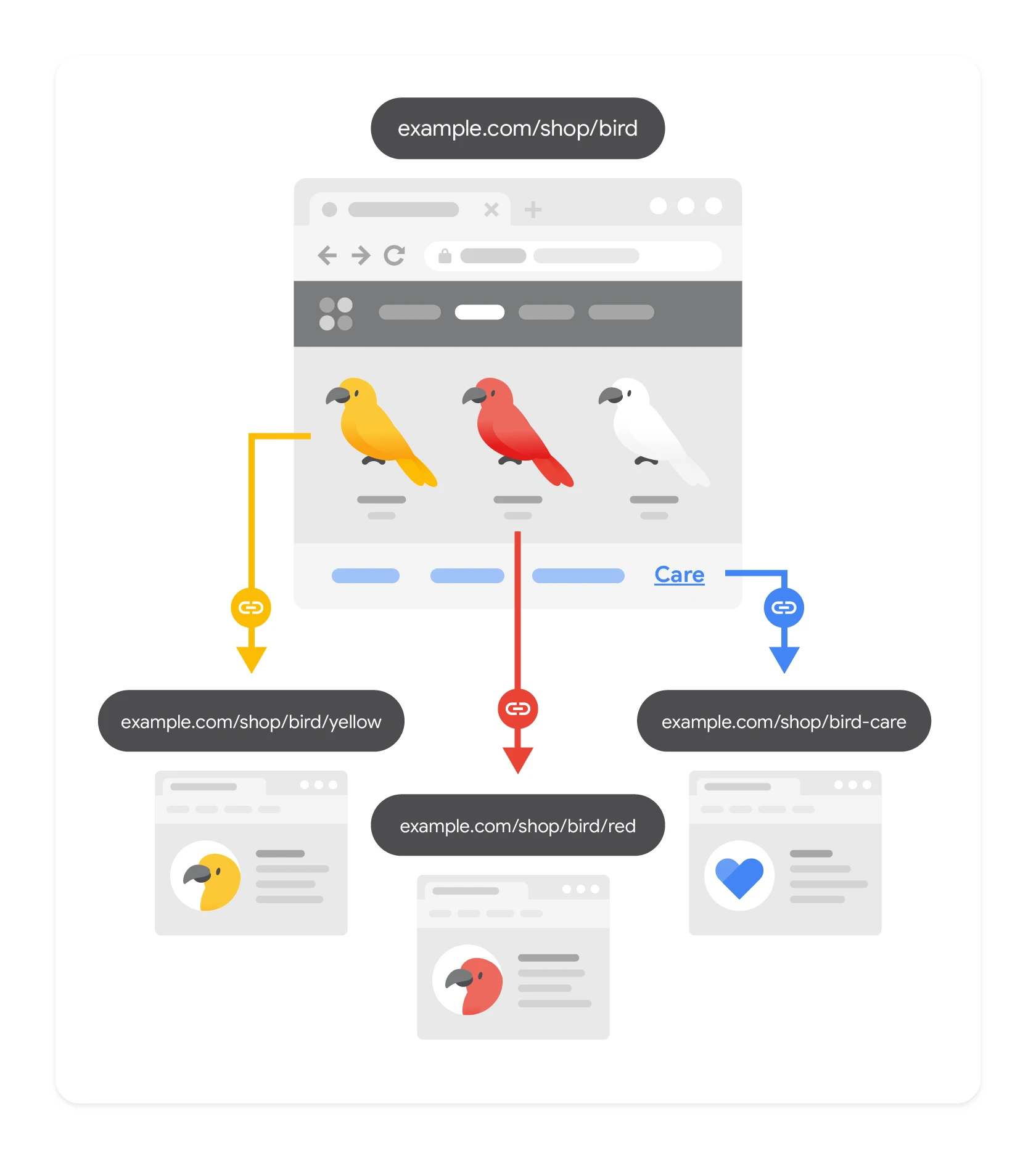
On the other hand, external linking includes both placing links to valuable and trustworthy websites and acquiring links back from other domains. Such actions build a site’s authority in the eyes of Google’s algorithms, which translates into a higher assessment of its value. It is worth remembering, however, that link quality matters first and foremost – they should come from reputable and thematically relevant sources.
Both types of linking require a well-thought-out strategy and regular updates. In the case of internal links, the key is:
- maintaining the right hierarchy of pages,
- using keywords in anchor texts.
When it comes to external links, it is important to:
- building relationships with other websites,
- avoiding risky practices such as buying links, which can lead to penalties from Google.
Effective linking not only affects a site’s position in search results, but also improves user experience. Clear navigation and access to valuable resources increase visitor engagement, which further strengthens the effectiveness of the entire SEO strategy.
How does internal linking affect a site’s position?
Internal linking is one of the key elements affecting a site’s SEO. It not only makes navigation easier, but also helps search engine crawlers better understand the site structure. Thanks to well-placed links, users can move around the site more efficiently, which translates into longer time spent on it and a lower bounce rate. This is a clear signal to Google’s algorithms that the site is valuable and user-friendly.
What is more, proper linking allows the so-called “SEO power” to be distributed evenly between individual subpages. Strategically connecting pages using keywords in anchor texts strengthens the position of important subpages in search results. For example, a blog article may include a link to a product page with the right keywords, which increases its visibility.
It is also crucial to link related content in a logical way. This approach not only helps Google’s crawlers better understand the context of the page, but also encourages users to further explore the website. For example, material about SEO optimisation may include links to articles devoted to keyword strategies or the technical aspects of optimisation.
Well-planned internal linking has one more advantage – it supports the indexing of new content by search engine crawlers. A clear link structure means bots visit the site more often, and new materials appear in search results faster.
As a result, effective internal linking is not only a tool for improving user experience, but also an important pillar of an SEO strategy that affects a site’s visibility in Google.
Why is link building important?
Link building is one of the most important elements of an SEO strategy, having a direct impact on a site’s authority and visibility in search results. Backlinks from other websites pass on so-called “SEO power”, which helps Google’s algorithms assess the value and trustworthiness of a domain. The more high-quality links lead to a site, the greater the chance of achieving better ranking positions.
Good links not only support SEO, but also attract organic traffic. Users who land on a site via valuable links are more likely to engage, which further strengthens the site’s reputation in the eyes of search engines. What is more, links from reputable sources can attract new audiences and increase conversions.
What is crucial, however, is that the quality of links matters more than their quantity. Links from thematically relevant and authoritative sites are far more valuable than those from low-quality websites. Effective link building requires creating unique content and building relationships with other websites.
For small businesses, this process can be particularly important. It helps them stand out from the competition and gain valuable backlinks, which contribute to increased visibility and a higher number of potential customers.
Link building is not just a technique that improves SEO – it is also a way to build long-term domain authority and attract valuable organic traffic.
Local SEO and mobile optimisation
Local SEO and mobile optimisation are key elements of effective SEO today. In an era of growing smartphone and tablet use, more than half of web traffic comes from mobile devices. That is why sites that are well adapted to these devices have a better chance of achieving high positions in search results.
Local SEO focuses on increasing a company’s visibility in a specific region. For businesses such as restaurants, hair salons or retail stores, it is an integral part of the marketing strategy. Key activities include:
- optimising the Google Moja Firma profile (Google My Business),
- adding accurate contact details,
- encouraging customers to leave reviews.
This allows the company to appear in the local pack (Local Pack), which is displayed to users searching for services in their area.
On the other hand, mobile optimisation involves adapting the website to different screen sizes. The site should be responsive, meaning it automatically adjusts the layout of the content to the device dimensions. Google favours mobile sites, as confirmed by the introduction of Mobile-First Indexing. In this model, indexing is done mainly on the basis of the mobile version of the site.
No less important is page load speed. Mobile sites should open within 2-3 seconds so as not to put visitors off. It is worth applying techniques such as:
- image compression,
- minification of HTML and CSS code.
An important aspect is also user-friendly navigation on mobile devices. Buttons should be large enough to click easily with a finger, and the text should be readable without having to zoom in.
By combining local SEO with mobile optimisation, companies not only increase their visibility in search results, but also improve the experience of users on portable devices. This is a key step for any business looking to compete effectively in the digital market.
Why is mobile optimisation key?
Mobile optimisation is now a key element of effective SEO. Most internet users browse websites using smartphones and tablets, which means that sites not adapted to these devices are often inconvenient to use. This, in turn, leads to higher bounce rates. Google values mobile-friendly sites, which is why responsive design and loading speed have a huge impact on SEO.
In the era of Mobile-First Indexing, Google’s algorithms analyse the mobile version of a site above all else. Companies that neglect this issue risk losing visibility in search results. However, optimisation is not limited to a flexible page layout. It is equally important to reduce loading time to 2-3 seconds and ensure intuitive navigation on smaller screens.
For online stores, especially those operating on platforms such as PrestaShop, adapting to mobile devices is particularly important. More and more consumers shop via smartphones, so responsiveness and a consistent appearance across different resolutions are essential. It is also worth taking care of technical aspects such as:
- image compression,
- minification of HTML and CSS code,
- other actions affecting site performance.
Neglecting mobile optimisation can lead not only to lost customers, but also to a drop in search rankings. Investing in responsiveness and site speed is now a necessity for any company that wants to compete effectively in the digital world.
Using analytical tools
Using analytical tools is the foundation of an effective SEO strategy. They allow you to monitor the results of optimisation activities on an ongoing basis and identify areas that need improvement. Platforms such as Google Analytics, Google Search Console or SEMrush offer insight into website traffic, visitor behaviour and the effectiveness of the keywords used.
Systematic data analysis makes it possible to tailor strategy to dynamic changes in search engine algorithms. For example, you can identify pages generating the most organic traffic and those that need additional optimisation. This makes it easier to respond to sudden drops in visibility or changes in user preferences.
These tools also provide valuable information about bounce rate, time spent on site or conversions. This makes it easier to understand which pieces of content attract attention and which elements need refining. A high bounce rate may signal the need for better alignment of content with user intent or improved technical performance of the site.
It is worth using the reporting features available in these tools on a regular basis. Reports make it possible to track the site’s positions for key keywords and assess the effects of implemented changes. As a result, the SEO strategy becomes more flexible and easier to adapt to current needs, which translates into better results in the long term.
Analytical tools are not only a way to assess the effectiveness of SEO activities, but also the key to continuously improving a strategy based on reliable data and current market trends.
How do analysis and monitoring affect SEO results?
Analysis and monitoring play a key role in assessing the effectiveness of SEO activities. By regularly tracking results, you can easily spot areas that need improvement and adapt your strategy to dynamic changes in search engine algorithms. Tools such as Google Analytics and Google Search Console offer the ability to monitor site traffic on an ongoing basis, analyse user behaviour and assess the effectiveness of keywords.
Regularly reviewing data makes it possible to identify pages that attract the most organic traffic, as well as those that require optimisation. This makes it possible to react quickly to sudden drops in visibility or changes in audience preferences. For example, a high bounce rate may suggest the need for better alignment of content with user intent or improved technical performance of the website.
It is equally important to track the site’s positions for key keywords. This is not only a way to assess the effectiveness of the SEO activities undertaken, but also an opportunity to make the necessary adjustments. Regular reporting also helps to spot search trends and adapt the strategy to current market requirements.
Using analytical tools is not only a method of assessing the effectiveness of SEO activities, but also the foundation of continuous improvement of a strategy based on reliable data and current market trends.
FAQ
Frequently asked questions
Which elements have the biggest impact on a site’s position in Google?
The most important are content quality, technical optimisation and internal and external linking. Responsiveness, page speed, meta tags and an SSL certificate also matter a great deal.
Does page loading speed affect SEO?
Yes, sites that load in 2–3 seconds have a greater chance of achieving higher positions in Google. Slower websites may be assessed less favourably by algorithms.
How do you match keywords to user intent?
You need to distinguish between informational, transactional and navigational intent, and choose phrases that match the site’s goal. Tools such as Google Keyword Planner and SEMrush can help with this.
Why are long tails important in SEO?
Long tails are more specific phrases that usually have lower competition and higher relevance. This makes it easier to reach people with a specific need and increase the chances of conversion.
How do you take care of a site’s technical optimisation?
It is worth creating friendly URLs, using correct H1–H3 headings, filling in the meta title and meta description, and optimising images. Unique content, no duplication and regular SEO audits are also important.
Is an SSL certificate needed for website SEO?
Yes, SSL is recommended because sites without it are marked as unsecured. This can discourage users and negatively affect rankings.