
LinkedIn SEO is focused work on your profile and published content, aimed at increasing visibility among the right people. The main point is for recruiters, clients, partners or candidates to find your profile more easily, and to quickly understand what you do once they land on it. This applies both to the LinkedIn search engine and, in some cases, to your profile’s visibility in Google. The most important thing here is not “adding keywords”, but matching the language of your profile to how your audience actually searches. In practice, profile completeness, up-to-date information, consistency of specialism and visibility settings also matter. Well-implemented LinkedIn SEO organises the message and shortens the path from impression to contact.
What is LinkedIn SEO and why is it important?
LinkedIn SEO is the optimisation of your profile and content so that they are easier to find on LinkedIn and better support visibility beyond the platform. It includes keyword selection, arranging information in key sections, controlling audience settings and publishing content around a clearly defined specialism. The aim is not more traffic for its own sake, but a better match between the profile and the audience’s intent.
This matters because on LinkedIn, simply having a profile does not guarantee exposure. The internal search engine relies heavily on signals such as job titles, skills, industry, location and the alignment of content with the profile’s topic. If you use language that nobody searches for, you may have strong skills and still be hard to find.
LinkedIn SEO also affects the decision to click. Users first see a short set of information, usually the headline, photo, position and location, and only then decide whether to open the profile. That is why it is not only about search relevance, but also about a clear message and whether the profile immediately shows who you help and in what way.
In practice, this is not the technical SEO known from websites. Here, greater weight is given to profile consistency, up-to-date experience, sensible selection of skills and regular activity around one topic area. Content does not replace a well-optimised profile, but it very effectively strengthens the association with a specific specialism.
Public profile visibility also matters. If you tighten privacy settings, part of the potential is lost, because the profile may be less accessible to people outside your network and less visible in external search engines. This is a common mistake, because many people refine the description but overlook the settings that, in practice, limit reach.
- 01Profile optimisationEasier to find
- 02Visibility and relevanceBetter audience intent
- 03Search signalsKeywords, content
Important: LinkedIn SEO does not guarantee traffic, but rather a better match to audience intent.
Which LinkedIn profile elements have the biggest impact on SEO?
In LinkedIn SEO, the strongest elements are: the headline, About section, experience, job titles, skills, location, industry and profile visibility settings. These are the elements that most strongly determine relevance for search queries and whether someone will click through to the profile at all. Not all sections carry the same weight, so it is best to start with those that are visible immediately or that describe your specialism most accurately.
- Headline — one of the key places for the main keyword, role, specialism and the specific value you bring to your work.
- About section — should clearly show the scope of your work, the type of clients or projects, the problems you solve and the vocabulary used in the industry.
- Experience and job titles — company names alone are not enough. What matters is a description of actual responsibilities, specialisms, tools and industry context.
- Skills — they clarify the topic of the profile. An overextended, random list reduces relevance and dilutes positioning.
- Location and industry — these are particularly important when the audience is looking for people from a specific market, city or sector.
- URL and audience settings — these affect how easy it is to reach the profile and whether it can be indexed outside LinkedIn.
- Photo, banner and featured sections — this is not classic SEO, but it has a strong impact on credibility and profile click-through rate.
The headline usually has the highest practical priority, because it appears in search results and immediately provides context. The best approach is to combine role, specialism and outcome, for example instead of a generic “marketing consultant”, it is better to specify the area, type of client or problem you deal with. The headline should answer the question “who am I looking for and how does this person help?”, not just “what do they call their job title?”.
The About section and experience expand on the promise made in the headline. It is worth showing tools, industries, collaboration models, project types and scope of responsibility here, because these details often match the actual queries of recruiters and clients. Simply rewriting a dry CV description usually does not work, because such text tends to be too formal and not specific enough.
Skills, industry and location help narrow the match, but only if they stay aligned with the profile’s main direction. When several inconsistent roles are mixed into one profile, both the algorithm and the user receive an unclear signal. The most common problem is not a lack of keywords, but an overly broad and inconsistent description of the specialism.
At the end, it is worth reviewing the basics that are easy to overlook: public profile visibility, your own URL, contact details and up-to-date job titles. These are not “technical details”, but elements that determine whether the profile can be found at all and whether, once someone lands on it, it leads to the next step. If the goal is contact, the profile should make that easier, not just look good.
What steps should be taken to optimise a LinkedIn profile?
To optimise a LinkedIn profile, it is worth working in a set order: first define the profile’s goal, then audit the current version, next rewrite the key sections around the right keywords, and finally check the visibility settings. Without this structure, it is easy to get stuck improving details that do not translate into results. First you need to know clearly who the profile is meant to attract and what that person should do after visiting. A recruitment-focused profile looks different from a profile of an expert selling services.
The first stage is to choose a priority: role, service, industry, client problem or project type. That decision brings order to the whole thing and reduces chaos. When you try to speak to a recruiter, a B2B client and a technology partner at the same time, the message usually becomes too broad and loses clarity.
The second stage is an audit of the current profile. It is worth checking whether the headline, About section, experience and skills all “pull in the same direction” and lead to one conclusion: what you do and for whom. In practice, the problem is usually not a lack of content, but inconsistency, overly generic descriptions and outdated job titles.
The third stage is to rewrite the fields that have the strongest impact on clicks and on the reader’s decision. The headline should combine the role or specialism with the outcome of the work, and the About section should quickly explain the scope of services, types of clients, industries and way of working. In experience, it is not enough to enter a job title — you need to add real skills, tools and project context.
The fourth stage is to verify the technical elements and trust signals. The profile should have a sensible URL, visible contact details, public settings where needed, and a clear path to the next action. If someone lands on the profile and does not know whether to send a message, visit the website or send an invitation, you lose part of the traffic regardless of the quality of the description.
The final stage is validation and maintenance. Read the profile as if the viewer were seeing you for the first time and did not know your company or industry jargon. A good profile is understandable without extra context, sounds natural and answers the most important question: why is it worth getting in touch with you. Afterwards, it is worth revisiting it regularly, especially after a change of offer, position or target group.
- 01Set the goalChoose a priority: role, service, industry.
- 02Carry out an auditAnalyse the current version and gaps.
- 03Rewrite the sectionsAdapt them to keywords.
- 04Check visibilityConfigure privacy settings
A clear goal and structured action are the key to an effective profile, avoiding chaos in communication.
How should keywords be selected effectively for a profile and content?
Keywords and key phrases for a profile and content should be selected according to how your audience actually searches, not according to how the profile owner likes to describe their work. This is a crucial principle, because LinkedIn rewards query matching, not creative labels. If a client types “SEO specialist B2B”, and the profile shows only “digital growth architect”, the match will simply be worse.
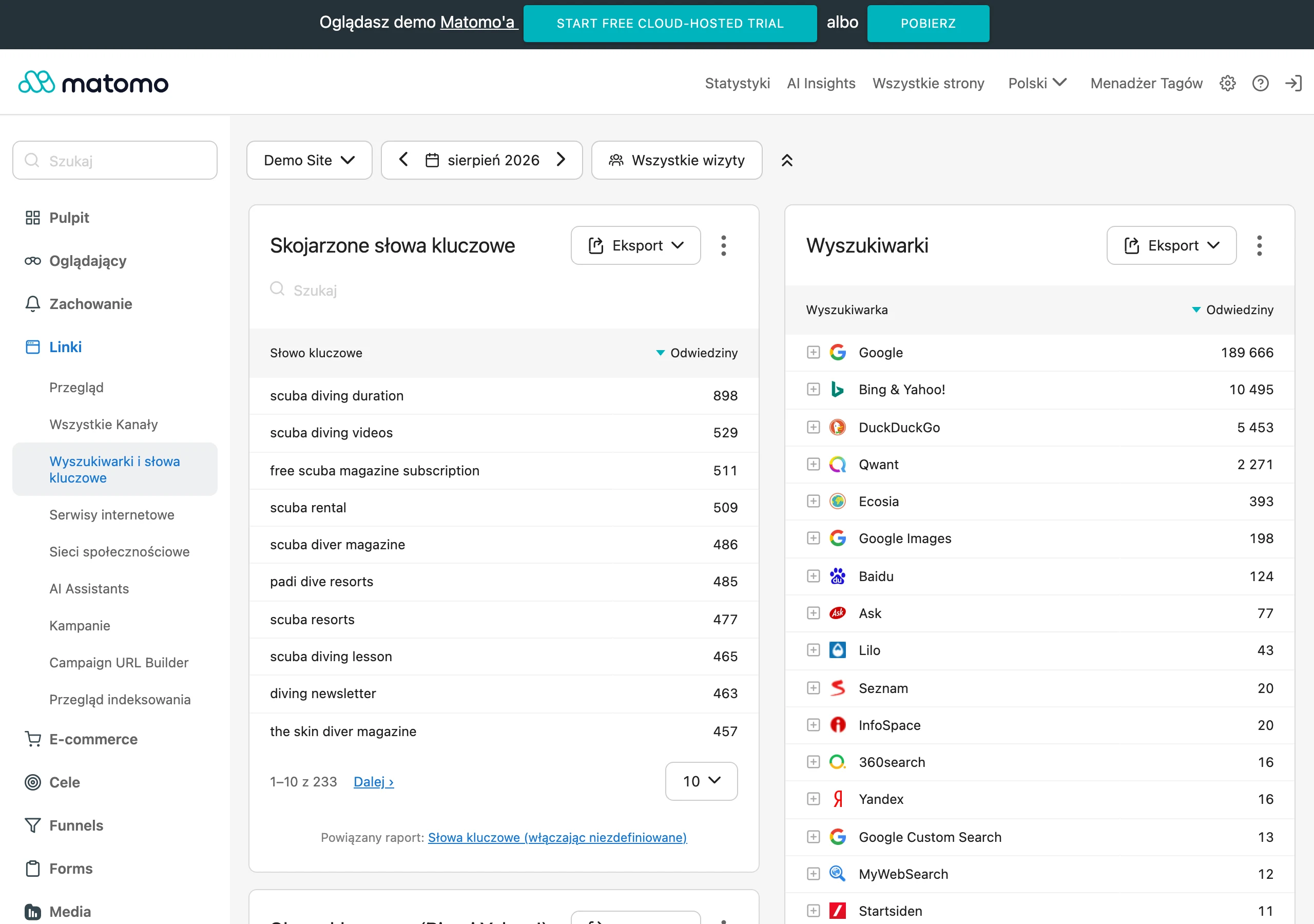
The best starting point is to gather the language used by the market. In practice, it pays to review job titles, specialisms, services, tools, industries, client problems and locations that recur in job adverts, the profiles of similar experts and LinkedIn’s search suggestions. This set quickly shows which phrases are in circulation and which only look good “internally”, on paper.
The next step is to separate primary keywords from supporting ones. Primary keywords describe the most important role or specialism, while supporting ones specify the scope of work, tools, industries or client type. It is better to have a few precisely targeted phrases than a long list of vague terms that blur the profile’s focus.
Keyword selection should also take the audience’s intent into account. A recruiter is more likely to filter by role title, seniority level, tools and industry, while a potential client is more likely to search by problem, service and expected outcome. For this reason, the same profile may need different emphases in the headline and in regularly published content.
After choosing the keywords, it is worth assigning them to specific places on the profile. The most important phrases should go into the headline, About section and current experience, while supporting ones should appear in role descriptions, skills, project names and publication topics. The point is not to repeat words mechanically, but to confirm the specialism naturally in different parts of the profile.
In content, thematic consistency works best. Instead of publishing random opinions, it is better to build a few fixed areas that strengthen the profile for priority queries. A single post does not have to include every keyword, but the whole series of publications should reinforce a clear association with your specialism.
The most common mistakes include choosing keywords that are too broad, mixing several audience personas, and copying language from a CV or company website without checking whether users actually search that way. If a phrase does not fit the offer, experience and content, it is better to drop it, even if it seems popular. On LinkedIn, relevance to the right person matters more than broad reach.
What are the most common mistakes in LinkedIn profile optimisation?
The most common mistakes in LinkedIn profile optimisation are an overly general message, an inconsistent set of keywords, imprecisely described experience, and a lack of connection between the profile and published content. The most common problem is trying to speak to everyone at once. When a profile is supposed to attract recruiters, clients, partners and candidates at the same time, it usually does not hit the mark for anyone. In practice, this leads to weaker visibility and lower effectiveness once people land on the profile.
Another common mistake is using “company” language instead of the audience’s language. The profile owner describes themselves as they would talk about work inside the organisation, rather than how a client or recruiter would search for them. As a result, the headline and About section contain vague phrases, industry abbreviations or trendy buzzwords without substance. LinkedIn SEO is not about mechanically repeating phrases, but about matching the language to the audience’s intent.
It is also a mistake to treat the headline as a place for a slogan rather than a message that can be searched for and easily understood. “Helping companies grow” or “passionate leader” on its own does not explain exactly what you do, who you work for and in what area you want to be found. When the headline lacks a role, specialism, industry, tool or the outcome of the work, it stops having practical value.
Many profiles also lose out because their experience is poorly described. Job titles alone, without the scope of activities, specialisms, project types and industries, do not build relevance. This is especially important when the job title was internal or non-standard. A recruiter or client should immediately understand what you actually do, instead of having to guess from your employment history.
- cramming the same keywords into the headline, About section and every job description,
- copying content from a CV without adapting it to the LinkedIn search engine and the audience,
- a skills list that is too broad and blurs the main specialism,
- not updating the profile after a change of role, offer, tools or market,
- ignoring the public settings, URL and contact details.
A separate mistake is the lack of consistency between the profile and published content. If the profile positions you as a specialist in one area, but your posts cover random topics, the algorithm and the audience receive a contradictory signal. If the content is not thematically consistent, the profile loses its distinctiveness. That does not mean every post should look the same, but it should reinforce a few recurring themes.
Another often overlooked mistake is a purely practical one: the profile does not lead to any action. Even a well-optimised profile loses significance if it is not clear whether you want to receive a message, an invitation, a job offer or a sales enquiry. A lack of a clear contact point weakens the effect of the whole optimisation, because traffic does not translate into conversations.
- 01Too general a messageTalking to everyone at once.
- 02Inconsistent phrasesIndustry language, not the client’s.
- 03Vague experienceNo precise descriptions.
- 04No connection to contentProfile and content separated.
As a result, weaker visibility and lower effectiveness of the profile in attracting the audience.
How to monitor and maintain LinkedIn SEO results over time?
LinkedIn SEO results are worth tracking through the quality of profile visits, the type of contacts being made, and whether visibility supports a business or career goal. The number of views alone is not enough, because a profile can attract a lot of irrelevant traffic. The best monitoring is observing the quality of visits and contacts, not just the number of views. A well-optimised profile should increase the number of relevant enquiries, not just generate activity that has no significance.
To begin with, it is worth having a simple benchmark. See who currently visits the profile, what messages you receive, which roles or companies those people come from, and which pieces of content actually generate visits. If you have access to search result impression data or content statistics, treat them as additional pointers, not the only evaluation criterion.
In practice, a regular review of the key elements works best. Every few weeks, check whether the headline still matches how you want to be found, whether the experience section shows your current scope of work, and whether the skills list is consistent with your main specialism. When the offer, role or target group changes, it is worth rewriting the profile rather than limiting yourself to cosmetic changes. A LinkedIn profile is not a one-off project; it should be updated as your offer, role or market changes.
Content also requires review, but not solely through the lens of reach. What matters more is which topics bring the right people to the profile and after which posts sensible conversations begin. If posts get good reactions but do not strengthen your specialism, they do not support the profile’s SEO in practice. It is often better to publish less often, but consistently within chosen areas.
- every month, check the headline, the About section and current position,
- every month, assess what types of people visit the profile and send messages,
- every 4-8 weeks, review the content and remove topical chaos from the publishing plan,
- after every change to the offer, position or specialism, update the key sections,
- from time to time, check the audience settings, public URL and contact details.
Consistency of terminology also plays a big role in maintaining results. When you use “SEO Specialist” in one place, and elsewhere “Growth Consultant”, “Marketing Expert” and “Content Strategist”, the profile loses clarity. It is not about artificially limiting yourself to one word, but about making sure the most important specialism is clear throughout the profile and in the content you publish.
It is also worth checking from time to time whether the profile is understandable to someone outside your company or industry. A simple test works well: can someone say, after 15-20 seconds, what you do, who you work for and what problem you solve? If not, usually what is missing is not more content, but a stronger message in the key sections of the profile.
FAQ
Frequently asked questions
Which LinkedIn profile elements have the biggest impact on SEO?
The strongest signals are the headline, About section, experience, job titles, skills, location, industry and visibility settings. These have the biggest impact on matching search queries and on whether someone clicks through to the profile.
How do you optimise a LinkedIn profile step by step?
First define the profile’s goal and who it should attract, then audit the current version. Next, rewrite the key sections around the right keywords and check the visibility settings.
How should you choose keywords for a LinkedIn profile and content?
Keywords should be chosen based on the language your audience actually uses to search, not on how you describe your own work. It is best to combine primary keywords with supporting ones and assign them to the headline, About section, experience and posts.
Why is profile optimisation alone not enough without content?
Content strengthens the association with a specific specialism and helps reinforce the profile’s topic. If posts are random, the profile loses consistency and sends mixed signals to both the audience and the algorithm.
What are the most common mistakes in LinkedIn profile optimisation?
The most common issues are an overly generic message, inconsistent keywords, poorly described experience and no link to the content being published. Audience settings, the URL and contact details are also often overlooked.
Does public LinkedIn profile visibility matter for SEO?
Yes, because restricted privacy settings reduce profile accessibility for people outside your network and can weaken visibility in external search engines. This is a common mistake when a well-crafted description is paired with limited reach.