

Content marketing in e-commerce only makes sense when it genuinely supports sales, product selection or the quality of traffic in the store. Full stop. In practice, it is not about regularly “dropping posts in”, but about delivering content exactly where the user actually needs it. That can be a detailed category page, an FAQ section, a buying guide, a variant comparison or simply a better product description. Good content in an online store is not only meant to attract traffic — it is meant to help people make a decision and move towards purchase. That is why the key is not how much you publish and whether you close the editorial calendar, but how tightly the content is linked to the offer, user intent and data. This model means fewer random publications and more relevant decisions.
What is content marketing in e-commerce without publishing for the sake of publishing?
It is a way of working in which content is created only when it has a specific business function in the store. Not for the sake of it. It can support a category, explain the differences between products, answer pre-purchase questions, reduce returns or improve SEO visibility. But beware: this only works when the topic is connected to the offer, user intent and the purchase decision itself. If there is no such connection, it should not be published.
In this approach, the blog is not a separate world alongside the store. Content is part of the store’s information architecture, not an add-on published “just in case”. That means a guide should lead to categories or products, an FAQ should address specific concerns, and an educational section on a category page should help narrow the choice. The reader is not meant to wander between tabs. They should be led step by step to the cart.
The most important change is simple: the starting point is not a “popular” topic, but a useful one. The question is where to get such topics from. Ideas come from queries in Google Search Console, data from GA4, the internal search, customer service questions, complaints, returns and commercial problems. This is usually a better source of topics than general inspiration from keyword tools.
In practice, this model leads to very specific decisions. Sometimes it is worth creating a new piece, but more often it is better to expand an existing category, improve a product page, update an old article or merge several similar pieces of content. And that is not just cosmetic work, but organising the purchase path. In e-commerce, it is easy to scatter user intent between the blog, FAQ and offer pages until nobody knows where to click next. When content is placed in the right spot, the user moves from question to product choice more quickly.
What are the most important rules for creating content in e-commerce?
The rules are simple, but not trivial. You start with intent and the offer, choose the right content format, link the material with categories and products, and then update it regularly. The content should answer a real customer question and support a specific stage of the buying journey, instead of merely “doing SEO”. Not every phrase deserves a separate article, and not every informational topic is valuable for a store. The fact is: if it does not help with decision-making, it often just gets in the way.
- Publish only when the content has a defined function. Before you start, you need to know clearly whether the piece is meant to support a category, product page, comparison, SEO, retention or after-sales service.
- First, polish the pages closest to the sale. In many stores, it makes more sense to strengthen categories, FAQ and product descriptions than to add more blog posts.
- Match the format to user intent. Some topics work better as a buying guide, others as a section on a category page, a model comparison or a direct answer to the most common questions.
- Base the plan on data, not just keyword volume. The key is to match the assortment, margin, seasonality, stock levels and whether, after reading, the user has somewhere real to go next.
- Plan the update at the point of publishing. In e-commerce, the offer, prices, availability and specifications change quickly, so outdated content can do more harm than having no content at all.
Good content in practice should shorten the path to a decision. Users rarely look for a long essay; more often they need straightforward answers: which product to choose, how the variants differ, who a given option makes sense for and when it is better not to buy it. If the material does not help with decision-making or does not lead to the offer, its business value is low.
Beware of topic dispersion. The same purchase problem should not be written up separately on the blog, in the FAQ and on the category page without a clear role and sensible linking, because that ends in keyword cannibalisation and chaos for the user. Instead of three half-measures, it is better to have one strong core piece and, alongside it, supporting sections in the right places in the store.
The last rule is purely operational. Every piece should have an owner, an indicated data source and a review date. Content in e-commerce works best when it is managed as a process based on data, not like a production line measured only by the number of publications. The result is practical: it becomes easier to decide what to create, what to develop, and what to remove or merge.
How to analyse and prioritise content marketing topics?
Content marketing topics are worth evaluating through their connection to user intent, the store offer and the real impact on sales or traffic quality. The starting point is not a “list of popular phrases”, but hard sources: data from Search Console, GA4, the internal search, questions to support and user behaviour on categories and products. They show where the customer really gets stuck in the choice, what they do not understand and at which stage they drop off. The best topics are usually not the most general ones, but the ones best matched to a specific purchase decision.
First, group queries by intent. Some will be informational, others comparative, some transactional, and a share will relate to post-purchase issues. This distinction determines whether the topic should go on a category page, an FAQ, a buying guide, a comparison page or a product page. The question is: should this content drive people to the offer, or just capture visits? If you skip this step, it is very easy to produce materials that generate traffic but do not close the path to the product.
Prioritisation cannot stand on one leg. It should be based on several criteria at once, not solely on search volume. In e-commerce, what often wins is whether the topic relates to available, profitable and genuinely important products for the store, rather than how many people type it into Google. A high-traffic keyword has low value if it cannot be sensibly tied to a category, a filter or a specific product.
- alignment of the topic with the assortment and category,
- strength of purchase or comparison intent,
- impact on product choice and reducing wrong purchases,
- SEO potential and the chance to cover the topic thoroughly,
- margin, seasonality and product availability,
- ability to link to offer pages without artificiality.
The priority is set. Now the question is whether you are building new content or strengthening what already works. Often a better result comes from adding a “how to choose” section, FAQ or comparison of variants on the category page than from adding a separate blog post that starts to live its own life. Instead of dispersing intent — you collect it in one place, and the user has a shorter path from question to purchase. If the topic can be handled better on the category or product page, a separate article is usually unnecessary.
At the finish, every topic should get a simple operational brief. Not decoration, but an instruction for action: what user decision the content is meant to support, which category it should be linked to, which questions it must resolve and how you will assess its effectiveness. Without this, publication turns into “content to be published”, rather than an element of the sales process that is meant to deliver results.
In what way does content marketing support the architecture of an online store?
Content marketing supports the architecture of a store when it organises the path from the user’s question to the right category, filter and product. In short: content should not work alongside the store, but inside its information structure. In practice, this means that guides, FAQs, comparisons and educational sections need to be placed where they actually help with decision-making, not where they happen to “fit” the publication calendar. Good content shortens the path between an informational visit and an offer page.
The key is assigning the right role to each type of page. The category is responsible for choice within a group of products, the product page for details and resolving doubts, and the blog or guide for broader context when the user still does not know what they are looking for. The problem is that when these roles start to overlap, things get messy: several pages answer the same question, and the user and Google receive conflicting signals. And from there it is only one step to keyword cannibalisation and weak internal linking.
Content also strengthens architecture when it is woven into the store’s navigation. An educational section next to a category can directly explain the differences between variants and, at the same time, guide users to the right filters or bestsellers. On a product page, the text should dispel doubts: use, limitations, compatibility and situations where it would be wiser to choose another model. The most useful e-commerce content is the kind that narrows the choice, not the kind that only “describes the topic”.
Internal linking is also hugely important. It ties everything together. If a buying guide talks about product types, it should lead to the right categories and subcategories, not to random posts along the way. If a supporting topic appears on the blog, it should strengthen the target page in the cluster instead of competing with it for the same query. The result is simple: the store builds logical topical connections and distributes traffic more sensibly across pages that truly matter to the business.
Architecture supported by content requires constant updating. Constantly. The store’s offer changes, and with it the user’s expectations and the structure of the journeys. When products disappear, new product lines are added or parameters change, the content needs to be updated in parallel with links, recommendations and supporting sections. Outdated content damages not only SEO, but also navigation and user trust. That is why it is worth treating content in a store as part of the information system, rather than as a separate set of articles.
How to optimise content for SEO and the user?
Content is well optimised for SEO and the user when it answers a specific question quickly and clearly. And leads them on. In e-commerce, the point is not for the text to be long, but for it to help with decision-making and match search intent. A buying guide is structured differently, a category page differently, and a product page differently again. First you need to choose the right type of page for the intent, because even good copy on the wrong URL often will not work.
From an SEO perspective, the fundamentals matter: topic relevance, a logical heading structure, complete coverage of supporting questions and sensible internal linking. This is not cosmetic work, but construction. The content should cover real selection criteria, parameters, use cases, limitations and differences between options, rather than circling around general definitions. If the user is looking for a comparison or buying advice, the text should deliver that without fluff and without cramming in keywords. Semantics should help to understand the topic, not pretend to be optimisation by repeating keywords.
From the user’s perspective, content should shorten the route to a decision. That is its job. That is why it pays to build it modularly, so that answers can be “scanned” with the eye. Sections such as: who the product is good for, what to look out for when choosing, when it is better to pick a different option, what mistakes are most commonly made. This format is simply more convenient than a long block of text, especially on mobile and category pages. The user is not looking for an “article”, but for an answer that lets them choose and move on.
It is also crucial to connect content with the store’s offer. An article, FAQ or educational section should lead further: to categories, filters, bestsellers, complementary products or specific variants mentioned in the text. Internal links should sound natural and arise from the context, not be bolted on mechanically at the end. Because if, after reading, the user does not know where to click, then all the optimisation stops halfway there.
Optimisation does not end after publication. It only ends once behaviour has been analysed. In practice, you check whether the content captures the right queries, whether it really generates transitions to categories and products, and whether it supports conversion, rather than only organic traffic. When a piece gets traffic but does not lead to any meaningful transitions, the culprit is usually the wrong format, weak alignment with the offer, or a topic stretched so broadly that it loses intent. A good content result in e-commerce is not traffic alone, but traffic that moves into the offer and does not lose intent.
What are the most common mistakes in e-commerce content marketing?
Mistakes in e-commerce content marketing repeat like a refrain. Publishing without a business goal, the wrong choice of format and a lack of connection between the material and the store’s real offer are classics that cost more than they seem. This is especially visible when a store publishes a post only because the keyword has volume, and then nobody can answer a simple question: what should the user do after reading it? Such content can rack up page views, but often fails to deliver sales or traffic quality. The problem is not the publication itself, but the lack of a decision on why the material was created in the first place.
A very common mistake is scattering similar topics between the blog, FAQ, categories and product descriptions without a single logic. The result is predictable: several subpages answer almost the same question, start competing with each other in SEO and make it harder for the user to reach the right answer. Instead of strengthening one strong URL, the store splits intent into several weaker pieces. If the topic concerns product selection, it is often better to expand the category or a buying guide than to write yet another separate post.
Another mistake is broad, generic guides detached from the assortment. On the face of it, the wording is fine, but the content lacks what really helps with the decision: specific parameters, variants and product limitations available in the store. The user reads it and still does not know what to choose from the actual offer. Informational traffic without a transition to a category or product usually has little commercial value.
Many stores also lose out because they do not update content. The copy may be strong on the day it is published, but after changes to the offer, season, prices, product parameters or availability, it quickly starts to smell stale. When a guide recommends solutions that are no longer available in the store, the content, instead of helping, undermines trust and reduces the site’s usability. Every important piece of content should have an owner, a review date and a clear criterion for when to update, merge or remove it.
An operational mistake is also measuring effectiveness solely by the number of publications, sessions or positions. In e-commerce you need to look more broadly, because what matters is the path from content to offer: transitions, conversion support, traffic quality, user questions and the real impact on reducing wrong purchases. Sometimes fewer pieces produce a better result. Under one condition: they are embedded in categories and solve specific customer problems instead of “driving reach”. Content marketing works better as a process based on data and assortment decisions than as a calendar of posts to “tick off”.
How do you measure the effectiveness of content marketing in e-commerce?
The effectiveness of content marketing in e-commerce is measured by the impact of content on visibility, transitions to the offer and the quality of the buying decision, not by page views alone. That is the essence. Every piece should have an assigned function: support a category, answer pre-purchase questions, reduce wrong choices or move the user closer to a product. And if you do not know which decision the content is meant to support, how can you then assess the result sensibly? First define the role of the content, and only then choose the metrics.
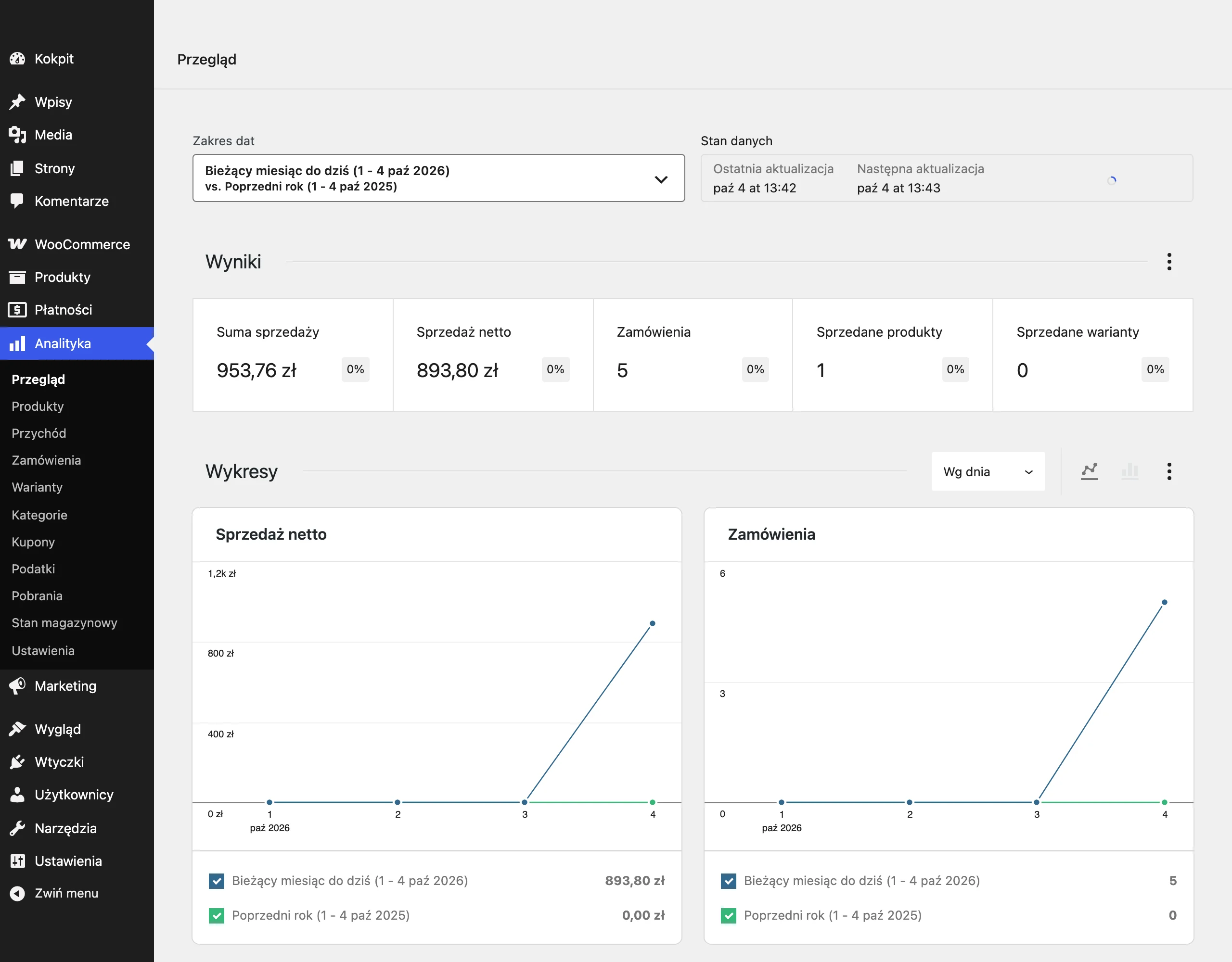
For content that acquires traffic from Google, the most important things are organic entrances from relevant queries, clicks in Search Console and matching queries to the store’s offer. Traffic growth on its own is not enough. The problem is that users can land on content from topics the store does not actually cover, and then the “result” starts to look like meaningless statistics. It is better to have fewer visits, but with a clear link to categories and products, than lots of traffic without sales potential.
In GA4 it is worth checking whether the user moves from the content to the next shopping step. What matters is traffic that goes further. The most practical metrics are clicks from a guide or educational section to categories, products, filters, bestsellers and recommendation modules. Content in an online store should be assessed primarily by whether it shortens the path from question to offer. That is why it is crucial to implement events for internal links and CTA elements, instead of looking only at average time on page.
The next level of measurement is assisted impact, that is, a situation where content takes part in the path to purchase, even if it is not the last page before the transaction. This is often that quiet yet decisive contribution. In practice, one analyses transitions between content and the offer, assisted conversions, session quality and the differences between users who have engaged with the content and those who landed directly on the product. Such measurement is particularly important for buying guides, comparisons and FAQs, because their role is often different: not an immediate sale close, but reducing uncertainty and the number of poor decisions.
In e-commerce, it also pays to measure indirect effects. They are the ones quietly lowering costs and limiting losses, because well-prepared content can reduce the number of questions to customer service, cut returns resulting from choosing the wrong product and increase conversion on categories expanded with helpful sections. If content explains the differences between variants, points out limitations and helps select parameters, its value does not end with SEO.
Business context is crucial here. Content performance depends on seasonality, price changes, product availability, margin, paid campaigns and shifts in assortment, so a simple month-on-month comparison without background can be a straightforward route to wrong conclusions. The question is: what exactly changed in the offer and demand at the same time. It makes more sense to compare like-for-like periods and check how content performance lines up with what was happening in the shop.
In practice, a simple dashboard for each important content group wins. It should show traffic sources, queries from Search Console, clicks through to categories and products, share in conversion paths and the date of the material’s last update, because without these few points we are groping in the dark. If content does not support visibility, does not lead to the offer and does not improve traffic quality, it usually needs updating, consolidation or removal.
For day-to-day work, a mix of GA4, Google Search Console, CMS and a simple report in Looker Studio is usually enough. And that is not a cliché, because more important than elaborate reporting is that each piece of content has an owner, a success metric and a review date, instead of living forever in “we’ll get round to it one day” mode. Without regular updates, even good e-commerce content quickly loses value, because the shop’s offer changes faster than the traffic itself.
FAQ
Frequently asked questions
How do you create content marketing in e-commerce without publishing for the sake of it?
Content should only be created when it has a concrete business function in the shop. It should support a category, product, choice or purchase decision, rather than existing “just in case”.
Should a blog in an online store work separately from the offer?
No, the blog should not be a separate world alongside the shop. Articles should lead to categories or products and support the information architecture, rather than operating independently.
Where should you get topics for content marketing in e-commerce?
The best sources are data from Google Search Console, GA4, the internal search engine and questions and issues from customer support. They show where users really need an answer.
How should you prioritise content topics in an online store?
First assess their fit with the range, user intent and real impact on sales or traffic quality. Search volume alone is not enough if the topic cannot be sensibly linked to the offer.
When is it better to expand a category or product page instead of writing a new article?
When the topic can be better covered on a page closer to the point of sale, a separate post is usually unnecessary. Often a bigger impact comes from adding a “how to choose” section, FAQ or a comparison of variants.
How does content marketing support the architecture of an online store?
It organises the path from the user’s question to the right category, filter and product. As a result, content shortens the path to a decision and strengthens internal linking instead of creating chaos.