
Content that genuinely drives sales is not about “generating traffic”, but about closing decisions. It sounds banal, but in practice the materials that still win are the ones that answer specific pre-purchase questions, remove uncertainty and structure the choice. Good content can shorten a sales conversation. It can also improve the quality of enquiries and filter out people who are simply a poor fit for the offer. The most important thing is whether a given piece of content helps move someone to the next step in the buying process, not how many views it gets. That is why it is better to look at content not as a separate marketing channel, but as a sales support tool at specific stages of decision-making. That shifts the emphasis in topic planning, results measurement and prioritising publications.
What content really supports sales?
Sales are supported by content that matches purchase intent. Full stop. This means materials that help compare options, assess fit and understand the terms of working together before the first “let’s talk”. The most valuable content is close to the decision: service pages, solution comparisons, sales FAQs, implementation process descriptions, use cases and materials that plainly show limitations and cost-driving elements. These are what remove ambiguity before contact with the company. And the customer quickly knows whether the conversation makes sense.
The best-performing content is the kind used by marketing and sales at the same time, instead of everyone pulling in different directions. I’m talking about service subpages, landing pages for specific needs, selection checklists, materials sent after a meeting and follow-up content. If a salesperson regularly sends a given piece of material to clients, that is usually a strong signal that the topic really influences the decision. And then there is no point pretending that “it kind of works”. It is better to refine such material for clarity, specificity and measuring its real impact.
Sales content does not have to be aggressive. And it does not need to be plastered with slogans like “buy now” either. Its job is simpler and harder at the same time: explain for whom the solution makes sense, what can be expected, how the collaboration works and where the limits of the offer are. Content that shows the scope and limitations often sells better than generic promises, because it builds trust and improves lead quality. The question is: what is more valuable to the audience, specificity or a marketing tone.
The best topics rarely are born at a desk. They are born in conversations. The sources are mundane and unforgiving: sales notes, call recordings, CRM, forms, chat, emails and reasons for lost opportunities. If customers keep asking about price, timelines, implementation, differences between options or risks, these are not “difficult questions” to avoid, but topics with the highest sales potential. Instead of guessing what to write, it is better to list the questions that keep coming up before a contract is signed. Then there is only one thing left: answer them in a way that enables a decision, not just “reading up on it”.
The current decision-making and buying context
Today, a customer almost never buys after one visit. Usually they compare several sources, return to the offer, check the company’s credibility and want to organise the answers for themselves before they even contact a salesperson. That changes the stakes. Content should support not only the first contact, but also the next rounds of reflection, when doubts appear and there is a need for clarification. Mere “interest in the topic” no longer delivers.
In this setup, high traffic is not yet proof of impact on sales. An article can rack up thousands of visits and still fail to generate a single meaningful enquiry, because it does not help users take the next step. The key question is whether, after reading, the user does something logical: goes to the offer, compares solutions, sends a brief, asks for a consultation or comes back with a greater readiness to talk. Content should be evaluated by its impact on micro-conversions, lead quality and decision speed, not just by page views. Otherwise we are feeding statistics instead of the funnel.
Broad informational content still makes sense. But be careful: most often it supports sales indirectly, because it builds reach and visibility rather than closing the decision. Without a sensible bridge to “purchase” materials, it can keep the user at the education stage, where it is safe but there is no forward momentum. That is why an informational article should lead to the next step: a service page, an option comparison, a buying FAQ or a form tailored to intent. If that transition is missing, traffic becomes detached from the sales process and starts living its own life.
Content also has to reflect the reality of the company. If the website promises speed, flexibility or a scope of services that the team cannot actually deliver, the number of poor-fit leads grows and trust falls, and that hurts twice. Consistency between content, UX, the offer and sales is now a condition of effectiveness, not a nice extra. The user quickly spots the mismatch between the message and reality. And usually does not give a second chance.
It is becoming more important to measure the assisting impact of content, not just the last click. The question is: what did the user read along the way before sending the form. In practice, it is worth checking which pages appear before conversion, which materials are most common among the highest-quality leads and which content reduces repetitive questions during conversations. That gives a much better picture of content value than simply reporting visits from Google. Only then can you see what really helps sales and what only looks good in spreadsheets.
How to build a system of content that supports sales?
Such a system is built from analysing the real buying process, not from a publishing calendar. First you collect customer questions from conversations, forms, chat, emails and CRM, and then you check at which stage of the decision they come back most often. That is concrete, not an “insight”. This makes it clear where content can shorten explanations, defuse an objection or filter out a poorly matched enquiry before it takes up a salesperson’s time.
The next step is simple. You assign these questions to the decision stages: problem recognition, option comparison, risk assessment, supplier selection and contact, so gaps and places where the content diverges from user intent are immediately visible. The most common mistake is creating content around SEO topics, without linking it to a specific stage of the customer decision.
Then you move on to the audit. And it is not just about traffic, but about the share of content in conversion paths, because a page with numbers in a table can be commercially dead. In practice, you check which subpages people read just before submitting a form, which generate low-quality leads, and where users simply drop off. For this, GA4, Search Console, CRM, form analysis and a few simple observations of on-site behaviour are usually enough.
Priority goes to the content that genuinely pushes the decision forward. This is usually service pages, solution comparisons, buying FAQ pages, descriptions of the process, cooperation models and limitations, because that is where the client is looking for specifics, not inspiration. Every piece should have one main goal: educate, qualify, reduce risk or lead to contact. If content does not have a clear role in the user journey, it usually ends up as a dead asset with traffic, but without any impact on sales.
At the end, you connect the content with UX and the sales team’s work. Instead of “nice articles”, you need sensible internal linking between stages, tailored CTAs, materials sent after meetings, and content that sales actually uses in follow-up, rather than just setting it aside “for later”. A well-functioning system measures not only clicks, but also lead quality, decision speed and a drop in the number of repetitive pre-purchase questions.
What to do in practice to make content support sales?
Content should support sales, not just drive reach. The key is publishing what helps the client assess the fit of the offer and take the next step, because that is where the quality of enquiries is decided. In practice, this means fewer “reach” topics and more materials answering questions about cost, scope, differences between options, implementation, deadlines and risks. These are the things that most often shape the sales conversation before the first “hello” is even said.
- Start with a list of questions that salespeople hear before the contract is signed, not with a list of keywords with the highest volume.
- Assess every piece of content against one thing: does it help with decision-making, or does it only provide general information.
- For service and offer pages, show not only the benefits, but also the scope, terms of cooperation and limitations.
- Connect educational materials with more decision-oriented content through clear links, comparison sections and tailored CTAs.
- Turn one important topic into several formats: an offer page, FAQ, landing page, a post-meeting asset and a follow-up response.
- Check in CRM and analytics which pieces appear before high-quality leads, and which attract traffic that does not match the offer.
It is not worth hiding key information just to “leave something for the call”. That backfires. If, before making contact, the client does not understand who the offer is for, what the process looks like and what the cost depends on, they are more likely to delay the decision or send an enquiry completely “in the dark”, without real fit. Transparency usually improves lead quality more than elaborate branding content.
It is also key to separate the informational goal from the buying goal. One is education, the other is decision-making. A broad educational article may be needed, but it should lead to the next step, for example a solution comparison, a selection checklist or a consultation. Content that supports sales does not have to sell aggressively, but it must clearly guide the user onward.
It usually breaks down where marketing and sales run on separate tracks. The problem is that without shared data it is easy to create content that looks great in traffic reports but does nothing for the pipeline. The minimum implementation is simple, although sometimes inconvenient. Access to analytics and CRM, sales involvement in topic selection, defined decision stages and one person responsible for the consistency of the entire process.
Typical mistakes in creating sales content
The most common mistakes are repetitive. Writing content for traffic rather than for decision-making, no link to the sales process, and publishing materials that do not help the client assess whether the offer fits. The fact is that in practice this means lots of visits, but few meaningful enquiries. Such content may be read, but it does not shorten the route to contact or make life easier for salespeople.
The number one mistake is writing for popular phrases, rather than for the buyer’s real questions. Search traffic can look impressive, but that is not sales yet. If the text does not answer objections related to price, scope, implementation, risk or comparison of options, its impact on sales will be limited. And that is not just a cliché. This is especially visible with very general content, which ends without a logical transition to the next step.
The second mistake is separating marketing from sales. It is convenient, but costly. When topics are created without the involvement of salespeople, the content misses the questions that really block decisions. As a result, the sales team still has to explain the same issues from scratch, and the published materials are not used either on the site or in follow-ups.
The third problem is hiding key information behind vague statements. Instead of specifics — fog. If the service page does not show who the solution is suitable for, what the cooperation looks like, what affects the cost and what the limitations are, the user cannot assess the fit. Sales content should not only persuade, but also qualify. This usually improves lead quality more than generic claims about benefits.
A common mistake is the lack of consistency between what the content promises and what the client actually gets in practice. If the material sells rapid implementation, full flexibility or a broad scope of service, but the operational process looks different, the company is cultivating the wrong expectations. In the short term, the number of enquiries increases. Then the bill comes: trust drops and the effectiveness of conversations suffers.
A separate issue is publishing content without a place in the user journey. Even excellent content will not deliver results if it does not lead to the next stage: comparing offers, a brief, a consultation, a demo or contact. Content that supports sales has to “sit” at a specific decision-making moment, not in a vacuum. It is also crucial to connect it with other pages, CTAs and the actual work of the salesperson.
How do you measure the impact of content on sales?
The impact of content on sales is measured by its contribution to the path to an enquiry, the quality of the leads acquired and the speed of decision-making, not by page views alone. Traffic sounds impressive, but it means very little if you cannot see whether users move on more often after interacting with the content. The question is: where does that content actually “push” the process. That is why the analysis has to combine website analytics data with what happens in the sales process.
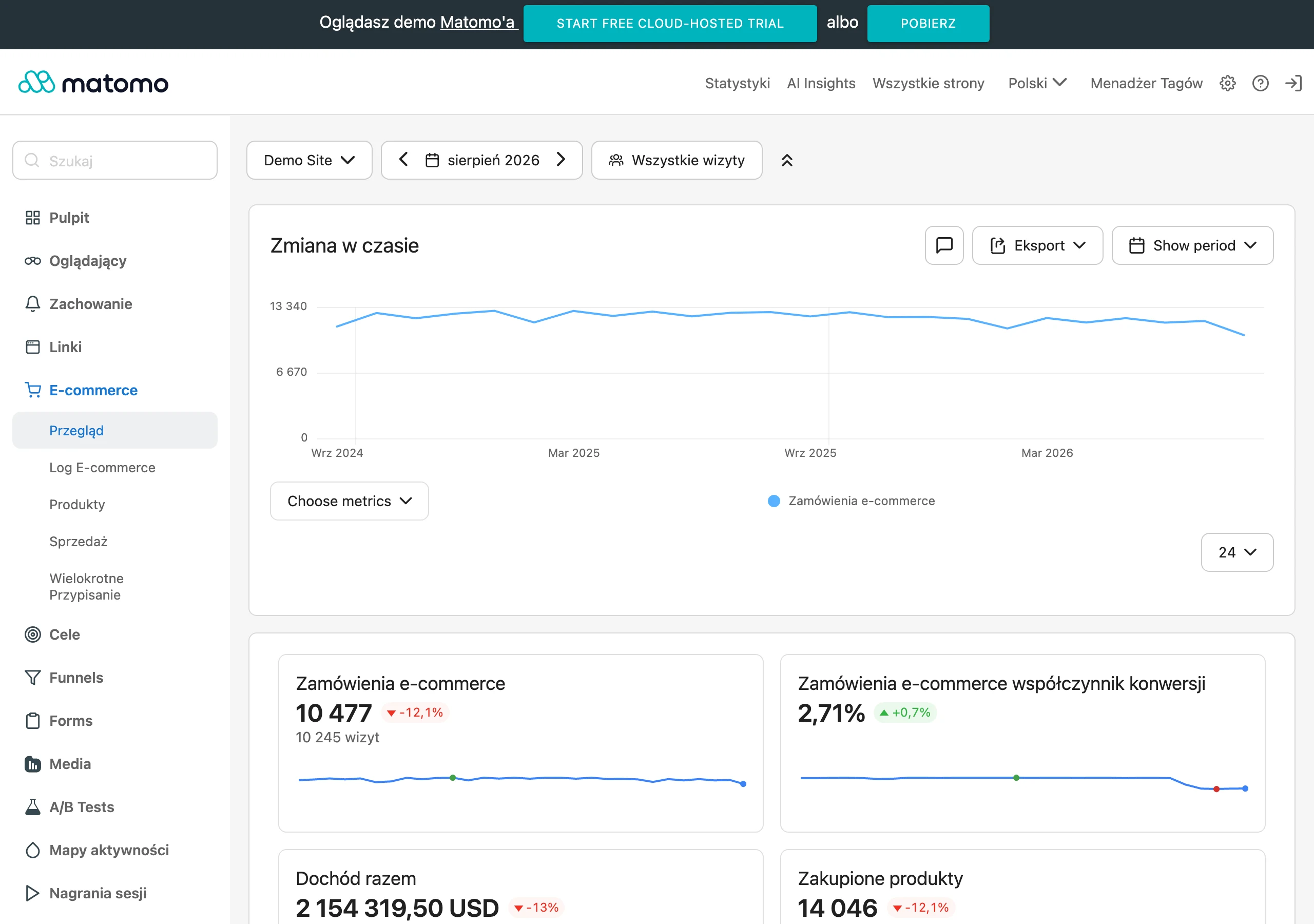
First, assign each piece of content a specific role. One page is meant to overcome objections, another to qualify the client, and yet another to move traffic towards contact. Without a clear goal, you cannot sensibly assess whether the content works. In practice, this means measuring not only the form, but also micro-conversions: visits to the offer page, clicks on the CTA, downloading a checklist, starting a brief or visiting the contact page.
The next step is to connect content with lead quality in the CRM. It is useful to know which pages were viewed before a form was submitted by people who later became valuable sales opportunities. But be careful: what is more interesting is comparing journeys. Which materials appear more often before matched leads, and which bring in enquiries that drop out right at the start.
Measuring assisted impact is very important, because sales content rarely works as the last click. The user often starts with a guide, then reads a comparison, then checks the service page and only at the end sends an enquiry. If you look only at the page from which the form was submitted, you will miss the materials that were shaping the decision in the customer’s mind beforehand. The data says it clearly: the “last click” is often just the end, not the cause.
A good indicator is also the operational change after publication. If salespeople answer the same basic questions less often, move to specifics faster or send a given piece of content more often after a meeting, then the content is probably easing the sales load. In practice, effective content not only generates enquiries, but also shortens explanations and structures the conversation. And that is not a cliché, just a side effect of a well-organised journey.
At the end, put misleading metrics to one side. High traffic, long time on page or a low bounce rate can look like success, but they do not have to translate into revenue at all. What matters is something else: whether the content appears more often in the journeys of good leads, whether it pushes the recipient to the next stage, and whether it works like a sieve, filtering out mismatched enquiries before they even reach sales. The question is whether this builds the pipeline, not just the charts.
FAQ
Frequently asked questions
Which content really supports sales before purchase?
The most helpful content is close to the decision: service pages, solution comparisons, sales FAQs, implementation descriptions and materials showing the offer’s limitations. This kind of content removes uncertainty and makes it easier to get in touch.
Does high traffic on an article mean the content supports sales?
No, traffic alone is not proof of an impact on sales. What matters is whether, after reading, the user takes the next step, for example goes to the offer, sends a brief or asks for a consultation.
Why can content showing the limitations of an offer sell better?
Because it increases trust and improves lead quality. The user more quickly understands for whom the offer makes sense and for whom it does not.
Which customer questions are worth turning into sales content?
Best are the ones that repeat before signing a contract, for example about price, timelines, implementation, differences between options and risks. These are the ones with the highest sales potential.
Can informational articles also support sales?
Yes, but usually indirectly, because they build visibility and educate. For them to genuinely help sales, they need to lead to the next step, for example to a service page, a comparison of options or a form.
How do you measure whether content really helps sales?
You need to look at the content’s role in the path to an enquiry, lead quality and decision speed. Micro-conversions are also helpful, such as clicks on CTAs, visits to the offer or starting a brief.