
Marketing and sales around one goal is a way of working in which both functions stop being assessed separately and start being accountable for the same business outcome. It sounds simple. In practice, it is not about having more reports, but about better decisions: which campaigns attract the right companies, which leads genuinely show promise, and where the funnel is losing value. This approach connects data from ads, analytics, forms and CRM with the real sales process. As a result, you can measure not only the cost per lead, but also the quality of sales opportunities, the speed of progression between stages, and the impact of activities on the pipeline. The most important change is that marketing no longer optimises for volume alone, and sales no longer assesses leads “by gut feeling”, but according to shared definitions and data. What is key is that this setup makes the most sense where the sales cycle is longer, transactions are more valuable, and purchase decision passes through many touchpoints.
What is the marketing and sales model around one goal?
It is an operating model in which marketing, sales, analytics and technology work towards one jointly defined outcome, for example the number of qualified opportunities, pipeline value, or the number of sales meetings with the right target group. One outcome. The focus shifts from local KPIs to a result that genuinely contributes to revenue, rather than merely looking good in a table. In this setup, traffic, leads and forms are important, but they remain intermediate stages, not the goal in itself.
The most important feature of this model is a shared funnel and shared criteria for moving between its stages. Without that, everything falls apart. Marketing and sales must understand in the same way what a lead, MQL, SQL, sales opportunity and customer are. The question is: are we talking about the same thing when we say “good lead”. If both sides have a different definition of a good lead, reports stop being useful for decision-making.
In practice, this model covers more than advertising campaigns. It is not a cosmetic change, but a redesign of the way decisions are managed. It combines strategy, CRM, analytics, forms, content, UX and the sales process into one system in which data leads to concrete actions. It usually ends with preparing a KPI tree, a funnel map, source attribution rules, reporting architecture and a list of changes to implement. And this is not a cliché, because without this “operating manual” teams go back to old habits.
Its value lies in the fact that it reduces the typical conflict between marketing and sales. At last. Marketing no longer pumps weak leads just to improve volume, and sales no longer rejects contacts without clear justification in the data. Instead of a tug-of-war, there is a shared compass: business outcome. In a well-structured model, a cheap but poorly matched lead is not a success, because it does not bring the company closer to its business goal.
How does the marketing and sales integration process work in practice?
The integration process consists of translating one business goal into a shared funnel, shared stage definitions, consistent measurement and a constant optimisation cycle. First comes the decision. It starts with determining what result is to be the primary one and for which customer segment, because without that you optimise “something” for “someone”. Then that goal is broken down into stages, data and responsibilities so that everyone knows what they are responsible for and what progress in the funnel means.
- First, you choose one main goal and supporting KPIs that show whether the organisation is moving towards the result.
- At the start, you map the real sales process: from the first contact to closing, including clear criteria for moving between stages.
- Then you audit the data and tools: CRM, forms, analytics, campaign tags, statuses, duplicates and lead sources.
- The next move is to align shared definitions of MQL, SQL, opportunity, unqualified lead and owner-assignment rules.
- Then comes measurement. This means form-to-CRM integrations, passing campaign source through, standardising fields and a dashboard that connects marketing with the pipeline.
- Only then does optimisation make sense: campaigns, landing pages, forms, lead routing, sales response speed and the quality of follow-up.
- In the final stage, the process moves into a regular rhythm: performance review, bottleneck analysis and prioritisation of changes.
In practice, the biggest mess comes not from the campaigns themselves, but from the data and the process. That is where consistency breaks down: the CRM may have no statuses, salespeople do not record reasons for loss, and forms do not pass the full contact source. Without mandatory fields for source, stage, loss reason and opportunity value, it is impossible to assess reliably which activities truly support sales.
The quality of handing the lead over to sales makes a difference. A specific one. It is not only about where the contact came from, but also whether it matches the ICP, what the intent is, how quickly someone called back, and whether the first conversation followed a consistent framework. With a longer sales cycle and a greater number of touchpoints, the importance of CRM integration and feedback from sales to marketing increases. The question is: does this feedback loop actually work, or is it just on a slide.
This process only works when optimisation covers the whole funnel, not just one channel. Simple enough, hard to do. A poor result may stem from an ill-matched offer, too generic a message, a bad form, incorrect routing or a delayed sales response. Optimisation only starts to produce meaningful results when every change is assessed through its impact on the whole funnel, from acquisition to won opportunity.
Key operational elements of the marketing and sales model
The operational backbone of this model is simple: shared KPIs, a unified funnel, organised data, reporting and a constant optimisation cycle. Without this, marketing and sales still run on parallel tracks, even if they click the same tools. The problem is that “integration” in systems alone does not create shared accountability. In practice, it is about both functions making decisions based on the same definitions and the same business outcome. What matters most is that the overarching goal is one, measurable and accepted by both sides.
The first element is the KPI tree. At the top sits the business outcome. This could be the number of qualified opportunities, pipeline value or the number of meetings with companies from the target group. Lower down sit the supporting metrics, that is, what actually pushes this result up or drags it down: lead quality, contact speed, conversion from MQL to SQL, win rate or average opportunity value. This structure keeps the analysis in check, because you can immediately see which metrics are just warning lights and which are turning the wheel.
The second element is the funnel map and precise stage definitions. Without this, semantic chaos sets in. Lead, MQL, SQL, opportunity and customer must mean exactly the same thing to marketing, the SDR and the salesperson, otherwise every report will tell a different story. If marketing considers a lead valuable after a form submission, while sales only does so after a discovery call, the results stop being comparable. The question is: what are we actually measuring then. Divergent definitions are one of the most common reasons companies incorrectly assess campaign effectiveness.
The third element is order in the data and in the CRM. This is not cosmetic. A lead record should carry source, campaign, segment, owner, stage, transition dates and the outcome of further sales work. Without these fields, it is impossible to fairly assess whether the problem is the ad, the form, routing, delayed contact or simply poor fit with the ideal customer. And one thing is key here: the standard for mandatory fields and campaign tagging rules is not a technical detail, but part of the operating model.
- a shared main goal and KPI tree,
- one funnel map with criteria for moving between stages,
- consistent definitions of lead quality and sales opportunity,
- rules for source attribution and data standardisation in the CRM,
- a dashboard connecting marketing, sales and pipeline,
- a backlog of changes and an SLA for first contact and feedback.
The fourth element is the reporting dashboard, but not in the form of a collection of disconnected charts. The figures need to connect into a chain of causes and effects. A good dashboard shows the full journey: from traffic source to opportunity quality and won deals. This makes it possible to compare channels not only by cost per lead, but also by intent, conversation quality and impact on pipeline. But be careful, this only works when the data is continuous across stages. If the report ends at the form, it does not support sales management.
The fifth element is the optimisation backlog and clear SLAs between marketing and sales. Without a backlog, fixes happen “along the way”, which usually means they do not happen at all. The backlog organises what to improve first: campaigns, landing page, forms, lead routing, contact templates or CRM statuses. The SLA ties down the operational detail that later decides the outcome: who responds to the lead and when, when the lead goes back to marketing, what data is mandatory and what feedback looks like after first contact. The fact is that only then can you distinguish a acquisition problem from a sales handling problem. Only then can you distinguish an acquisition problem from a sales handling problem.
Current challenges and market context for integrating activities
Integrating activities is more difficult today. Buying journeys have become multichannel, and customer data is scattered across systems that rarely “talk” to each other properly. One contact may see an ad, come from search, read content, return from an email, book a meeting and only then land in the CRM as an opportunity. And then a simple campaign report shows at best a slice, not the whole picture. The problem is that without connecting data from ads, analytics, forms, calendars and the CRM, it is hard to talk about one process at all, rather than several parallel stories.
There is also a major change in measurement itself. Session data alone has stopped being enough to assess effectiveness, because more and more happens outside “one visit” and outside one source. First-party data, properly configured events and reliable passing of sources to sales records are key. If campaign tags are inconsistent or the form does not pass data to the CRM, analysing pipeline quality becomes frankly questionable. In practice, poor measurement very often leads to bad budget decisions, not just a worse report.
The biggest operational problem is still the mismatch between marketing and sales metrics. Marketing looks at the number of leads and acquisition cost, while sales looks at meetings, opportunities and closures. The question is what this tells us, if the CRM is full of incomplete statuses, there are no loss reasons and feedback from sales reps drops off along the way. In such a setup, you cannot fairly assess which activities really work and which only look good in a spreadsheet. Instead of jointly removing bottlenecks, both sides start defending their own metrics.
The importance of integration grows with business complexity. The longer the sales cycle, the higher the transaction value and the greater the number of offline touchpoints, the less sense there is in assessing marketing solely by leads. In such companies, the focus should move towards stage modelling, CRM integration and a qualitative feedback loop from sales, not towards more report “beautification”. The fact is that the difference between “lots of leads” and “lots of valuable opportunities” costs the most here. And that is not a cliché.
The current context also requires a broader view of optimisation. It is no longer just about improving acquisition cost, but also about matching the message, user intent, data completeness, sales response speed and the way the lead is handed over to the right person. But be careful, weak channel performance can be the result of poor routing or delayed sales response, not the campaign itself. Weak channel performance can be the result of poor routing or delayed sales response, not the campaign itself. This shifts priorities, because some of the biggest gains do not come from turning up the ads, but from fixing the post-conversion process.
Technical and legal constraints also need to be taken into account. Marketing consents, privacy policy, the quality of user identification and the possibilities of integration between systems directly determine what can be measured and with what accuracy. That is why a sensible model is not based on the assumption that everything will be tracked perfectly, but on the fact that the data will be good enough to make decisions. Not technical perfection, but a reliable decision-making system. The goal is not full technical perfection, but a reliable decision-making system for marketing and sales.
Practical tips for implementing the model
There is no room here for dispersion. Implementing this model requires choosing one main business goal and one process owner, because when marketing is measured against leads and sales against revenue without a common point of reference, local KPIs and arguments about “quality” quickly come back to life. In practice, the goal should be something both sides can genuinely see in the funnel, for example the number of qualified opportunities, pipeline value or the number of meetings with companies from the target group.
Start with the fundamentals. You need access to data sources and to the people who genuinely know the process, because access to tools alone is not enough if nobody can explain how salespeople qualify leads, when they change statuses and why some topics fall away. Most often this involves CRM, forms, web analytics, advertising platforms, lead history and the input of the person responsible for marketing, sales and technical implementation. The question is: who can tie this together into one story, rather than three parallel versions of the truth.
The data either exists or it does not. The basis of implementation is a minimum data standard in CRM and reporting, because if a record is missing the source, campaign, segment, funnel stage, contact date, opportunity value and reason for loss, the report only looks sensible at first glance. Without these fields, it is impossible to fairly assess which activities deliver real sales opportunities and which merely inflate volume.
Lead quality is the main topic, not a side note. The number of forms tells you very little if the contacts are outside the ICP, have low intent or reach the salesperson too late, when interest has already started to cool. Most wrong decisions come from judging marketing by cost per lead rather than by the quality of progression through the next funnel stages. Not the cost on paper, but movement through the funnel makes the difference.
The project scope must match the complexity of the business. The more products, markets, languages, lead sources and offline touchpoints there are, the greater the need for report segmentation, separate definitions and more precise mapping of stages. In a simpler model, a consistent funnel and a basic dashboard are enough, but with a longer sales cycle CRM integrations, feedback from salespeople and a regular review of win and loss reasons come into play. Instead of one “universal” view — several precise ones that can be defended in front of the board.
Technical and legal constraints will not disappear just because of ambition. Marketing consents, privacy policy, tracking limitations, the quality of user identification and the possibilities of integration determine what can be measured without gaps and mental shortcuts. A good practice is to plan specific deliverables from the outset: KPI trees, a funnel map, a measurement plan, a CRM field dictionary, UTM rules, a management dashboard and a procedure for passing information from sales to marketing. Not “we’ll add it later”, but right away, in a version ready to use.
The most common mistakes and risks in the integration process
The most common mistake in integration is banal in form, dangerous in effect. A company connects the tools, but not the definitions, responsibilities and the way the outcome is assessed, so each department calculates “its own” figures. Marketing reports campaigns, sales reports closed deals, and nobody sees exactly where the funnel is breaking down. The risk grows especially where CRM is used irregularly or statuses are changed without shared rules.
A serious misstep is counting all leads with one metric. A form from the ideal customer, a random enquiry from someone outside the market and a repeat contact end up in one report, even though their real value is not comparable. If there is no clear definition of MQL, SQL and opportunity, optimisation very quickly starts rewarding the wrong volume. The question is: who actually wins then, apart from a spreadsheet with a “growing number of leads”.
The second risk can be deceptive. Blame is sought solely in the acquisition channel, as if everything else were healthy by definition. Meanwhile, weak performance may result from a mismatched offer, too generic a message, a poor landing page, a form that is too long, a lack of routing, slow sales response or no follow-up. It is not worth turning off campaigns until you know whether the problem arises before contact, during qualification, or only after the lead has been passed to sales.
A common operational mistake is also the lack of a closed feedback loop. Without it, everything works “by instinct”. When salespeople do not fill in the reasons for loss, do not describe the quality of the conversation and do not mark the real potential of the opportunity, marketing has nothing on which to base adjustments to messaging and targeting. On the other hand, when marketing does not pass on the context of the source, intent and content of the contact, sales starts every conversation from scratch, as if the lead had fallen from the sky.
Another risk is being too ambitious at the start. The aim is to rebuild CRM, analytics, campaigns, forms, scoring and the sales process all at once, and then the pace, which slows after a few weeks, comes as a surprise. The effect is predictable: the company loses momentum and fails to complete any element. It is safer to implement the model in stages and assess each change by its impact on the whole funnel, not by the local growth of a single metric.
The importance of data quality and its impact on the effectiveness of activities
Data quality determines whether marketing and sales optimise the right activities or simply react to seemingly good results. The facts are these: if the CRM lacks the lead source, funnel stage, opportunity value or reason for loss, the report stops showing the real impact of campaigns and the work of salespeople. At that point it becomes very easy to keep adding budget to channels that generate a lot of contacts but few valuable opportunities. Poor-quality data not only makes analysis harder, but also leads to incorrect operational and budget decisions.
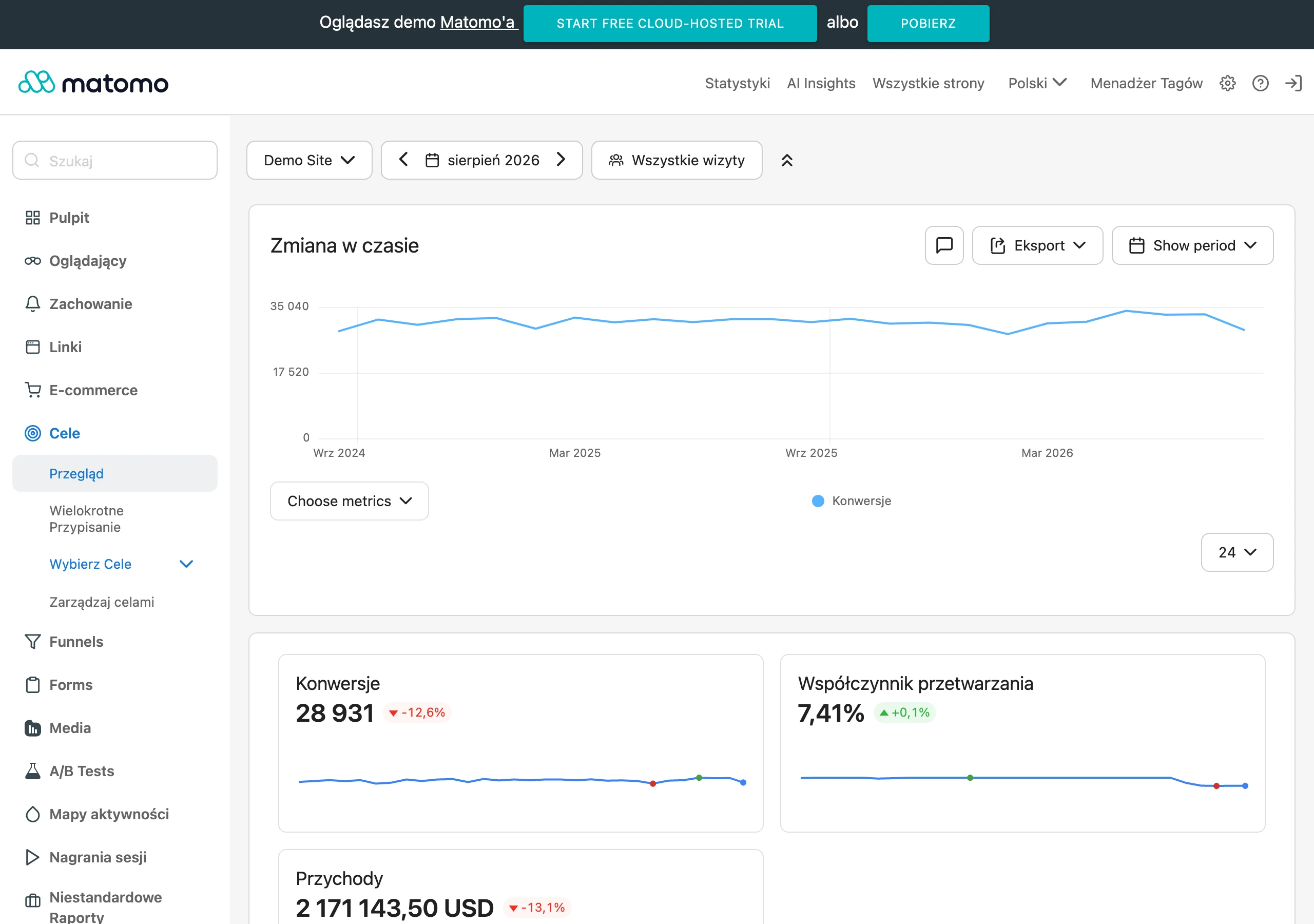
In practice, the key is a minimum data standard common to marketing and sales. This is not a matter of a “nice CRM”, but of comparability and accountability. Every record should have at least the source, campaign, segment, owner, stage, dates of movement between stages, opportunity value and final status recorded correctly. Without this, it is impossible to honestly assess which activities build the pipeline, where leads drop off and whether the problem lies in traffic quality, the form, qualification or the salesperson’s work.
CRM does not forgive chaos. Consistency of definitions and discipline in updating records have a major impact on effectiveness, because if one salesperson labels a matter as “not interested”, another as “to be contacted again”, and a third leaves the record without closure, analytics simply stop making sense. The most useful dashboards are created not from a large number of indicators, but from a few fields that are filled in consistently and according to one logic.
Data either speeds up decisions or blocks them. Data quality affects the speed and accuracy of optimisation, because when you correctly pass source, medium, campaign and conversion type into the CRM, you can compare not only cost per lead, but also the share of meetings, opportunities and wins for each channel or message. The question is what becomes visible then. The way you manage advertising, content and the landing page changes, because entries with genuine purchase intent come to light, not just those that deliver volume.
In long sales cycles, continuity matters, not a snapshot. In more complex sales processes, the importance of first-party data and the integration of several systems increases, because session data from web analytics alone is not enough when the purchase decision involves a phone call, a demo, a sales meeting and a long follow-up in the CRM. It is therefore key to keep track of UTM tags, connect forms with the CRM, deduplicate contacts, maintain a history of status changes and capture feedback from sales after the first conversation.
The most common mistake is mundane. The company wants better reporting, but does not fix the data quality at source, so the report becomes a nice table rather than a working tool. The problem may be too few required fields, no standard for entering loss reasons, unclear lead routing or a delayed first contact from the salesperson. Only after these elements are organised does the report start to become a decision-making tool, rather than a set of numbers that everyone reads differently.
FAQ
Frequently asked questions
How does marketing and sales around one goal work in practice?
It involves setting one shared business outcome and breaking it down into a shared funnel, stage definitions and measurement. This allows both functions to make decisions based on the same data.
In this model, does only the number of leads matter?
No, leads are only an intermediate stage, not the goal in themselves. More important are the quality of sales opportunities, the speed of progress through the funnel and the impact on pipeline.
Why are shared definitions of MQL, SQL and opportunity so important?
Because without them, marketing and sales may understand what a good lead is differently. Then reports stop being comparable and it becomes difficult to make sensible decisions.
What needs to be put in order before implementing marketing and sales integration?
First, it is worth going through the funnel map, a data and tools audit, and agreeing source attribution rules. Only then do you build the dashboard, change backlog and SLA rules.
When does this model make the most sense?
It works best where the sales cycle is longer, transactions are more valuable and the purchase decision passes through many touchpoints. In such cases, assessing activity by leads alone is too simplistic.
What problems most often undermine the measurement of marketing and sales effectiveness?
Most often, these are gaps in the CRM, inconsistent campaign tagging, no loss reasons and incomplete passing of sources from forms. As a result, it is hard to distinguish a campaign problem from a sales handling problem.