

AI-generated content can be fast and good at the same time. But only when it is produced in a controlled process, not in “drop in a prompt and publish” mode. The model itself does not guarantee quality, because it assembles text from what it is given as input and from how it is guided. The result is determined above all by the brief, sources, human editing, fact-checking and aligning the content with the business goal. In practice, AI works best as a boost to the workflow, not as an independent author of publications. This is crucial when the content needs to answer specific user questions, support SEO and avoid undermining brand credibility. A well-set-up workflow makes it possible to scale content without flooding the site with texts that are “correct” only on paper.
Creating content with AI: what it is and how it works in practice
Creating content with AI is not a trick, but a process. It means preparing or scaling content with the help of a language model, but under constant editorial control and with clear rules of the game. In practice, AI most often provides a draft, headline ideas, develops sections, organises information and helps prepare metadata. The question is therefore not “was AI used”, but “did the process deliver quality”.
Such a service rarely ends with the text alone. It often also includes the content brief, heading structure, meta title, meta description, FAQ, internal linking suggestions and recommendations for later updates. This matters because good content needs to work not only as text, but as part of the whole SEO and UX system. Instead of a single article, you get a piece of the puzzle that is meant to click, guide and answer.
AI is most useful where production needs to be accelerated without the standard slipping. It handles a first version of an article, gathering user questions, organising material from sources or preparing several ways of framing a topic very well. Then it gets harder. It performs less well where precise industry nuances, up-to-date data, interpretation of regulations or expert experience that cannot be “prompted in” in five minutes are what matter.
The most important layer of this solution is quality control. Without it, all the “cleverness” turns into risk, and that is not just a cliché. Control includes the brief, a set of reliable sources, prompting rules, brand style, a quality checklist, fact-checking and human editing before publication. Publishing raw model output is the shortest route to content that is linguistically correct, but weak in substance and of little practical use. In short: not X, but Y. Not automation at any cost, but automation under supervision.
The quality of such content needs to be defined operationally, not intuitively. What matters is alignment with user intent, factual accuracy, brand consistency, readability, completeness of the answer and the ability to update it easily. These are not “nice extras”, but boundary conditions. If the text meets them, readers and search engines do not view it through the prism of whether AI was used in the process, but through whether it genuinely solves the problem and leads the user to the goal.
Key stages of the content creation process using AI
Creating content with the help of AI is not a one-click action. It is a sequence of stages that together reduce the number of errors and increase the usefulness of the material, and in practice work like filters catching what in a generator is often “nice” but empty. Miss one step and the quality usually shows it, even if the sentences still read smoothly. The problem is that poor-quality content can look professional at first glance, so the process has to be stricter than simply “generating an article”.
- Setting the goal — at the start, you define the type of content, audience, funnel stage, search intent, main topic, keyword clusters, CTA and acceptance criteria. Without this, AI will produce text “for everyone” rather than content matched to a specific task.
- Preparing the input — you gather sources, existing brand content, tone of voice, product information, sales questions, expert notes and any legal or compliance constraints. The stronger the input, the fewer last-minute fixes and the lower the risk of hallucinations.
- Controlled generation — the model receives a precise brief, heading structure, citation rules, required sections and stylistic constraints. One thing is key: treat the output as a working draft, not a finished piece ready for publication.
- Substantive editing — a human cuts out generalisations, adds specifics, orders the line of argument, aligns the language with the brand and closes information gaps. This is the point at which the content starts to have real value, not just a correct form.
- Verification — facts, data freshness, definition consistency, alignment with the offer, terminology, uniqueness of the angle and potential legal risks are checked. In topics related to health, finance, law or safety, the expert’s involvement should be clearly greater than the model’s.
- SEO optimisation and UX — title, description, H1-H3, FAQ, anchor texts, internal linking, paragraph structure and other elements affecting readability and visibility are refined. The aim is for the text to be simultaneously easy to understand, simple to scan and aligned with search intent.
- Publishing and monitoring — after deployment in the CMS, you need to track indexing, clicks, CTR, engagement, visits to sections and quality signals. Good content does not end on the day it is published, because it continues to live and requires further tweaks and updates.
In practice, three pressure points make the difference. The quality of the brief, the quality of the sources and the quality of post-generation editing — the things that are easiest to “tick off” and hardest to do properly. If the brief is too vague, AI produces vague content. If the sources are weak, the text may sound smooth but will repeat errors or outdated information. And if editing is missing, the material usually loses the brand’s character and adds nothing beyond what is already sitting in search results. The question is whether that is really the effect you want.
It pays to separate stable data from task-specific data. Stable data includes the style guide, service description, personas, language rules and brand standards, in other words the backbone that should not change from text to text. Task-specific data includes keywords, sources, user questions, internal links and notes from the expert, so material “for today” and for a specific topic. This division organises the work and helps maintain repeatable quality even at a larger production scale.
After publication, the story does not end. What matters is not only the text itself, but also whether someone keeps an eye on it once it starts living online. The content should have a list of sources, a verification date, a note on risks and an update plan, especially if the topic changes quickly. That way, the material does not age in silence. And it can keep working for traffic, trust and conversion.
How to ensure high quality of AI-generated content
Quality does not come about by chance. It is ensured by a process in which the model receives good input and the final text goes through editing and verification. The problem is that most issues result not from the tool itself, but from working on a brief that is too general or without sources. Quality does not come from using AI, but from the quality of input data, editing rules and pre-publication control. The starting point should be operational, not purely creative.
First you define the goal. Then the audience, because without that AI is shooting in the dark. The brief should include: the topic, user intent, the audience’s level of knowledge, the scope of the answer, sources, constraints, brand tone and acceptance criteria. The question is also what the text should not do. If the brief does not say what the text should avoid, AI very often fills the gaps with vague statements or incorrect generalisations.
In practice, the cleanest approach is a two-layer input model. The first layer is stable information about the brand: the offer, vocabulary, personas, style guide and communication rules, in other words the framework that keeps things consistent. The second is task-specific data: keywords, user questions, notes from the expert, internal links, current sources and required sections, in other words fuel for a specific piece of content. Instead of mixing everything into one document, you get a structure that can be scaled.
For specialist topics, the source-first principle applies. Sources first, generation second, because otherwise the risk of confabulation and unnecessary leaps in logic increases. AI can help organise the material, expand sections and prepare variants, but it should not be the sole source of subject-matter knowledge. The greater the risk of error for the user or the company, the greater the human involvement with domain expertise should be.
- checking alignment with user intent, not just with the topic,
- verifying facts, dates, definitions and proper names,
- removing repetitions, paraphrases without value and empty paragraphs,
- adapting the language to the brand and the audience’s level,
- assessing whether the text adds anything practical compared with existing results,
- checking on-page SEO and mobile readability,
- checking correctness after implementation in the CMS.
The most common mistake. Publishing a raw draft from the model because it “looks right” at a glance. And then it turns out that the text has shaky logic, rehashes well-known theses, jumps between generalities and detail and misses the user’s real questions. It is worth treating raw AI output as working material, not a finished product.
Quality does not end on the day of publication. You need to record the sources, the verification date and the update plan, because a large part of content loses value not because of initial errors, but through simple obsolescence. A well-designed process therefore includes not only writing the text, but also its later revision, ideally at specific intervals.
The most important principles of optimising AI content for SEO and UX
AI content optimisation for SEO and UX has one goal. The text should answer the right intent, be easy to read and send clear topical signals to the search engine. Keyword stuffing is not enough, and sometimes it even damages the user experience and pushes the meaning to the margins. First you need to match the content to the user’s question, and only then refine the SEO layer.
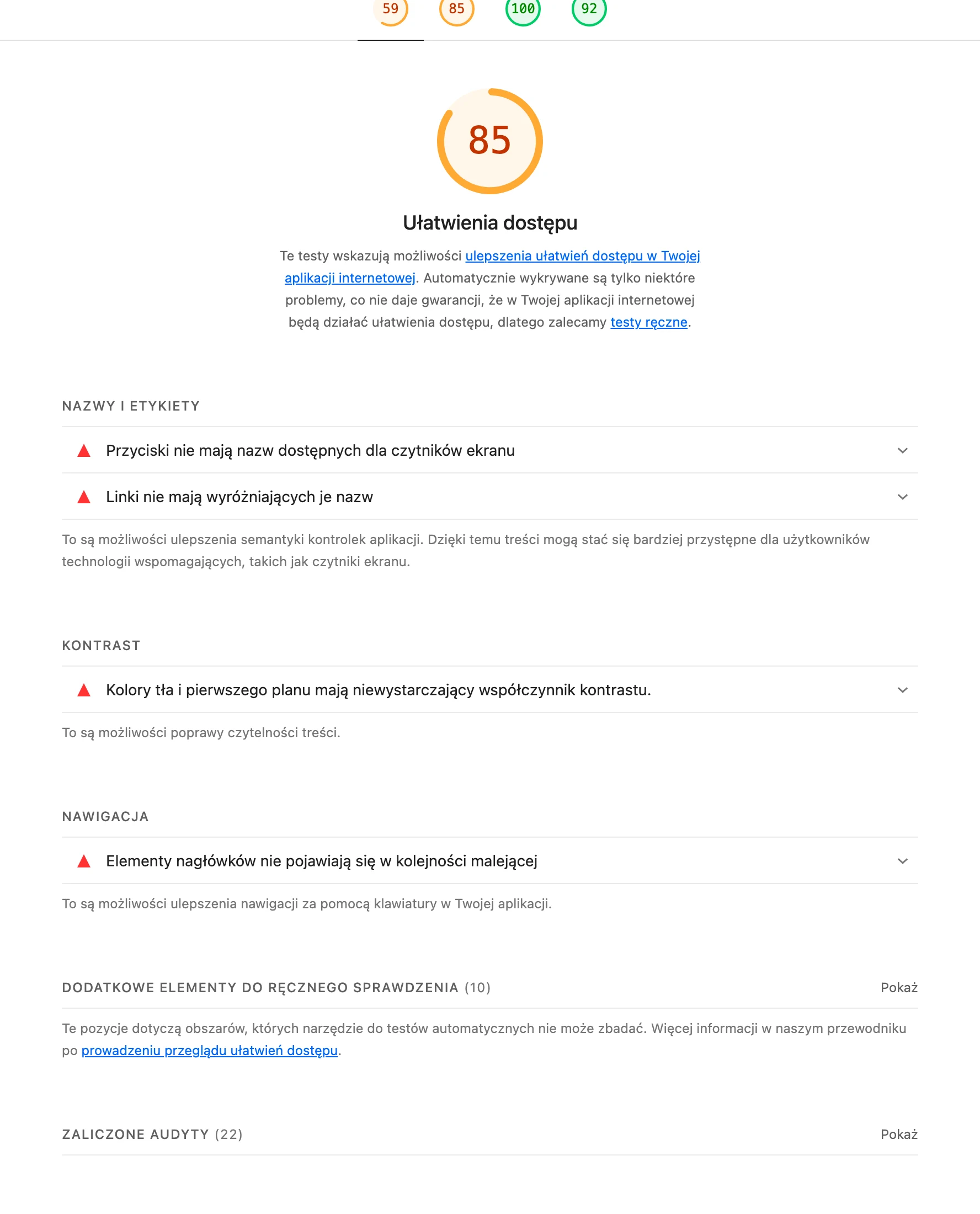
Structure is key. The title, subheadings and order of sections should lead the user from the main answer to the details, not the other way round. It sounds banal, but this is exactly where AI most often falls over, serving up headings so general that nothing follows from them. If the generator produces “Introduction”, “Summary” and “Advantages”, then you rewrite it into concrete language: what is in this part and which question the text answers.
Good SEO optimisation starts with sensible mapping of keywords and supporting topics. One main intent should have one main piece of content, and additional questions are better handled in sections, FAQs or supporting content. Instead of mixing several different user needs in one article, you arrange them into a hierarchy. The side effect is very practical: less chaos and fewer problems with keyword cannibalisation.
UX determines whether anyone will actually use the text. Shorter paragraphs, clear subheadings, a logical order, concrete examples and clear transitions between sections are often more important than “nice style”. And that is not a cliché, but everyday reality on a phone, where nobody reads walls of text. Content that is written correctly but difficult to scan on a phone often loses out to a simpler but better structured version.
Technical elements also play a role, but beware: they should stem from the content, not distort it. Meta title and meta description should improve clarity and CTR, internal linking should make it easier to move on, and FAQ or rich results structures should appear only where they genuinely help the user. The question is whether you are optimising for the person or for the checklist. Overly mechanical optimisation ends in artificial language and a drop in credibility.
After implementation, look broader than rankings. CTR, visits from specific queries, scrolling, engagement and clicks to subsequent subpages clearly show whether the content works or is merely “in the index”. The data makes one thing clear: if the text does not attract the right queries or users leave it quickly, it is usually not the “algorithm” at fault, but a mismatch in intent, structure or level of detail. If the text does not attract the right queries or users leave it quickly, the problem usually lies in a mismatch in intent, structure or level of detail.
In practice, a modular approach wins. One properly prepared source piece can drive an article, FAQ, section description, newsletter and shorter formats, but each of these elements needs to be tailored to a specific channel. This makes it possible to scale content without pasting the same text over and over again and without harming the user experience.
How to avoid the typical mistakes when creating content with AI
Typical mistakes when creating content with AI are not avoided through “cleverness”, but through discipline. The key things are: a precise brief, verified sources and mandatory review before publication, because most often we fall over at one assumption. We treat the model as the final author, not a tool for preparing a draft. Raw text from AI should almost never go into the CMS without editing. The more a topic influences user decisions, the less room there is for automation.
Quality breaks down at the input stage. When the prompt is generic, the model responds generically, churns out banality and patches gaps with guesses. The data makes it clear: without specifics there are no specifics, so in practice you need to provide the topic, audience, content goal, scope of the answer, sources, prohibited simplifications and what the text must not promise. First you define the task framework, then you start generation.
Another mistake is writing “on trust”, without checking sources. AI can sound like a confident expert even when it is stitching together out-of-date information, incorrect generalisations or its own additions. The problem is that a confident tone is not proof. That is why, for expert content, it is worth following the source-first rule: first the documents, data, notes from the specialist and the brand offer, then the draft. This is particularly important in health, finance, law, security and personal data.
Often the result is also ruined by SEO done “rigidly”. When text is written around a single phrase, it becomes unnatural, loses its logic and stops answering the user’s real intent. Good SEO content does not look like it was written for robots, but like a sensible answer for a human. Instead of pumping up keyword density, it is better to refine the structure, context and internal linking.
Another risk is drifting away from the brand and the offer. The model does not know the company’s restrictions, sales exceptions, communication language or product nuances unless you give them to it up front. The question is: how is it supposed to know. In practice, it is worth feeding it a permanent pack of materials: a style guide, an offer description, personas, sales FAQs, naming rules and examples of correct content. This makes it easier to avoid texts that sound fine but do not fit the business.
It is also a mistake to treat publication as the finish line. After implementation, you need to check whether the text is readable in the CMS, whether the headings and links work properly and whether the content is attracting the right queries and engagement. A lack of post-publication review means that even a good draft quickly ages or loses effectiveness. A good practice is to add a verification date, a list of sources and an update plan, because a text without maintenance sooner or later starts to drag.
The role of verification and editing in the AI content creation process
Verification and editing turn an AI draft into text that can be published safely. They keep meaning, logic, language and usefulness in check, and at the same time make sure the message is consistent with the offer and the sources. Verification checks whether what appears in the paragraphs is correct and up to date, while editing makes sure it actually hangs together. Without these two stages, AI speeds up production, but does not guarantee quality.
The editor is not there simply to “smooth out” the style. They are meant to cut empty generalisations, add specifics, organise arguments and trim the parts that only pretend to be content. It is also the moment to set the level: how much the audience knows, what tone the brand should have and what the page is actually meant to deliver commercially. The problem is that the model can sound confident even when it adds nothing new. In practice, value is created precisely here: through experience, relevant examples and a good balance between simplicity and precision.
Verification does not end with “facts”. It covers definitions, numbers, data freshness, regulatory compliance and consistency with the product or service, that is, everything that can later come back to bite. A simple discipline works well: every statement that influences a user’s decision should be traceable to a source or an expert approval. And that is not a cliché. If the text contains comparisons, promises, interpretations of regulations or sensitive information, the review has to be stricter than in a standard guide.
For high-risk topics, the involvement of a person with subject-matter expertise is not a “nice extra”. It is a condition for responsible publication. The expert does not have to write everything from scratch, but they must confirm key claims, spot simplifications and clearly mark limitations. The greater the consequences of an error for the user, the greater the involvement of the expert and formal approval should be.
Editing and verification also do the job for SEO and UX. This is when headings are finalised, sections answering specific questions are expanded, repetitions are removed, meta data is refined and logical internal linking is set up. But beware: “order” alone is not enough if the content cannot be read. That is why you check whether the text is easy to scan on a phone, whether the paragraphs are digestible and whether the structure is not distracting. This way the material is not only correct, but also performs better after publication.
The most effective working model is to split responsibilities. AI prepares the draft and variations, the editor turns this into the final form, a subject matter expert confirms accuracy, and finally someone checks the implementation in the CMS and the result against the brief. This is faster than writing everything by hand. However, it does not hand quality decisions over to the tool itself, because it does not bear the consequences. That is exactly why content created with AI can be good, provided its quality is managed rather than assumed from the outset.
Tools and procedures supporting the quality of AI-generated content
The quality of AI content is determined not by the model’s magic, but by solid craft. What matters most here is a sensibly structured set of tools and a clear workflow: from brief to post-publication monitoring. The language model alone will not keep track of facts, brand tone or alignment with the page’s goal. Only the process makes that work, once it is clear who prepares the input, who edits, who verifies and who ultimately sends the material out into the world. The biggest improvement in quality usually does not come from changing the AI tool, but from organising the work around it.
In practice, you need a set that is simple, but complete. It is not about a heavyweight technology stack, but about making sure each stage has its place and that decisions can be reconstructed a week or a month later. If the team does not have a single source of briefs, sources and text versions, errors quickly return with subsequent publications. And they return exactly where it hurts most: in the facts, in consistency and in the question of “who allowed this?”.
- Brief document — gathers the topic, audience, search intent, business goal, required sections, CTA and acceptance criteria.
- Source repository — organises links, expert notes, company first-party data and verification dates so the editor does not rely on memory or guesswork.
- Prompt and template library — makes repeatable work easier, but only when prompts are grounded in the brief, rather than used without context.
- Collaboration editor — allows comments, marking corrections and separating the AI draft from the post-edit version.
- QA checklist — enforces fact-checking, brand alignment, readability, on-page SEO and correct implementation in the CMS.
- CMS with versioning — lets you see what was changed after publication, who made the change and roll back to a previous version without chaos.
- Results monitoring dashboard — shows whether the content is getting clicks, whether it answers user intent and which sections need updating.
Procedures beat the number of tools hands down. First comes the brief and a full set of sources, then an AI draft, then human editing, fact-checking, SEO review and only then publication. It sounds banal, but the problem is that without an owner for each stage and a simple definition of “done”, the text tends to land in the CMS too early. And then come the rush, live fixes and unnecessary risk.
The best approach is to stick to the source-first principle: sources and data first, generation second. That cuts off hallucinations, random generalisations and low-value paraphrases before they enter circulation. AI should work on input material prepared by the team, not replace substantive research. So the question is not “can AI write?”, but “what is it writing from?”.
In specialist topics, an additional compliance procedure is useful. It includes marking risks, checking terminology, verifying how current the information is and approval by a person competent in the given field. This is not bureaucracy for its own sake. It is particularly important wherever content may influence financial, health, legal or safety-related decisions.
A simple post-publication change log also helps a great deal. A register. It is enough to note when the text was checked, which sources were replaced, which sections were touched and why. Without a change history, it is difficult to tell a one-off correction from a persistent quality issue in the process.
From an SEO and UX perspective, tools should support modular content structuring, not production “piece by piece”. One source material can feed an article, FAQ, meta description, landing page sections and internal linking, but this only works when everything is tied together by one brief and one information logic. Instead of five versions of the same fact, you get one consistently developed narrative. That is what keeps everything coherent and limits divergence between variants of the same answer.
In the end, monitoring is still needed. Because content quality does not end on the day of publication. You need to keep an eye on indexing, CTR, user behaviour, visits from specific queries and the places where readers drop off. If content has poor visibility or low engagement, the problem often lies not in AI itself, but in the brief, the answer structure or the lack of updates.
FAQ
Frequently asked questions
How do you create AI content without losing quality?
You need to work in a controlled process: start with a brief, gather reliable sources, generate a draft and carry out editing and fact-checking. The model itself does not guarantee quality without human oversight.
Why should raw AI text not go straight to publication?
Because it may be linguistically correct but weak in substance, full of generic statements and not aligned with the purpose of the content. Without editing, it is also easy to lose brand consistency and credibility.
What should a good brief for AI-generated content include?
The brief should define the topic, audience, user intent, scope of the answer, sources, brand tone and acceptance criteria. It is also worth adding constraints and what the text should avoid.
What stages does the process of creating AI content include?
First you define the goal, then prepare the input, generate a draft, carry out substantive editing and fact-checking. At the end, SEO and UX optimisation and post-publication monitoring are added.
When is a greater expert contribution needed for AI content?
Especially in topics related to health, finance, law, safety and personal data. The greater the risk of an error for the user or the company, the greater the role a subject-matter expert should play.
How do you optimise AI content for SEO and UX?
The content needs to match user intent, with a logical heading structure, short paragraphs and readability on mobile. Meta title, meta description, internal linking and analysis of CTR and engagement after publication are also important.