
AI can clearly speed up content preparation for a blog, but it does not work as a magical “write this for me” button. It adds the most value when the process is structured and it is clear from the outset what material is to be created, for whom and for what purpose. The best results come from treating AI as a tool within a controlled editorial process, not as an independent author. In practice, this means faster topic research, structuring outlines, creating draft versions and preparing SEO elements. You still need editing, fact-checking and adapting the content to the brand’s language. When you set up the input and quality control well, AI shortens the time needed without reducing the usefulness of the text.
How AI supports the content creation process for blogs
AI supports content creation for blogs primarily by speeding up research, planning, drafting and the technical optimisation of a post. This is most visible in repetitive tasks such as expanding an outline, preparing headline variants, creating meta data or drafting FAQ sections. It is a tool for streamlining work, not a guarantee of good content. The final quality still depends on what input data the model receives and how the final edit is carried out.
In practice, AI can already be helpful at the topic selection stage. It allows you to organise audience questions faster, assess search intent and build a topic map around a single area. This is particularly useful for a company blog, where publishing consistency and coherence between posts matter.
The next level of support is preparing working material. AI can develop a brief, outline, first draft of paragraphs, headline suggestions, a lead, a summary and publication-related implementation elements. It works best when it is given a precise goal for the text, audience profile, topic scope, sources and SEO requirements. The more general the prompt, the greater the risk of generic statements, repetition and paragraphs that sound correct but add little value.
It is also worth clearly marking where automation ends. AI generates correct language and a sensible structure, but without supervision it can oversimplify the topic, miss important nuances or provide uncertain information. This is especially relevant for content based on current data, law, medicine, finance or specialist industry knowledge. Publishing without final editing is the quickest route to a text that looks good but gives the reader no real value.
From the blog owner’s perspective, it is also important that the output of working with AI does not have to be only a finished article. Often the intermediate materials matter more: a topic list, post structure, set of supporting words, internal linking, CTA suggestions or a plan for updating older content. In this way, AI supports not only a single text, but the whole publishing system.
Key stages of implementing AI in content creation
The key stages of implementing AI in content creation include gathering solid input data, preparing a brief, generating a draft version, editing, optimisation and later updates. It is better to introduce such a process gradually, rather than trying to automate the whole blog straight away. At the start, it is best to choose one type of publication, for example guides with a similar structure. This makes it easier to assess the results and quickly check where AI genuinely shortens the time needed.
- First, you gather the input data: business goal, target audience, topic scope, communication tone, constraints and the expected CTA.
- Next, you analyse search intent, user questions, content gaps and the potential of existing materials.
- On that basis, you prepare a brief with the main keyword, H1-H3 structure, section scope, sources and linking requirements.
- Only then does AI create an outline, draft, title variants, meta title, meta description and supporting sections.
- Finally, a human edits the text, verifies facts, removes repetition and adapts the whole piece to the brand standard.
The most critical point of implementation comes at the brief stage. When the brief is too broad, AI will generate a text that is formally correct, but too generic, too long-winded or misaligned with user intent. That is why it is better to build operational prompts rather than general instructions. Instead of asking for “an article about AI”, it is better to specify the audience, the post’s goal, the scope, the prohibited simplifications, the section structure and the sources the text is to be based on.
In practice, it works well to separate generation from evaluation. First you ask AI for an outline or draft, and only then for the gaps, inconsistencies, unanswered questions and places that need clarification. This division reduces the risk that the first draft will be uncritically treated as the final version. The editor can more quickly see what needs improving and what is ready for publication after refinement.
Implementation is only complete after publication and results analysis. It is worth checking whether the article answers the user’s intent, whether it has a sensible structure, whether it is still current and whether it needs expanding with new sections. AI is particularly useful here for refreshing older posts, standardising publications and developing topic clusters. It is often at the maintenance stage that the biggest return from a well-set-up process becomes visible.
Best practices for using AI to write blogs
It is best to treat AI as a tool that supports specific stages of the work, not as the sole author of the entire post. In practice, this approach works particularly well for content with a repeatable structure, for example guides, knowledge base category pages or FAQ articles. This makes it easier to compare results, streamline the process and quickly spot errors. The biggest advantage comes not from the model itself, but from a well-prepared brief and clear quality criteria.
Good results start with precise input. Instead of writing “create an article about X”, it is better to specify straight away the audience, the text’s goal, the topic scope, the level of expertise, the expected heading structure, the keyword, the sources and the elements to avoid. The less room there is for guesswork on AI’s side, the fewer corrections the editor will have to make.
The most practical working model is a phased approach. First, AI supports research and helps you build an outline, then it prepares a draft, and only at the end does it help refine the SEO and implementation elements. Do not base the entire process on a single prompt, because the sequence: brief, outline, draft, review and final edit usually delivers a better, more predictable result.
- Start with one content type and one procedure, instead of automating the whole blog at once.
- Separate generation from evaluation: first ask AI for a sketch, and then for identifying gaps, repetitions and unanswered questions.
- Use AI for routine tasks such as expanding paragraphs, shortening text, suggesting subheadings, meta title and meta description.
- Build your own working templates: briefs, editorial checklists, FAQ formats, linking standards and CTA patterns.
- Refresh older posts with AI based on new user questions, drops in visibility and missing sections.
In practice, building a library of ready-made input materials also works well. When you have a saved brief template, heading standards, brand style and a list of required sections, subsequent texts are produced faster and keep a consistent direction. AI delivers the best results when it operates within your process, rather than as a substitute for the process.
At the end, human editing is always needed. This is the stage where you remove generalities, add practical experience, structure the argument and verify alignment with the search intent. This is precisely where the text stops being merely linguistically correct and starts genuinely helping the reader.
Challenges and limitations associated with using AI
Challenges and limitations associated with using AI stem mainly from the fact that the model can write fluently, but not always accurately, specifically and in line with the real purpose of the content. That means a risk of factual errors, simplifications, repetitions and paragraphs that sound good but add very little. The most common problem is not that AI “writes badly”, but that it too easily creates text that only appears sufficient.
A major limitation remains the quality of the input data. If the topic is too broad, the brief does not define the audience, or it is not clear what intent lies behind the query, AI will usually generate generic and not very useful content. In SEO this is particularly important, because the text may be correct, and yet still not answer the user’s question better than the competition.
Difficulties also begin with content that needs to be current, source-based and subject to editorial accountability. This is especially true for law, medicine, finance, technical industries and topics where a single mistake can genuinely mislead the reader. In such situations, AI can be useful for producing a quick draft, but it should not act as an arbiter of truth.
The second limitation is style and brand credibility. Without editorial oversight, AI can mix language registers, return to the same sentence patterns and rarely bring a perspective characteristic of the company. As a result, the blog starts to sound like many other sites, which weakens both its usefulness and the brand’s distinctiveness.
In practice, you also need to keep an eye on SEO risks. Artificial keyword stuffing, mechanically built FAQ sections, very similar articles within a cluster and publishing many texts without real value can reduce the quality of the entire content section. If AI shortens publication time, quality control should grow just as quickly as the production pace.
The safest approach is to treat AI as an operational layer, not a decision-making one. The model can help prepare a draft, compare headline variants, spot gaps in the structure and support the updating of an older post. Final responsibility for facts, business sense and real value for the reader should still remain with the human.
How to optimise blog content with AI
Blog content can be optimised with AI by refining the structure, alignment with search intent, readability and SEO elements already after the draft has been prepared. The best results appear when AI does not write “in a vacuum”, but works from a finished sketch, a brief and a clearly defined article goal. In practice, it is worth thinking of it as a second editor who points out gaps, organises the material and prepares versions for testing. Section-by-section optimisation gives the most value, rather than one general prompt like “improve the article for SEO”.
The first area is matching the content to search intent. AI can check whether the text really answers the user’s question, or merely circles around the topic. It works well at identifying missing sections, unanswered questions, overly broad fragments and places where the article does not move from theory to practice.
The second area is structure and readability. AI quickly spots repetitions, overly long paragraphs, low-value headings and fragments that can be simplified without losing meaning. If you ask AI to edit, assign shortening separately, heading organisation separately and identifying content gaps separately. This division gives you more control than a one-off “rewrite the whole thing”.
The next step is implementation SEO optimisation. AI can prepare suggestions for meta title, meta description, subheadings, anchors for internal linking and FAQ sections, provided they genuinely result from user intent. It also works well as a tool for checking whether the main keyword and supporting keywords appear naturally in the text, rather than being forced in. Too much keyword density usually spoils the reading experience, even if, formally, the “SEO is right”.
AI can also be helpful when refreshing older posts. With its support, you can compare the current article with newer user questions, fill in missing examples, update definitions and suggest a different order of sections. This is especially important for content that loses traffic not because it is weak, but because it has become incomplete or simply outdated.
At the finish, human editing is needed. It is worth verifying the facts, alignment with the brand tone, consistency of the argument and whether the material genuinely helps the reader make a decision or take action. AI efficiently refines the form, but responsibility for meaning, precision and usefulness still rests with the editor.
Measuring the effectiveness of AI-generated content
The effectiveness of content generated by AI is worth assessing through the lens of the article’s goal and by comparing the results against that goal, rather than simply because it was created faster. A shorter production time does not automatically translate into better SEO or greater business value. You need to verify whether the content builds visibility, attracts the right traffic and leads the user to the next step. The most common pitfall is holding AI accountable only for the number of published texts.
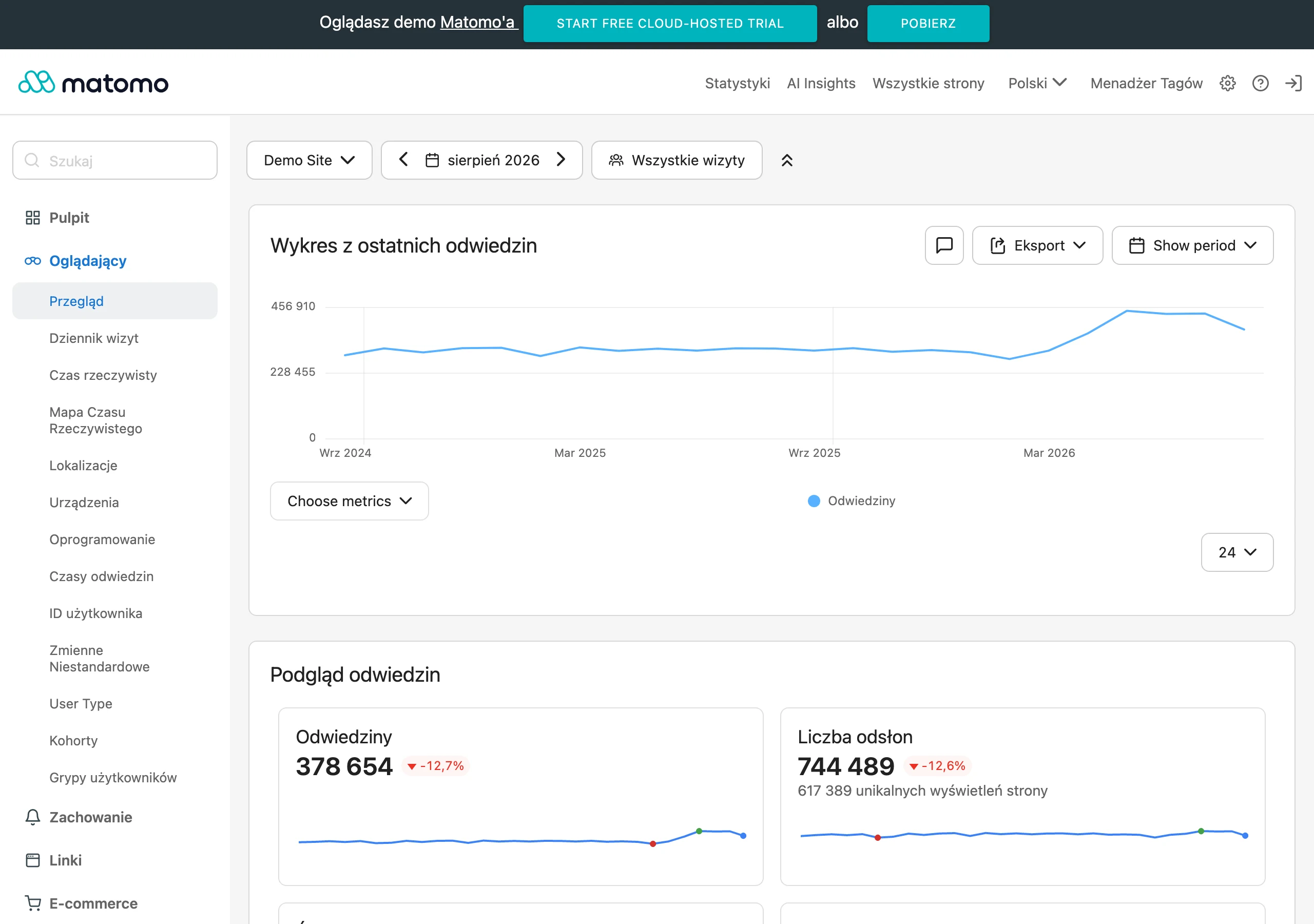
Metrics should be matched to the role of the post. A how-to article is assessed differently from material supporting sales or a content refresh within a topic cluster. That is why you should first define why the text was created and only then analyse the data.
- for an SEO goal: impressions, clicks, average position, CTR and the number of keywords for which the article appears,
- for a quality goal: engagement time, scroll, transitions to other pages and clicks on internal links,
- for a business goal: sign-ups, submitted forms, CTA clicks, sales enquiries or other conversions supported by the content,
- for an editorial goal: text preparation time, number of revisions, update pace and publication cost.
Comparing results within a consistent model is often the most practical approach. You can compare texts created with the help of AI with articles prepared earlier, but only on the condition that they cover a similar topic, have a similar level of difficulty and a comparable publication date. Otherwise, it is easy to draw false conclusions, because the result is also influenced by domain authority, seasonality, competition and the quality of distribution.
It is worth assessing not only the start, but also whether the result is sustained over time. Some texts created in a rush quickly pick up initial visits and then lose traffic, because they are too generic or fail to close the topic and answer the user’s follow-up questions. That is why a useful signal is also how often the article needs refreshing and whether it regains visibility after corrections.
The most telling insights come from combining quantitative data with qualitative assessment. If an article has impressions but a low CTR, the cause is often the title or meta description. If it generates traffic but engagement is weak, the problem usually lies in the structure, the lack of specifics or a mismatch with intent. Measuring the effectiveness of AI content makes sense only when, based on the data, you refine the brief, the editorial process and the way subsequent posts are optimised.
The most common mistakes and how to avoid them when using AI
The most common pitfalls when using AI include overly general prompts, publishing without editing, failing to match the reader’s intent, “artificial” SEO and skipping fact-checking. In practice, the tool itself is rarely at fault. More often, it is the way it is used that fails. If the input to AI is imprecise, the output will usually be superficial too.
- Too general a prompt. Instead of asking “write an article about AI”, specify the goal of the post, the audience, the scope of the topic, the tone of voice, the expected structure and the sources.
- No user intent. It is not enough that the text “is about the topic”. It should answer a specific question, problem or stage in the reader’s decision-making process.
- Publishing without final editing. AI can write fluently, but it sometimes oversimplifies, circles around the same arguments or provides uncertain information. Every text should be checked before publication.
- Artificial keyword stuffing. Keyword stuffing lowers the quality of the text and worsens the reading experience. Keywords should stem from the topic and natural language, not from mechanical repetition.
- Too broad a topic. The broader the scope of the post, the greater the risk of generalities. It is better to prepare one specific article than a long text that only skims many threads.
- No updates after publication. Even a good post loses value if it does not answer new user questions or contains outdated information.
Another common mistake is treating AI as an independent author rather than a tool supporting the editorial process. In that case, the text may be linguistically correct, but it does not bring experience, specifics or a clear point of view. The working model that works best is one in which AI prepares the working material and a human is responsible for selection, assessment and the final version.
Many average articles come from putting the entire process into one basket instead of breaking it into stages. One prompt is supposed to create the topic, structure, content and SEO straight away, which usually ends in misalignment and a lack of coherence. A much better approach is a sequence of steps: brief, outline, draft, gap analysis, editing and only then optimisation. Separating generation from assessment is one of the simplest ways to improve quality.
In practice, it is worth implementing a fixed checklist before publication. It should ideally cover alignment with the purpose of the text, search intent, facts, brand language, heading structure, internal linking and the quality of the CTA. A stable quality-control standard matters more than a “stronger” AI model.
Care also needs to be taken when scaling up. When the number of publications grows faster than editorial control, the blog quickly fills up with similar posts that compete with one another or give the reader nothing concrete. It is better to publish less, but with a clearly defined topic scope, unique value and an update plan.
FAQ
Frequently asked questions
How does AI help with creating blog content?
It speeds up research, planning, drafting and SEO optimisation. It can also help with headings, meta data, FAQ and updating older posts.
Can AI write a good blog article on its own?
It should not be treated as an independent author. Without editing, fact-checking and brand alignment, the text may be too generic or incomplete.
Why is a brief so important when writing with AI?
Because it defines the goal of the text, the audience, the scope, tone and SEO requirements. The better the brief, the lower the risk of generic points, repetition and drifting away from user intent.
When is it worth using AI to optimise blog posts?
It works best after preparing a draft, when you need to improve structure, readability and alignment with search intent. AI also works well when refreshing older content.
What should be checked after AI-generated content has been created?
You need to verify facts, remove repetition and adapt the text to the brand tone. It is also important to check whether the article actually answers the user’s question.
How can you assess whether AI-assisted content is performing effectively?
It should be measured against the article’s goal, not just how quickly it was published. It is worth checking, among other things, SEO visibility, engagement time, link clicks and conversions.