

AI in marketing has stopped being a curiosity. Today it is a set of concrete tools that speed up analysis, make precise communication easier and automate repetitive decisions. It works best where marketing is based on data, large audience scale and fixed processes such as campaigns, e-mail, leads or content creation. In practice, it is not about “implementing AI”, but about improving the result in one clearly defined area. AI delivers the greatest value when it has a specific business goal, good input data and human control over the outcome. Without these elements, it is easy to produce lots of activities that look modern but do not translate into KPI. That is why it is worth understanding not only the capabilities of AI, but also the areas where it genuinely increases marketing effectiveness.
What are the applications of AI in marketing?
The applications of AI in marketing are practical implementations in which models analyse data, forecast audience behaviour and support or automate operational decisions. So we are not talking about one function, but about an entire set of uses in campaigns, content, lead handling, segmentation and performance analysis. AI plays the role here of a data-based execution layer, rather than a replacement for strategy.
In practice, the system can indicate which users are more likely to buy, which message has a higher chance of being clicked, or when it is best to send a message. It can also prepare content variants, organise leads by quality or support budget allocation for advertising. The key point is that AI speeds up decisions that were previously manual, time-consuming or based on such a large amount of data that a person cannot conveniently process it.
Business value appears when AI improves a specific process, rather than just “generating something”. If it shortens campaign preparation time, improves segment relevance or passes priority leads to sales more effectively, the implementation makes sense. When there is no clear goal, metric or process owner, the whole thing usually ends in chaos.
It should also be made clear that AI should not operate without supervision in every area. Strategy, sensitive communication, product promises, brand consistency and fact-checking still require human involvement. A good practice is for AI to support analysis and execution, while the human takes responsibility for direction, approval and risk.
What are the key areas for AI implementations in marketing?
The key areas for AI in marketing implementations include data analysis, audience segmentation, communication personalisation, content creation, lead scoring, campaign automation and ad optimisation. These are precisely the processes where it is easiest to combine data with action and measure the impact on results. In practice, companies most often use AI not in separate systems, but inside CRM, advertising platforms, e-mail tools and analytics.
- customer segmentation and identifying similar audience groups,
- personalisation of offers, product recommendations and messages,
- creating and editing marketing content,
- chatbots and automatic handling of simple queries,
- lead scoring and prioritising contacts for sales,
- sentiment analysis, retention and customer churn risk,
- optimisation of ad delivery and budget allocation.
Segmentation and personalisation are among the most practical implementations, because they directly improve communication relevance. AI can combine purchase history, on-site behaviour, campaign responses and CRM data to build groups with genuinely different needs. This makes it possible to show one offer to new users, another to returning customers, and yet another to people close to churning.
Content is another important area, although it is easy to have unrealistic expectations here. AI is good at shortening the time needed to prepare ad drafts, subject lines, product descriptions or text variants for testing, but it does not ensure high quality without a solid brief and verification. The best approach is to treat AI as a tool for speeding up content production and testing, rather than as an independent author of publications.
In B2B marketing and wherever there are lots of leads, scoring is particularly useful. The model can analyse traffic source, user activity, content downloads, e-mail responses and firmographic data, and then indicate which contacts have the greatest chance of a sales conversation or purchase. This makes it easier to set the right order of sales actions and avoid wasting time on low-potential leads.
In performance campaigns, AI is most often used to optimise bids, creatives, audience groups and budget. The system compares signals from previous campaigns, user responses and conversion results, and then supports the selection of more effective combinations. However, the effectiveness of such an implementation depends on the quality of conversion data, correct analytics and sensibly set KPI, because without this the algorithm optimises something that does not necessarily have real business significance.
How does the AI implementation process work in marketing campaigns?
The process of implementing AI in marketing campaigns comes down to connecting the model to a specific task, data and performance metrics, and then regularly adjusting settings based on the results. In practice, it rarely starts with choosing a tool, but with deciding what should improve: lead quality, ad CTR, content creation time, abandoned basket recovery or customer retention. If the goal is not written down in a single KPI, the implementation usually quickly dissolves into actions with no impact on results. That is why at the outset it is worth defining the scope, the process owner and the point at which AI is meant to support a decision or take over part of the work.
The next step is preparing the input data and integrating it. AI must have visibility into what is already happening in marketing and sales, that is, data from web analytics, CRM, e-commerce, campaign history, forms, emails and user behaviour. This is usually where mundane issues come to light, such as duplicate contacts, inconsistent campaign naming, incorrectly assigned conversion sources or gaps in sales data. The model does not fix data chaos — it simply processes it faster.
When the data is organised, AI moves on to pattern detection and supporting operational decisions. It can identify audience segments, predict the likelihood of purchase, choose the optimal send time, assess lead quality or suggest variants of ad creatives. In performance campaigns, this often comes down to automatically allocating budget between stronger and weaker combinations of audiences, messages and placements. In email marketing, it may mean segmenting based on behaviour and creating several content versions for different groups.
After analysis comes execution, that is, launching campaigns, publishing content, sending messages, passing leads to sales or implementing product recommendations. The key here is to clearly separate actions that can run automatically from those that require human involvement. Strategy, product claims, sensitive communication, expert content and final brand approval should remain under the team’s control. The safest implementation model is a limited start: small scope, test, measurement and only then broader use.
The final stage is optimisation based on KPI, not on the mere impression that “AI works”. You need to measure the impact on conversions, acquisition cost, basket value, lead quality, retention or handling time, depending on the goal. The results should feed back into the process in a loop: AI output, test or publication on a limited basis, measurement, correction of prompts, rules or data, and another run. Without such a loop, even a good tool quickly starts suggesting decisions that are at best average.
What data is essential for effective use of AI in marketing?
For effective use of AI in marketing, the main requirement is organised first-party data, meaning your own data about users, campaigns, sales and audience behaviour. The most valuable sets are those that connect marketing activities with a real business outcome, rather than just a click or an email open. This means data from web analytics, CRM, the e-commerce system, purchase history, forms, marketing automation and lead handling. The best implementations do not have the most data, but the most useful and consistent data.
In practice, AI must draw on several types of information at the same time. The first group consists of behavioural data, such as page views, clicks, visit duration, abandoned baskets, material downloads and email reactions. The second is transactional and sales data: purchases, order value, purchase frequency, returns, margin or closed opportunities in CRM. The third is made up of data on acquisition sources and campaigns, showing where the user came from and which messages they previously had contact with.
Data describing the contacts and companies themselves is also highly important, especially when marketing works hand in hand with sales. In B2B, this will be firmographic data: company size, industry, position, stage of the buying process and sales activity. In B2C, purchase history, category preferences, repeat visit frequency, average basket value and the seasonality of behaviour more often come to the fore. It is precisely this information that enables sensible lead scoring, as well as segmentation and offer personalisation.
Data quality matters more than scale. When campaigns are poorly tagged, conversions are assigned to the wrong sources, and the CRM does not show which leads actually resulted in sales, AI will optimise against a false signal. This trap is often visible in ad automation: the system improves intermediate metrics, but this does not translate into higher revenue or better customer quality. That is why, before implementation, it is worth checking naming conventions, field completeness, contact deduplication and consistency between analytics and CRM.
Access to data alone is not enough; rules for using it are also needed. It must be clearly established who can feed the model with data, who approves content generated by AI, when the output requires manual correction and how to measure the impact on KPI. This is particularly important in the area of content, offer recommendations and customer communication, where it is easy to make a factual error or send a message that is inconsistent with the brand. Data must not only be available, but also legal, documented and embedded in the control process.
What are the best practices for implementing AI in marketing activities?
Best practices for implementing AI in marketing involve launching one clearly defined process with a specific KPI, rather than trying to automate everything at once. In practice, the areas that work best are those where the effect can be measured easily, such as email personalisation, lead scoring, product recommendations or support for content creation. First you choose the business problem, only then the tool. This makes it quicker to assess whether AI is actually improving the result, rather than merely increasing the number of actions.
The second good practice is to organise the data and integrations before the start. The system should work with consistent information from web analytics, CRM, campaign history, sales and user behaviour. When the data is scattered, duplicated or carelessly described, AI will make poor decisions regardless of the model’s quality. In marketing, AI most often loses not because of the algorithm, but because of a mess in the input data.
Implementation should also be based on a simple, clear accountability model. It should be defined who owns the process, who approves the content, in which situations the AI output can run automatically, and when it must undergo manual correction. This is particularly important for sales communications, product claims, expert publications and brand materials. Without such rules, it is easy to publish content that is inconsistent with the brand or at odds with the facts.
In content areas, an operational brief works well instead of a general prompt alone. It should include a description of the target audience, the communication objective, brand tone, the offer, language constraints, factual sources and the expected output format. This reduces the number of revisions and lowers the risk of generating content that is too generic or imprecise. The better you define the boundaries of the task, the less time you will waste on later corrections.
- start with one process and one main KPI,
- check the availability and quality of first-party data,
- connect AI with CRM, analytics and campaign systems,
- set approval rules and the scope of automated decisions,
- run a pilot test on a limited scale,
- measure the final outcome, not just intermediate metrics.
The most effective implementations work in a loop: AI output, a test on a small sample, measurement, correction of data or rules, and then relaunch. This model makes it possible to quickly filter out weak segments, ineffective creatives and incorrect scoring assumptions. AI delivers the best results when it is continuously corrected on the basis of real results, rather than left unsupervised. This approach can be safer and usually cheaper than a large deployment launched at full scale straight away.
How to avoid common mistakes when using AI in marketing?
Common mistakes when using AI in marketing are easiest to avoid by keeping an eye on the objective, data, the publication process and the way results are evaluated. Most often, the problem starts with implementation without a clearly defined business question. If the team is not sure whether it wants to improve lead quality, retention, acquisition cost or content production time, AI becomes an add-on with no noticeable impact on results. In such a situation, it is easy to mistake activity for effectiveness.
The second common pitfall is feeding the system low-quality data. This includes, among other things, incorrect lead labels, incomplete purchase histories, poorly connected traffic sources or a lack of consistent conversion definitions. When the model learns from outdated or inconsistent data, it begins to reinforce existing distortions. In practice, it is worth regularly checking whether the data from CRM, e-commerce and analytics describe exactly the same events.
Another equally common mistake is publishing AI-generated content without checking it. This applies especially to product descriptions, guides, legal communications, chatbot replies and expert materials. AI can write fluently, but that does not mean factual accuracy, brand consistency and reputational safety. A text that sounds credible can still contain errors, which is why final human review is mandatory.
A problem can also be evaluating effectiveness solely on the basis of intermediate metrics. A higher CTR, more email opens or more generated leads do not necessarily translate into better sales. If scoring delivers more contacts but the sales team closes fewer opportunities, the system needs fine-tuning. The most important metrics are final KPIs: lead quality, acquisition cost, revenue, retention or customer value.
- do not implement AI without one clearly written business objective,
- do not assume the model will remove data errors on its own,
- do not publish content without verifying facts and brand consistency,
- do not leave automation without escalation and approval rules,
- do not ignore privacy, marketing consents and data usage rules,
- do not assess the project solely by metrics that have no bearing on sales.
It is also worth being careful with automation “too broadly”. Not every task should be handed over to AI, especially when it requires sensitivity to context, risk assessment or responsibility for the message. Strategy, SEO brand positioning, sensitive replies to customers and decisions involving a large budget still need human involvement. The best working model is division: AI speeds up analysis and production, while the human is responsible for the final decision.
The final mistake is a lack of governance, meaning rules for running the process. The team should be clear about what data may be passed to the tool, who approves the output, how changes are archived and when automation should be switched off. This is not a formality, but a way to reduce costly mistakes. With clear rules, AI becomes operational support rather than a source of chaos.
How to measure AI effectiveness in marketing campaigns?
AI effectiveness in marketing campaigns is assessed by comparing the business result before implementation with the result after implementation, or by comparing the AI variant with the non-AI variant. The benchmark should arise directly from the process objective, otherwise it is easy to treat as a success a change that improves only intermediate metrics. When AI supports performance advertising, the key metrics will be acquisition cost, conversion and sales value. In the case of e-mail marketing, what matters is not only opens and clicks, but also the impact on orders, leads or retention.
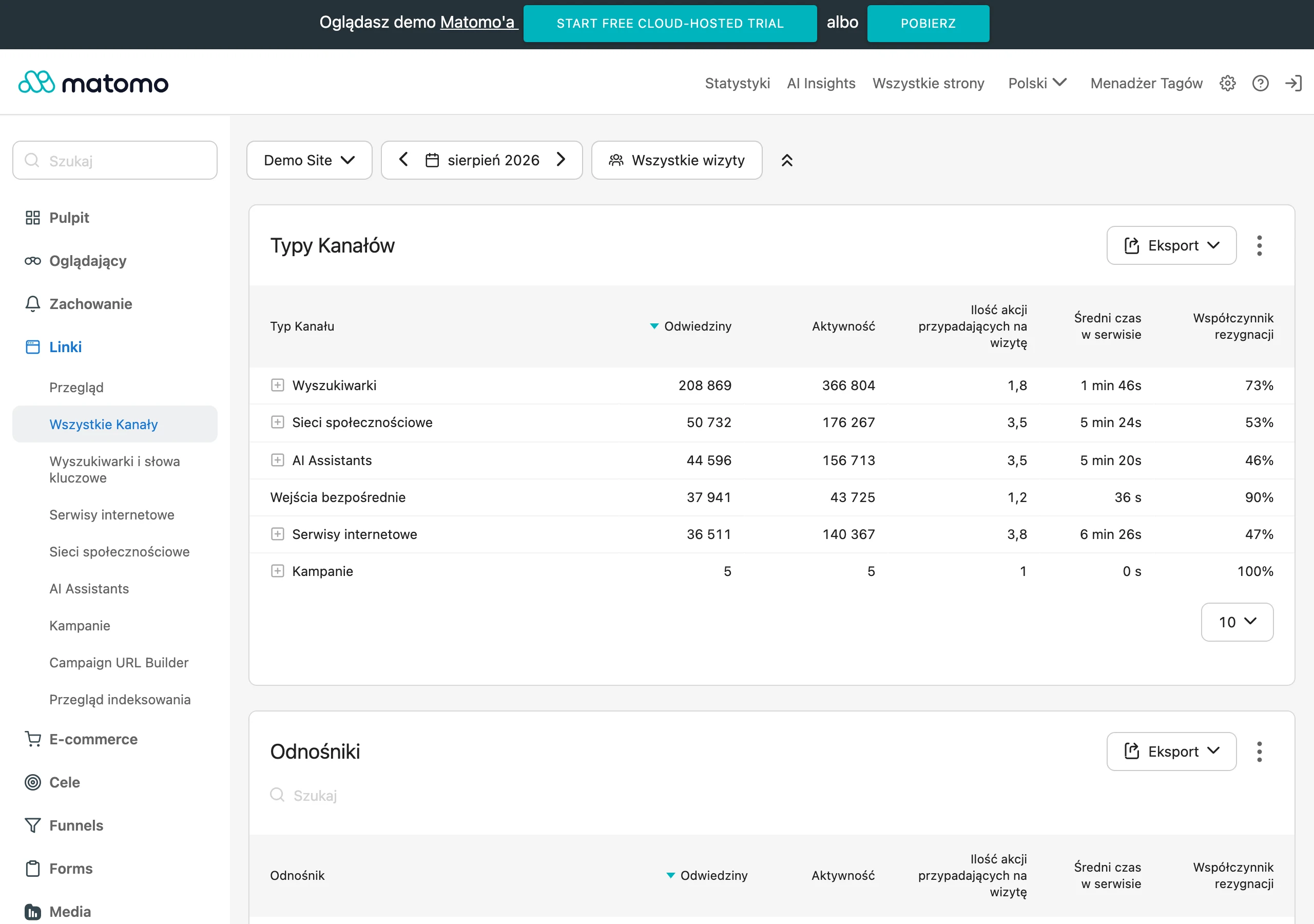
The most important principle is simple: measure AI at the level of the business KPI, not just at the level of system activity. A higher volume of generated content, more segments or faster chatbot responses are not valuable in themselves. What matters is whether the campaign sells more, does so more cheaply or passes valuable leads to sales more quickly.
In practice, the best approach is measurement using a control group, an A/B test or a pilot on part of the traffic. This approach makes it possible to see the real impact of AI instead of the effect of seasonality, promotions or simply a bigger budget. If you do not have a point of reference, you do not know whether AI made the improvement or whether the campaign conditions simply changed. For simple implementations, comparing a few weeks before and after may be sufficient, while in larger campaigns it is better to keep a manual variant running in parallel.
The choice of metrics depends on the use case. In communication personalisation, you analyse CTR, conversion rate, revenue per recipient, basket value and unsubscribes. In lead scoring, the key metrics are the percentage of leads accepted by sales, response time, number of sales opportunities and the quality of closed deals. In advertising automation, acquisition cost, ROAS, the share of budget wasted on weak segments and the stability of performance over time will be particularly important.
Indirect metrics are useful, but they cannot be the only basis for evaluation. Email opens, time on site, the number of generated ad variants or the speed of content production tell you about process efficiency, but they do not determine the business outcome. That is why it is worth splitting the dashboard into two layers: operational and business. The first shows whether the process is working, and the second whether it is actually improving the result.
It is also worth measuring the quality of the input data and the quality of AI outputs. If the model receives incorrect lead labels, an incomplete purchase history or inconsistent data from the CRM and analytics, the assessment of effectiveness will be distorted. The same applies to AI-generated content: it is a good idea to track the number of editorial corrections, rejected materials, factual errors and cases of brand inconsistency. Sometimes AI speeds up work, but increases the cost of control and fixes, so the full balance sheet must include both elements.
When analysing results, you need to take the delay in effect into account. Some implementations give a signal almost immediately, such as improving CTR or shortening handling time, but others require longer observation, for example retention, churn or the quality of leads after passing through the entire sales funnel. That is why it is a good idea to set the evaluation window before launch. Otherwise, it is easy to close the test too early or keep a solution running for too long when it is not delivering.
A good measurement model should end with an operational decision, not just a report. If AI improves one metric at the expense of another, you need to decide in advance which one has the higher priority. For example, a higher CTR is not always beneficial when acquisition cost rises at the same time or lead quality falls. The most useful measurement is the one that lets you decide whether to scale, improve the data and rules, or switch off a given implementation.
FAQ
Frequently asked questions
What are the most important applications of AI in marketing?
AI supports data analysis, audience segmentation, communication personalisation, lead scoring, campaign automation, content creation and ad optimisation. It works best where data can be combined with measurable results.
How does AI implementation work in marketing campaigns?
First, you set a specific goal and KPI, then connect the model to the data and the process it is meant to improve. Next, you test the solution at a small scale, measure the result and adjust the settings.
What data is needed for AI to work effectively in marketing?
The most important thing is organised first-party data from web analytics, CRM, e-commerce, campaign history, sales and user behaviour. Data consistency and quality also matter a great deal, because AI does not fix mess; it just processes it faster.
How does AI help with segmentation and communication personalisation?
AI combines purchase history, on-site behaviour, campaign responses and CRM data to create groups with different needs. This makes it possible to tailor the offer and message for new customers, returning audiences or people close to churning.
Can AI support the creation of marketing content?
Yes, but mainly as a tool for faster preparation of drafts, subject lines, product descriptions and copy variations for testing. It does not replace a solid brief or verification, so a human should still control quality and brand alignment.
What are the best practices for implementing AI in marketing?
It is best to start with one process and one main KPI, and only then expand the scope of use. It is also worth ensuring data quality, integration with CRM and analytics, and clear rules for approving AI-generated outputs.