

Implementing AI into marketing in a small business is not a one-off “switch it on and forget it” exercise. It is more a matter of structuring specific actions, data and tools so that they genuinely increase sales and help in acquiring customers. In practice, it is about shortening working time, improving the quality of selected processes and achieving results that can be measured, not just “felt”. It makes the most sense where there are repetitive tasks, plenty of data and a clearly defined end result. The most common mistake small businesses make is starting with the tool rather than with the business goal and clean data. A well-designed implementation does not replace the whole marketing function; it relieves the team exactly where automation delivers a real return. In this section, I explain what such an implementation is and what stages it usually consists of.
What is AI implementation in small business marketing?
Implementing AI in marketing for a small business means designing and launching specific marketing processes supported by artificial intelligence. So it is not about simply buying access to a model or platform, because that is only the beginning. The key is for AI to work on the company’s data, within a defined process and according to established rules, rather than “running wild”.
The starting point is often fairly mundane. The company wants to respond to leads faster, produce content more cheaply, segment its database more effectively or improve campaign performance, and the question is: what of this can be turned into a repeatable process. The implementation then involves checking where the workflow steps can be described in a way that allows them to be repeated without improvisation. If the input, decision and expected output cannot be clearly described, automation will usually be weak or costly to maintain.
In small businesses, AI most often supports content generation and editing, preparing ad variants, e-mail marketing, lead scoring, website chatbots and analysing customer questions. These are not random areas, but ones in which a similar workflow repeats and it is easy to check quickly whether the output makes sense. A practical example is simple: instead of manually writing every service description from scratch, the company designs a process in which AI prepares a draft based on the offer, keywords and brand tone, while a person finalises the quality, approves it and makes improvements.
A good implementation works in layers. It combines data, an AI tool, automations and the team’s way of working, because only this mix delivers results. The language model on its own does not solve the problem if the CRM is disorganised, forms collect data badly or nobody monitors content quality. The greatest value appears when AI works on the company’s real data, rather than general knowledge from the internet.
This also means there are limitations that need to be put on the table from the outset. The quality of source data, access to the CMS, CRM, analytics and ad accounts, as well as compliance with data processing rules, all matter, because without them even the best implementation scenario starts to fall apart. In practice, some companies first need to improve conversion tracking, organise their offer and gather sales materials before AI starts delivering results that can be defended with numbers.
The outcome of the implementation should not be just “we have AI”. What should remain is a set of ready-to-use operational elements that can be plugged into day-to-day work without improvisation. Usually this means a process map, a set of prompts or agents, integrations, a performance dashboard, automation scenarios and rules for content approval. This allows the team to know when AI can act independently, when human oversight is needed and how to judge whether the solution is actually delivering results.
What are the key stages of AI implementation?
AI implementation is not a single “click”, but a sequence of steps. The key stages are audit, use-case selection, data preparation, technology selection, process design, integrations, configuration, testing, launch and later optimisation. This sequence matters because the business case is checked first and only then are the tools selected. In a small business, it is wiser to start with one process rather than trying to rebuild the whole marketing function at once. The safest implementations start with a limited scope, one data set and a few clear evaluation metrics.
The first stage is the initial audit. It sounds serious, but it is really just a simple question: what works today and what eats up time. At this stage, you assess marketing goals, lead sources, the current sales journey, content quality, available systems and organisational constraints. Only then can you see where the business is going round in circles, where it has repetitive tasks and whether the data is organised well enough for AI to work with it.
The second stage is choosing the use case, that is, deciding which process to implement first. And this is where the catch appears: what wins is not the “most impressive” option, but the one that can be measured and repeated. In practice, this might be SEO content creation for one service category, automatic sorting of leads from a form, preparing ad variants or a chatbot based on the company’s knowledge base. At this stage, you need to define immediately what you will count as success: shorter response time, more complete data, better lead quality or faster content preparation.
The third stage is data preparation. This is usually where illusions end. It includes organising the offer, FAQ, personas, sales materials, campaign history, conversion data and brand communication rules. If the company does not have proper tracking and a sensible data structure, AI will usually only speed up the existing chaos.
The fourth and fifth stages are the choice of technology and designing the workflow. This is the point at which, instead of “what are we buying”, “how is this meant to work in practice” becomes more important. You need to decide which tools will be used for content generation, automation, e-mail marketing, CRM, analytics and knowledge storage. It is equally important to establish what the inputs to the process are, what rules AI applies, where validation takes place and at which point a human approves the output.
The sixth and seventh stages are integration and configuration of specific use cases. Without this, you are left with data silos and manual retyping, which is exactly what was meant to disappear. In practice, forms, the website, CRM, GA4, Search Console, the e-mail system and advertising platforms are connected so that data flows without manual retyping. Only then does one configure the content generator, query intent classifier, lead scoring, chatbot or automatic campaign briefs.
The eighth stage is testing. The ninth is deployment into day-to-day work, which is the moment when theory collides with operational reality. Tests should check not only the quality of responses, but also alignment with the offer, factual accuracy, brand voice consistency, correct campaign tagging and the completeness of data flowing into the systems. Content relating to the offer, pricing, terms of cooperation and marketing promises should not be published without human review.
The final stage is optimisation based on real results. And it is this that separates a project that has been “launched” from a process that actually delivers results. In practice, prompts, segmentation rules, lead scoring, the automation structure and data sources are refined by looking at what genuinely works and what only looks good in theory. The key is for improvements to come from data, not intuition. A well-run implementation ends not only with the process going live, but also with a KPI dashboard, team instructions, human review rules and a plan for further improvements.
What should you pay attention to when choosing processes for automation?
Choosing processes for automation starts with a hard assessment. The question is: does this process have a clear business outcome, a repeatable flow and the data needed for AI to operate. In a small business, it is best to start with one process that already eats up time today or simply delays sales. The best process to start with has a clear end result, can be measured and does not require many exceptions. That is why handling leads from a form is usually a better candidate than fully automating all marketing communications.
Good processes to implement have a simple logic: input, decision, output. It works like an obstacle course, where you know where you start and where you are meant to finish. The input can be a form, an enquiry, a brief, a product list or a FAQ database. A decision may be, for example, lead classification, segment selection or choosing a message variant. The output becomes a ready response, a content draft, assignment to a stage in the CRM or the launch of an e-mail campaign.
- the process repeats frequently and follows a similar pattern,
- the company has the data needed to make a decision,
- errors can be detected and corrected without major risk,
- the process outcome has a real impact on leads, sales, working time or operating costs,
- it is possible to define performance indicators, for example response time, data completeness or enquiry quality.
Not every process makes sense to hand over to automation straight away. The problem is that where exceptions, discretionary decisions or sensitive information multiply, AI should rather support the human, not replace them entirely. Do not automate publishing, quotations or answers about terms of cooperation without a human approval stage. Instead of “faster at all costs”, it is better to have control, because that is what limits the risk of factual and communication errors.
In practice, the most sensible processes are things like content creation for one service category, ad variations, initial lead classification, answers to common questions or summaries of sales calls. It is a safe test bed. Each of them can be tested on a limited scope and the result assessed quickly before anything goes “wide”. Such a start gives a real picture of whether the company has sufficiently good data and whether the team can work with AI outputs, rather than just receive them.
First check the foundations. If the CRM is disorganised, lead sources are not tagged and conversions are not measured properly, automation will only amplify the mess instead of removing it. If the CRM and conversion measurement are disorganised, fix the data first and only then add AI. With small budgets, this is not a detail, but a decision that makes a difference.
What tools and integrations are essential when implementing AI?
AI needs infrastructure. When implementing it, you need tools for data, task execution and results measurement, plus integrations that tie it all into one working workflow. The AI model alone is not enough if it has no access to the offer, lead history, campaign results and the place where it is meant to hand over the output of its work. The effectiveness of an implementation depends more on integrations and data quality than on the AI model itself. The problem is that many companies start by choosing an app instead of first mapping the data journey from click to sale.
The minimum is simple. It usually includes a CRM, analytics, lead sources, an automation tool and execution channels such as a CMS, e-mail marketing or an ad system. The CRM stores lead data and sales results, while also organising statuses without which meaningful feedback is impossible. Analytics shows where users are coming from and which activities lead to conversions. The automation tool passes data between the form, AI, CRM and subsequent service stages so that nothing gets lost along the way.
- a CRM or other system collecting leads and sales statuses,
- GA4 and correctly configured events and conversions,
- Search Console for analysing queries and content generating traffic,
- a CMS or e-commerce platform if AI is to support content publication,
- an e-mail platform and ad system if the implementation includes campaigns,
- an automation tool for passing data between systems,
- the company’s knowledge repository: offer, FAQ, sales materials, brand guidelines.
Integrations have to close the loop. The most important are those that connect lead capture with a business outcome, not just with “passing the lead on”. The form on the website should pass data to the CRM, the CRM should return the lead quality status, and analytics should show the source of traffic and conversions. Only then can AI not only create messages, but also learn from real outcomes rather than assumptions. Without this, the company sees activity, but not effectiveness.
Content follows its own rules. If the implementation concerns content, integrations with the CMS, Search Console and often a source material library are needed so the model does not write “from thin air”. It should use the current offer, the brand’s language rules and a list of topics based on data, rather than random prompts. The question is whether you want nice paragraphs or text that delivers results. Otherwise, it is easy to end up with content that is linguistically correct but commercially weak and inconsistent with the offer.
If the implementation concerns lead management, the game is about the basics. It is about forms, the CRM and scoring rules, that is, the point where an enquiry becomes a “lead”, and the lead gets a priority and an owner. AI can classify enquiries by industry, location, service type, urgency or data completeness, but it must have somewhere to save the result and something to do with it next. The minimum sensible setup is a CRM, analytics, lead sources and an automation tool connected into one process. Only then does automation stop being a gadget and start delivering time savings and operational order.
Privacy and data security cannot be “added at the end” here. When passing data to external tools, you need to take into account marketing consents, cookie policy, the legal basis for processing and the scope of data sent outside the company. The key is a simple approach: instead of sending everything — send only what is necessary for the process to work. A good practice is to limit data to the minimum needed for the process to work and separate sensitive data from the content generation layer. This is especially important when AI handles customer enquiries or works on CRM data.
What are the most common mistakes and limitations of AI implementation?
The most common mistakes are painfully repetitive. They involve implementing AI without organised data, without a clear business objective and without human quality control. In practice, the company buys a tool but does not design the process in which that tool is meant to help in a real way, and does not define what a “good answer” is or who verifies it. The result is usually the same: the content is poor, leads are classified incorrectly, and the team loses trust in the whole implementation. AI does not fix mess in marketing, it just scales it very quickly.
A common mistake is also starting too broadly, that is, shooting blindly instead of running a precise test. A small company tries to automate content, ads, e-mail marketing and enquiry handling at the same time, even though it has no single process owner and no time for tests, iterations and fixes. The question is: who is meant to monitor quality when everything starts at once. It is safer to begin with one area, for example responding to leads from a form or creating content for one service, and only then expand the scope.
The second major limitation is the quality of the input data. If the CRM is incomplete, conversions are measured incorrectly and the offer exists only in the heads of the sales team, the model will work on an incomplete picture of the company and at best will “guess” part of the context. And that is not a cliché: the more missing data and inconsistent definitions there are, the more noise automation produces instead of decisions. The effectiveness of an implementation depends more on the quality of the data, the process and the integrations than on the AI model itself.
A problem can also be the lack of rules for approving content and responses. Generative models are capable of creating messages that seem correct, but are inconsistent with the offer, pricing, cooperation terms or the brand’s language, and that is a straight path to costly misunderstandings. That is why automatic publication or sending without review is risky, especially where marketing promises, legal information or sales details are involved. Not “control for the sake of control”, but a safeguard. If content affects sales, reputation or legal compliance, a human review stage should be mandatory.
Integrations and access to systems can also be a limitation. Implementation usually means connecting the website, forms, CRM, GA4, e-mail platform, CMS and advertising accounts into one sensible whole. The problem is that when some data does not pass between tools or comes through without the right tags, AI takes shortcuts. Decisions are then made on the basis of incomplete context, and reporting loses credibility.
In small companies, work organisation fails just as often. Who improves the prompts, who approves the responses, who spots errors in the integrations, and who finally analyses the results. Without this, you get chaos, not a process. Even a good tool will not work reliably if there are no simple roles, a review rhythm and a clear error-reporting path.
There are also legal and privacy limitations. When passing data to external tools, you need to check the legal basis for processing, marketing consents, cookie policy and the scope of data that is actually needed, not just “nice to have”. It is also key that the chatbot or assistant uses only the current, approved knowledge base, and refers questions outside its scope to a human or a form. The biggest problems appear when a company treats AI like an independent specialist rather than a tool working within a well-described process.
How do you monitor and optimise the effects of AI implementation?
The effects of AI implementation are measured by combining process, quality and business outcome metrics. The mere fact that a tool works technically proves nothing yet. The question is whether the team works faster, whether the data is more complete, whether leads are of better quality and whether campaigns make more accurate decisions. Only such a set says anything about whether the implementation makes sense.
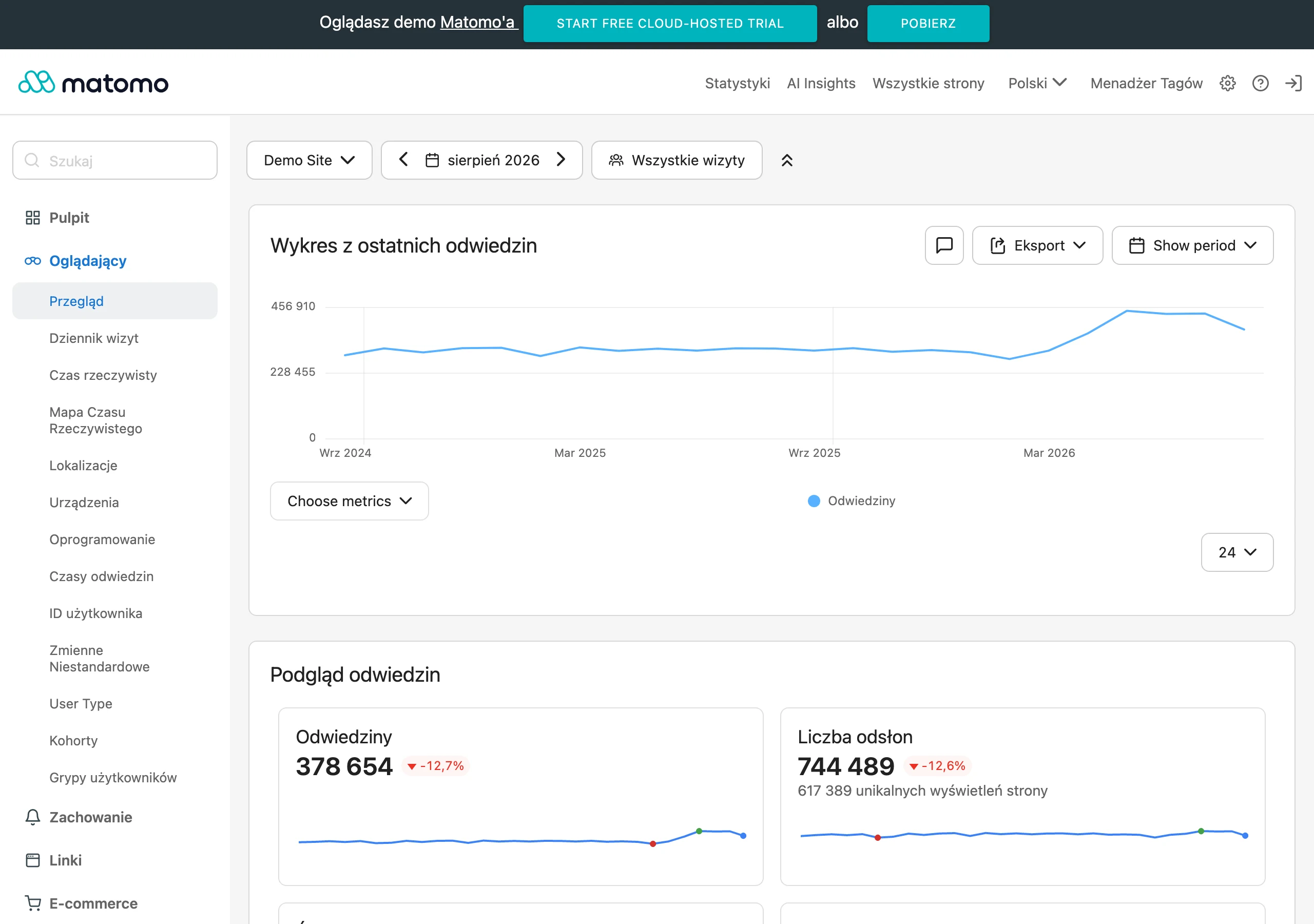
The most practical approach is to compare the “before” and “after” state for one specific process. For content, this could be the time needed to prepare material, the number of revisions and the share of content that genuinely generates traffic and conversions, rather than just filling the plan. For lead management, the more important factors will be response time, completeness of data in the CRM, consistency of classification with the actual quality of enquiries and downstream sales from those leads. If you cannot point to a measurable change in the process, the implementation is more of an experiment than a real improvement.
Beyond the numbers, you need to regularly check the quality of the outputs. In practice, this means reviewing samples of content, responses, scoring and segmentation, as well as checking whether the communication stays aligned with the offer, brand tone and current data. Data only speaks clearly once we stop ignoring the “dirt” in the details. It is therefore worth catching factual errors, duplicate content, poor CTAs, misinterpretation of customer questions and data loss in integrations.
Optimisation usually starts not with changing the model, but with improving the input. If the results are weak, first make the prompts more precise, organise the knowledge base, expand the FAQ, improve campaign tagging, add lead qualification rules or fix data transfer to the CRM and analytics. This is work “in the kitchen”, not on stage. What usually delivers the biggest improvement is better context and better rules, not another tool.
In paid campaigns with AI, you need to separate two things. Monitor the quality of recommendations separately and the hard campaign results separately, because these are two different worlds. The model may be excellent at grouping queries, suggesting message variations and summarising results concisely, but budget decisions must come from data from the ad account, acquisition cost and conversion quality. AI is there to support analysis, not run the business for you. And that is the key point: business control stays on your side, rather than being handed over to suggestions that cannot see the full context.
The rhythm of reviews makes a difference. A good standard is a fixed cadence, for example weekly for operational quality and monthly for business results. In such a review, you check what actually works, where exceptions are appearing, which rules are too broad and whether the whole process still fits the team’s real work. The question is whether this mechanism still reflects what is happening in the account, or just looks good in the report. AI implementation is not a one-off configuration, but a process of continuous tuning based on real data and errors from day-to-day work.
FAQ
Frequently asked questions
What does AI implementation for marketing in a small business look like step by step?
First, an audit is carried out, then one use case is chosen, the data is prepared and the technology is selected. Next, the process is designed, systems are integrated, the solution is tested, launched and optimised based on results.
Is it worth starting AI implementation across all marketing at once in a small business?
No, it is better to start with one process that can be measured and repeated. The article stresses that it is wiser to implement AI in a limited scope than to redesign the entire marketing function at the same time.
Which marketing processes are best to automate using AI?
The most sensible are repetitive tasks with a clear outcome and access to data. The article points to content, ad variations, e-mail marketing, lead scoring, chatbots and analysing customer questions, among others.
Why is data preparation so important before AI implementation?
Because without organised data, AI will only speed up existing chaos. You need sensibly collected information about the offer, FAQ, personas, campaigns, conversions and brand communication rules.
What tools and integrations are needed to implement AI in marketing?
You need tools for data, automation, analytics and task execution, as well as integrations between forms, CRM, CMS, e-mail marketing, ads and a knowledge repository. The AI model alone is not enough if it has no access to data and nowhere to deliver the output of its work.
When is human oversight needed in AI implementation?
Human oversight is especially needed for content about the offer, prices, cooperation terms and marketing promises. The article also recommends human review where there are exceptions, discretionary decisions or sensitive data.