

Content SEO
SEO content creation
I start with the arrangements and the brief, which set out the scope: the content types, the number of topics/pages, the languages, and responsibility for publication and approvals. On that basis I select keywords and topics by intent, map them to existing or planned URLs and analyse the SERP and competing content; where necessary, I audit the current materials.
About the service
Brief and keyword analysis for planning SEO content: intents, SERP, mapping
About the SEO content creation service
A few service details- Agreeing the scope and terms
- Brief: materials and priorities
- Selecting keywords by intent
- Mapping keywords to URLs
- Analysis of the SERP and competitor content
- Audit of existing content (optional)

Work process
How we work together: brief, keyword analysis and SEO content planning
I start with the brief, to set out the scope of work and the rules of cooperation. I then select keywords and map them to pages based on intent and SERP analysis. Next, I plan the content architecture and deliver the materials in stages, with subject-matter verification on the client’s side.
- 01/ 03
Brief and arrangements
I collect information about the offer, the audience, the tone of voice and the constraints, and agree the content types, the languages and responsibility for publication.
- 02/ 03
Keyword and intent analysis
I select keywords and topics to match user intent, analyse the SERP and competitor content, and map queries to existing or planned URLs.
- 03/ 03
Content plan and delivery
Based on the analysis, I organise the content architecture and prepare new materials or updates in line with the priorities and ready for subject-matter verification.
Arrangements and brief: key steps in creating SEO content
The arrangements and the brief set out the scope of work and the terms of cooperation in creating SEO content. At this stage I collect information about the offer, the audience and the tone of voice, as well as about industry constraints that may affect how the content is worded. We also agree which content types will be produced, how many pages or topics there will be, in which languages, and who is responsible for publication. As a result, the next steps (keyword selection, the content plan and writing) are carried out within a consistent framework.
The brief is effective when the client provides a complete set of materials and gives access to subject-matter knowledge. Materials from the client are required: product or service information, current content, brand guidelines, subject-matter sources and a list of priorities, as well as a contact for a subject-matter expert for verification. If approvals are delayed or source content is missing, delivery may be put on hold. It is worth specifying in the brief whether the work will concern new materials or updates to existing ones, and who is responsible for implementation.
- Collecting information about the offer, the audience, the tone of voice and industry constraints.
- Agreeing the scope: content types, number of pages/topics, languages and responsibility for publication.
- Obtaining materials from the client, the priorities and a contact for a subject-matter expert for verification.
Keyword and user intent analysis
Keyword analysis and user intent analysis consist of selecting keywords and topics based on user queries and their intents. In practice I take into account informational, comparative or transactional intent, as well as language variants and topical relationships between subjects. This stage is carried out in line with what was agreed in the brief, so that the keywords support the goals of the content and fit the brand’s way of communicating. The result of the analysis is the basis for further planning of the content architecture and subsequent materials.
As part of the analysis I map keywords to pages, in order to assign primary and secondary queries to existing or planned URLs. The aim is to limit keyword cannibalisation and organise the content architecture before new pages or updates are created. In parallel, I analyse the SERP and competing content, checking which formats dominate, which threads are standard and what is missing from a subject-matter perspective. If materials already exist on the site, the analysis may include a content audit in terms of usefulness, topic coverage, duplication, heading quality and internal linking.
- Selecting keywords and topics with intent in mind: informational, comparative and transactional.
- Mapping keywords to existing or planned URLs in order to limit keyword cannibalisation.
- Analysis of the SERP and competing content: result formats, standard threads, subject-matter gaps.
- An optional audit of existing content: usefulness, duplication, headings and internal linking.
Mapping keywords to pages: avoid keyword cannibalisation
Mapping keywords to pages consists of assigning primary and secondary queries to specific existing or planned URLs so as to limit keyword cannibalisation. In practice this organises the content architecture and makes it easier to decide whether it is better to develop an existing page or create a new one. In the mapping I take into account topical relationships and how well the topic matches user intent, so that every URL has a clear role. The result is a clear division of topics and keywords that brings order to further content production.
The mapping leads directly to the “new content vs update” decision, because it shows the risk of duplication and where pieces of content could compete for the same keywords. If materials already exist on the site, the conclusions from assessing usefulness, topic coverage, duplication, heading quality and internal linking help to identify content to update, merge or split. This stage is also a reference point for later on-page optimisation, when keyword cannibalisation is verified and a change of keyword targeting may be recommended. This makes it easier to maintain the topical consistency of the site in subsequent publications.
- Assigning primary and secondary keywords to existing or planned URLs.
- Organising the content architecture and limiting the risk of keyword cannibalisation.
- The basis for the decision: creating new content or updating existing content.
- Guidance on merging, splitting or changing keyword targeting when a risk of duplication arises.
Content planning and topic prioritisation
Content planning and topic prioritisation mean setting the order of production or publication and defining the goal of each piece of content and the elements required on the page. At this stage I choose formats, such as an article, a category description or a landing page, in line with the keyword mapping and the intent of the queries. I also take into account the decision on whether we are working on new materials or on updating existing pages, in order to minimise the risk of duplication. The result is a document that brings order to content production and makes subsequent delivery decisions easier.
The key outcome is the Content plan (deliverable) — a list of topics or URLs with assigned keywords, intent, suggested format, required sections and delivery priority. The plan becomes the basis for preparing outlines and structure before the actual copy is written. The scope and pace of planning are affected by factors such as the number of pages, the level of research, the need for subject-matter consultations, formal requirements (e.g. in regulated industries), the number of feedback rounds, the availability of source content and decisions concerning implementation. It is worth taking these dependencies into account as early as the prioritisation stage, because they affect how smoothly the rest of the delivery runs.
- Setting the order of production/publication and choosing content formats.
- Defining the goal of the content and the elements required on the page.
- Deliverable: a list of topics/URLs with keywords, intent, format, sections and priority.
- Taking into account the factors that affect the scope: number of pages, research, subject-matter consultations, formal requirements, feedback rounds, availability of sources and implementation decisions.
Outline and structure: the foundations of effective content
The outline and structure organise the layout of a page or article so that the content is complete, readable and in line with the intent of the queries. At this stage I prepare proposed headings and the order of sections, and indicate elements that can support the user’s decision, such as FAQs, comparisons, steps or examples. In the structure I allow for places for internal linking and any visual materials, if they are meant to make the topic easier to understand. As a result, writing and editing follow a clearly defined content plan at section level.
The result of the work is the Content outline (deliverable) — a document with the proposed H1–H3, the scope of the sections and a list of user questions to be addressed in the content. In the outline I also include a proposed CTA and notes for subject-matter additions, which make verification on the client’s side easier. This material is a reference point for copywriting and editing, as well as for later on-page optimisation. If, in the course of clarifications, a change to the scope of the sections proves necessary, I make the corrections at the level of the structure, before the final version is written.
- Content layout: headings, order of sections and the required elements supporting the decision (FAQs, comparisons, steps, examples).
- Indicating places for internal linking and for visual materials.
- Deliverable: a document with H1–H3, the scope of the sections, user questions, a proposed CTA and subject-matter notes.
On-page optimisation: the key to SEO effectiveness
On-page optimisation refines the finished draft so that the content is consistent with SEO requirements and, at the same time, useful to the user. In practice it covers work on a clear structure, topical coverage without overdoing it, and the elimination of repetitions that reduce the clarity of the message. I refine passages to match intent and user questions, so that the content answers what the reader is actually looking for. This stage is carried out after copywriting and editing, and before the material is handed over for verification and approval.
As part of the optimisation I check for keyword cannibalisation and duplication, verifying that the content does not compete with another page for the same keywords and does not repeat passages. If the risk exists, I prepare recommendations: merging, splitting or changing keyword targeting, depending on the situation within the site. In parallel, I refine the trust elements, supplementing the content with sources, definitions, explanations, examples and other components that support credibility (e.g. sections on authorship or methodology, if they are used on the site). The version after optimisation is ready for proofreading and subject-matter verification on the client’s side.
- Matching the content to SEO requirements: structure, limiting repetitions, refining for intent and user questions.
- Checking for keyword cannibalisation and duplication, with recommendations: merging, splitting or changing keyword targeting.
- Adding trust elements: sources, definitions, explanations, examples and components that support credibility (if used on the site).
Testimonials
What clients and the industry say
Feedback from clients and industry people I have worked with on SEO projects.

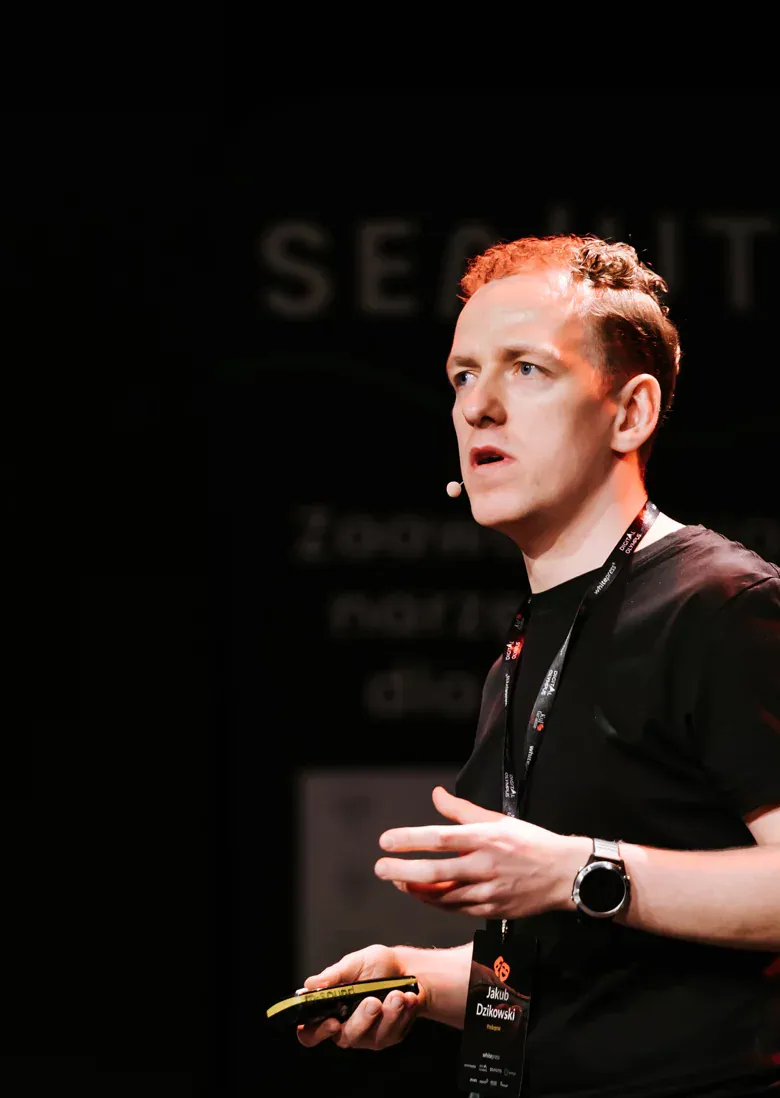
I had the chance to work with Kuba at Kulturalnie o SEO, an event I organise. Kuba did a great job as a speaker and received high marks from the audience. He showed professionalism and broad knowledge. In other projects at Vestigio, Kuba shows enormous commitment, a willingness to explore and implement new ideas, and excellent organisation of his work.

01 / 08
You talk to me, not a salesperson
Tell me what you want to achieve. I’ll reply personally
I work as a freelancer: the same person reads your message, prepares the quote and then runs the project. No sales team in between.