

Realistic marketing goals for a quarter are not a bold slogan. They are a plan for an outcome that can actually be delivered and then checked without excuses, because it grows out of data, budget, team capacity and the pace of implementation. In practice, it is not just the number of leads or sales that matters. It is also crucial whether you understand where that result comes from and what you do when the chart starts to drift sideways. The most common mistake is setting a final target without checking whether the company actually has the conditions to deliver it and measure it reliably. That is why a sensible quarterly goal ties the expected business outcome to leading indicators, the scope of activities and clear accountability. It is not a wish, but a controllable plan.
What realistic marketing goals for a quarter are
Realistic marketing goals for a quarter are outcome and operational goals that genuinely support the business and fit within three months. It sounds simple. In practice, they may mean increasing the number of qualified leads, improving the conversion rate, more organic traffic on service pages, or better profitability of paid campaigns. Their purpose is down to earth, but unforgiving. They prioritise work and tell the team what it should focus on in a given quarter instead of running after everything at once.
A goal is realistic when it starts from the baseline, not from a deck of wishes. The data makes it clear: you need to take into account results from previous periods, seasonality, the quality of the offer, team capacity and how many changes can realistically be implemented in that time. If the company does not have the resources for new landing pages, ad tests and analytics improvements, then even a well-phrased goal may be unrealistic from the outset. So the question is not “how much do we want”, but “what can we do so that this has a chance to work”.
In practice, the goal statement itself does not solve anything. You need data sources, an owner of the goal, the channel scope, a definition of success, leading indicators and specific checkpoints. Only then do you know not only what you want to achieve, but also how you will recognise that the plan is moving in the right direction. Instead of belief, you get control.
A well-set quarterly goal usually combines the final outcome with leading goals. If the final goal is more sales from inbound, then the leading indicators may be a higher number of sessions on service pages, a higher ad CTR, a lower cost per lead or better enquiry quality assessed in CRM. This matters because the final result often appears with a delay, and leading indicators show earlier whether the growth mechanism is working. In other words: you do not wait until the end of the quarter to realise that something is off.
The significance of such a goal is purely operational. It is what decides which channels to develop, what content to create, which tests to launch and what to consciously give up in a given quarter. Instead of doing “a bit of everything” — you do less, but more precisely. Without this, marketing easily gets distracted by many activities that are labour-intensive and only weakly affect the result, if at all.
The current operational context of quarterly goals
The current operational context of quarterly goals is simple. Their credibility depends on measurement quality and on whether departments speak the same language. If analytics has gaps, CRM does not reflect lead quality, and sales and marketing understand MQL and SQL differently, then the assessment of effectiveness starts to mislead within a few weeks. In such a setup, even an increase in lead volume does not answer whether marketing actually delivered a better result.
The biggest brake is rarely the idea. The problem is that there is no coherent data and no shared definitions, so everyone counts “their own”. Marketing may report lots of conversions, but sales may assess those contacts as poor, irrelevant or simply not ready. That is why a realistic quarterly goal should take into account not only volume, but also lead quality, response speed and the impact on sales.
There is also the delay in results. Paid campaigns need time for learning, creative testing and optimisation, and SEO, content or website changes rarely show the full result straight away. That means a goal set solely around a quick final result can be unstable and push the team into poor decisions. The most common one. Turning off activities too early, just as they are starting to work.
Technical and organisational constraints also affect how realistic a goal is. These include, among other things, data feed quality, website performance, form functionality, availability of the content team, the speed of deployment on the development side and the limitations of ad platforms. These are not “details”. They are pieces of the puzzle that can overturn even a sensible plan. In practice, a quarterly plan should take these dependencies into account from the outset, rather than discovering them only when they block delivery.
In current conditions, the most useful goals are based on a mix of outcome, quality and process indicators. The number of page views, clicks or forms alone is not enough if you do not know whether the traffic has buying intent and whether leads turn into real sales opportunities. A better approach is to look at the number of leads, their segment, acquisition cost, follow-up effectiveness and their further status in CRM at the same time. Not X, but Y. Not “how much”, but “what it leads to”.
How realistic marketing goals are set and managed
Realistic marketing goals start with the business outcome. Only then do you break them down into metrics, channels, activities, delivery conditions and a control method. At the start, you need to answer what effect marketing is meant to deliver in a given quarter: more qualified leads, better campaign profitability, a greater share of organic traffic on service pages, or a faster move from lead to sale. And one question is crucial here: what exactly will we consider success. Only after that do you check the baseline in the data. Without this order, it is easy to set a goal that looks great on a slide but is operationally just fragile.
The starting point audit must not end with a GA table. It should cover analytics, CRM, ad systems, SEO and hard information from sales. You are looking not only at the number of sessions and conversions, but also at lead quality, the effectiveness of landing pages, seasonality, earlier tests, technical constraints and the simple human availability of the team. A quarterly goal only makes sense when you know what level you are starting from and what is really blocking performance today.
Next comes choosing the main KPI and the supporting metrics. Without this, you are lost. The main KPI should show the business outcome, and the supporting metrics explain whether the growth mechanism is actually working or just looks nice in the report. In practice, you can measure the number of SQLs, cost per lead, form conversion rate, sessions on service pages and pipeline value in parallel, but not all of these numbers carry the same weight. The most common mistake is treating reach, clicks and pageviews as the end goal, even though they are only a supporting signal.
Then you choose the channels and growth levers according to the specific bottleneck. And there is no magic here. If the problem is too little traffic with purchase intent, the priority will be SEO, content or paid campaigns. If the traffic is already there but converts poorly, landing pages, forms, CTAs, content layout, trust signals and CRO tests will become more important. And if leads come in but sales does not close them, the key is improving qualification, handoff to sales reps and feedback from CRM.
Every goal also needs to be broken down into actions and dependencies. Specifically, not “in general”. This means a list of pages to improve, content plan, campaign structure, test backlog, required analytics implementations, task owners and review dates. Just as important are execution conditions: access to accounts, the ability for development to deploy changes, form integration with CRM, legal approvals and materials from sales. The problem is that when these conditions are not in place, the goal has to be adjusted rather than pretending the obstacle will disappear on its own.
At the same time, you build the measurement plan. Without it, you are blind. It includes events, goals, UTM parameters, form and call tracking, offline conversion import, consistent campaign naming and a dashboard for day-to-day control. Without proper measurement, a quarterly goal is not controllable, because you cannot tell real improvement from noise in the data.
Managing the goal during the quarter is regular optimisation, not waiting for the “big finale”. The question is what you improve every week, not what you describe on a slide afterwards. You need to compare performance against the baseline, check deviations, move budget between channels, switch off activities with no impact and diagnose whether the problem lies in reach, messaging, the page, the offer or sales performance. In the end, a report alone is not enough. You need a list of conclusions: what worked, what not to scale, which segments were the best and what to carry into the next quarter.
What to do to make a marketing goal realistic and controllable
A marketing goal should be deliverable. And controllable. To make that possible at all, you need to cut the number of priorities, base the plan on data and decide in advance when and how you will correct course. The best approach is to start with one main goal for the quarter and at most a few supporting metrics. This structure brings order to budget, accountability and pace of work. When you try to improve everything in parallel, in practice you do not improve anything permanently.
The goal has to stand on solid ground. If the site needs rebuilding, analytics is incomplete, campaigns are only just “learning” the algorithms or the content team has limited capacity, those conditions cannot be a footnote but must be part of the plan. A realistic goal does not ignore obstacles; it includes them as part of execution. That makes it easier to decide whether the result was ambitious but achievable, or built from the outset on assumptions without substance. The question is: what can you really get through in this quarter.
It is also crucial to separate the impact of marketing from what results from price, the offer, the product or the work of salespeople. Marketing is responsible for traffic quality, page effectiveness, acquisition cost and initial qualification. Sales delivers contact speed, follow-up quality and closing opportunities. The number of leads on its own is not a good definition of success if you do not know which of them are relevant and handled on time. So do not count units. Count sense.
That is why it is worth bringing CRM data into the assessment of the goal. Lead statuses, reasons for loss, customer segment, enquiry source and information about revenue or pipeline show whether growth is qualitative or only “inflating” the number of weak contacts. This is the moment when the data clearly shows whether marketing is feeding the right engine. In practice, this is often where it turns out that the problem does not lie in advertising or SEO, but in misaligned messaging or in the way leads are handed over. And that is not a minor detail, but a bottleneck.
Control points need to be set before the quarter starts. Not only when the result starts to drift. The simplest and usually most effective logic looks like this:
- if traffic grows but conversion does not, check the page, the offer, the form and UX,
- if conversion grows but the leads are poor, improve targeting, messaging and qualification criteria,
- if the leads are good but sales is not growing, analyse sales handling, response time and the follow-up process.
Such a framework saves time. It immediately directs attention to where the real problem is. Not every drop in performance means there is a channel issue. Sometimes the channel is working properly, but the landing page, form, overly broad audience or lack of feedback from sales becomes the blocker. But be careful: without this feedback loop, you are stumbling in the dark, even if the dashboard looks “nice”.
After the quarter, it is not about simply settling the plan. It is about decisions for the next stretch. You need to know what to scale, what to stop, which segments are most profitable, which content and pages to develop and what data gaps to close before the next planning cycle. This is the moment when strategy meets operations, instead of ending on a slide. A good quarterly goal ends with an operational decision, not just a performance report.
The most common mistakes when setting quarterly goals
The most common mistakes start out trivially. A target is set without baseline data, without defining the quality of the result and without checking whether the team actually has the conditions to deliver it. In practice, the problem rarely lies in ambition itself. More often it is that the target has no owner, no assigned measurement, or assumes actions that cannot realistically be implemented in that quarter. A quarterly target stops being realistic when it is only a number in a report, not an execution plan.
It is also a mistake to mix up the responsibilities of marketing, sales and product. If marketing is responsible for the number of leads, but sales does not assign statuses in the CRM, there is no fair way to assess the quality of the result. The problem is that the culprit is often not traffic, but the offer, pricing or the sales rep’s response time. And then growth in visits or forms alone does not close the business goal.
- Setting a target based on board expectations rather than data from comparable periods.
- Choosing vanity metrics such as reach or impressions without linking them to intent and conversion.
- Lack of a single definition of a lead, MQL, SQL or sale attributed to a marketing source.
- Planning too many priorities at once, causing the budget and the team’s attention to be spread across several directions.
- Launching activities without ready analytics, form integrations, UTMs and data quality controls.
- Ignoring the time needed for implementation, content indexing, campaign learning and site tests.
A separate mistake is the lack of conditional decisions in case of deviations. When traffic grows but conversion stalls, a quick shift of focus to the page, form or offer matters. When conversion grows but the leads are weak, the source of the problem usually lies in targeting, the message or campaign match being too broad. The question is: what do we do when the intermediate metrics do not deliver on the promise. A good quarterly target includes not only the target outcome, but also a correction plan if the leading indicators move in the wrong direction.
Seasonality and operational constraints are often overlooked. A comparison with the previous quarter can be misleading if a strong season, promotion or new offer was in play in one period. Context matters, not the chart alone. A realistic target must be set against the backdrop of the available budget, team capacity, site condition, feed quality, development support and the speed of the sales team.
How to measure the effectiveness of quarterly marketing targets
The effectiveness of quarterly marketing targets is measured by comparing the final result with the starting point and by assessing the leading indicators that show whether the growth mechanism is actually working. The end-of-quarter result alone is not enough, because it may be the product of seasonality, a change in the offer or the delayed impact of earlier actions. The data make one thing clear: a single metric rarely explains the whole story. That is why it is worth looking at result, quality and process at the same time, not just one of the three. The most useful measurement combines data from analytics, CRM, advertising platforms and feedback from sales.
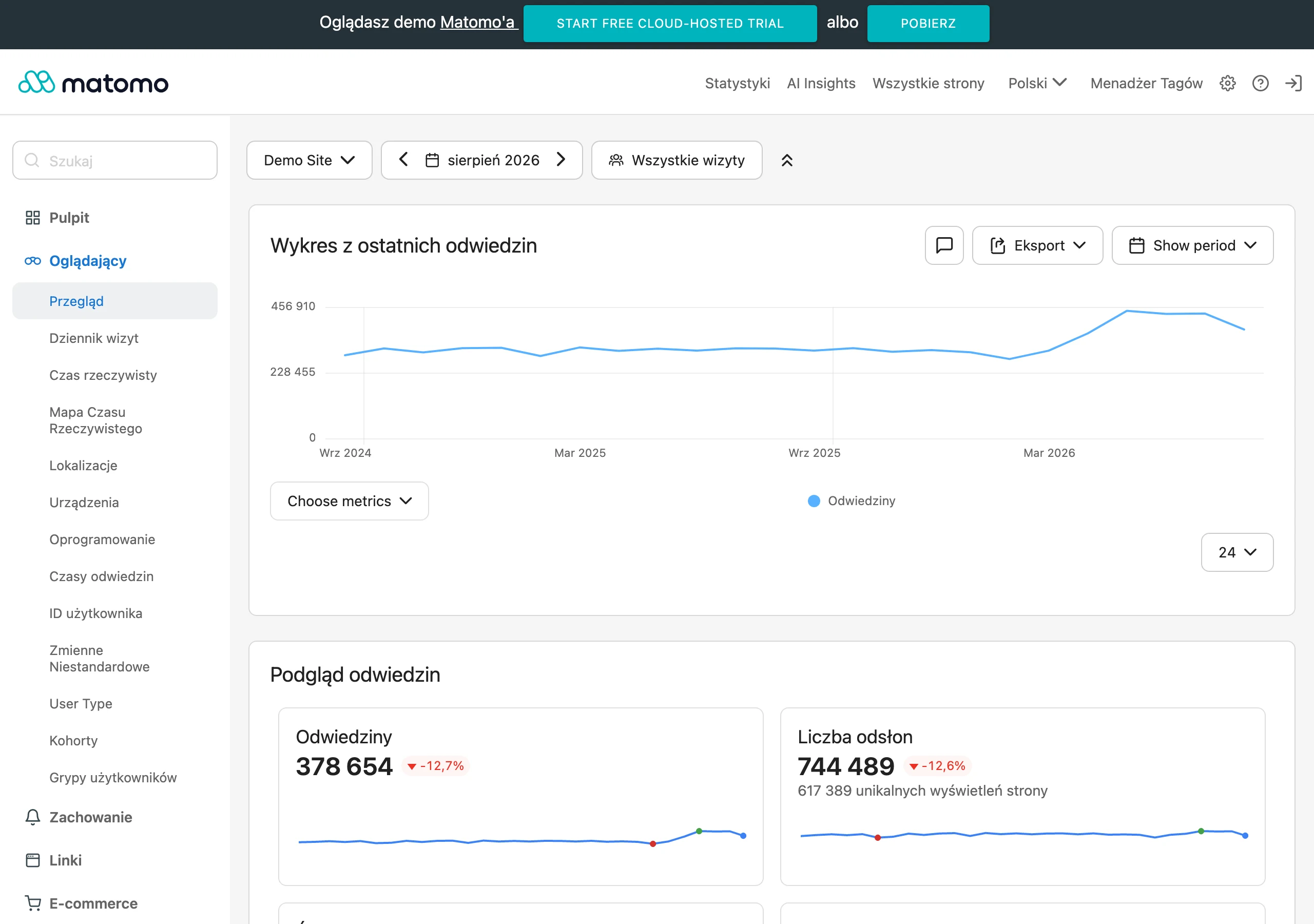
At the start, you choose one main KPI. End of discussion. It should describe the business outcome, for example the number of qualified leads, acquisition cost, pipeline value or the share of profitable campaigns. Everything else is a supporting metric that shows whether that outcome has any chance of happening at all. That means traffic to offer pages, ad CTR, form conversion rate, share of the right segment, sales rep contact speed or the number of demos booked.
Measurement only works with one data definition. Without that, it is theatre. The same lead has to mean the same thing in the form, analytics, CRM and sales report; otherwise you are comparing apples and pears. If marketing reports form conversions and sales counts only conversations with the right segment, both teams are looking at a different part of the funnel and pretending it is the same result. Before assessing effectiveness, it is worth checking whether the data sources refer to the same stage of the funnel.
In practice, the weekly and monthly rhythm wins out. Simple, but effective. Every week you check deviations in traffic, costs, conversion and lead quality so you can quickly correct campaigns, pages and targeting instead of waiting for the problem to mature. Every month you look more broadly: whether the whole mechanism is genuinely bringing you closer to the quarterly target, or merely pumping activity without translating into sales. This split cuts off the classic scenario in which the problem is only visible at the end of the quarter, when it is already too late for a sensible correction.
Also set alarm thresholds. Without them, decisions are made “by eye”. If the cost per lead rises above the acceptable level, but lead quality improves, the response will be different than in the case of rising cost and a simultaneous drop in quality. And here the question arises: what do you measure as “progress” when a channel has a delayed effect. If SEO does not yet deliver the full business effect, assess leading indicators such as growth in visibility on offer pages, the number of visits from non-brand queries or improved conversion on key landing page’s. Not every channel should be judged by the same speed of effect, but every channel has to be assessed according to the same business logic.
In the end, a target’s effectiveness is measured not only by the result. It also matters whether the measurement tells you anything. If after the quarter you know which channels to scale, which segments are profitable, which pages block conversion and what data gaps need fixing, the target was managed sensibly, even if the final result needs adjustment. Such measurement gives you fuel for a better plan for the next period, instead of repeating the same mistakes in a new wrapper.
Decision review and conclusions for the future
The decision review is the moment of truth. That is when you check what exactly worked, what is not working, and what adjustment makes sense in the next period. The point is not to describe the results for the sake of description, but to find the cause of the variances and make specific decisions, ideally ones that can then be measured. In practice, you break the topic down into parts: whether the problem lies in reach, the message, the landing page, the quality of the offer, lead qualification or sales performance. Without this separation, it is easy to confuse the symptom with the cause and improve the wrong element, only to then wonder why the numbers are standing still.
A good review starts with comparing the goal against the starting point and the metrics along the way. If the final result was not delivered, you need to break the process down and check whether traffic, conversion, acquisition cost, enquiry quality or further handling in the CRM fell short. The mere lack of a final result still does not tell you where the problem lies. Only the data trail shows whether the growth mechanism was working, just too slowly, or not working at all.
The conclusions are meant to be operational decisions, not a collection of nice-sounding observations. If a campaign generated traffic but no conversions, the priority for the next quarter is the landing page, the offer or the form. If there were conversions but the leads were of low quality, you need to narrow the targeting, improve the message and refine qualification. If the leads were good but sales did not close them, then the area to improve is no longer marketing, but the sales process, contact speed or the way follow-up is handled.
This is where you need to draw a line. A clear one. Separate the activities to scale from those that should be stopped, because numbers without context can be seductive. Channels, content, creatives and audience segments are assessed not only by volume, but by quality and profitability. What delivers cheap traffic does not always support the business goal. Often, a smaller segment with a better sales conversion rate is worth more than broad reach with no real effect.
Future conclusions also need to take execution constraints into account. If the result was weaker because of delayed implementations, gaps in analytics, the content team’s unavailability or a lack of statuses in the CRM, these elements need to be entered as starting conditions for the next quarter. Otherwise, the next plan will again be based on the naive assumption that all dependencies will somehow “sort themselves out”. Realistic planning for the next period starts with removing the bottlenecks that slowed down the previous one.
The end result of the review should be simple: what to scale, what to improve, what to switch off and what still cannot be assessed honestly because of data gaps. Not a report for the sake of reporting, but a list of decisions that gives direction to the work. In practice, it is this list that has the greatest value, because it turns the summary of the past quarter into a plan of action for the next one. A well-run review does not close the topic; it organises priorities, responsibility and the way performance is measured for the next cycle.
FAQ
Frequently asked questions
How do you set a realistic marketing goal for a quarter?
First, define the expected business outcome, and only then break it down into KPIs, channels, actions and the control process. You also need to check the starting point in the data and execution conditions such as analytics, CRM and team availability.
Is the final goal alone enough for marketing to be effective?
No, because the final outcome often appears with a delay and does not show early enough whether the plan is working. That is why you also need leading indicators that let you adjust course during the quarter.
Why should quarterly goals take lead quality into account, not just volume?
Because growth in lead volume does not yet show whether marketing is delivering a better business result. The speed of follow-up, CRM statuses and whether contacts actually move further down the sales process also matter.
What makes it hardest to achieve marketing goals in a quarter?
The most common problems are gaps in measurement, a lack of consistent definitions between marketing and sales, and technical and organisational constraints. Results are also affected by delays in campaigns, SEO, content and implementations.
Which metrics are worth combining with a quarterly goal?
A good approach is to combine the main KPI with a few supporting metrics, for example the number of SQLs, cost per lead, form conversion rate, sessions on service pages and pipeline value. This way you can see not only the result, but also whether the growth mechanism is working.
When is it worth adjusting a marketing goal during the quarter?
When deviations show that the problem lies in traffic, conversion, lead quality or sales performance. The goal should have predefined checkpoints and a correction plan, rather than waiting for the final report.