
In a small business, the fastest marketing is the kind that catches the customer at the finish line. It is about those moments when someone is already looking for a specific service, comparing providers nearby, returning to the site after a previous visit, or once bought before and can be sensibly reactivated. The fastest result most often does not come from being present in many channels, but from capturing existing demand and closing the contact efficiently. That is why, in the real world, it is not the “trendiest” actions that win, but those closest to the purchase decision. And just as important as the ad itself are: the offer, the website, measurement and response time to the enquiry. If one of these pieces is missing, even a good channel stops delivering quick results.
What the fastest marketing activities are in practice
The fastest marketing activities are those that reach people already looking for a solution and lead them along the shortest path to a phone call, form submission or purchase. In a small business, this will most often be search ads on specific service keywords, a properly completed Google Business Profile, a well-optimised landing page, remarketing and follow-up contact with current or former customers. This is not a marathon for reach, but a sprint after demand that is already on the table. If the customer is searching now, what matters is visibility for the specific query and a simple way to get in touch.
A quick result is made mainly “at the till”, that is, just before the decision. Local queries such as “plumber Kraków”, service queries such as “accounting for a limited company”, problem queries such as “boiler repair 24h”, as well as moments when someone abandoned a form, basket or did not get a quick quote response all work. That is exactly where a small business can recover money and contacts faster than through long-term image building. The more urgent the need and the shorter the decision path, the faster the possible result. Simple, but ruthless.
But beware: you need to look at the whole setup, not just the channel. Advertising on its own does not sell if, after the click, the user lands on a slow site, cannot see the scope of the service, does not know the service area and does not know how to get in touch. A channel only delivers a result when the chain works: offer, message, website, form or phone, fast service and closing the sale. That is why improving the website and the call-back process often gives more growth than adding another traffic source. The question is: are you closing the contact, or just buying clicks.
In a small business, actions “close to the phone” matter especially. That is where the decision is made. Users compare offers on their smartphones on the move, so a visible number, clickable phone link, short form, directions map, reviews and clear information about the lead time or quoting method become critical. In local services, a well-configured business profile helps enormously: the right category, photos, opening hours, service area, list of services and factual responses to reviews. It sounds minor. The problem is that these small elements often decide whether the user calls now or drifts to a competitor.
The most common mistake is trying to do everything at once. It is tempting. A small business usually grows faster when it tightens up one or two demand sources and organises lead handling, instead of testing many channels in parallel without sensible measurement. This applies especially to businesses with a small budget, where spreading campaigns out in practice quickly eats away at effectiveness. Why launch five mediocre ones when you can have one truly strong one. It is better to set up one high-intent channel properly than to launch five average ones.
How an effective process works step by step
An effective process is simple. First you choose the place where demand already exists, then you build a short path to contact and measure which source is actually delivering valuable leads. It starts with diagnosis, not with switching ads on. You need to check which services have the highest margin, what questions customers ask, where enquiries come from today, what the website looks like, how many reviews there are and how quickly the company responds. Only then does it become clear whether the biggest lever lies in advertising, the Google Business Profile, reactivating the database or improving conversion.
The second step is choosing the channel according to the customer’s intent. And this is where the problems start. If the company operates locally and the customer is looking for a provider “right now”, the Google Business Profile and search ads on specific local keywords usually work fastest. If there is traffic but few contacts, remarketing and website improvements will give a quicker result than adding more campaigns. If the company has a customer database or unused leads, very often the fastest move is an email, SMS or phone follow-up to people who already know the brand.
The third step is preparing the assets, meaning what the user will see after landing. First impressions matter. The website or landing page should focus on one service, clearly describe the scope, service area, quoting method, timelines, reviews and include a simple call to get in touch. Instead of sending traffic to the homepage, it is better to deliver a dedicated subpage if the campaign concerns a specific service. The better the website answers the user’s query exactly, the faster the number of meaningful contacts grows.
The fourth step is to start capturing demand, but sensibly. In campaigns, you need to separate services, trim overly broad keywords, add exclusions and set delivery to the hours when someone is actually answering the phone or replying to enquiries. At the same time, you implement measurement: calls, forms, clicks on the number, bookings or purchases. Without this, you are groping in the dark and cannot tell the difference between a campaign that only generates traffic and one that actually delivers sales contacts.
The fifth step is recovering lost opportunities. It sounds technical, but it is about simple things: remarketing to people who have already been on the site, automatic enquiry confirmations, calling back missed calls and following up again on quotes without a response. In many small businesses, the fastest growth lies precisely here, because the lead has already been acquired, it just has not been handled in time. Who is supposed to make sure of that, if not you. Response speed often affects the outcome more strongly than the ad budget itself.
The sixth and seventh steps are optimisation and scaling. First, you check the hard numbers: lead quality, cost per contact, search queries, form drop-off points, headline effectiveness and CTA visibility. Only once you know which keywords, pages and messages are delivering valuable enquiries do you increase the budget, develop separate landing pages for the best services and expand remarketing or work based on existing customers. Scaling before you sort out these basics does not accelerate the business, it merely inflates the cost of mistakes.
Current execution context
The current execution context is simple and not very romantic. Quick results are increasingly delivered by making better use of what the company already has: traffic, the profile, the customer base and the contact process. Acquisition costs are rising, so simply adding more budget will not solve the problem if the website does not convert or the company calls back after a few hours. In a small company, the fastest growth often comes from improving conversion and lead handling, not from launching another channel. This is especially important where the user is already looking for a specific service and wants to compare 2-3 offers quickly.
Today, many decisions are made on a phone. That is why simplicity and information availability matter, not fireworks. The user wants to see the phone number straight away, the scope of service, service area, reviews, opening hours and a simple way to get in touch. If the page loads slowly or the form is too long, some enquiries are lost before the first click on the CTA. And that is not a cliché. On mobile, the company that is easiest to contact here and now wins.
In local services, the Google Business Profile matters a great deal, because it often becomes the first point of contact. Correct categories, up-to-date opening hours, photos, a service description, service area, a link to the website and regularly collected reviews all count. Reviews alone are not enough if the profile is incomplete or the company does not respond to reviews, because the user is also judging credibility and activity. So the question is not “should we collect reviews”, but “does the whole profile look like a place you could do business with”.
In paid campaigns, proper conversion tracking is crucial. Without it, you do not know what is actually delivering results and what is just creating noise in the stats. You need to measure calls, forms, clicks on the phone number, bookings or purchases, depending on the business model. Lack of measurement means the company is optimising traffic, not outcome. And that is where the paradox begins: often, technical limitations are a bigger obstacle than the ads themselves. Poorly configured analytics, no service-specific page, no access to data or no callback procedure can cut the effect in half before anyone even clicks “contact”.
The speed of results also depends on the type of offer. It is not magic. The fastest-working services are those with an urgent need, local intent and a short decision path, for example repairs, private healthcare, transport, home services or simple B2B services. Offers that are expensive, complex or require customer education work more slowly, because there even a good lead needs more time, conversations and arguments before making a decision. The question is: is your offer “for now”, or “for later consideration”.
What to implement first and what to watch out for
First, implement the elements that shorten the path from the user’s entry to contact and allow you to measure the result. The rest can wait. In practice, the order is simple: refining the offer and CTA, tracking calls and forms, tidying up the Google Business Profile, launching search ads for specific services, then remarketing and reactivating existing customers. This sequence delivers clearer data more quickly and limits implementation chaos, instead of multiplying actions that cannot be assessed fairly.
If the company operates locally, it makes sense to start with a minimal implementation package. It should be airtight, not “pretty”. That usually means a complete business profile, a separate subpage for each main service, a visible phone number, a shorter form, a map or a clear service area and a reviews section. Do not send traffic to the home page if the client is looking for one specific service. A separate service page usually matches intent better and delivers better-quality contacts, because it responds to the need here and now rather than telling the company’s story around it.
With a small budget, narrowing the scope is the most important thing. Not broad, but precise. It is better to promote one service in one location across a small group of keywords with a clear intent than to spread resources across everything at once. The same applies to the landing page and the campaign objective: one message, one offer, one main action to take. In a small company, a simpler setup almost always launches faster than an elaborate campaign with multiple goals. The data clearly shows that a blurred promise costs the most.
If traffic is already there but there are no contacts, do not increase the budget automatically. First, carry out a quick audit of what happens after the click. Check the match between the message and the query, page speed, form length, CTA visibility, indicative prices, availability of dates and the way trust is presented. Often the problem is not the traffic source, but the fact that the user does not get a quick answer to the basic question: will this company solve my problem, where does it operate and roughly how much does it cost.
Poor leads are rarely the ad’s fault. The problem is that it is worth breaking the entire qualification process down into parts, not just the clicks in the campaign. Too broad keywords, no exclusions, too generic a landing page or an unclear service description pull in traffic that has no real chance of turning into sales. Also check whether the form is prompting random enquiries and whether the team is actually calling back valuable contacts quickly.
These mistakes keep coming back like a boomerang. And they usually cost more than the campaign itself. This is mainly about starting without measurement, no separate message for local intent, a slow website, too many goals on one subpage, no call-backs and no work on the existing customer base. A well-structured implementation should end not only with a campaign, but also with an organised operational set: a list of services to promote, campaign structure, exclusions, landing pages, follow-up templates and a simple dashboard with leads and sources. That way the company knows not only where the traffic comes from, but also which activities are actually delivering valuable enquiries.
What are the most common mistakes and how to avoid them
The list is short, but painful. No measurement, sending traffic to the wrong page, overly broad campaigns and poor lead handling. In practice, it looks like this: the company pays for visits, but does not know which ones end with a phone call, a form submission or a sale. If you do not track calls and enquiries, you cannot sensibly assess what works and what only generates traffic.
The classic mistake is sending the user to the homepage instead of a specific service page. Someone searching for “hydraulik awaryjnie Kraków” or “serwis klimatyzacji Wola” does not want to get lost in the menu. They want to see the service scope, service area, availability and contact method straight away. To sort this out, prepare separate subpages or landing page for the main services and match the heading and CTA to the specific intent.
The second sin is overly broad keywords and no exclusions. The result is predictable: the campaign picks up informational, random or out-of-area searches, and the company gets poor leads. The question is whether you want to pay for curiosity or for a real need. A narrower campaign focused on specific services and locations delivers better results than a broad “everything” campaign.
Sometimes the problem is not the advert, but the website or the form. On mobile, loading speed, a visible phone number, a simple form and a clear offer matter, not an elaborate company presentation. If traffic is coming in but contacts are few, shorten the form, show an indicative price range or quoting method, add reviews and make it clear when you call back.
Another mistake appears after the lead has been sent. The company invests in advertising, but calls back after a few hours, does not respond to missed calls or does not send a confirmation of the enquiry. That is not a detail, it is a missed opportunity. Response speed often has a bigger impact on the result than the advert creative itself.
The problem can also be the desire to launch many channels at once with a small budget and limited resources. The result is predictable. Then no channel gets the attention it deserves, and data analysis starts to feel like guesswork rather than marketing control. It is better to start with one source of demand, one conversion goal and one handling process, and only then expand activities step by step.
How to measure the effectiveness of marketing activities
Effectiveness of activities marketing activities is measured by the number and quality of contacts, the cost of acquiring them and which sources actually convert into sales. Clicks and reach are tempting, but they are only noise. The number of clicks, impressions or reach alone is not enough if you do not know how many of them were real enquiries. The most important metric in a small business is not traffic, but a valuable lead.
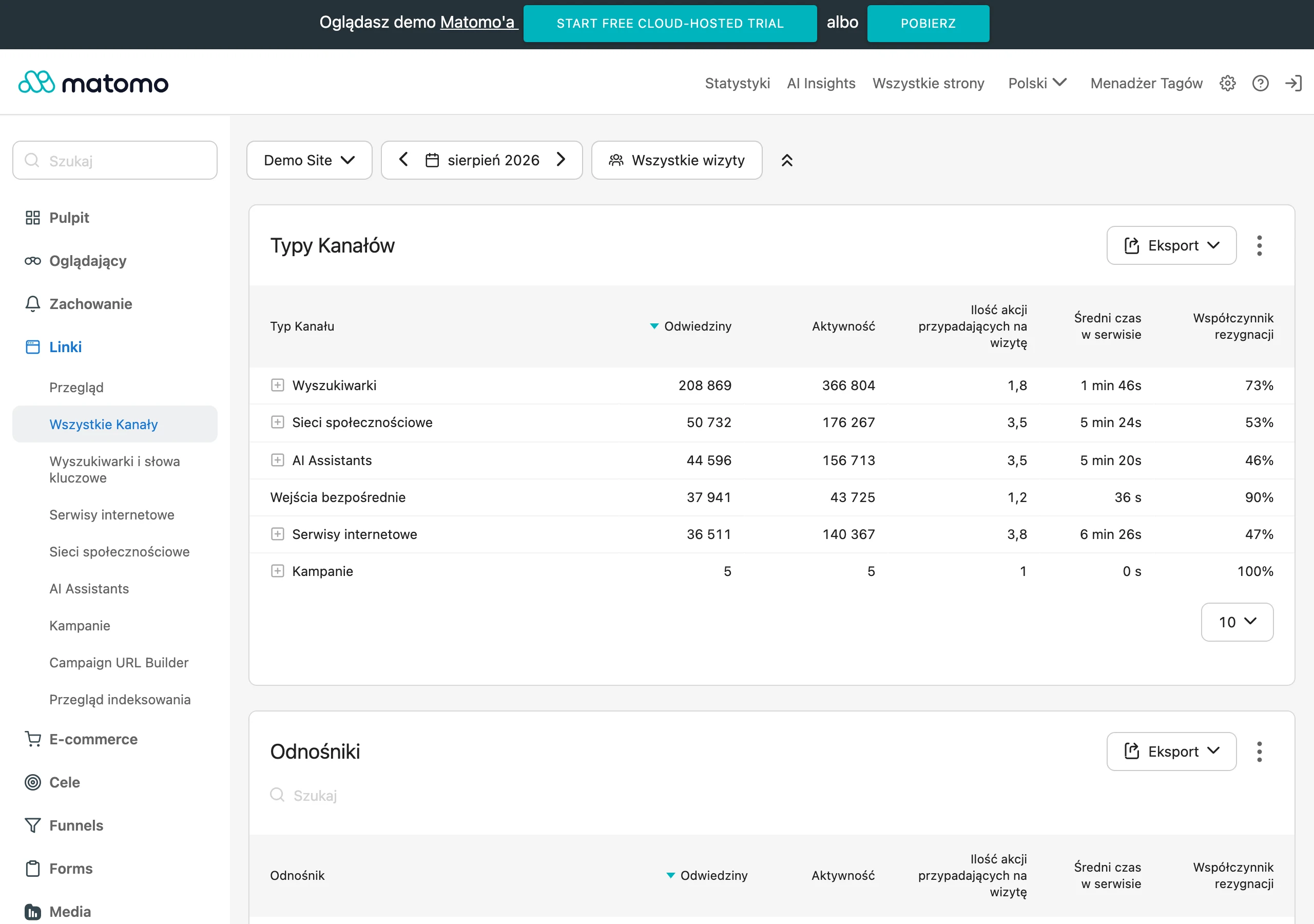
At the start, set one main goal for a given channel. And stick to it consistently instead of chasing everything at once. For a local service, this will usually be a phone call, a form submission or a booking, and for e-commerce, a purchase. You can also measure supporting actions such as clicking the phone number, sending a form, starting a chat or visiting the contact page, but you must not confuse them with the actual conversion.
For measurement to make sense, every lead must be assigned a source. Otherwise you are counting into a void. The minimum is to know whether the contact came from the Google Business Profile, a search campaign, remarketing, email or organic traffic. Even better if you can see a specific campaign, keyword or landing page, because then you know what to scale and what to switch off without regret.
Do not judge the quality of activities solely by cost per lead. That is a trap. A cheap lead may be weak, poorly matched or outside the service area, while a more expensive one may convert into sales more often and faster. That is why, alongside the number of enquiries, you need to check how many leads were answered, how many were qualified and how many moved on to an offer or a sale.
In practice, a small business only needs a simple system, as long as it is updated regularly. No fireworks. It can be a CRM or even a well-organised spreadsheet, if you record the contact date, source, service, status, value and outcome. If you do not connect advertising data with the sales outcome, you are optimising campaigns blindly.
It is also worth measuring process elements, not just the final outcome. That is often where the money leaks away. Lead response time, the share of missed calls, form submission rate, page abandonment and callback effectiveness can show where the real problem is within a week. When the campaign delivers visits and sales stand still, the cause is very often the website or handling, not the channel.
The best pace for analysis is a brief review every week and a broader assessment every month. A week is a dashboard check, a month is for decisions. Every week you look at the number of leads, cost per contact, enquiry quality and technical errors. Every month you assess which services, locations and campaigns deliver the most value, and which are only burning budget.
Which decisions matter most for a small company
This is where the money is decided. The most important decisions are about which service to promote, where to capture demand and how to handle the contact before the lead goes cold. In a small company, results are improved more often not by the number of actions, but by choosing the right priority for a given month. When you promote everything at once, budget and attention spread too thinly across too many directions. It is better to choose a service that has demand, a sensible margin and a short decision path.
The channel is the second axis of the debate. If a customer is looking for a solution now, the fastest-acting options are search ads and a well-completed Google Business Profile, because they capture “right now” intent. And when traffic is already there but is not turning into contacts, the better decision will be to tighten up the website, form, phone and remarketing, rather than adding more campaigns. Why pump up reach if the funnel is leaking. First choose the place closest to purchase, only then increase reach.
It also matters where you send someone from the ad. The homepage rarely beats a simple service page that immediately shows the scope, service area, pricing method, reviews and a clear call to contact. In practice, a small company should more often invest in one polished sales landing page than in expanding the whole website “just in case”. The first few seconds do the work. What the user sees in the first few seconds has a greater impact on contact than the number of visits alone.
Then comes lead handling. Even a good campaign loses value if the phone is not answered, forms sit for several hours, or nobody calls back missed calls. And here is the paradox: in many small companies, faster growth comes from organising the contact process, not from increasing the ad budget. Reaction beats fireworks. Response time often determines sales more than the cost per click.
It is equally important what you call a result. If you look only at traffic, it is very easy to burn budget on visits with no value and break records in spreadsheets without sales. It makes more sense to measure calls, forms, bookings, lead quality and the sources they came from. Only then do you know whether to scale the campaign, improve the website, or narrow the keywords.
At the end, there is scale. A small company does not have to be everywhere to see results quickly, because “everywhere” usually means “nowhere in particular”. Usually, concentration works better: one service, one location or service radius, one landing page and one main conversion goal. Spreading yourself too thin is tempting, but it costs. Scaling only makes sense once you know which enquiries and which sources bring valuable contacts.
FAQ
Frequently asked questions
Which marketing activities deliver the fastest results in a small business?
The fastest are the activities that reach people already looking for a specific service and take them straight to contact. The article points above all to search ads, Google Business Profile, remarketing and re-contacting current or former customers.
Does search advertising deliver a quick result in a small business?
Yes, especially when it is set up for specific service keywords and local intent. This channel catches the customer just before the decision, so it can bring a call or form submission faster than awareness-building activity.
Why can Google Business Profile work faster than other channels?
Because it is often the first point of contact and appears when the customer is already comparing providers. What matters there are up-to-date opening hours, category, photos, service area, reviews and easy contact.
When does remarketing produce the fastest effect?
When the company already has traffic to the website, but users do not get in touch right away. Remarketing helps bring back people who visited the site, abandoned a form or did not finish their decision.
What most shortens the path from website visit to contact?
A simple offer, a short website tailored to one service and a visible way to get in touch shorten it the most. Also important are a clickable phone number, a short form, reviews and clear information about the service area and pricing.
Should a small business launch many channels at once?
No, because that often spreads the budget too thin and makes it harder to assess what works. It is better to set up one strong high-intent channel well than several average activities without meaningful measurement.