

Not every marketing activity that drives traffic actually helps a company sell. In practice, most budget leaks not into spectacularly bad campaigns, but into activities where “something is happening” and yet they do not improve lead quality, sales or business decisions. This topic needs to be broken down into its constituent parts, at the level of specific actions, rather than under the banner of “marketing works” or “marketing does not work”. The key question is not whether the channel looks active, but whether its purpose can be justified by a business outcome. That is why evaluation should tie together data on cost, traffic quality, user intent and impact on the funnel. Only then do you know what to switch off, what to reduce and what to fix, instead of instinctively cutting the whole budget.
What assessing marketing activities that have stopped working involves
Assessing marketing activities that have stopped working comes down to one thing: whether a given activity still delivers measurable business value. This is not an audit of “marketing” as one monolith, but a breakdown into individual operational moves. This includes mass SEO content creation, a reach campaign without a clearly defined conversion, one email sent blind to the whole database, or reporting only page views. Sounds familiar. And it is exactly this level of analysis that shows what is really hurting performance and what just looks good in slides.
The most common mistake is judging activities by superficial signals. Clicks without purchase intent, reach without site visits, leads without qualification or indexed content without clicks can all glow green in a report, yet fail to deliver sales. If an activity generates only activity, and does not move the user to the next stage of the funnel, its purpose is at best questionable. The question is whether this is still marketing, or merely statistics for statistics’ sake.
In practice, it is worth running every activity through a few simple assessment filters. No philosophy, but plenty of consistency.
- business objective — why are we doing this and what outcome should it deliver,
- traffic quality — are the right users arriving,
- cost of delivery — budget, time and team resources,
- measurability — can the result be assessed reliably,
- impact on the funnel — does the activity support movement to the next step,
- technical or reputational risk — could the activity do more harm than good.
Such a model brings order to decisions, because it separates weak activities from activities that are simply being measured badly. Sometimes the problem is not the channel, but poorly configured analytics, a mismatched landing page or an offer that does not align with the user’s need. And this is where it gets interesting, because it is easy to confuse “it does not work” with “it is not visible that it works”. It is not worth switching off a channel just because it does not close the sale if its real role is earlier in the journey and this can be confirmed with data.
The result of the assessment should be a simple decision matrix: keep, reduce, retain conditionally, replace with another solution, or fix the measurement first. And that makes a difference. This matters because not every ineffective activity needs to be thrown out of the plan immediately. Some activities simply need a narrower audience, KPI adjustments or better integration with the CRM. The key is what can be defended by results or by a clearly described role in the customer acquisition process.
Current challenges in digital marketing
In digital marketing, shortcuts are running out. The problem is that privacy restrictions, consent requirements and cookies have weakened models based solely on external data and simple remarketing, so the easy wins from “settings” are no longer working. That is why first-party data, correct GA4 configuration, consistent UTM tagging, CRM integration and proper event collection are becoming more important. Without solid measurement, it is easy to spend budget on campaigns that cannot be assessed fairly.
In SEO, volume-led tactics are increasingly running into a wall. Publishing many similar articles for small keyword variations, creating thin content and reworking the same topics rarely delivers a lasting effect today, because algorithms and users are simply resistant to it. The question is: does such content even match user intent? In practice, fewer pieces of content work better if they are better aligned, up to date and sensibly connected with the rest of the site.
In social media, regular posting on its own has ceased to be a strategy. Daily posts do not guarantee traffic, leads or enquiries if they do not have the right format, purpose and a clear call to action. But be careful: distribution matters too, because even good content without paid support, a network of contacts or effective recycling often ends up with low reach. It is not the posting cadence that counts, but whether the content supports a specific stage of the funnel.
In paid advertising, manual micromanagement is losing importance. The real work is increasingly done by the quality of the input data, because if an account has incorrectly configured conversions, weak exclusions, an out-of-date product feed or a faulty landing page, then further “tightening” of the campaign will not change much. First you need to sort out the account structure, conversion definitions and sales data transfer, and only then scale the budget.
Another issue is vanity metrics, which still dominate many reports. Reach, number of fans, raw page views or clicks alone can only be useful if you know what they cost and what follows from them. Without linking them to lead quality, stage of the journey and sales outcome, such numbers are more likely to soothe the conscience than help with decision-making. And that is precisely why some activities look good in the dashboard and yet make no business sense.
How to carry out an effective audit of marketing activities
An effective audit is not about “assessing marketing”. It is about breaking each activity down into parts and examining it separately in terms of business objective, cost, traffic quality, measurability and impact on the funnel. You do not assess “SEO”, “social media” or “ads” as big abstract entities here, but specific operations: a series of articles, a reach campaign, a newsletter to the whole database or reporting only page views. Only this level of analysis shows what really delivers and what only pretends to be active.
The first stage is an inventory. You list all active activities, their budgets, time spent, process owners, goals, data sources and related landing pages. If an activity has no assigned goal or owner, it is usually already a candidate for reduction from the outset.
The second stage is a measurement audit. In practice, this means checking GA4, Search Console, ad systems, CRM, pixels, events, UTM parameters and the consistency of conversion definitions across tools, because that is where the whole mess usually starts. And this is where the question arises: is the channel really ineffective, or is it just being measured incorrectly? Without this verification, it is easy to write off a traffic source, even though the real problem may be faulty tagging, missing CRM data or poorly configured events.
The third stage is an effectiveness analysis. For each activity, you compare cost with session quality, movement to the next step, pipeline contribution, retention or basket value, if the business has such data. Clicks, reach and impressions alone are not enough if you do not know whether they lead to valuable enquiries or sales.
The fourth stage is diagnosing the cause. You need to firmly separate a channel problem from a problem with the offer, creative, landing page, form, segmentation or simply poor targeting. In many cases, a campaign is not weak in itself, but sends traffic to a page that loads too slowly, has unclear CTA or fails to match the user’s intent. Instead of adding budget — first remove the bottleneck.
At the end, an operational decision is needed. Some activities should be switched off, others reduced, some left in place conditionally, and some first fixed on the measurement or implementation side. A well-run audit does not end with a report, but with a clear decision: stop, improve, replace or stop funding.
Practical steps to optimise marketing activities
Optimisation starts brutally simply. By switching off or reducing activities that do not have a measurable goal or continually attract traffic with no purchase intent. The problem is that the largest amount of budget is burned not on obviously bad channels, but on activities that generate “some results” but do not improve lead quality or sales. In practice, you first need to regain control over the data, and only then think about scaling.
In SEO, it usually pays to move away from mass-producing similar content for minor keyword variants. A better result comes from a content audit, consolidating cannibalising URLs, updating pages with the greatest potential and stronger internal linking, because these are the moves that actually change the graph. If content is indexed but does not get clicks or match intent, publishing more posts on its own rarely solves the problem.
In paid advertising and social media, manual micromanagement of campaigns increasingly misses the point if the inputs are simply poor. First, get the house in order. You need to finalise conversion definitions, exclusions, audience lists, the product feed, page speed and data transfer to the CRM, because without that every “optimisation” is a bit like shooting in the dark. Only then can you honestly assess whether the campaign needs a bigger budget, different creative or simply better alignment between offer, advert and landing page.
In e-mail marketing, one mailing to the whole database usually does not deliver. And that is not a cliché. Segmentation by acquisition source, lifecycle stage, purchase history, user behaviour and marketing permissions works much better, because these differences really change the context. Event-triggered automations are usually more useful than regular “send to all” mailings, because they hit a specific moment and a real need of the recipient. The question is not “should we send more often”, but “to whom and why”.
In social media, publication frequency alone is not the goal. What matters is the role of the content. Materials should support a specific stage of the funnel, answer real customer questions and have a clear CTA, and their assessment must take into account website visits, assisted conversions and enquiry quality, rather than ending with a table of likes. A post that collects reactions but adds nothing to traffic, leads or sales conversations should not be defended by reach alone.
Finally, instead of manual reports on impressions, clicks and follower counts, it is better to use a simple dashboard that combines cost, source, funnel stage, lead quality and sales outcome. But beware. With current privacy restrictions, first-party data, correct UTM parameters, GA4, CRM integration and, where possible, server-side tracking are becoming increasingly important, because without them the picture drifts away from reality. Without such structure, it is hard to say which activities really stopped making sense and which have simply stopped being measured properly.
What usually stops working and how to replace it effectively
Usually, those activities fall away that generate cost but do not improve the quality of traffic, leads or sales. The facts are these: in practice, these are activities carried out out of momentum, because “we’ve always done it this way”, because they are easy to report on or because they simply look good on a slide. If an activity cannot be justified by a business goal and measurement, it is usually not worth scaling. Not more, but better. It is better to keep fewer activities, but ones that have a clear role in the funnel and can be accounted for by their effect.
- Low-quality links, directories and “SEO” publications usually do not deliver lasting value. Rather than pumping quantity — prioritise quality. A better alternative is link profile audit, reclaiming unlinked mentions, digital PR, strengthening content that genuinely deserves to be cited, and proper internal linking.
- Mass-producing many similar articles for minor keyword variants loses its point when the content starts cannibalising itself and does not match user intent. Let’s look at it differently. Rather than multiplying URLs, it is better to create an intent map, combine similar URLs, update the strongest pages and base the content plan on data from Search Console.
- Display and social campaigns aimed solely at cheap reach often end up generating clicks without intent. A more effective model is not “more traffic”, but a clear campaign objective, audience segmentation, a coherent offer–creative–landing page structure and remarketing based on first-party data, not just third-party cookies.
- Sending one email to the entire database lowers communication relevance and damages results in the long run. Instead, segmentation by acquisition source, lifecycle stage, behaviour, consent and purchase history, as well as automations triggered by a specific event, will work better.
- Publishing on social media every day, without checking site visits, enquiries and impact on sales, rarely delivers a real effect. It is better to base the content plan on customer questions, formats that are easy to distribute and measuring assisted conversions, not just reach.
- Manual reports on views, clicks and followers do not help with decision-making. What is needed instead is a dashboard that combines cost, source, funnel stage, lead quality and sales outcome.
- Expanding ad campaigns before fixing measurement often only speeds up budget waste. First, you need to sort out conversion definitions, exclusions, audience lists, feed quality, page speed, forms and data transfer to the CRM.
In SEO, quality and consolidation make the most sense today, not quantity. A site with a few strong, up-to-date and well-connected URLs usually has more value than a fragmented set of similar publications. If content is indexed but does not gather clicks or support the move to the next step, being present in the index is not success. And that is not a cliché.
In paid media, manual micro-management of a campaign is becoming less worthwhile when there are no good input data. More often, the right account structure, sensible conversion signals, exclusions, feed quality and a matched landing page win out over constant manual bid tweaks. The problem is that without proper data input, optimisation turns into turning the knobs “by eye”. This is especially important where the ad system learns from CRM data and real lead quality.
In email marketing and automation, relevance wins, not sending scale. A shorter, better-matched sequence triggered by a specific event usually delivers more than a broad send to the entire database. Segmentation by behaviour and decision stage is practically always better than one message for everyone.
What should be turned off or merely reduced also depends on working conditions. The length of the sales cycle, seasonality, the number of channels, access to CRM, the quality of historical data, marketing consent and the ability to implement changes on the website all matter. The question is: are we cutting blindly, or are we prioritising properly? That is why the decision should not be just “cut” or “keep”, but rather: keep, reduce, improve measurement or replace with another action.
The most common mistakes and risks in ineffective marketing activities
The most common mistake is banal, but costly. A channel is assessed by superficial signals rather than by how much it actually contributes to the business result. Reach, clicks, page views or follower numbers say something about activity, but they still do not show value. A metric only makes sense once it can be linked to cost, traffic quality and movement to the next stage of the funnel.
The second classic mistake is confusing a channel problem with a problem in the offer, creative or landing page. A campaign may deliver good traffic and still fail on the details. A weak form, a slow landing page or an unclear value proposition can block conversion more effectively than poor targeting. If you do not separate these, it is easy to switch off an activity that was not the main cause of the weak result at all.
Scaling budget before you sort out measurement can also be risky. When GA4, the ad system and CRM use different conversion definitions, the team is effectively optimising three different objectives at once. In such a setup, even correct operational decisions can look wrong, because the data simply is not comparable.
Another mistake. Judging everything against one KPI. A brand campaign, content SEO, remarketing and a lead campaign play in different positions, so they should not be assessed by the same measure. An upper-funnel activity does not have to close sales directly, but it must be defensible through its impact on the next stage of the journey.
In practice, a lack of process ownership and a lack of a decision threshold are also harmful. If nobody is responsible for the activity, budget keeps running on momentum and reports become nothing more than an archive of numbers. The question is who makes the decision when things get tense. It is better to decide in advance after how long and under what conditions the campaign will be turned off, reduced or kept conditionally.
Ineffective activities also carry technical and reputational risk. Buying weak links, aggressive emailing without segmentation, intrusive remarketing or low-quality content can undermine brand reputation and make future results harder to achieve. And then there is a second wave of problems: privacy, consent, data loss. If tracking is implemented badly, you pay not only with poorer performance, but also with chaos in analytics.
A separate mistake is ignoring the business context when interpreting data. The same result means something completely different in an industry with a long sales cycle than in e-commerce, where the buying decision is made quickly. Without taking seasonality, the quality of historical data and the length of the sales process into account, it is easy to draw the wrong conclusion and cut off a channel that simply needs a different way of being assessed.
The safest approach is simple and it works. First sort out the data, then diagnose the cause, and only at the end decide whether to cut the budget. This lets you separate activities that are truly unnecessary from those that simply require better offers, a better website, segmentation or measurement. This usually delivers a better result than quickly reducing activity on the basis of one weak metric.
How to measure and verify the effectiveness of changes in a marketing strategy
The effectiveness of changes in a marketing strategy is checked simply. You compare “before” and “after”, but only on metrics linked to the business outcome. A rise in traffic, reach or clicks proves nothing by itself. What matters is whether session quality is improving, whether the user moves more often to the next stage of the funnel, whether more valuable leads are coming in and, ultimately, whether sales are growing. If activity rises after a change, but quality or revenue does not, then it is usually not an improvement, just more expensive noise.
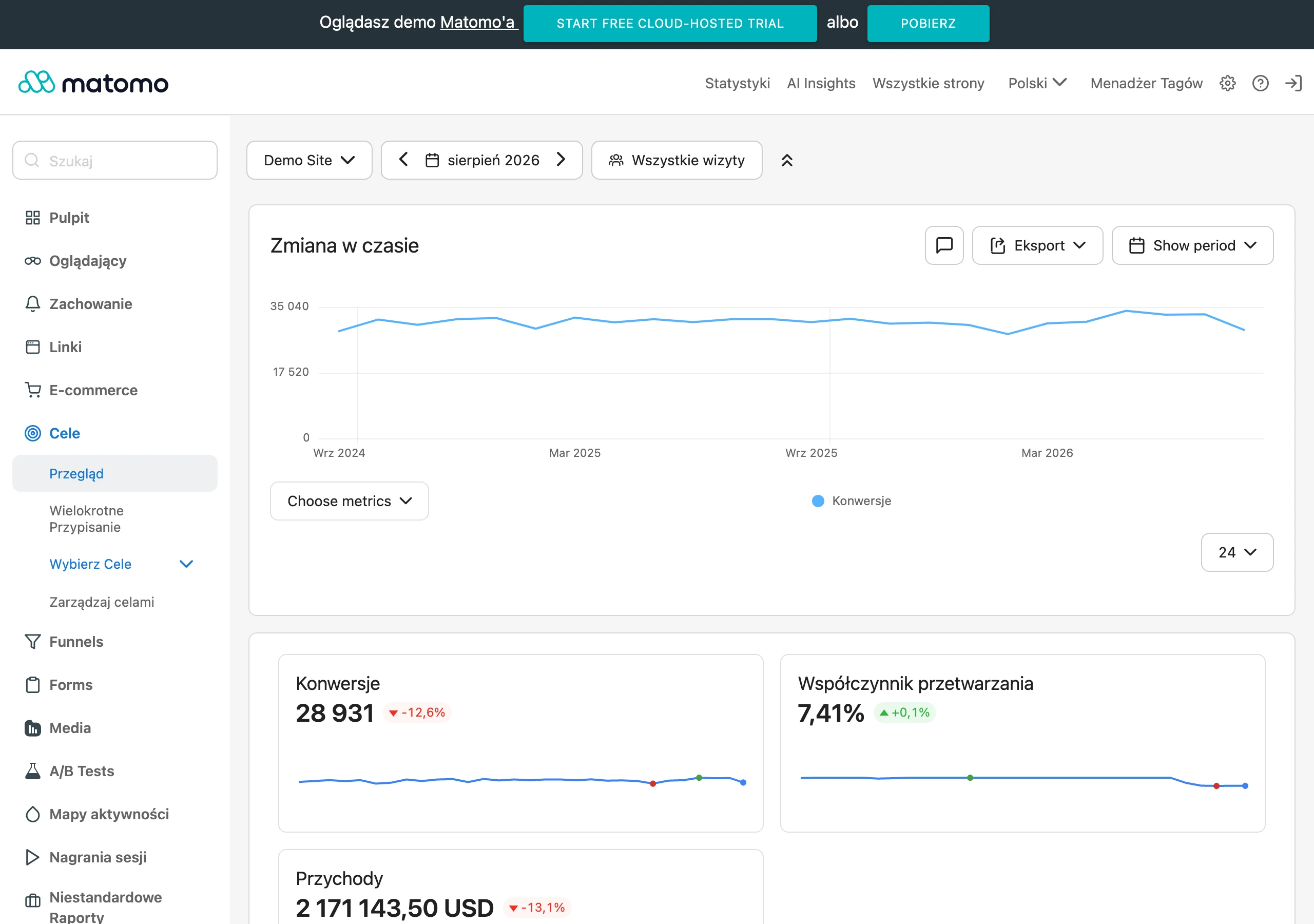
A benchmark is a necessity, not a “nice extra”. You need to take baseline data from before the change and compare it with the situation after implementation under as similar conditions as possible. In practice, that means the same channel, the same type of campaign, a similar period and similar seasonality. Without such an anchor, it is easy to attribute success to the strategy when it was actually caused by something that happened alongside it: a promotion, a budget change, a surge in demand or a one-off rise in interest. The best way is to assess the change at the level of a specific action, not the entire marketing mix at once.
Then come the KPIs. And the problem here is that the “right KPI” depends on the objective, not on what is easiest to pull from the report. For SEO, it is not only about clicks from organic results, but also the quality of visits, the number of queries with purchase intent, visits to offer pages and contribution to conversions. For paid campaigns, the key metrics are cost per acquisition, lead quality, the conversion rate to sales and consistency of data between the ad system, GA4 and CRM. In social media and e-mail marketing, you need to look beyond opens or reactions, because the real value only becomes visible in the impact on traffic, leads and sales.
The third step is measurement hygiene. Without it, even the best strategy looks like an error in the data. If conversions are defined incorrectly, UTMs are inconsistent, forms do not pass the source and the CRM does not close the loop on lead quality, the result will simply be misleading. Today this carries extra weight, because privacy restrictions weaken some external data and remarketing does not provide the full picture. Before you switch off or scale a channel, make sure you are measuring the same goal in the same way across all tools.
Finally, time. It is time that verifies whether the change made sense.
The fourth step is assessing the impact over time, not only in the first week after implementation. Some fixes work straight away, such as improving a form or exclusions in an advertising campaign. Others need to “mature”: SEO content consolidation, a change in landing page architecture or e-mail automation segmentation. That is why the data says it clearly: measure operational metrics and the final outcome at the same time, so that you can see the trend and direction before the full sales result appears.
The most useful control model is a simple dashboard that brings together cost, traffic source, funnel stage and sales outcome in one place. In short: you can see what works. Such a view lets you assess in a minute whether the “saved” budget has actually improved efficiency or simply cut the scale of activity. It is good when the dashboard also adds supporting metrics: share of intent-driven traffic, conversion rate between stages, basket value, retention or lead quality after sales contact. Because what is the point of lower cost if sales fall along with it. A report only makes sense when it leads to a decision: keep, reduce, improve or replace the activity with another one.
At the end, the key is to separate the effect of the channel itself from the problem of the offer, creative, targeting and landing page. Let’s not mix things up. If a campaign delivers cheap traffic but the landing page does not respond to user intent, the channel is not always to blame. If content generates visits but does not push the user to the next step, the cause is often a poor CTA or a lack of fit with the stage of the funnel. The question is: where exactly is the chain breaking. Effective verification of changes is not about looking for one culprit, but about checking where exactly business value is being lost.
FAQ
Frequently asked questions
How can you assess whether a marketing activity still makes business sense?
You need to check whether it delivers measurable value: whether it supports sales, lead quality or the next stage of the funnel. Cost, traffic quality and the ability to measure reliably also matter.
Does mass-producing similar SEO content still pay off?
The article suggests that increasingly it does not, especially when the content is thin, duplicated and does not match user intent. Fewer pieces work better if they are current, tailored and sensibly connected to the site.
Why has regular posting on social media stopped being enough?
Because daily posts do not guarantee traffic, leads or enquiries if they have no purpose and do not support a specific stage of the funnel. Distribution and the impact on website visits and enquiry quality also matter.
What needs fixing in paid advertising before scaling the budget?
First, you need to sort out conversion definitions, exclusions, the product feed, site speed and passing data to the CRM. Without that, further micromanaging the campaign changes very little.
Does emailing the whole database still make sense?
The article indicates that it usually does not perform as well as segmentation. Better sends are tailored to the acquisition source, lifecycle stage, purchase history, behaviour and marketing consents.
Which metrics can misleadingly suggest that marketing is working?
Reach, number of fans, page views and clicks alone can look good, but they do not have to translate into sales. Only linking them to lead quality, funnel stage and the business result gives the full picture.