


With a small budget, marketing does not forgive randomness. Every pound spent badly hits the company’s result faster, because the margin for error is simply smaller. In practice, the problem rarely comes down to choosing between SEO, advertising or social media. More often, it is about data being scattered across tools, goals being set “by eye”, and reports showing traffic but not real sales. Good marketing decisions with a limited budget mean investing only in activities that can be assessed sensibly and that have a real impact on business results. This requires a simple system: what to measure, how to compare channels and when to scale something up or switch it off without regret. This article is precisely about that practical approach to decision-making.
What are better marketing decisions with a limited budget?
It is a way of deciding on spend so that a small budget goes where it has the greatest chance of turning into sales or a valuable lead. In short: money should work, not circulate. So it is not only about choosing an advertising channel. You also need to assess traffic quality, offer fit, landing page effectiveness, friction in the funnel and whether results are being measured properly at all.
A better marketing decision does not mean “being everywhere”, but rather making a conscious selection. If a company operates in several channels at once but does not know which one actually brings in customers, the budget gets spread across low-value activities. Most often, what is lacking is not budget, but clear criteria for shifting budget between activities. The question is: what exactly has to happen in the numbers for a given channel to get more money, rather than yet another chance “because it might work”.
In practice, such a process combines marketing, analytics, UX, costs and sales data. And that is where the problems begin. The ad dashboard may show nice clicks and cheap traffic, but if the leads are poor or sales fail to close them, the business result remains mediocre. That is why better decisions are based on end results: cost per acquisition, lead quality, sales close rate and customer value, if the company can estimate it.
The result is not a general strategy in a presentation, but a concrete decision system. It should work like a filter, not a slogan. Such a system says what to keep, what to switch off, what to improve before increasing spend, and which tests to run first. With a small budget, improving the website and funnel often has a bigger effect than launching more channels.
What data needs to be organised and how should it be used?
You need to organise data on costs, traffic sources, on-site behaviour, conversions and sales results, because only combining them shows what really works. Clicks, reach or cost per visit alone are not enough. A channel may look excellent in the ad dashboard while at the same time delivering low-quality enquiries. The problem is that without joining the data up, it is easy to mistake “cheap traffic” for traffic that actually buys.
- Costs — not only media budget, but also the cost of creative, implementation, tools and servicing.
- Traffic sources — paid campaigns, SEO, social media, email, branded traffic, direct and remarketing.
- On-site behaviour — visits to the landing page, genuine engagement, drop-offs, movement between steps, form use and the mobile journey.
- Conversions — micro-actions (e.g. clicking a button) need to be distinguished from macro-conversions, i.e. sending a form, a phone call or a purchase.
- Sales and lead quality — the number of qualified enquiries, close rate, revenue from the channel, returns and repeat customers, if the company measures that at all.
You need to fix measurement first, and only then compare channels. If a form is counted twice, UTMs have a life of their own, or ads are not connected to the CRM, it is very easy to scale campaigns that generate results only on paper. And there is no shortcut here: you check the configuration of GA4, Google Tag Manager, ad pixels, offline conversion imports, campaign naming and event deduplication.
It is worth structuring data on three levels: traffic, website and sales. First traffic: where users come from and with what intent. Then the website: whether the offer, content and UX genuinely drive conversion rather than just look good. Finally sales: whether the leads or transactions acquired have real business value, rather than being “traffic for traffic’s sake”.
Data structured like this have one goal: decisions, not decoration. Thanks to them you can see whether the problem is the wrong channel mix, a misaligned advert, a weak landing page or simply underperforming sales handling. If the data from ads does not match the CRM, the trend and final result matter more than the pretty report in the ad dashboard.
You also need to remember the limitations of tracking and attribution. Not every sale can be attributed perfectly to a single click today, so some decisions must be based on period comparisons, first-party data and repeatable behaviour patterns. The problem is that a sophisticated report without team trust is like a compass without a needle. In practice, a simple, consistent evaluation model works better than fireworks in a dashboard.
How do you carry out an audit of current marketing activities?
An audit of current marketing activities is a check of which activities genuinely drive sales and which ones only burn budget or inflate seemingly good results. The starting point should be brutally simple: what business outcome is marketing supposed to improve, and how will you recognise that in the data. If there is no single main goal, the audit quickly turns into a review of reports with no decision-making value. For one company it will be the number of qualified leads, for another the cost of acquiring a transaction, and for yet another the sales value from a specific channel.
The next step is straightforward in principle. You need to bring together, in one place, the data and costs from all the sources you use, not only ad platforms, but also GA4, CRM, forms, sales, call tracking, e-mail marketing, and the costs of labour, implementation and content. In practice, many companies see the media spend, but do not factor in campaign management, landing page creation or technical fixes, which can “eat” the result. Without the full cost, it is easy to regard a channel as profitable simply because the ad platform shows a low cost per lead.
Then we move on to measurement. And there is no mercy here, because bad data can overturn the entire audit. You check whether conversions are being counted correctly, whether UTM tags follow one standard, whether there are duplicated events and whether marketing can be linked to sales performance. Because if a lead from a campaign does not make it into the CRM or no one knows whether it was closed, what exactly are you comparing? First fix measurement, then assess the effectiveness of the actions.
A good audit also includes the funnel map. In other words, checking what happens from the first visit to the site through to the sale, step by step. You look at where traffic comes from, where users drop off, which forms are abandoned and at which stage lead quality disappears. The key is to distinguish a channel problem from a website, offer or sales process problem. Often the ads do their job, and the result is ruined by an overly generic landing page, a form that is too long, or a lack of a clear answer as to why you should buy here.
In the audit, you also need to assess, without beating around the bush, the alignment of communication with user intent. The ad, keyword, page content and offer should all say the same thing, rather than veering off like two different worlds. If a campaign promises a specific solution but the page leads to a generic company description, conversion usually drops, regardless of traffic quality. The question is: why add another channel if the current one is “leaking” on the site? With a small budget, improving the existing website and offer often delivers a bigger impact than launching another channel.
At the end, the audit should produce decisions, not just a diagnosis. You divide actions into three groups: to keep, to improve and to switch off, because otherwise the report becomes a nice document with no consequences. You also organise the backlog of changes according to impact on results, implementation cost and the time needed to verify the effect. Only then does such an audit make sense, because it leads to simple questions: what to scale, what not to touch, and what to stop immediately.
What should you pay attention to when assessing channel profitability?
When assessing channel profitability, what matters is the quality of the final result, not the price of traffic or the number of conversions. A channel is profitable only when, after taking full costs into account, it delivers sales, valuable leads or another clearly defined business outcome. Low CPC, broad reach or a cheap form can look great in a spreadsheet, but they do not have to mean anything in revenue. A cheaper lead can be more expensive for the business if the sales team cannot close it.
The key is to connect marketing data with sales data. The number of leads alone tells you very little if you do not check their quality, progression to proposal, sales closes, average deal value and the time needed to close. Only then can you see in black and white whether the channel is really delivering value or just pumping out a volume of random contacts. In services, this is often more important than the cost of acquiring the form submission itself.
You need to factor in the full channel cost. Not just the ad budget, but also media, creative, content, specialist support, implementations, tools and team time, because in practice these are what determine profitability. A channel that looks like gold in the dashboard can suddenly lose its appeal once you add fixed costs and the work needed to maintain it. With a small budget, this maths is ruthless, because operational cost can easily eat up any performance advantage.
Do not lump channels together. SEO for informational queries, brand campaigns, remarketing and campaigns on transactional keywords operate in different parts of the funnel and on different intents, so comparing them “on the same line” simply distorts the picture. High-intent traffic usually converts better, but has less scale. Broader traffic can work towards later sales, provided it can be measured sensibly and does not consume too much of the budget. The question is whether you have hard data for this, not hope.
Performance stability is the channel test. One good week or a few transactions is not yet a reason to scale the budget, but a signal for a cool-headed verification. It is better to look at trend consistency, seasonality, changes in the offer and the impact of other activities, such as promotions or the sales team’s work. Budget decisions should not be based on a small sample, because an accidental result is easy to mistake for a genuine improvement.
Scaling can be a trap. The problem is that some sources are profitable only up to a certain spend level, after which acquisition cost rises or traffic quality falls. That is why profitability needs to be assessed not only for today, but also in terms of scaling potential, demand constraints, creative quality, feeds, landing pages and the team’s availability to handle a larger number of leads. Instead of asking “does it work”, it is better to ask “can this be delivered at a larger scale without losing its point”.
In practice, a good channel assessment comes down to three questions. Does it deliver a valuable result, how much does it really cost, and can its effect be repeated, because these three things are what separate profit from a nice chart. If the answer to any of them is unclear, first improve the measurement or run a controlled test, rather than adding budget blindly. With limited resources, the winner is not the channel that looks best in the report, but the one that most reliably delivers business results.
How should you prioritise marketing experiments?
The result matters. Marketing experiments should be prioritised according to the expected impact on business results, implementation cost, time needed for the test and confidence in the data. It sounds dry, but it works. In practice, it is not about what is “interesting”, but about what will improve sales, lead quality or acquisition cost the fastest. With a small budget, every test consumes resources, so an overly broad plan usually blurs the conclusions. First, we take on changes with high potential and low cost, and only then move on to more complex initiatives.
Backlog brings order to chaos. A good starting point is a list divided into three groups: quick fixes, medium-risk tests and bigger rollouts. Why this split. Because otherwise everything ends up in one bucket and the game of prioritising “on the gut” begins. The first group usually includes things like improving the CTA, shortening the form, exclusions in campaigns, changing the headline on the landing page or tidying up the campaign structure. The second includes new messages, different audience groups, changes in remarketing or new landing pages. The third contains projects requiring developer work, CRM integrations, an offer rebuild or larger content changes.
The order follows the bottleneck. The best order is set not by the channel alone, but by where the problem sits in the funnel. If the traffic is valuable but users are dropping off on the page, it is more worthwhile to test UX or messaging than to add media budget. If forms are coming in but sales are not closing them, the experiment should concern lead qualification, the offer or the contact process, not just ads. This is a common mistake: optimising the channel when the real barrier is later.
One hypothesis. Every experiment should have one hypothesis, one main change and one success metric, because only then can you separate the effect of the test from chance, seasonality or noise in other channels. Change the creative, landing page and targeting all at once, and then you are left asking: what actually worked. Such a test does not teach; it only obscures the picture. With a limited budget, a simpler test more often leads to a good decision than an ambitious experiment without a clear conclusion.
Feasibility matters. In practice it is worth taking implementation constraints into account, because a great idea that cannot be rolled out for a month due to the CMS, the lack of a feed or an unavailable team often loses to a simpler change that can go live immediately. Priority is therefore not just an assessment of impact, but also of real feasibility. And that is precisely why a sensible test order rarely matches the team’s wish list.
How to implement simple measurement of marketing results?
Measure what really drives the business. Simple measurement of marketing results is implemented by choosing one main goal, a few supporting KPIs and correctly connecting the data from ads, the website and sales, because otherwise it is easy to “optimise” for clicks, forms or cheap traffic that does not deliver business value. With a small budget, the measurement system should be useful, not elaborate. The data clearly show that too many metrics rarely help decision-making and more often paralyse it. It is better to measure less, but correctly and regularly, than to have dozens of reports with no impact on decisions.
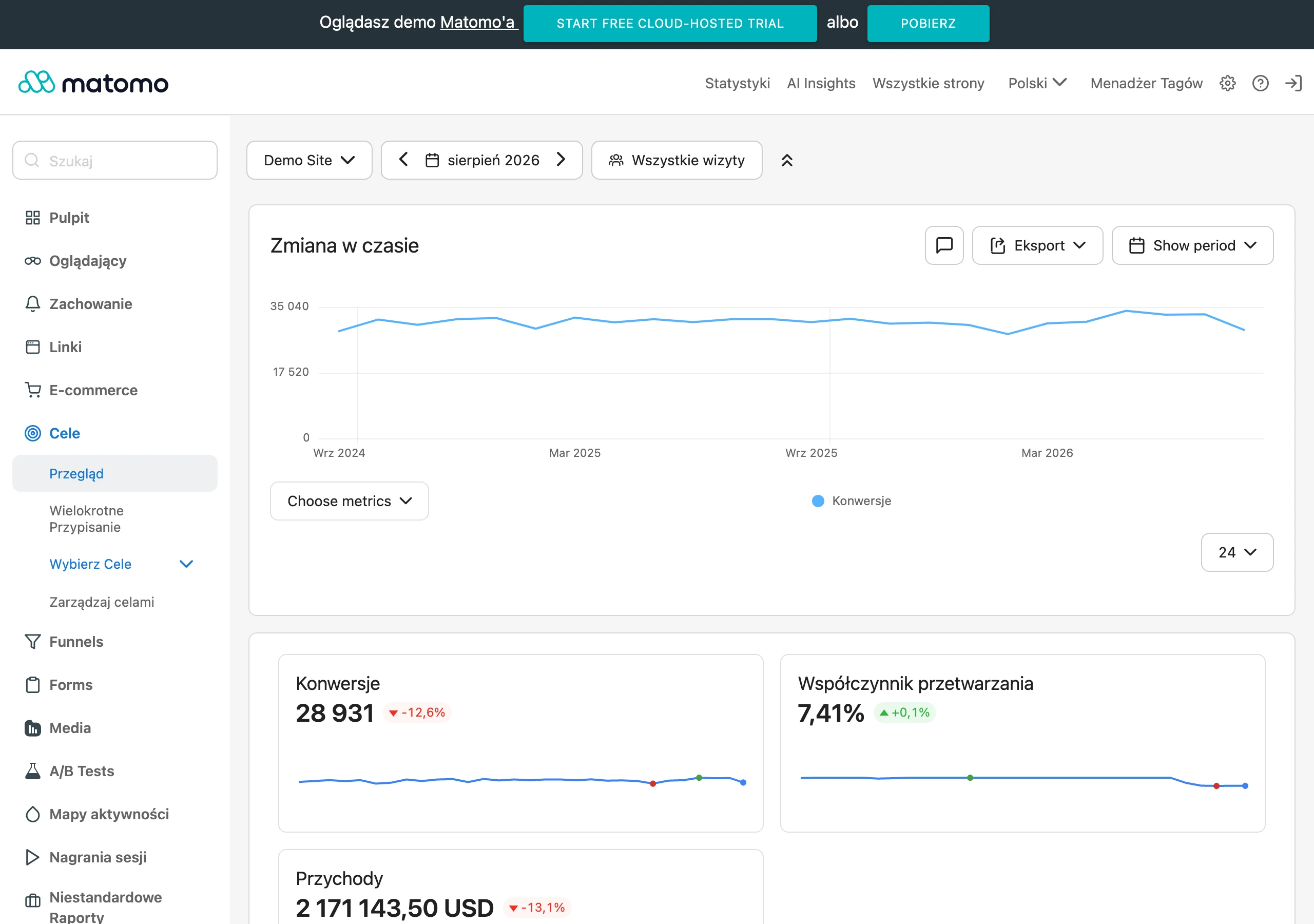
The simplest yet sensible model has three levels. The first is traffic effectiveness, meaning where users come from and how much it really costs to acquire a visit or a lead. The second level is website effectiveness: whether people do what matters to you, from submitting a form, through clicking on the phone number, to adding to basket or going to the offer. The third, hardest level is sales effectiveness, meaning how many of those contacts close into a transaction, a qualified lead or simply revenue.
- one main business goal, such as sales, qualified leads or customer acquisition cost,
- 2-4 supporting KPIs that keep traffic quality, website effectiveness and sales performance in check,
- correctly tagged campaigns and consistent UTMs,
- macro and micro conversions separated in analytics,
- connecting marketing data with CRM or at least a regular import of sales results into a shared spreadsheet or dashboard.
Technically, it starts with an audit of the basics. You check whether GA4 and Google Tag Manager are collecting the right events, whether ad pixels are not double-counting conversions, whether forms and phone calls are actually being measured and whether campaign naming allows channels to be compared without guesswork. The problem is that when the data are inconsistent, every later analysis will just be an elegantly packaged mistake. Fix the measurement first, then assess campaign effectiveness.
It is also crucial to separate micro- and macro-conversions. Micro-goals, such as scrolling the page, time on site or visiting the contact subpage, are great for diagnosing friction in the funnel, but they should not be the main basis for budget decisions. A macro-conversion is an action with real business value: a purchase, a qualified lead, a booked call, an enquiry. The question is: is the campaign delivering results, or does it just look good in reports? If it performs well only on micro-goals, it usually does not yet deserve a budget increase.
Finally, you need a simple rhythm for working with data. One dashboard or spreadsheet is enough, where you compare channels, costs, conversions and sales performance, plus a regular review, for example weekly operationally and monthly for decisions. Three decisions are made in such a review: scale, maintain or switch off. But be careful, today this is more important than it used to be, because attribution is incomplete and some decisions have to be based on trends, first-party data and comparing lead quality, not just the ad platform.
How to make cyclical decisions about scaling or switching off activities?
Decisions about scaling or switching off do not come from a whim. They are made on a fixed review rhythm, against the same KPI and with predefined profitability thresholds, so you do not chase “nice” charts. One thing matters above all: you assess activity by its impact on business results, not by traffic alone or the number of clicks. In practice, it is a simple sequence: you collect data, compare it with the previous period, and choose one of four options — increase the budget, leave it unchanged, improve it or switch it off. Without fixed review rules, it is easy to scale campaigns that look good in the ad platform but perform poorly in sales.
The review rhythm is not universal. It depends on the length of the sales cycle and on how much data is actually fed into the system. You can monitor paid campaigns more often for cost, errors and traffic quality, but budget decisions are better made in a longer window — weekly, fortnightly or monthly. If sales close after a few weeks, quick conclusions usually distort the picture rather than sharpen it. The smaller the budget and the less data you have, the more you need to look at the trend rather than individual days.
Every review should be based on a few metrics that lead to one specific decision. Most often these are cost per acquisition, conversion rate, lead quality, share of sales, revenue from the channel and — if the company measures it — retention or customer lifetime value. Not every channel has to use the same set of KPI, because their roles and dynamics are different. But beware: the final filter should be the same. The question is whether a given activity delivers a profitable result and whether it can be measured consistently, not “by eye”.
- Scale, when the final result is profitable, the quality of leads or orders does not drop after increasing spend, and the website and sales team are ready to handle a larger volume.
- Maintain, when the activity is profitable, but you are still not sure whether a bigger budget will not worsen efficiency, or when the limitation is the landing page, the offer or the sales team.
- Improve before scaling, when traffic looks promising but conversion is blocked by the form, the message, the ad-to-page match or plain measurement errors.
- Switch off, when after a reasonable period and basic improvements the channel still generates low-quality traffic, leads that are too expensive, or does not contribute sales relative to the cost and handling.
The most common mistake is banal, but costly: you switch off a channel too early or ramp it up too aggressively. When there is little data, it is better first to narrow the audiences, refine the message or the landing page, than immediately declare that “this channel does not work”. On the other hand, a good cost per lead alone is not a ticket to scaling if the sales team reports poor-quality contacts or the close rate starts to fall. It is not the number of leads that wins, but sales.
In cyclical decisions, you need to separate two worlds. The channel problem is one thing, and the funnel problem is another, and only that difference explains why “there is traffic” but no sales. The source may deliver the right users, but the result will suffer when the offer is unclear, the form never ends, and the contact sales process moves at a snail’s pace. If the result worsens after the click, do not automatically assume the campaign is to blame. The question is: where exactly does the journey break down? First identify the stage where conversion drops and check whether the problem lies in UX, the messaging or lead handling.
Scaling is tempting because it seems simple. But be careful: it is better to increase budget gradually and watch whether the quality of the result holds up, rather than believing that “more” always means “better”. In many channels, higher spend means moving into broader, less relevant traffic, so CPA rises and quality starts to crumble. Instead of one big jump — stages, comparing the same periods and controlling not only cost, but also what happens further down the funnel. Scaling only makes sense when business value grows alongside spend, not just volume.
Switching off activities also requires a cool head. Not impulses, but control, because “cutting it off” can hurt more than a weak result. Before making the decision, check three things: whether the measurement is correct, whether the campaign had a real chance to collect data, and whether obvious barriers on the website or in the offer were removed earlier. If these points are in order and the result is still unprofitable, switching it off may be the best move. It frees up budget for more effective tests and channels that have real traction.
At the end of each round, record the decision and its rationale. It is a small thing, but it makes a difference. Such documentation allows you to distinguish genuine improvement from seasonality, changes in demand or attribution errors that like to pretend to be a “trend”. After a few cycles, the company no longer runs on intuition, but on its own data: it knows what to scale, what to maintain and what to cut off, without burning through budget.
FAQ
Frequently asked questions
How can you assess which marketing activities really drive sales on a small budget?
You need to look not only at traffic and clicks, but also at acquisition cost, lead quality, the sales close rate and customer value. Only by combining this data can you see what really works.
Does cheap traffic from ads mean a channel is profitable?
No, because cheap traffic can produce poor leads or sales that the sales team fails to close. Profitability becomes clear only after taking full costs and the business result into account.
What data should be organised before comparing marketing channels?
You need to gather data on costs, traffic sources, on-site behaviour, conversions and sales results. Clicks or reach alone do not show what actually delivers results.
Why should a marketing audit with a limited budget start with measurement?
Because incorrect conversion counting, duplicate events or a lack of consistency with the CRM can show results only on paper. First you need to fix measurement, and only then assess how effective the activities are.
How should you carry out an audit of current marketing activities so that it makes sense?
First you need to identify one main business goal, then gather data and costs from all sources in one place. Finally, divide the activities into those to keep, improve and switch off.
How should you prioritise marketing experiments on a small budget?
The best approach is to prioritise by the expected impact on results, implementation cost, test duration and data confidence. First it is worth making changes with high potential and low cost, and only then moving on to larger implementations.