

Paid ads can work faster than SEO. Especially when a business needs traffic, leads or sales immediately, rather than in several months’ time. This is most often the case with a new offer, a newly launched website, a time-limited promotion, seasonal demand or entry into a new market. SEO builds visibility over the long term, but it has to do the groundwork: indexing, ranking growth, collecting quality signals. You launch ads almost instantly, and from the very first days you can see which keywords, audience groups and messages deliver results. The quickest results from ads appear not when the budget is large, but when the offer, the site and tracking are ready to handle the traffic. In practice, ads are worth treating not only as a source of clicks, but also as a quick test of real demand.
Why do paid ads deliver faster results than SEO?
Because they start straight away. Paid ads can generate visibility and traffic immediately after a campaign is launched. In search, they capture existing demand for keywords with buying intent, while on social media and in display they quickly build reach where SEO does not work in the same way. The result is simple: the business does not wait for indexing, domain authority growth or the slow pushing up of organic rankings.
The biggest advantage of ads appears when time matters. This applies to new domains, seasonal offers, limited promotions, local services with an urgent need and testing a move into a new market. If you want to be visible today for commercial keywords, advertising is usually a faster route than SEO.
Ads also give you more control. You control who sees the offer and when, instead of hoping that “organic” will deliver the right traffic on its own. You can split campaigns by brand, specific services, locations, products or remarketing, and then quickly assess cost per acquisition and enquiry quality. This allows you not only to sell faster, but also to learn the market faster before you burn budget on wrong assumptions.
SEO and ads do not always compete with each other. Often they simply solve different problems instead of fighting for the same slice of the pie. SEO is better at building a lasting presence and, over the longer term, reducing dependence on paid traffic. Ads are faster where you need immediate visibility, message testing or a quick validation of whether the offer actually matches real demand.
Key conditions for effective paid ads
There is no magic here. The effectiveness of paid ads depends primarily on whether the business is operationally ready for traffic and conversions. Ad delivery on its own will not hide a weak offer, an unclear website or poorly configured tracking; it will only expose those shortcomings faster. For ads to deliver a quick result, you need a polished landing page, a clear value proposition and a correctly defined campaign objective.
The number one condition is tracking you can trust. Events and conversions in GA4 and via Google Tag Manager must be set up correctly, and ad data is best connected to a CRM or sales system as well. Without information on lead quality and actual sales, it is easy to confuse a quick rise in traffic with quickly burning through budget.
The second condition is a website matched to paid traffic. The landing page needs to load quickly, work smoothly on mobile, show the benefit straight away, address the main objections and guide the user towards one simple action. Sending campaigns to a general homepage often holds back results, because the user has to find on their own what the ad promised.
The third condition is to play to intent, not just keywords. The quickest “wins” usually come from brand, transactional, local and problem-solution keywords, because they are closer to the buying decision than broad informational queries. It is worth directing the first budget where intent is strongest, not where reach looks most impressive.
In e-commerce, product data quality also matters. A quick result from product campaigns depends on a correct feed, Merchant Center setup, price and availability consistency, and sensible mapping of categories and attributes. If these elements are out of sync, the ad system receives weaker signals and even a large budget will not hide technical problems.
In the end, what happens after the click is what decides. When forms are cumbersome, the phone stays silent and the salesperson calls back after a few days, ads lose their speed advantage and the whole promise of an “immediate result” falls apart. A paid channel works quickly only when the website, sales process and response to the customer enquiry work just as quickly.
How to implement a paid ad campaign effectively?
Effective implementation of a paid ad campaign starts with actions that will show as quickly as possible whether the offer really sells. First, you choose one main objective: lead, sale, call, sign-up or a local visit. This determines the platform, campaign type, measurement method and test budget, because you optimise clicks differently from revenue. The biggest mistake at the start is trying to “pack” several different objectives into one campaign.
The next step is a simple check of whether the website is ready for paid traffic. The landing page must clearly communicate what the business offers, for whom, at what price or on what terms, and what the user should do next. If the advert promises a specific benefit, the landing page should confirm it immediately, otherwise the cost per click rises and conversion falls.
Then you build the campaign around user intent, not reach alone. The quickest result is usually delivered by brand, transactional, local and problem-specific keywords. Broad informational campaigns can build awareness, but at the start they less often deliver a quick return.
The campaign structure should separate different types of demand. Run campaigns for brand, specific services or products, locations, remarketing and tests of new segments separately, instead of putting everything into one basket. This way the budget does not get mixed between intents, and the results are easier to interpret and optimise.
Traffic from ads should land on relevant pages, not on the homepage. For each key service, product category or location, it is better to prepare a separate landing page with the right message, CTA and response to the most common objections, because that is where the decision is made. This shortens the route to purchase and shows more quickly which segments really have potential.
The campaign launch should be controlled, not broad. First you launch those ad groups and those keywords that carry the highest purchase intent, because they gather data on cost per acquisition and query quality fastest. Only after a few days or weeks does it make sense to expand reach to less obvious audience groups. Why burn budget before you see what works.
After launch, you need to read the data operationally straight away, not just glance at the number of clicks. What matters are search terms, conversion rate, cost per acquisition, lead quality, device share, locations and ad delivery times, because they show where the campaign is really making money. If there are clicks but no sales, the problem often lies in the offer, the form, the price, the salesperson’s response time or poor alignment between the page and the intent.
A well-implemented campaign also provides fuel for further SEO efforts. The queries that convert in ads are fed into the content plan, service pages, FAQ sections and offer comparisons, instead of guessing what “should” work. In practice, ads accelerate not only sales, but also decisions about what is worth investing in organically.
Most important technical and operational aspects of paid advertising
The most important technical and operational aspects of paid advertising are correct conversion tracking, data quality, efficient lead handling and consistency between the ad, the landing page and the sales process. Without this, a campaign may generate traffic, but it will not give a reliable answer as to whether it is really making money or just looking good in the dashboard. Fast results from ads appear only when the system measures the right events and the company can handle them after the click.
The foundation is the correct configuration of GA4, Google Tag Manager and the ad conversions themselves. You need to measure the main business goals, such as purchase, form submission, phone call or booking a consultation, rather than basing optimisation on micro-goals like scroll depth or visiting a subpage. Automated bidding strategies only learn well when they receive clean and valuable signals, not noise.
Equally important is connecting ad data with the CRM or sales system. The sheer number of forms means very little if half the contacts are random or simply do not fit the offer. In practice, you need to assess not only the cost of a lead, but also its quality, sales value, margin, cancellations and time to close.
From a technical point of view, before launching a campaign you need a few basics ticked off. Without them, even the best budget works in a vacuum:
- whether conversions are recorded correctly and do not duplicate,
- whether forms work on mobile and do not force the user to fill in unnecessary fields,
- whether the page loads quickly and does not “lose” the user after the click,
- whether the consent policy is not blocking key tags without sensible control,
- whether the ads lead to the right landing pages,
- whether the delivery times and locations match the real availability of sales or support.
In e-commerce, product feed quality and Merchant Center configuration also come into play. This is not cosmetic. Prices, availability, categories and product attributes must match what is on the site; otherwise product campaigns lose visibility or drive traffic to underdeveloped product pages. The problem is that here the technical side directly affects the result, because the ad system makes decisions based on this data.
Operations are just as important as tool configuration. Full stop. If the salesperson calls back after two days, the helpline does not answer or the contact inbox is not monitored, the campaign will look worse than it actually is. Advertising can deliver demand, but it will not cover up a leaky sales process.
You also need to keep an eye on query quality and exclusions. And do it regularly. Too broad keyword matching, no negative keywords and sending all traffic to a general company homepage quickly raise costs and lower relevance. The key question is simple: are you paying for clicks you do not even want. That is why a constant review of the search terms report and updates to exclusions are not an add-on, but a routine on which profitability depends.
Finally, one thing that is easy to “forget” in the heat of optimisation: advertising will not speed up results if the offer is poorly matched to the market. Even a correctly set up campaign will not save an excessive price, unclear value proposition, poor UX or a lack of trust on the site. Paid ads are fast, but they work best when the whole journey from click to contact or purchase is well organised.
Typical mistakes and limitations in paid campaigns
Typical mistakes and limitations in paid campaigns usually look the same. The start is quick, but there are no conditions for turning traffic into a real result. Most often it is not the ad platform itself that fails, but the landing page, poorly set up tracking or targeting that is too broad. In practice, ads help you enter the market faster, but they do not fix a mismatched offer, an uncompetitive price or slow lead handling. If there are clicks but no sales, first check the offer, the landing page and the sales process, and only then the campaign itself.
The mistake repeats like a refrain. Instead of directing traffic to a relevant landing page, many companies push users to the homepage. After the click, they should immediately get what they were looking for: a specific service, product, location, purchase terms and a clear CTA. When the ad promises one thing and the page serves up generalities, the conversion rate drops and the cost per acquisition rises.
The second classic is badly set goals and equally poor interpretation of data. A campaign can look great in the dashboard because it has lots of clicks or a low entry cost, while at the same time delivering poor leads or queries outside the target group. Without connecting ad data with the CRM, it is easy to optimise a campaign for cheap forms that do not turn into sales.
Paid ads have one more limitation: they are on the leash of budget and auction conditions. When the competition tightens, bids go up, and the “quick result” can end up being more expensive than originally assumed. This is especially visible in sectors with high customer value, locally limited demand, or keywords with very strong purchase intent.
Not every business situation is suited to a fast result from ads. If a client makes decisions over weeks, needs multiple approvals or compares several suppliers, simply running ads will not compress that process into a week. The question is: are you measuring the campaign in the right time window. In such cases, a campaign may generate interest well, but the sales result will come later and that needs to be taken into account when assessing effectiveness.
A separate issue is configuration. Poorly defined conversions, a lack of negative keywords, overly broad matches, random targeting or no ad schedule mean the system learns from the wrong signals. Bid automation works well only when it receives clean data on valuable conversions, not on random micro-actions.
In e-commerce, the limitation is sometimes not the campaign itself, but the product infrastructure. A poor feed, errors in Merchant Center, mismatched prices, stock shortages or poorly set product attributes reduce visibility and harm traffic quality. Even a large budget will not make up for messy product data.
And one more thing, because this keeps coming back. Paid ads do not replace SEO in building lasting visibility. They provide a quick start, market testing and control over traffic distribution, but when the budget stops, the traffic usually drops too. The best use of paid campaigns is rapid demand validation and the parallel collection of data that later strengthens SEO.
How to measure and analyse the success of ad campaigns?
The success of ad campaigns is counted in money, not clicks. Traffic and CTR can look impressive, but only the business result shows whether the whole machine makes sense. First, establish which conversion is really key: a sale, a lead, a phone call, a signup, a local visit or an order of a specific value. Only then do you choose the metrics, reporting method and optimisation logic. If the main goal is not defined before launch, later analysis usually mixes the data and leads to wrong decisions.
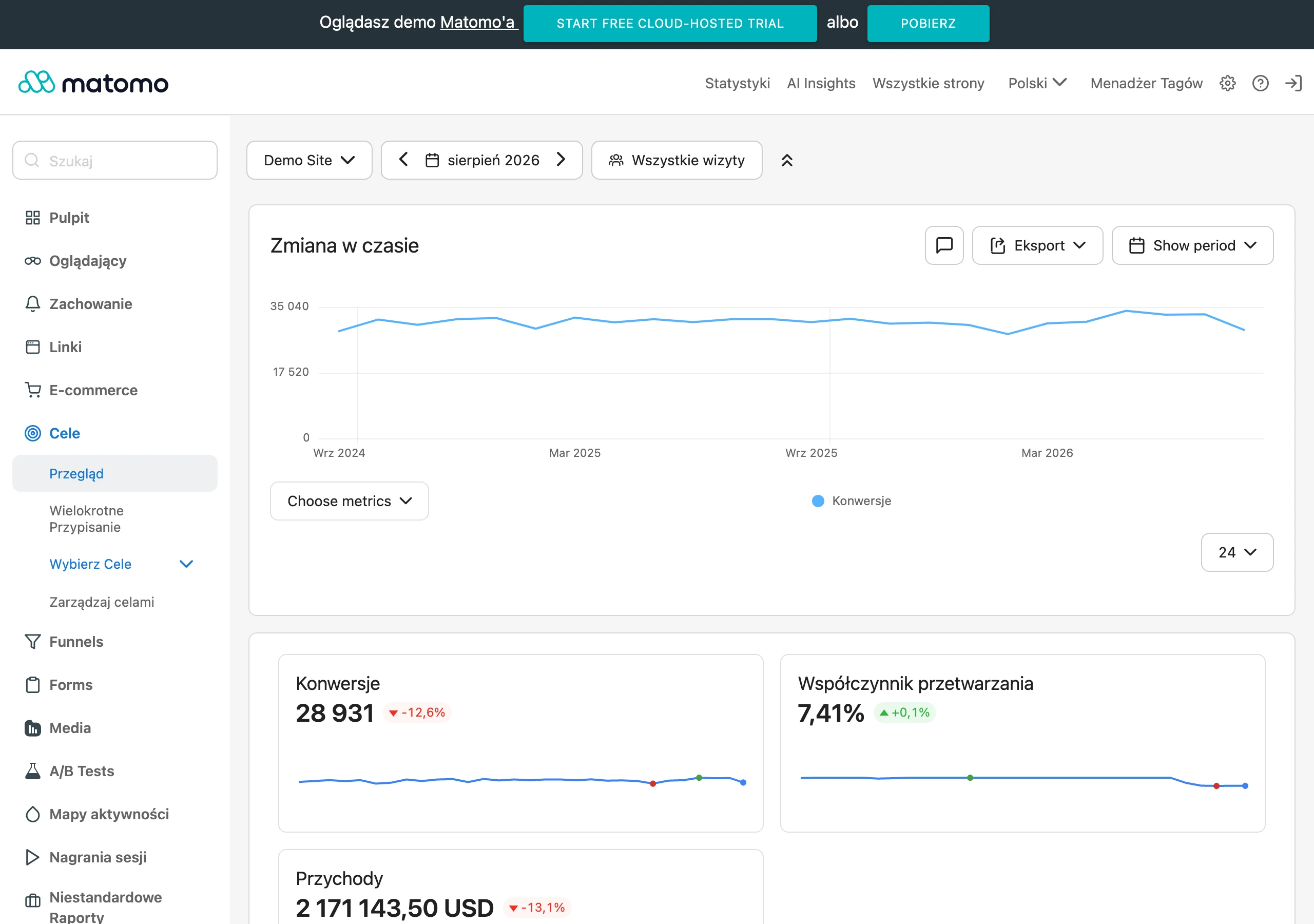
Without measurement, you are in the dark. In practice, this means properly implemented GA4, Google Tag Manager, sensibly configured events, separating primary and secondary conversions and, where possible, importing data from the CRM or sales system. Then you can see not only who filled in the form, but also which campaigns delivered valuable enquiries, sales or margin. And that is where the magic of “nice charts” ends and hard verification begins.
In day-to-day analysis, one metric is not enough. A campaign is assessed in parallel through cost per acquisition, conversion rate, lead quality, the share of high-intent keywords and user behaviour on the site. In e-commerce, basket value, revenue and returns also matter, and in services, time to close and lead quality after sales contact. The point is not to “have lots of data”, but to read it in the same context.
- CTR shows whether the ad grabs attention, but it does not answer the question of whether the traffic is worth anything.
- Conversion rate says whether the page and offer turn clicks into action, rather than another visit and exit.
- CPA or cost per lead allows you to assess whether acquiring a contact fits the realities of the business, not just the ambitions of marketing.
- ROAS or revenue makes sense mainly where sales value can be reliably attributed to the campaign.
- Lead quality from CRM shows whether the campaign delivers customers, not just forms to tick off.
After launch, the search terms report and data segmentation are key. You need to regularly check exactly which queries triggered the ads, which devices and locations convert best, and at what times traffic is of the highest quality. This gives you simple but powerful levers: you cut out irrelevant terms, narrow the delivery and shift budget to where purchase intent is real. And not where people merely “click”.
It is worth breaking the results down by traffic type rather than putting everything in one bucket. Brand, transactional, local and remarketing campaigns usually have different costs, different roles and different times to conversion. Mixing them in one report blurs the picture and makes it harder to assess what really works. Let’s look at it another way: order in the structure is often a faster optimisation than yet more changes to creatives.
When results are weak, the analysis should proceed step by step. First the ad, then the keyword or audience group, then the landing page, form, sales rep response time and, finally, the quality of the offer. This sequence quickly shows whether the problem is irrelevant traffic, a weak page or the stage after the enquiry is sent. Good campaign analysis does not end in the ad platform, but combines marketing data with the sales result.
The most practical conclusion from measurement is simple. Data from paid campaigns should be fed onward straight away, rather than kept only in the ad platform. Effective keywords, customer questions, high-converting headlines and user objections should feed into the SEO plan, sales copy and website development. This way, ads not only deliver a quick result, but also add a brick to cheaper growth in the following months.
Integrating insights from paid ads with the SEO plan
Integrating insights from paid ads with an SEO plan comes down to one thing: using campaign data to identify faster which keywords, messages and pages really drive sales or leads. And that makes a difference, because SEO stops relying solely on search volume estimates and starts relying on real user behaviour. This is especially important for a new offer, a new domain or a change in brand positioning. Ads show faster what people are looking for, how they describe the problem and what they respond to in the messaging. The question is whether we want to use that knowledge, or waste it.
The most practical transfer concerns keywords and intent. The search terms report from a campaign makes it possible to see which queries are transactional, comparative or problem-solution in nature, and which only generate traffic with no business value. This is a good way to set SEO priorities not by keyword popularity, but by quality and conversion potential. In practice, some topics should be moved into service or product pages, while others should go to FAQ, comparisons, sections addressing purchase objections or how-to articles.
Only those signals from ads that are confirmed by business results should be carried over into the SEO plan. Clicks alone are not enough, because some keywords attract cheap traffic but do not deliver valuable enquiries or sales. That is why content decisions are best tied to CRM data, lead quality and information about which enquiries close faster or with a higher margin. If a keyword has lower volume but consistently leads to high-quality conversions, it usually deserves a higher SEO priority than a topic generating traffic alone. Not more reach, but more sense.
- keywords with high purchase intent for service pages, categories and offers,
- user questions for FAQ sections and educational content,
- ad headlines with good CTR for testing SEO titles, H1 and meta descriptions,
- the most common customer objections for content on landing pages and organic pages,
- data on locations, devices and conversion times for planning content architecture and local priorities.
Insights from ads can improve not only campaigns, but also the pages being optimised. If paid traffic shows that a shorter form, more prominent CTA and clear information about price, turnaround time or availability work better, those exact elements should also be brought onto SEO pages. Organic traffic and paid traffic convert better when they land on pages that answer the very same intent. And that often delivers a bigger effect than adding yet more paragraphs “for search engines”.
Ads are excellent for testing messages before anyone sinks budget into expanding content. Before a company builds a large content cluster, it can check in a campaign whether users respond better to price, speed of delivery, expertise, local relevance or the scope of the service. What wins in clicks and leads. Then those winning messages can be transferred directly into page titles, category descriptions, copy intros and the layout of sales sections. This shortens the time needed to arrive at effective SEO content, because some hypotheses have already been tested on paid traffic.
The most common mistake is simple in form, costly in effect. It consists of mechanically copying every keyword from Google Ads into the SEO plan. Not every keyword that is profitable in advertising will be a good organic target, because you still need to account for competition in the results, assess the SERP type, weigh up content resources and the real time needed to gain visibility. A more sensible approach looks different: combine ad data with topic difficulty analysis, site structure and the team’s capabilities. Then SEO benefits from paid data without losing its own logic of long-term growth.
Integration of PPC and SEO only works when it becomes a habit. Not a one-off action, but a cycle. Every few weeks it is worth reviewing the search terms reports, landing page results, questions from salespeople and changes in lead quality, then updating the content backlog and the pages to be expanded. This model makes it possible to build organic visibility faster where ads have already confirmed demand. As a result, ads speed up market testing, and SEO takes over the areas that have the greatest long-term value.
FAQ
Frequently asked questions
What situations make paid ads work faster than SEO?
This usually happens with a new offer, a newly launched website, a time-limited promotion, seasonal demand or entering a new market. Then immediate visibility and traffic matter, rather than waiting for organic results.
Can paid ads deliver results from the first days of a campaign?
Yes, because they can be launched almost immediately and you can see traffic and the first signs of effectiveness straight away. However, the offer must be ready, measurement must be set up properly and the site must be prepared to handle the traffic.
Why do paid ads produce results faster than SEO?
Because you do not have to wait for indexing, domain authority growth or climbing positions in organic results. Ads start immediately and can capture existing demand for keywords with purchase intent.
When are paid ads best for testing demand for an offer?
Especially when a business wants to quickly check whether the offer matches real demand. The article stresses that ads should be treated not only as a source of clicks, but also as a quick market test.
What needs to be ready for paid ads to deliver a fast result?
You need accurate conversion tracking, a well-crafted landing page and a clear value proposition. If these elements do not work, the ad will show problems faster than it will deliver results.
Which keywords usually deliver results fastest in paid campaigns?
These are usually brand, transactional, local and problem-solution keywords, because they are closer to the buying decision. Broad informational queries usually rarely deliver a quick return at the start.