

Brand visibility in AI responses is not just about adding a few keywords or a single schema tag. It is about something simpler and at the same time more difficult: making sure AI systems can clearly recognise who the brand is, what it offers, whom it genuinely helps and which sources they can rely on for the answer. In practice, this means organising the content on the site, standardising information beyond it and removing technical barriers that simply make it harder to read that data. The most important thing is to build a coherent, trustworthy brand entity, not just optimise an individual page. And that is where the difference begins. This approach is broader than classic SEO, because it also covers citability, expert recognition, data consistency and real-world ways AI models use content. The clearer the brand is described and the more consistently it appears in public sources, the greater the chance it will show up in an answer.
What increasing brand visibility through AI means in practice
Increasing brand visibility through AI in practice means organising information about the company so that AI systems can easily understand the brand, its offer and the context in which it is used. It is not a game of pushing one page higher, but of building a full picture of the brand as an entity. That picture includes the company name, services, products, locations, experts and the relationships between them.
The work usually starts with a simple test: is the brand described consistently on its own website and beyond it. If different versions of the name, description or scope of services circulate on the company site, external profiles and publications, AI can stumble when determining whether it is the same entity. AI systems recognise brands more easily when they can be clearly distinguished from other companies with a similar name. And it works like a filter: first order, then visibility.
This work covers both owned sources and public external sources. It is not just sales pages that matter, but also the about section, author profiles, FAQ, guides, documentation, contact pages, location descriptions and mentions in trustworthy websites. AI is more likely to “pick up” brands that have more than one clear, consistent and citable point of reference. Instead of one business card — a whole set of consistent signals.
The result of this work is not some magical guarantee of appearing in answers, but better brand recognition by AI models. In practice, this usually results in an entity map, a list of priority topics and queries, a content plan and a list of technical and source-related gaps. The greatest value comes from identifying which pages should be the canonical source of knowledge about the brand and its offer. Without that, AI gets a mixture of versions, not one solid story.
The scope of work depends on the size of the company and the level of information chaos. The approach is different for one service on one domain and for a brand with several sub-brands, many locations, language versions and distributed content published by different departments. The more such elements there are, the more important it becomes to set priorities and establish one version of the truth about the brand. Because the problem is that AI does not infer intent — it assembles the answer from whatever it has to hand.
Current conditions affecting brand visibility in AI responses
Several things work towards brand visibility in AI responses at once. Content quality, entity consistency, technical accessibility of the site, source credibility and information consistency across different places on the web all add up to one picture. There is no single magic setting that guarantees a brand will appear in an answer. The problem is that what decides whether a brand gets used is usually a mix of many signals, not one “golden” factor.
Readability matters. Full stop. It is highly important whether the brand is described on pages that AI can simply read and understand, without having to infer content “between the lines”. If key materials are hidden behind a login, rendered only in JavaScript, blocked in robots.txt or have incorrect canonicals, their use as a source becomes simply less likely. The content must be available in readable HTML and at an indexable URL, otherwise even a well-written page may be skipped.
Structured data helps. But note, it does not solve everything on its own. Schema.org can make it easier to recognise an organisation, product, service, author or location, but it only works when that data matches the visible content and does not conflict with other sources. If the markup says one thing and the content or company profile somewhere else says something different, the brand becomes less clear. And without clarity, AI does not choose — it skips.
Visibility in AI can be capricious. It depends on the context of the question. The same brand may appear for one type of query and disappear for another, even if both relate to the same category. Assessment should not be based on a single prompt, but on a set of questions covering different intents, languages and usage scenarios. So the question is not “can we be seen”, but “under what conditions and why”.
Brands that have “coverage” of the topic win. Not those with a single lonely offer page. If there are also guides, definitions, use-case pages, expert profiles, answers to common questions and content explaining limitations alongside the offer, AI has more material to understand when the brand is a relevant example or a sensible source. This is especially important for problem-solving and comparison queries, where a sales page on its own usually does not deliver. Instead of one claim — a network of context.
How the process of optimising a brand for AI systems works
The process of optimising a brand for AI systems starts with a source audit and ends with monitoring and further iterations. First, you check whether the brand is described unambiguously, whether it is not being mixed up with other entities with a similar name and which public sources already mention it. Then, in parallel, you assess content accessibility: what crawlers can see and what is hidden, duplicated or technically difficult to read. The fact is that without this diagnosis, the rest of the work is often shooting in the dark.
The next stage is the entity map. And only then does it get serious. The point is to build relationships and assign canonical sources: between the brand, services, products, experts, locations and topics with which the company wants to be associated. If the brand does not have one coherent identity and one main source for every important entity, AI has fewer reasons to use it in its response. The key is not to multiply “almost identical” entities, but to close them into a coherent, recognisable set.
After the audit comes the time for priority decisions. In other words, choosing the questions and situations in which the brand is to be visible, rather than some lofty slogan about “increasing awareness”. This should not be a broad, abstract goal, but a set of specific scenarios: problem queries, comparative, local or expert ones. This makes it immediately clear which pages need to be created or rebuilt first and where investment will deliver the fastest effect.
Next, content optimisation and its semantic structure are finalised. New pages are created or existing ones are organised: organisation, services, products, authors, FAQ, guides and use cases, so that each of them clearly answers a specific user intent. The content must not only be SEO-correct, but above all easy to understand, cite and connect with a specific entity. Without this, even the best words remain in a void.
At the same time, the technical layer comes into play. It ensures that AI systems read information without guessing, without assumptions, without “interpretation in the dark”. In practice this means structured data aligned with the visible content, logical internal linking, breadcrumbs, correct canonicals, sitemap.xml, hreflang and the availability of key information in HTML. The problem is that when the most important data is hidden in scripts, behind login or blocked by robots.txt, even good content may simply not be used.
The final stage is strengthening signals off-site and ongoing monitoring. The brand should be described consistently in company profiles, publications, directories, partner materials and other public sources that can be treated as confirmation. Visibility in AI is assessed on the basis of the trend across a set of control prompts and cited sources, not from a single isolated result. The question is: are you looking at the process, or at a momentary flash.
Key actions that increase the chance of a brand appearing in AI
The chance of a brand appearing in AI is increased above all by a coherent, easy-to-recognise identity across all sources. Details and consistency matter: the name, business description, domain, scope of services, locations and the people representing the company should be written in the same way on the website, in external profiles and in publications. The most common problem is not a lack of content, but the fact that different sources describe the same brand in different ways. And then the algorithm gets several versions of the same story.
The second key action is to prepare pages that answer real user questions and at the same time clearly show what the company does. A sales page alone is usually not enough if the brand is also to be mentioned in problem-based or expert responses. So what is needed is not decoration, but substance: service and product pages, use-case descriptions, FAQ, guides, expert profiles, contact details and content explaining conditions of use, limitations and differences between solutions. Instead of one “buy now” — an answer architecture.
The third element is proper organisation of structured data and the entire information architecture. This is the foundation. Schema.org helps systems recognise an organisation, service, product, author or local branch, but it only works when the markup is consistent with what the user actually sees on the page. Structured data will not fix inconsistent content, but when implemented well it significantly makes it easier to assign the right relationships between entities.
Technical accessibility is just as important. Without it, everything else falters. Pages intended for citation should have indexable URLs, correct canonicals, logical internal linking and content available in HTML here and now, not only after scripts are rendered. In practice, you simply need to check whether the crawler sees the full content without hesitation, contact details, the brand name, authors and the key elements of the offer.
Source credibility is no less important. And this is not a detail. AI systems more often draw on materials that have clear authorship, update dates, company details, expert pages, editorial policies and references to primary sources where needed. This is especially important in sectors where the user expects not only an answer, but also an explanation of who stands behind it.
At the end there is what is most down-to-earth and at the same time most useful: measuring progress. Instead of asking broadly whether the brand “is visible in AI”, it is better to check whether it appears for specific problems, whether the right subpages are being cited and whether the company information remains consistent in different places. The most damaging factors here are mass thin content, automatically multiplied FAQ and exaggerated claims, because they reduce the brand’s distinctiveness instead of strengthening it.
The most important strategic decisions in the context of AI
The most important strategic decisions come down to one thing: which questions, entities and use cases the brand is to be recognised for by AI systems. Without this, it is very easy to scatter efforts across dozens of topics that deliver no business value. The question is whether the priority is problem queries, comparative ones, local ones, expert ones or product ones. This decision determines which pages will be created, which data needs to be organised and which external sources will actually be needed, rather than just “looking good” in the plan.
The second decision concerns the entity model and canonical sources. There is no room for half measures here. The brand should clearly establish which page describes the organisation, which URLs are the main ones for services and products, where expert profiles are located and which subpages should be citable. If one piece of information appears in several versions, AI is more likely to lose context or choose the less favourable source.
The third decision is scope. Languages, locations, sub-brands, product lines and markets do not have to move at the same time, because not every company should launch a full rollout across all countries and sections of the site. Usually, it makes more sense to first organise one main area, check visibility for selected prompts, and only then gradually expand the project. Scaling makes sense only when the basic brand model is consistent and technically accessible.
The fourth decision concerns credibility beyond your own website. A company website alone is rarely enough, especially when inconsistent profiles, old descriptions or a lack of public sources confirming the offer and specialism circulate online. The question is where the brand should be truly “visible”: in company profiles, expert publications, partner sites, industry directories, documentation or press materials. Just as important is deciding how to measure progress, because brand visibility in AI is assessed on the basis of trends and a set of scenarios, not a single answer from one tool.
Typical mistakes and limitations when optimising a brand for AI
What most often throws things off course is inconsistency. On top of that come machine-unfriendly content and the expectation of a quick result after a single implementation. Very often a company uses different names, different service descriptions and different URLs depending on the channel. For a human this can be a minor detail, but for AI systems it blurs the distinctness of the entity. First, the brand identity needs to be organised; only then should the content be expanded.
The second common mistake is a flood of “thin” materials. This means publishing large volumes of content, mass FAQs and texts written solely for visibility, which ultimately are superficial, repetitive and do a poor job of differentiating the brand from competitors. If content does not provide clear definitions, conditions of use, limitations and practical context, AI is less likely to recognise it as a valuable source. But beware, the problem can also be a mismatch between the content visible on the site and the structured data.
The third mistake is purely technical. A brand may have good content, but if key information is hidden in JavaScript, blocked by robots.txt, duplicated by incorrect canonicals or scattered across multiple language versions, systems will not read it properly. In practice, this means one thing: HTML quality, indexability and proper information architecture are a basic requirement, not an add-on.
It is also worth taking a clear-eyed look at limitations that cannot be erased in one move. There is no setting or tag that guarantees a brand’s presence in AI answers, because the result depends on the question, language, region, conversation history and the current set of sources. New brands, companies operating in niches with few public mentions, or organisations with a dispersed structure usually need more time. In regulated industries, there is also the need to align content with law, compliance and communications policy, which simply slows implementation down.
The last mistake is judging results with too simple a metric. If someone runs one prompt once every few weeks, it is really easy to draw false conclusions. It is better to look more broadly: whether the brand appears in several types of questions, whether the right pages are being cited and whether consistency of information across sources is increasing over time. In AI optimisation, stable, repeatable presence of the brand in relevant contexts matters more than a one-off result.
How to measure the effectiveness of actions for brand presence in AI
Effectiveness of actions for brand presence in AI is measured through a series of repeatable question scenarios, the quality of citations and the visibility trend over time, not a single result. One prompt says nothing certain. After all, answers depend on language, region, conversation history and current sources. The most useful thing is a fixed set of control questions, run regularly under the same conditions. Only then can you see whether the brand appears more often, in a better context and from the right sources.
Such a set should include brand and non-brand queries. But only those that make business sense. In practice, it is a good idea to separate problem, service, comparison, local, expert and product queries. Progress means not only that the brand is mentioned, but that it appears for the right user intents. And that is key. It matters more than the number of mentions alone.
The second level of measurement is the quality of the AI response. You need to check whether the system correctly understands what the brand does, whether it assigns the right services or products to it, and whether it cites the correct URLs. Because what is the point of AI mentioning the brand if it leads to an out-of-date page, confuses the offer or links the company with another entity with a similar name. In that case, the result is weak despite the mere presence. The best quality signal is the correct connection between the brand, the topic and the canonical source.
It is also worth measuring indirect signals. They often show the problem faster than AI answers themselves. These include content availability in HTML, the indexability of key pages, the alignment of structured data with the content, the consistency of brand information in external sources, and server logs showing crawler visits. If important pages are not being crawled, have canonical conflicts (or the content is hidden from machines), visibility in AI usually does not increase even with good content. Lack of technical accessibility often blocks the effect earlier than the lack of new publications.
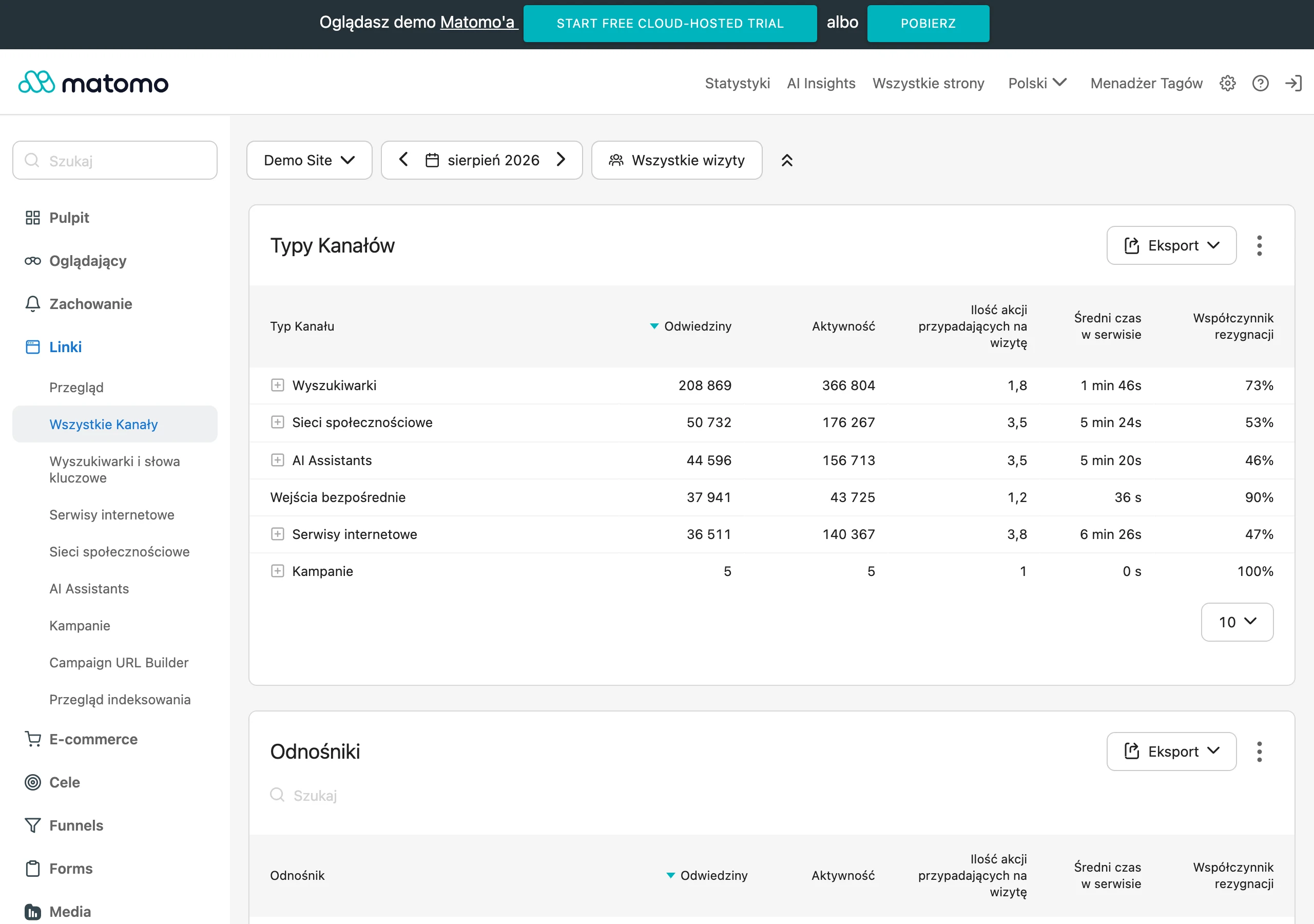
Traffic and business impact need to be looked at separately. But with a sense of proportion. Referral from AI tools, an increase in brand queries, more visits to expert or product pages and better lead quality may suggest that the brand is simply “spreading” more strongly. Is that already thanks to AI? Not necessarily, because such changes cannot be fairly attributed to just one channel, so it is better to treat these figures as supporting indicators rather than the only proof of effectiveness. First, measure visibility and citation accuracy, and only then the impact on traffic and conversions.
A good report should not pretend to see everything at once. It should show month-on-month changes for the same set of scenarios and stick to consistent criteria, instead of chasing a single “spike” in the data. In practice, it is enough to check whether the brand is mentioned more often, whether better pages are being cited, whether the number of incorrect associations is falling, and whether source consistency is increasing. That makes it easier to distinguish real progress from random fluctuations in answers. And that is crucial, because such measurement provides a concrete basis for decisions on the next step: improve content, organise entities, expand external sources, or tighten up the technical layer.
FAQ
Frequently asked questions
How to increase the chance that a brand appears in AI answers?
You need to structure the information about the brand so that AI systems can clearly recognise who the company is, what it offers and who it helps. Consistency of data on and off the site also helps, as do the absence of technical barriers that make content difficult to read.
Is one schema tag enough for a brand to be visible in AI?
No, schema.org helps, but it does not solve the problem on its own. It must match the visible content and other sources, otherwise the brand becomes less unambiguous.
Why is consistency of the brand name and description so important for AI?
If different versions of the name, description or range of services appear in different places, AI may decide that these are different entities. A consistent identity makes it easier to recognise the brand as a single entity.
What makes it hardest for AI to read content about a brand?
The main problems are content hidden behind logins, rendered only in JavaScript, blocked in robots.txt or available under incorrect canonicals. In such cases, even a well-written site may be overlooked.
Is a sales page alone enough for a brand to appear in AI answers?
Usually not, especially for problem-based and expert queries. You also need guides, FAQs, use-case descriptions, expert profiles and other content that shows the brand context.
How can you measure whether a brand is starting to appear in AI answers?
It is not worth relying on a single prompt; instead, check a set of control questions and the sources cited. What matters is the trend, not a single result.