

Brand credibility in AI-supported search means one thing: systems must be able to recognise flawlessly what the company does, who it genuinely helps and why it deserves trust. The idea that it is enough to “rank for a keyword” and that is the job done is over. More and more, what matters is whether the AI model can connect the brand name with a specific service, expert, industry and verifiable source of information. If the brand is inconsistent, poorly described or technically difficult to read, AI may skip it, summarise it badly or assign it competencies it does not actually have. And that is not an academic observation, but everyday reality in answers generated “on the fly”. That is why you need to look beyond classic SEO and, in parallel, tighten up content, structure, entity signals and external validation. In practice, the point is for the brand to be clear not only to a human, but also to systems that collect, organise and synthesise information.
The significance of brand credibility in AI-supported search
Brand credibility in AI-supported search determines whether the system will describe the company accurately and whether it will treat its content as material for an answer. This is no longer just a race to rank for one keyword. It is also crucial whether the brand looks consistent, well documented and clearly linked to a defined scope of services. The question is: does AI see a company here, or just a jumble of pages.
AI systems take in many signals at once. They analyse on-page content, structured data, author information, service descriptions, “about” and “contact” sections, as well as mentions beyond the website itself. The more consistently a brand presents itself in different places, the easier it is for systems to recognise it as a specific entity rather than a random collection of subpages. Conversely, the more discrepancies there are in names, descriptions and claims, the greater the risk that the model will build its own version of the brand.
This translates directly into visibility in synthetic answers and AI-generated summaries. If the brand clearly communicates its specialism, scope of responsibility, working method and proof of expertise, the chances increase that it will be cited correctly or referenced as a source. When these elements are missing, AI is more likely to turn to competitors, general materials or external sources that describe the topic more clearly. Not because they are “better”, but because they are easier to read unambiguously.
In practice, the biggest problem is with brands that speak only the language of marketing. Claims about “expertise”, “end-to-end service” and “individual approach” sound nice, but to systems they are almost empty. AI works better with specifics: a definition of the service, the process, limitations, input requirements, authorship and sources. Instead of promises that could be attached to any page, it needs information that can be verified and associated with a specific competence.
The importance of credibility grows especially where the user is making an important decision. This is the moment when they are choosing a service provider, consulting on a specialist issue or comparing solutions, often under time pressure and risk. In such areas, it is not only the presence of content that matters, but also transparency, meaning whether it is possible to check “who wrote what, when and on what basis”. Update dates, real authors, editorial responsibility and alignment between promises and the offer build a signal that the brand is suitable for citation and summarisation. And if that is missing, AI will usually choose the source that sounds more confident, even if it is only average in substance.
How AI systems interpret brands and their content
AI systems see brands as entities, that is, recognisable beings linked to a name, services, topics, experts, location and quality signals. This is an important distinction. They do not look at a website solely as a bag of keywords, but try to establish who the brand is, what area it operates in, who it matters to and which information can be reliably attributed to it.
Such interpretation requires clarity. And this is not just a cliché. If different versions of the company name circulate on the website and in external sources, service descriptions are vague and specialism claims contradict one another, the model starts to lose the thread and combines facts badly. Inconsistency not only weakens SEO, but above all makes it harder for AI systems to build an accurate picture of the brand.
AI rewards content that can be extracted quickly and understood flawlessly. The key is for the reader and the parser to arrive at the same place: clear headings, short answers to questions, a logical information architecture, pillar pages, FAQs, author profiles and methodology descriptions all do real work here. Instead of content hidden in scripts — content served directly. Material split into unreadable sections or deprived of semantic context simply has a lower chance of becoming a source for answers.
Structured data and the relationships between elements of the site also play a major role. Mark-up such as Organization, Person, Article, FAQPage or BreadcrumbList helps parsers better understand what is on the page, but note, only when it reflects the actual content. Simply implementing schema does not solve the problem if the content does not confirm what the mark-up suggests.
Models also analyse external signals. The question is: is the brand visible beyond its own domain, or is it only talking about itself. Company profiles, expert publications, editorial mentions and other credible sources help confirm that the brand exists, operates in a given specialism and is recognised externally. It is not about a mass number of links, but about quality confirmations that strengthen the interpretation of the brand as a credible entity.
Brands are best interpreted when three layers come together: clear source content, correct technical implementations and consistent external signals. The problem is that one weak layer is enough for AI to understand the brand only partially, and sometimes simply incorrectly. That is precisely why work on credibility does not end with publishing content, but also includes tidying up the site, authorship and the way the brand is described beyond its own website.
Stages of building brand credibility in an AI environment
Building brand credibility in an AI environment starts with defining the entity and carrying out an interpretability audit, and ends with content and technical implementations as well as continuous monitoring. This is not cosmetic work. The first stage is to establish one official version of the brand: the name, spelling variants, scope of services, specialisms, location, languages and expert people. This is the starting point. Because if a brand describes itself once as an agency, once as a software house, and at another time as consultancy, AI systems receive conflicting signals and piece together a poor-quality story from them. Without a clear entity definition, it is difficult to expect correct brand descriptions in AI-generated responses.
The second stage is an interpretability audit, in other words a test of whether the brand is readable for search engines and language models. The question is straightforward. Not only service pages are analysed, but also the about us, contact, author, editorial policy, FAQ, expert materials and evidence-based content sections, because this is exactly where AI looks for the “signature” and context. In practice, it comes down to a simple answer to a few questions: who you are, what exactly you do, for whom, to what extent and on what basis you can be trusted.
The third stage is mapping topics and user intent. Without this, you are wandering blind. The brand should know which content answers questions at the research stage, which helps compare solutions, and which confirms competence just before a purchase decision. This makes it possible to connect the brand with specific problems, working methods, experts and customer types, instead of publishing random content with no clear role and no intended audience.
The fourth stage concerns information architecture. This is where you can see whether the site has a backbone. You need to organise pillar pages, topic clusters, glossaries, FAQ, author pages and subpages showing methodology or working standards. For AI systems, it is not only what is written that matters, but also where it appears and in what relationship to other content. But be careful: if the service, expert and quality evidence are scattered across the site without clear connections, brand interpretation becomes weaker, and model responses become more “guessed” than based on structure.
The fifth stage is content optimisation of source materials. No more stuffing in keywords. Good content for AI is not about chasing keywords, but about a clear description of the service, the collaboration process, implementation conditions, limitations, responsibilities and typical use cases. The more specific and structured the content, the easier it is to extract, quote and summarise correctly, without adding threads that you have not written down anywhere.
The sixth stage is about strengthening evidence. Claims are not enough. It is worth adding expert profiles, sources, bibliographies, update information, editorial responsibility, working procedures and other elements that show the brand does not rely solely on promises. The fact is this: AI and the user are more likely to “believe” in a process than in a slogan. The message “we are experts” has little value if it is not clear who is responsible for the knowledge, where it comes from and how it is updated.
The seventh stage is technical implementation. There is no room here for “it’ll somehow work out”. You check indexability, rendering, internal linking, canonicalisation, breadcrumbs, XML sitemaps, HTTP statuses and the presence of key information in the HTML code. What matters is what the bot sees, not just the human, because even excellent content will not help if the crawler cannot read it efficiently. The problem is that the most important information is sometimes hidden in the visual layer, which makes it harder for parsers to access it.
The eighth stage organises external signals. These are what complete the brand picture. This means consistent company profiles, expert publications, editorial mentions, press materials and other quality sources that independently confirm the brand’s existence and specialism. And this is not a cliché. This is not a mass link building strategy, but the building of confirmations that make it easier for systems to associate the brand with the right field, instead of leaving it in a grey area of ambiguity.
The ninth stage is testing in real AI environments. The question is: what do the systems actually say about the brand. You need to check how the brand is described in synthetic responses, which sources are cited, which attributes are assigned to it and where incorrect associations appear. The tenth stage is iteration, meaning improving the content, entity relationships and missing sections based on what the systems actually understand, rather than what the brand assumes about its communication. The best results come from a cycle of audit, implementation, test and correction, not a one-off optimisation.
Key elements of a visibility and interpretability audit
A visibility and interpretability audit has one task. It is meant to check whether the system can read who the brand is, what it offers and why it is worth citing without guesswork. This is not just an SEO review, but an analysis of whether the brand is understandable as an entity and whether its content is suitable for information extraction. In practice, the audit should flag both semantic and technical issues, because they often pull in the same direction. But be careful: a small detail in the structure can turn interpretation upside down.
The first area is the consistency of the brand entity. Details matter here, not declarations. The audit verifies the company name, name variants, service names, specialisms, locations, expert profiles and the relationships between them. If these elements differ between the homepage, service descriptions, external profiles and structured data, AI systems may incorrectly assign competencies or associate the brand with the wrong category. Instead of precision — chaos, and algorithms read chaos in their own way.
The second area is the quality of source content. Here you verify whether the key pages answer the user’s questions specifically, whether they describe the process, conditions, limitations and applications, and whether they are not built solely on marketing language. The fact is this: AI better “grasps” what can be named and verified. Content becomes credible for AI when clear facts, definitions and relationships can be extracted from it, not just promises.
The third area concerns trust signals in practice. They act like a passport for content. The audit covers authorship, expert bios, editorial responsibility, publication and update dates, sources and methodology information. This is particularly important in sectors where the user is making costly, regulated or risky decisions. Without these elements, even a sensible piece of content can look to the system like an anonymous opinion, not knowledge.
The fourth area is structured data and its alignment with the content. A simple rule. Simply implementing schema gives you no advantage if the markup is random or has no coverage on the site. The audit should therefore check whether types such as Organization, Person, Article, FAQPage, WebPage, BreadcrumbList or sameAs are used sensibly and whether they genuinely support the interpretation of the brand, rather than creating decoration for robots.
The fifth area is the technical accessibility of content. There is no room for guesswork here. You analyse whether key subpages are indexable, whether they are blocked, whether they render correctly and whether the most important information actually lives in HTML, rather than disappearing into layers that nobody can see. But note that the list does not end there. There is also duplication, canonicalisation, server response status codes, internal linking and whether important content is hidden behind scripts or interactions that are difficult to read.
- whether the brand has one canonical page describing what it does and who it works for,
- whether each key service has a separate page with a clear scope, process and limitations,
- whether experts have profiles linked to publications and areas of specialism,
- whether contact details, locations and business descriptions are consistent across the brand ecosystem,
- whether the site includes pages that help with brand identification, such as about, FAQ, methodology and editorial policies.
The sixth area is information architecture and the relationships between content. This is the backbone of the site. The audit should show whether there are logical connections between the brand, the service, the user problem, the expert, the method and quality evidence, rather than just loosely scattered subpages. The problem is that when these relationships are missing, systems more often see individual URLs than a coherent picture of the brand’s expertise. The question is whether the content structure leads to a conclusion, or just to another click.
The seventh area is external signals and consistency of descriptions off-site. This is verification in the field. You check business profiles, industry directories, expert publications, media mentions and other places where the brand is described by external sources. It is not about the number of mentions, but about their quality, independence and consistency with what the brand communicates itself, because a mismatch in the narrative can erode trust faster than the lack of another article.
The final element of the audit is a practical test: how the brand is interpreted by AI systems and AI-powered search engines. This is the moment of truth. You need to see whether the answers accurately describe the offer, whether the correct subpages are being cited and whether simplifications or incorrect generalisations appear. And this is not a cliché. This kind of test most often brings to the surface problems that you cannot see in SEO tools alone, because it is not about the page’s position, but about the quality of the system’s understanding of the brand.
Practical tips for improving brand credibility
Brand credibility does not come from nowhere. You build it by structuring entity descriptions, source content, technical signals and external confirmations so that everything speaks with one voice. Start with one canonical version of the brand description: what the company does, who it works for, in what scope and what topics its expertise really covers. This description should be consistent on the homepage, the “about” page, service pages, external profiles and press materials. If the name, scope of services and specialism differ between sources, AI systems will connect the brand with the wrong topics or fail to understand it unambiguously.
What matters most are the “identity” pages. These are the places that explain who you are and what you do, while also being easy to quote without stripping out context. In practice, these are the pages: about, contact, services, FAQ, authors, methodology, editorial policy and knowledge hub. These sections should answer simple questions in plain language: who is behind it, how the company works, what competencies it has and where the published conclusions come from. The fewer marketing shortcuts and vague slogans, the better for AI interpretation.
Describe services operationally, not with slogans. A good service page shows how to start working together, how the process unfolds, the roles on both sides, requirements, limitations and typical use cases, instead of promising “comprehensiveness” without substance. AI models make better use of content that clearly separates the definition of a service, the implementation conditions and the scope of responsibility than of texts full of general promises. This orders the brand picture. And reduces the risk that it will be lumped into too broad a category.
Without authors, a brand speaks through a megaphone. It is worth developing author and expert profiles, because they strengthen the real signals of experience and responsibility for content, not just the “corporate position”. A profile should include specialism, scope of responsibility, related publications, role in the company and the areas in which the person actually comments. The question is: can you verify who stands behind a particular claim. If texts are anonymous or signed only by the brand, the system has fewer reasons to treat them as a credible source on topics that require expertise.
Structured data works when it is honest. It helps as long as it reflects the real content of the page and organises the relationships between entities, rather than pretending to be something that is not on the page. In practice, this means markup such as Organization, Person, Article, FAQPage or BreadcrumbList where it matches the content and site architecture. Do not implement markup “just in case”, because incorrect or overblown markup more often damages interpretation than improves it. Publication dates, update dates and indicating who is responsible for reviewing the content are equally important.
The text should be able to be “pulled out” of context without any loss. That is why content should be written so it is easy to extract and summarise: short answers to specific questions, clear headings, definitions of terms, sections covering conditions and dependencies, and readable summaries. One section should answer one user problem, rather than mixing a description of the offer, sales arguments and general educational content in a single text block. The result is practical. It increases the chance that the AI system will pull the correct fragment and assign it to the right context.
You need to ensure the technical accessibility of the most important information. Key data about the brand, service, expert and contact details should be written in HTML, not only in elements rendered by scripts or hidden deep within the interface. When important content is hard to crawl, weakly connected by internal linking or duplicated across many similar subpages, its value as a source of answers simply melts away.
In the end, what matters is monitoring how the brand is described by AI systems and which sources appear alongside it. Check whether the answers accurately define the specialisation, whether they do not assign the company overly broad competencies, and whether the right pages are being cited. If AI repeats an imprecise description of the brand, the problem usually lies not in the model itself, but in the too weak or contradictory signals provided by the brand.
The most common mistakes and how to avoid them
The list of mistakes is well known, but still costly. It is an inconsistent brand identity, anonymous content, vague service descriptions, weak technical implementations and a lack of evidence confirming specialisation. The first problem appears when a company presents itself differently on the homepage, differently in offers, and yet differently again in external profiles. Instead of three versions of the same story, you need one consistent one. To avoid this, define one version of the name, business category, list of services and areas of expertise, and then implement it consistently across all touchpoints.
A common mistake is content that sounds professional but does not show who stands behind it or what the conclusions are based on. That makes a difference. Pages without authors, without sources, without update dates and without information on methodology look to AI systems like poorly documented claims. The solution is not longer text, but greater transparency. A byline, the author’s role, revision date, scope of responsibility and a clear indication of what is opinion and what is a procedure or service description organise the reading experience and reduce the scope for overinterpretation.
Many brands lose out at the outset because of service descriptions that are too broad and too similar to one another. The result is predictable. If every subpage promises “comprehensive support”, “an individual approach” and “maximum results”, AI has nothing concrete to extract. Instead, show the differences between services, entry conditions, the typical process, limitations and situations in which a given option will not be suitable. Such a description reduces the risk of incorrect associations and improves citation quality.
Another mistake is overusing structured data or implementing it without any connection to the real content. Schema markup alone will not build credibility if the page has no content confirming the marked-up information. Also avoid marking everything up as an FAQ, expert article or person profile just to “help SEO”, because inconsistencies between the code and the content can be easy to spot. Polishing does not work here. Consistency does.
Technical issues are still one of the most common causes of poor brand “interpretation”. Content hidden in tabs, the lack of sensible HTML, duplicated service templates, no linking between the expert, the service and evidence, and thin hub pages create confusion in system relationships. The result is simple: the algorithm sees fragments, but not the whole. To prevent this, you need to simplify the information architecture, connect related assets and ensure that key facts are available without additional layers of interaction.
The second trap is building a strategy on statements such as “we are experts” without independent confirmation. That does not work. AI systems respond better to specialist publications, consistent company profiles, editorial mentions, methodology pages and other traces that confirm the existence and specialisation of the brand beyond its own website. It is not about mass link building, but about quality sources that describe the brand in line with its real activity. The question is: what do others say about you when you are not there.
Many companies, once changes have been implemented, stop checking how they are presented in AI responses. And that is also a mistake. Models can retain old associations for a long time, mix up service scopes or cite the wrong subpages that the brand considers most important. In practice, this means one thing: you fix the website, and the model still “reads” its old version. That is why it makes sense to regularly test questions related to the offer, solution comparisons and the area of specialisation, and then improve the content wherever AI draws overly general or incomplete conclusions.
Brands operating in regulated areas or areas that influence important user decisions should be particularly careful. There is no room for ambiguity here. In such sectors, a lack of clear authorship, update procedures and responsibility for content does more harm than in straightforward informational topics. The higher the risk of a mistaken decision on the recipient’s side, the greater the emphasis that must be placed on transparency, sources and publication quality control. Instead of “it will somehow work out” — hard rules and a trace of every change.
Monitoring and performance analysis in the context of AI
Monitoring and performance analysis in the context of AI involve regularly checking whether systems correctly recognise the brand, assign it the right competencies and use its content as a source. This is no longer a nice “extra” task. It is not enough to observe rankings and organic traffic. You also need to see how the brand is described in synthetic answers, alongside which sources it appears and which simplifications or mistakes models repeat. Only then do you get a picture not just of visibility, but also of the quality of interpretation.
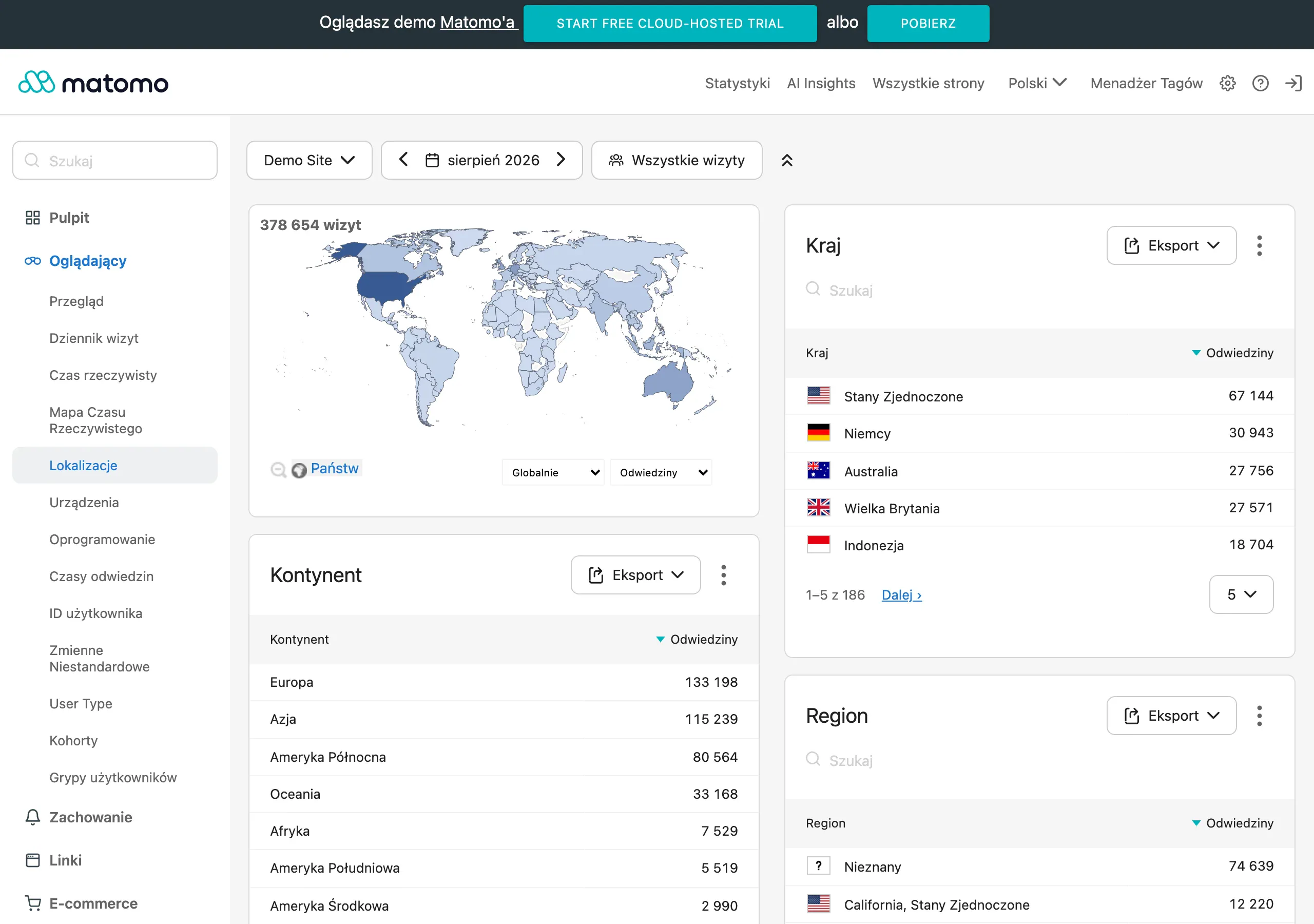
In practice, it is worth measuring several separate things. The first is the brand’s presence in AI responses to questions related to services, user problems and brand queries. The second is the accuracy of the description: whether the system properly understands the scope of the offer, specialism, location, experts and service limitations. The third is sources: whether the brand’s own pages are cited, or rather external websites, aggregators or competitors. What matters is what wins in this “duel”: your narrative or someone else’s.
A consistent test set beats improvisation. It works best when it is based on real user questions and goes through research, comparison, validation and decision-making, because a brand may be visible only at one of these stages. Without your own question base, it is hard to distinguish a genuine improvement from a random result generated by a specific model on a given day. So the question is not “whether to test”, but “whether we are testing the same thing”. Record each test with the date, language, location, tool used and the full response content.
The analysis cannot be one-dimensional. It should combine qualitative and technical data: on the one hand, you assess whether the AI response sticks to the facts and does not ascribe excessively broad or simply incorrect capabilities to the brand. On the other hand, you check whether the key pages are indexed, parsable, up to date and sensibly connected with internal linking. If a brand has good content, but the system does not cite it, the problem often lies in the information structure, poor HTML accessibility or a lack of clear source pages. The trouble is that, in practice, it is precisely technical issues that can silence even the best message.
Look at changes over time, not at individual readings. AI responses can shift after model updates, search result rebuilds, content changes or the appearance of new external mentions. That is why it makes sense to compare the monthly or quarterly trend: whether the number of correct mentions is growing, whether your own pages are cited more often, whether the number of incorrect associations is falling. A single test is an observation; only a series of tests shows the direction. And the direction matters more than a one-off “spike”.
Monitoring only makes sense when it ends in an implementation decision. If AI describes the service incorrectly, refine the service page, FAQ, methodology and the sections on responsibilities and limitations. If the system cites external sources instead of the brand website, there is usually a lack of a better reference page with a clear definition, process, conditions and authorship. Rather than fighting the symptom, it is better to build a source that can be cited. If the brand is confused with another entity, strengthen the entity signals: the canonical name, organisation data, expert profiles, relationships between pages and consistency of descriptions outside your own website.
A good standard is a simple dashboard combining classic SEO and AI observations. It should include data on indexing, brand clicks, visibility of service pages, citations in AI responses, the correctness of brand attributes and the share of your own sources in responses to key questions. The most important thing is not whether the brand appears often, but whether it appears correctly, in the right context and on the basis of its own, credible materials. And that is not a cliché, because “often” without “correctly” can simply be costly noise.
FAQ
Frequently asked questions
How does AI recognise whether a brand is trustworthy in search results?
AI analyses on-page content, structured data, authors, service descriptions, company and contact sections, and mentions off-site. On this basis, it tries to determine whether the brand is a coherent entity rather than a collection of random subpages.
Is simply appearing for a keyword enough for a brand to be visible in AI?
No, because what matters now is not only the position for a keyword, but also whether the brand is clearly associated with the service and sources of information. If the messaging is inconsistent, AI may overlook it or assign it the wrong expertise.
Why does marketing language weaken brand trust for AI systems?
Because phrases like “expertise” or “comprehensive service” are almost empty for models and difficult to verify. AI understands specifics better: service scope, process, limitations, authorship and sources.
When does a brand have the best chance of being correctly cited by AI?
When it clearly communicates its specialism, scope of responsibility, method of working and evidence of competence. This is especially important in areas where the user is making an important decision and needs transparent information.
What should be included in a brand interpretability audit for AI?
You need to check the consistency of the name and specialism, the quality of source content, trust signals, structured data and the technical accessibility of the site. The audit should show whether the system can read the brand without guesswork.
Which technical implementations help AI read brand content more accurately?
Indexability, correct rendering, internal linking, canonicalisation, breadcrumbs, XML sitemaps and the presence of key information in the HTML code are important. Schema alone is not enough if the content does not confirm what the labels suggest.