

Content optimisation for AI search engines is not about cosmetic tweaks, but about preparing the page so the system can quickly recognise the topic, identify the answer and pinpoint the source of information. in practice what matters is whether the material can be read efficiently, interpreted correctly and used in an AI-generated response. This affects the way you plan articles, service descriptions, guides and help sections. What matters most is not writing more, but answering more precisely, more clearly and in a better structure. Good content for AI must remain useful for people, because these two goals usually reinforce each other. This article is practical in nature: what to improve, what to organise and which pitfalls to watch out for.
What is content optimisation for AI search engines in practice?
Content optimisation for AI search engines means designing and updating a page so that the system can easily extract the topic, key concepts, answers, context and sources. It is not just about keywords, but about clarity of message and whether a correct answer to the user’s question can be assembled from the material. AI works better with content that has a clear structure, specific definitions and logical links between sections.
in practice you refine not only the text itself, but also the page layout. Headings, information order, question-and-answer sections, examples, internal linking, metadata and content availability in HTML all matter. When the answer is lost in a rambling introduction or buried in a hard-to-read layout, the AI system has less chance of extracting it correctly.
Such a process usually starts with analysing user intent and the map of questions, and only then moves on to writing or restructuring the content. You need to decide whether it is better to refine an existing URL, merge several similar pieces, or prepare a new page. This is important because spreading answers across many subpages often reduces clarity and leads to cannibalisation.
The operational goal is not simply “SEO”, but preparing the page as a reliable source of answers. Such a page should be suitable for quoting, summarising or using as the basis for an AI-generated response. The best-performing content is that which first gives a short and specific answer, and only then expands on the details, conditions and limitations.
- 01Clarity of messageUnambiguous answers, no ambiguity.
- 02Clear structureLogical order, heading hierarchy.
- 03Context and definitionsLogical connections, specific concepts.
- 04Technical accessibilityCorrect HTML, metadata, linking.
The AI system works better with content that has an unambiguous message, a clear structure and easy accessibility in the code.
The current context of AI search engines
AI search engines are increasingly building answers from multiple sources at once, which is why clear, consistent and easy-to-quote content gains an advantage. Text length alone gives no advantage if the answer is blurred or inconsistent. What matters more now is whether the system can quickly establish exactly what you are claiming, on what basis and to what extent it applies.
In practice, this gives greater weight to a clearly indicated author, the date of the last update, precise definitions and clear paragraphs that answer specific questions. When content mixes facts with opinions or does not reveal the basis of conclusions, misinterpretation is easy. AI makes the best use of fragments that ask one question, give one answer and clearly place it in context.
Technical barriers remain a significant challenge as well. Content hidden behind heavy JavaScript, rendered incorrectly, lacking a logical heading hierarchy or accessible mainly through user interactions is harder to read. If duplicates, incorrect canonicals or unclear topic naming are added on top, the system may assign the page to the wrong intent or skip it when building the answer.
Editorial and organisational signals will also shift in emphasis. Consistent entity naming, no contradictions between subpages and regular content refreshes after changes in the offer, the law or industry knowledge all matter. For AI search engines, a good page is not just “rich” content, but a structured, up-to-date and trustworthy document from which a specific answer can be safely derived.
How does the content optimisation process work step by step?
The process of content optimisation for AI search engines starts with analysing user questions and ends with post-publication checks. The key is to first establish what the audience is actually looking for, and only then arrange the page structure and the response content. In practice, it is more like organising knowledge than simply “writing for SEO”. First you establish intent and information gaps, then you design the answer, and finally you organise the technical and credibility signals.
- First gather the inputs: topic, business goals, existing URLs, questions from search, sales and support. The output should be a list of intents, key entities and gaps in the current content.
- Then carry out an answer audit: check which questions already have a sound answer and where the content is too general or does not add any concrete value. Look out for gaps in definitions, examples, comparisons, sources and limitations.
- Next make the structural decision: update the existing page, merge several similar assets or create a new URL. This decision depends primarily on intent alignment, keyword cannibalisation and the strength of the current landing page.
- The next stage is content design: a short answer first, then expansion, examples, conditions of use and limitations. Sections that answer specific user questions usually work better than long introductions.
- Then refine the semantic layer: define concepts more precisely, synonyms, relationships between terms and the industry context. This makes it easier for AI to connect the content with the actual meaning of the query.
- Only at this stage should you focus on strengthening credibility: name the author or responsible entity, add the update date, provide sources and the basis for key claims. This is particularly important where the user expects advice or a decision based on facts.
- During implementation, refine the HTML order, heading structure, internal linking, canonicals, indexing and schema. If the answer is hidden in heavy JavaScript or split into unreadable blocks, AI may skip it or interpret it incorrectly.
- After publishing, check how the page renders, whether paragraphs are easy to cite, and which sections are actually attracting traffic from long-tail queries. This is a control step, not a formality.
Most mistakes come from choosing the wrong page format. When one page tries to sell, educate and answer several different questions at the same time, it quickly loses coherence. One page should fulfil one main user task, and the remaining threads must support that goal.
In the writing itself, the order of information is crucial. Answer the question directly first, and only then clarify the conditions, exceptions and details. This makes life easier for the user and for AI systems, which pick out fragments that are easy to extract and include in a broader answer.
Finally, measure not only traffic but also question coverage. Analyse which sections are actually read, which URLs are capturing similar intents, and at what point the user stops getting concrete answers. If after a few weeks it becomes clear that the page only answers part of the question, improve the precision of the answer rather than just the length of the text.
- 01Intent analysisUnderstand user questions.
- 02Page structureMatch the format to the goal.
- 03Answer designOrganise the knowledge.
- 04Technical signalsBuild credibility.
- 05Post-publication reviewCheck consistency.
The key is to determine the user intent before creating the content, and one page should fulfil one main task.
What should you do to strengthen content credibility?
Content credibility is built by clearly stating who is responsible for the material, where the information comes from and when it was updated. For AI search engines, it is not only what you claim that matters, but also whether the source, context and accountability can be established. Content gains strength when every more important statement can be supported by an author, a date or a verifiable basis.
- Name the author or the entity responsible for the content. The user and the AI system should immediately see who stands behind the material.
- Add the publication date and the update date if the topic changes over time. A lack of freshness can reduce the usefulness of even a good answer.
- Indicate sources of information, especially when describing procedures, regulations, parameters, prices, health or finance. What matters is not the number of links, but their relevance.
- Clearly separate facts from opinions and recommendations. If something is an interpretation, say so explicitly.
- Show the reasoning process when using data, comparisons or assessments. A thesis on its own, without justification, is weak.
In practice, simple editorial signals work best. A short author note, a visible update date, a source listed under the section and a clear definition of the scope of responsibility usually matter more than elaborate declarations without specifics. This is particularly important in guides and decision-support content, where the reader wants to assess immediately whether they can rely on the information provided.
It is also worth clarifying the limitations. If a solution works only under specific conditions, it is better to say so straight away in the answer rather than hiding that information in a final note. Reliable content does not sound “certain” when the result depends on the industry, system, law, budget or input data.
Masking gaps with vague language is a common mistake. Phrases such as “usually the best”, “most often effective” or “experts recommend”, without saying for whom and on what basis, add little value. If no solid source can be identified, it is more sensible to honestly describe the conditions and scope of use than to create an impression of complete certainty.
Consistency across the entire site also builds credibility. When you use a different definition on one subpage than on another, and similar materials are spread across several URLs, AI has a harder time determining which version is correct. That is why it is a good idea to identify the main page for a given topic, organise internal linking and regularly update content after changes in the offer or in knowledge.
What are the key elements of a technical implementation?
The key elements of a technical implementation include indexability, a clear HTML structure, consistent headings, proper internal linking, canonicals and basic structured data. When any of these areas falls short, even good content can be misinterpreted, ignored or wrongly assigned to another URL. In practice, you first verify whether the page is accessible to crawlers and whether the main response is in the HTML code, rather than appearing only after heavy JavaScript rendering.
The layout of content on the page is also very important. The title, H1 and H2-H3 headings should name the topic in a similar way, but without mechanically repeating the same phrases. The most important answer should appear high on the page, in a short, standalone paragraph that can be easily quoted or summarised. This makes the job easier for both the user and the AI system, which is looking for a specific fragment rather than the whole narrative.
The relationships between URLs are equally important. If you have several similar pages answering the same question, you need to indicate the main version and set a consistent logic for canonicals, internal links and indexing. Not having a single canonical page for a topic often leads to signal dispersion and cannibalisation, meaning your own subpages compete with each other. As a result, the search engine and the AI system receive contradictory signals about which answer is correct.
Internal linking should lead to pages that genuinely deepen the topic, rather than simply “passing on authority”. Good anchor texts clearly announce what is on the subpage and make it easier to grasp the relationships between concepts, stages of the process or solution variants. This is particularly important where one piece of content answers the main question, while the other pages clarify definitions, limitations, examples or comparisons.
Structured data is support, not a substitute for solid content. Schema such as Article, FAQPage or HowTo helps organise the type of material, the author, the update date and the questions, but it will not fix unreadable text or messy headings. First organise the content visible in the HTML, and only then add schema as a supporting layer. In practice, this is a safer route than trying to “boost” a weak page with tags alone.
Finally, it is worth checking the implementation after publication. You should verify how the page renders, whether the headings changed after deployment, whether any important paragraphs dropped out, and whether links and multimedia break the logic of the answer. A good practice is also to check the update date, author, metadata and whether quotable fragments have not been hidden in sliders, tabs or components that are difficult to read.
- 01IndexabilityAccessibility for bots
- 02HTML structureReadable code, consistent headings
- 03Internal linkingProper connections
- 04Structured dataBasic markup
Solid technical foundations make proper interpretation and visibility of good content possible.
What should you pay attention to in order to avoid common mistakes?
To reduce common mistakes, you need to keep intent consistent, avoid duplication and formulate answers so they can be quickly extracted. The most common problem does not stem from a “lack of keywords”, but from the page not answering the question directly or mixing several separate user needs. When one subpage tries at the same time to educate, sell, compare and define the topic, the result is usually weaker.
Another frequent mistake is a long-winded introduction before the actual answer. In content prepared for AI search engines, it is worth shortening the distance to the point: first the concrete answer, then the explanation, followed by conditions and limitations. One question should lead to one main answer, not to several half-answers scattered across the page. This makes it easier to build sections that are readable for both humans and extraction systems.
You also need to watch out for inconsistent terminology. If you use one term at one point and later reach for several substitutes without clarification, the system may incorrectly associate entities or misread which variant of the service, product or procedure is being discussed. That does not mean you have to give up synonyms, but it is worth placing them in a clear context and consistently using the same naming across the entire page.
- Do not create several similar articles answering the same question if they differ only in minor details.
- Do not hide key content in elements that require rendering, clicking or expanding without a clear need.
- Do not publish advice without stating who is responsible for it, when it was updated and what the underlying claim is based on.
- Do not treat FAQ as a collection of random questions; each one should stem from the page’s main intent.
- Do not refresh only the date if the content has become outdated substantively or market, legal or product realities have changed.
A separate pitfall is placing too much trust in automation. Simply generating a longer text, adding a few headings and schema is not enough if the material does not show evidence, examples or limitations of use. Content that is to be a credible source for AI should clearly separate facts from opinions, and support general claims with a source, method or hands-on experience.
It is also worth assessing the effects more broadly than through the prism of one position or a single keyword. A better signal is whether the page starts to cover more long-tail queries, whether users reach the right sections, and whether after the update there are fewer places where the answer remains unclear. If, after implementation, questions still appear that the page does not answer directly, that is usually a sign that the problem lies in the structure of the answer, not in the length of the text itself.
How to measure the effectiveness of content optimisation for AI?
The effectiveness of content optimisation for AI is judged by whether the page answers specific user questions better, attracts more visits from long-tail queries and delivers answers that are easy to read and use. A simple rise in rankings for a few keywords is not enough, because AI systems often provide the answer without a classic click. That is why it is worth combining visibility data, user behaviour and the quality of the content itself. The key is not whether the page is “long”, but whether it answers the right questions accurately and precisely.
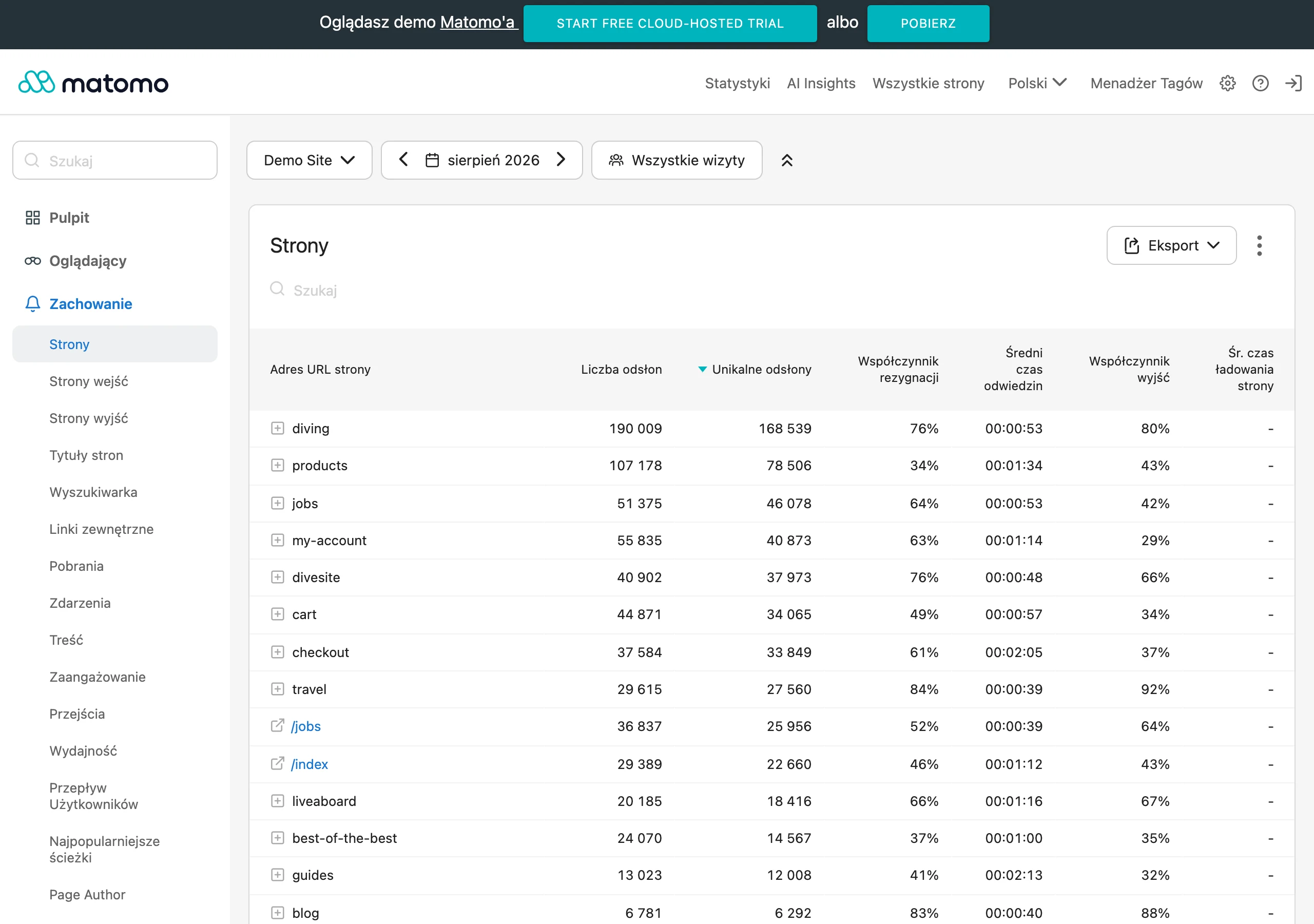
First, it is a good idea to establish which questions a given page is meant to handle and how you will recognise that it does so better than before. For one URL it will be a higher number of visits from problem-based queries, for another better reach into a comparison section or more frequent transitions to specific paragraphs from internal linking. Measurement without an intent map usually ends up monitoring general traffic, which says very little about the quality of the answer.
- question coverage: how many important user questions have their own clear answer on the page,
- quality of visits: whether the number of visits from long, more precise queries is increasing,
- on-page behaviour: whether users reach the sections that actually solve their problem,
- editorial signals: which fragments are updated, clarified or expanded most often,
- technical signals: whether the page is correctly rendered, indexed and assigned to the right topic.
In practice, it is better to observe changes at URL level and in individual sections, rather than assessing only the whole domain. Monitor which subpages have started to capture visits for new question variants, which headings generate internal traffic and where users stop reading. If visits are increasing, but users quickly leave the page or skip a key section, it usually means the answer is off the mark or too generic. A good result is not only a higher number of pageviews, but also a better match between the visit intent and the answer.
It is also worth accepting that the impact of AI search engines is not always visible in a single report. Some of the effects will show up as growth in branded queries, more visits to expert pages, longer internal journeys or higher lead quality from how-to content. That is why it makes sense to compare the period before and after the update, analyse groups of similar URLs and note which changes were implemented on the site. Without documenting the modifications, it is difficult to separate the effect of the new content structure from seasonality, campaigns or changes in the offer.
A good signal is also that after publication the number of questions for which the user has to look for answers on other subpages falls. This is usually visible in more frequent use of anchor links, smoother movement between sections and a lower need to return to search results. If users still “go further”, it is worth checking whether a definition, an example, usage conditions or a clearly stated limitation is missing. The most useful content leaves fewer things unsaid, and this is often visible in the data faster than a classic rise in rankings.
Finally, measure effectiveness regularly, not just once. After each major update, verify which questions have better coverage, which sections need clarification and whether keyword cannibalisation has appeared between similar URLs. This kind of review not only lets you assess the result, but also plan the next content iteration that will genuinely increase its usefulness for AI and for the user.
FAQ
Frequently asked questions
How do you optimise content for AI search engines step by step?
First, you identify user intent and information gaps, then you design the answer, and finally you refine the technical setup and credibility. After publishing, you still need to check rendering, headings, links and whether the content actually captures traffic from long-tail queries.
In content for AI, is text length more important than answer precision?
The article shows that precision, readability and a good structure matter more than simply writing more. Length does not help if the answer is vague or inconsistent.
Why does content need a clear structure to be read better by AI?
AI works better with content that has a clear structure, specific definitions and logical links between sections. When the answer gets lost in a long introduction or a difficult layout, the system has less chance of extracting it correctly.
What increases the credibility of content for AI search engines the most?
Clear identification of the author, the publication or update date and the information sources helps. It is also important to separate facts from opinions and show limitations if a solution works only under specific conditions.
Which technical elements are key when optimising content for AI?
Indexability, readable HTML, consistent headings, internal linking, correct canonical tags and structured data are important. The content should be available in the HTML code, not hidden behind heavy JavaScript.
When is it better to merge several pieces of content into one page rather than keep separate URLs?
When several subpages answer similar questions and keyword cannibalisation starts, it is better to point to the main version or merge the materials. Spreading answers across multiple URLs reduces clarity and makes it harder for AI to determine the right answer.