
Content written for AI-generated answers is meant to serve not only positions and clicks. It is also meant to make it possible for the system to correctly understand, summarise and cite the most important information. This shifts content planning, because it is no longer just the volume of text that matters, but its structure, precision and credibility. In practice, the materials that win are those that answer the question quickly, show usage conditions and rely on clear sources. If it is not easy to extract a specific answer from the content, the AI model will usually choose a different source, even if your text is longer. And that is where the battle for an advantage begins. That is why working on content in this era combines editing, SEO, UX and technical implementation. The greatest advantage comes not from the number of publications, but from a coherent content system built around users’ real questions.
What the content creation service for the AI era is
The content creation service for the AI era is the process of designing and rebuilding content so that it is useful for people and at the same time easy for answer-generating systems to use. This is not only about writing a blog article. The entire set of elements becomes the point of work: the topic, user intent, entities, questions, concise answers, expert elaborations, sources, structured data and contextual linking. It sounds technical. It is meant to sound technical, because technology is what forces order in content today.
In practice, this service shifts the goal from simply gaining a click to becoming a credible source of answers for the search engine, assistant and language model. This is an important change, because increasingly the user gets a summary before visiting the page. Good content in this model must be easy to quote, summarise and connect with other information without losing meaning. The question is: can your texts be “pulled out” of context and still make sense.
The scope of work usually starts with an audit of existing materials. It checks whether the pages answer specific questions, whether the naming is consistent, whether there are duplicates, missing sources and inconsistencies between the blog, offer, FAQ and documentation. Then the information architecture, topic map and relationships between pages are built. Without this, the content resembles a warehouse without labels — everything is there, but nobody knows where.
The next stage is editing or producing content in a more modular form. The material should clearly show who the author is, what the content is about, what problems it solves, what the conditions and exceptions are, and what the conclusions are based on. Text length alone does not give you an advantage if there is no clear answer, evidence and up-to-dateness. Not volume, but usefulness. Instead of waffle — concrete points that can be quoted.
At the end comes the technical layer and quality control. This includes valid HTML, a logical heading hierarchy, implementation of structured data, internal linking, indexability and monitoring of whether the content appears in summaries, answers and citations. The result should not be a single text, but a working content system supporting visibility and business goals. The key is for the content to be readable not only for people, but also for machines — and without gymnastics on the recipient’s side.
What are the key elements of content for answer-generating systems
This should be clear at first glance. The key elements of content for answer-generating systems are a clear answer to the question, a transparent structure, correctly named subject matter, credible sources and consistent technical signals. The AI model should quickly “grasp” what the material is about, what the main thesis is, when it is true and where its scope ends. The question is: how much room are you leaving here for assumptions. The less ambiguity there is, the greater the chance of the content being used correctly.
- Short answer at the start – ideally already in the first paragraph or immediately under the heading.
- Layered structure – first the essence, then the elaboration, and at the end the details, exceptions and context.
- Clear entities and naming – the same, consistent names of services, products, processes, roles and concepts across the whole site.
- Formats that are easy to extract – practical definitions, steps, conditional comparisons, FAQ, glossaries.
- Sources and authorship – indication of the author, update date, basis of the claims and source documents.
- Technical signals – proper headings, logical HTML, structured data and sensible internal linking.
The best-performing content is content from which a fact, instruction or recommendation can be easily distilled. It is simple, but demanding. That is why pages should have short definitions, sections “when to use” and “when not to use”, comparisons and a description of limitations. Content that is too general, long-winded or purely promotional is of little use to AI systems, because it is hard to extract a precise answer from it.
Credibility makes the difference here. And that is not just a cliché. If the topic concerns financial, legal, health, technical or operational decisions, a description alone simply does not cut it. You need to show the author, the expertise, the date of update and the basis of the claims, for example documentation, standards, regulations, first-party data or supporting materials.
Consistency between pages is just as important. When the offer says one thing, and the FAQ, help centre or product description say another, the model receives conflicting signals and starts “stitching” the answer together in its own way. That is no longer a minor editorial error, but a real risk to the message. In the AI era, content has to be maintained like a knowledge system, not like a collection of independent publications.
The result is also influenced by the technical layer, although technique alone cannot replace good content. But note: technique can present good content in a way that can be read without distortions. Readable HTML code, correct heading hierarchy, schema.org, breadcrumbs, indexability and fast loading help systems better grasp the meaning of a page. This does not guarantee citation, but it reduces the risk that even a good answer will be misinterpreted.
In practice, the most valuable materials are those that answer a specific question and immediately guide the user further. No waffle. Such content should show the essence, conditions, an example of use and the next step, for example a service page, a procedure or documentation. The better you structure the answer for a human, the greater the chance that a system generating answers will also read it correctly.
How the content optimisation process for AI works
Content optimisation for AI is not about polishing up the text. It is about translating the topic into a set of questions, answers, entities and technical signals that the system can quickly understand, summarise and connect with other information. At the start, you define what types of answers need to be covered: informational, comparative, problem-solving, transactional or after-sales. And this is where the challenges begin, because an educational guide needs a different structure than a service page or an FAQ that is meant to close objections. It starts with intent and questions, not with the keyword itself.
Then comes an audit of what is already there. You check whether the materials really answer specific questions, whether they duplicate each other thematically, and whether they use consistent naming for services, features and concepts. At the same time, you gather hard signals from real life: user questions from Search Console, sales, support, forms and the internal search engine. The result can be ruthless. It becomes clear where answers are missing and where the content is so general that it mixes several intents at once.
From this data, a map of entities and relationships is created. It sounds academic, but in practice it is about organising how the user problem, solutions, services, processes, documents, expert roles and usage conditions connect. Such a map suggests whether the topic needs a pillar page, a cluster of articles, a knowledge base, a glossary of terms or an expanded questions section. Without this, it is easy to produce texts that sound “correct” but do not form a complete picture of the topic.
Then you design answer modules for each important page. Good content first gives a short answer to the question, then develops the topic, and finally adds conditions, exceptions, examples and the next step for the user. Every important page should have a layer of short answer, expansion, as well as conditions and exceptions. This is a structure that reads smoothly, while also increasing the chance that the model will extract the meaning exactly where it should. Instead of a wall of text — a logical ladder.
From the editorial side, you do some housekeeping. You remove ambiguity, simplify sentences and clearly separate facts from opinions, because AI does not infer “context” in the same way a human does. At the same time, you strengthen credibility: author, update date, grounds for claims and sources, especially where an error costs the user time, money or decision risk. If the content is inconsistent between the service page, FAQ and documentation, AI may pick up the wrong or contradictory message. The problem is that then fixing one article does nothing. You need to tidy up the whole set of materials that talk about the same topic, even if each does so from a different angle.
At the end comes the technical layer and validation. This is the stage where you implement readable HTML, correct heading hierarchy, structured data, internal linking, breadcrumbs, canonicals and indexation control, and then check whether a definition, a list of steps, a comparison or a concise summary can be extracted from the content without effort. Editing alone is not enough without correct HTML, structured data and logical linking. After publication, the real test begins: you monitor topic visibility, long-tail questions, branded visits and clicks through to service pages, and then regularly refresh materials that are ageing or being misinterpreted.
What are the best practices for creating source content
The best practices for creating source content come down to one thing. The material should be both useful for a human and easy for an AI system to quote, otherwise it ends up either “nice” or “useless”. Layered content works best: first a direct answer, then context, and only afterwards technical details, variants and exceptions. This structure shortens the path to the core point and reduces the risk that key information will get lost in a long block of text.
Source content should be precise, not flashy. Instead of creative headings and marketing promises, it is better to use operational definitions, clear instructions, conditional comparisons and simple wording that can be repeated without losing meaning. The greatest value lies in materials from which a clear answer can be extracted without distortion. The problem is that this requires discipline: consistent naming of services, features, processes and limitations, without juggling synonyms “for style”.
Good source content does not exist in a vacuum. It should be embedded in a system of pages with different roles: a pillar page organises the topic, a service page answers the business intent, an FAQ closes doubts, and a knowledge base explains procedures and support. This way, the user and the search engine get not a single text, but a coherent knowledge graph of the site. And that usually gives a better result than publishing many similar articles for closely related keywords.
In practice, it is better to stick to a few rules, no philosophy.
- Answer the main question in the first sentences of the section, instead of hiding it after a long introduction.
- Add usage conditions, exceptions and situations in which the given solution will not be appropriate.
- Provide sources, the author and the update date where credibility and recency matter.
- Unify the message across the service page, FAQ, documentation and sales materials, so you are not telling four versions of the same story.
- Design content with regular review in mind, rather than as “one-and-done” publications.
Equally important is basing the content plan on data from several sources. Keyword tools alone show interest, but they do not always reveal the client’s real problem, the decision stage and barriers to making contact, and the question is: do you want to write for numbers or for people. That is why it is better to combine data from analytics, CRM, support, chat, forms and sales conversations. Then the content answers real questions, not just popular keywords.
In the end, one thing matters: quality after publication. Every important piece of content should have an owner, a review schedule and a control checklist. This list includes mundane but critical things: service scope, prices, instructions, product features or legal status. The final outcome should not be a single text, but a content system ready for updates and measurement. And that is not a cliché. Whether the brand remains a credible source of answers, even when the topic starts to shift and change, depends on that regular work.
What mistakes to avoid when creating content for AI
When creating content for AI, there is no room for padding. Generic, long-winded and overly promotional material sounds nice, but it is hard to extract a clear answer from it. An answer-generating system will more readily “pull through” content that says directly: what it is, when it works, when it does not work and what its conclusions are based on. The question is: can this paragraph be summarised without amputating its meaning. If not, a rebuild is usually requested. The most common mistake is writing text “about the topic” instead of answering the user’s specific question.
The second problem is more insidious: mixing several intents on one page. When the same material tries to educate, sell, compare solutions and answer technical questions at the same time, semantic chaos sets in. In practice, it is better to separate roles rather than pretending that everything can fit into one bag: a separate service page for the purchase decision, a separate FAQ for objections, a separate guide to explain the problem.
A common sin is the lack of a shortened answer layer. The user and the model need a short, precise answer first, and only then the expansion, conditions and exceptions. Otherwise the reader gets lost and the system loses priorities. If the most important answer appears only after several paragraphs, the content loses usefulness for both humans and the AI system.
A mismatch between pages and channels can be dangerous. If the service page gives one scope, while the FAQ, sales offer or help centre gives another, the system receives conflicting signals and does not know what to cite. The effect is simple: credibility falls, and the risk of the brand being cited incorrectly as a source rises. Consistent naming of services, processes and limitations matters more today than the number of published texts.
A mistake that does not “hurt” for a long time is publishing content without sources, an author and an update date, especially in topics that require precision. When material contains recommendations, procedures or interpretations, it is necessary to show where the information comes from and who is responsible for it (specifically, not anonymously). Without that, even a well-written text may be considered unreliable, because it cannot be placed in time or in terms of accountability.
In the end, many companies lose out at the technical layer, and quietly so. Unreadable HTML, poorly structured headings, a lack of structured data, weak internal linking or indexing problems make it harder to understand the content. This is no longer a cosmetic issue, but a brake. Good editing alone is not enough if the site does not help the search engine and models read the information structure correctly.
How to measure content effectiveness in the era of generated answers
The outcome matters, not fireworks in the statistics. The effectiveness of content in the era of generated answers is measured through visibility, usefulness and business impact, not just rankings and clicks. The sheer number of visits says little today, because part of the contact with the brand already happens at the level of the answer generated by the system (before entering the site). So the key is to look at things in parallel: whether the content is used as a source, whether it answers the right questions and whether it leads the user to the next step.
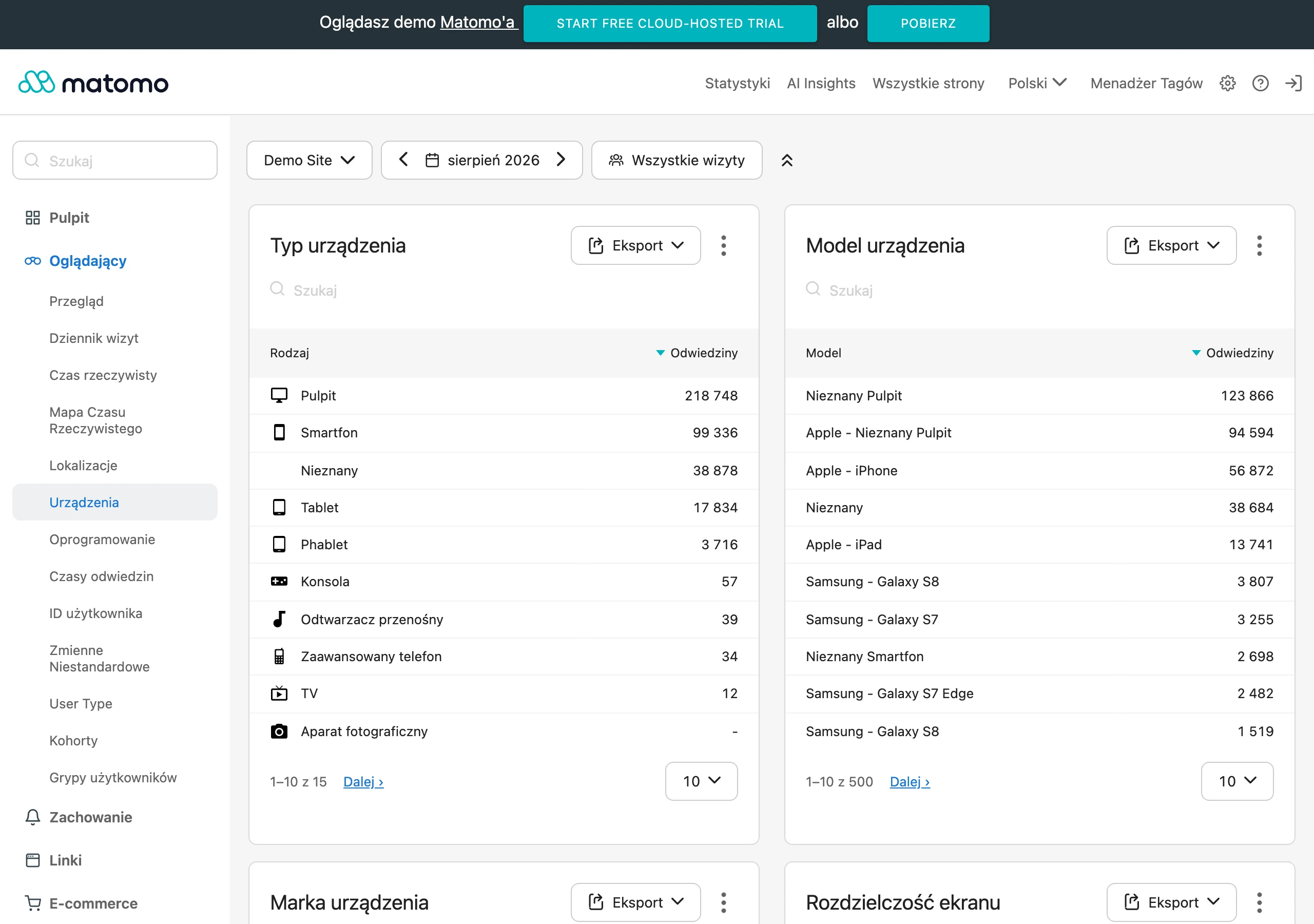
Visibility is more than a clicks graph. At this level, it is worth observing queries from Search Console, especially long questions, problem-based keywords and comparison keywords. It is also good to track growth in branded queries, visits to service pages from informational content and the brand appearing in answers, summaries and FAQ-type sections. But beware: A drop in clicks does not always mean a worse result if brand exposure and the quality of traffic from more specific questions are growing.
Usefulness starts with topic coverage. In practice, this means checking how many questions a given page or content cluster answers clearly, completely and without contradictions. Simple indicators help here: the number of questions handled within a given topic, transitions to other pages, the time needed to find an answer, as well as the number of places where the user returns to the search engine or asks support the same question again. The data makes it clear that the latter hurts twice: it damages the experience and drives up support costs.
Business likes specifics. At the business level, you need to measure whether content supports a decision, not just attracts traffic. What matters are transitions from articles to service pages, quality leads, the share of informational content in conversion paths, and which questions most often precede a contact with sales. The question is not “how much”, but “why”: The best content for AI does not have to generate the most traffic, but it should answer questions that genuinely move the user towards action.
There is another layer: maintenance. A separate area is content quality and upkeep, because the problem is that “good once” does not mean “good today”. It is worth measuring the proportion of materials with an assigned owner, an update date, sources and compliance with other sections of the site. Operational indicators are useful too: the number of pieces of content requiring a refresh, the number of semantic conflicts between pages, cases of keyword cannibalisation and the response time to a change in offer, product or regulations. And this is not a cliché: In an environment of generated answers, freshness and consistency are a measurable element of quality, not an editorial extra.
Report more broadly. It is best to show results not at the level of a single URL, but at the level of a topic or cluster. This makes it clear whether the whole knowledge area works as a coherent source of answers, or whether only a single article briefly picked up traffic. Let us look at it differently: this kind of measurement makes it easier to decide on consolidating content, expanding FAQs, updating definitions and strengthening source pages — instead of endlessly hunting for “that one” address.
FAQ
Frequently asked questions
What content works best in the era of AI-generated answers?
The best-performing materials are those that answer the question quickly, show usage conditions and rely on clear sources. If it is hard to extract a specific answer from the text, the AI model will usually choose another source.
Does text length alone help with being cited by an AI system?
No, volume alone does not give you an advantage if there is no clear answer, evidence and freshness. What matters more is the usefulness of the content and whether it can be easily summarised and quoted.
What elements should content include to be readable for AI?
It should have a short answer at the beginning, a clear structure, consistent terminology, credible sources and technical signals. Definitions, steps, conditional comparisons, FAQ and glossaries also help.
Why is consistency between the service page, FAQ and documentation important?
Because when these materials say different things, the model receives conflicting signals and may assemble the answer in its own way. In the AI era, content needs to be maintained like a knowledge system, not a collection of loose publications.
What does the process of optimising content for AI look like?
It starts with user intent and questions, then comes an audit of existing materials, an entity and relationship map, and the design of answer modules. Finally, there is the technical layer, validation and monitoring of results after publication.
What mistakes most often make it harder for content to be used by AI?
Above all, generic, long-winded and overly promotional copy, as well as mixing several intents on one page. Another problem is the lack of a concise answer and inconsistency between different materials on the same topic.